Comparison
Yucatan Deer Mouse vs White-footed Mouse
Yucatan Deer Mouse (Peromyscus yucatanicus) and White-footed Mouse (Peromyscus leucopus) both belong to the genus Peromyscus (deer mice) and part ways below it. Both are recorded in 1 country.
Yucatan Deer Mouse
Peromyscus yucatanicus
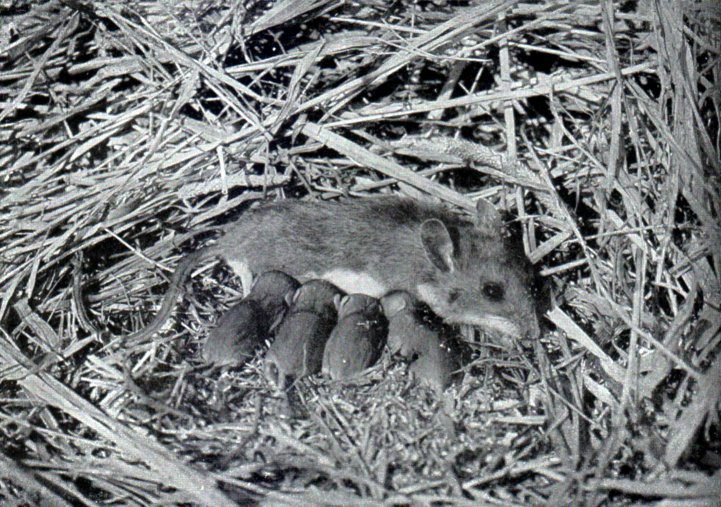
White-footed Mouse
Peromyscus leucopus
Edited by Chandler B. Beach, A.M., Public domain, via Wikimedia Commons

Side by side
| Yucatan Deer Mouse | White-footed Mouse | |
|---|---|---|
| Scientific name | Peromyscus yucatanicus J. A. Allen & Chapman, 1897 | Peromyscus leucopus (Rafinesque, 1818) |
| English name | Yucatan Deer Mouse | White-footed Mouse |
| Group | Mammals | Mammals |
| Class | Mammalia Mammal | Mammalia Mammal |
| Order | Rodentia Rodent | Rodentia Rodent |
| Family | Cricetidae New World Mice and Rats | Cricetidae New World Mice and Rats |
| Genus | Peromyscus Deer Mice | Peromyscus Deer Mice |
| Named in | 1897 | 1818 |
| Red List category | Least Concern | Least Concern |
| Environment | Not recorded | terrestrial |
| Countries on record | 2 countries | 3 countries |
| GBIF occurrence records | 2,044 records | 137,357 records |
Rows where the two agree are shown in grey.
Where each is found
Both recorded in 1 country
Only Yucatan Deer Mouse (1)
Only White-footed Mouse (2)
From Catalogue of Life checklists and GBIF occurrence records. A country missing from a list means no record is held, which is not proof of absence.
Checked facts
| Yucatan Deer Mouse | White-footed Mouse | |
|---|---|---|
| Appearance | No checked fact yet |
|
| Size | No checked fact yet |
|
| Habitat | No checked fact yet |
|
| Diet | No checked fact yet |
|
| Behaviour | No checked fact yet |
|
| Reproduction | No checked fact yet |
|
| Distribution | No checked fact yet |
|
| Conservation | No checked fact yet |
|
| Uses | No checked fact yet |
|
| Similar species | No checked fact yet |
|
In brief
White-footed Mouse
Peromyscus leucopus occurs across much of eastern North America, extending from Nova Scotia westward to Saskatchewan and Montana, and southward into eastern and southern Mexico and the Yucatan Peninsula. Its upperparts range from pale to rich reddish brown, while its underside and feet are white. Full profile
Compare something else
Page built on 26 November 2026 from the data on the two species pages, where every source is listed.
Cite this page
ScientificNames.org. (2026). Yucatan Deer Mouse vs White-footed Mouse. Retrieved November 26, 2026, from https://scientificnames.org/compare/yucatan-deer-mouse-vs-white-footed-mouse
“Yucatan Deer Mouse vs White-footed Mouse.” ScientificNames.org, 2026, scientificnames.org/compare/yucatan-deer-mouse-vs-white-footed-mouse. Accessed 26 Nov. 2026.
ScientificNames.org. “Yucatan Deer Mouse vs White-footed Mouse.” Accessed November 26, 2026. https://scientificnames.org/compare/yucatan-deer-mouse-vs-white-footed-mouse.
@misc{scientificnames_yucatan_deer_mouse_vs_white_footed_mouse,
  author = {{ScientificNames.org}},
  title = {Yucatan Deer Mouse vs White-footed Mouse},
  year = {2026},
  url = {https://scientificnames.org/compare/yucatan-deer-mouse-vs-white-footed-mouse},
  note = {Accessed 2026-11-26}
}