Comparison
Proso Millet vs Switchgrass
Proso Millet (Panicum miliaceum) and Switchgrass (Panicum virgatum) both belong to the genus Panicum (millet) and part ways below it. Both are recorded in 14 countries.

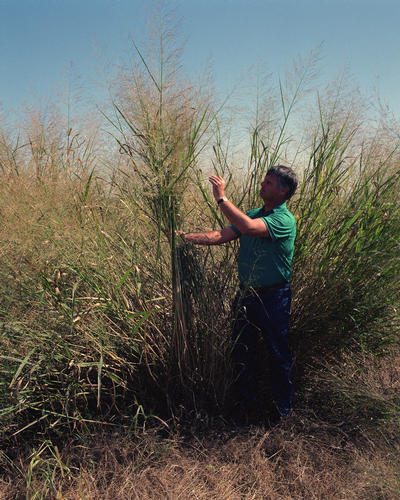


Side by side
| Proso Millet | Switchgrass | |
|---|---|---|
| Scientific name | Panicum miliaceum L. | Panicum virgatum L. |
| English name | Proso Millet | Switchgrass |
| Group | Flowering plants | Flowering plants |
| Class | Liliopsida | Liliopsida |
| Order | Poales | Poales |
| Family | Poaceae Turf | Poaceae Turf |
| Genus | Panicum Millet | Panicum Millet |
| Countries on record | 90 countries | 18 countries |
| GBIF occurrence records | 70,066 records | 26,875 records |
Rows where the two agree are shown in grey.
Where each is found
Both recorded in 14 countries
- Austria
- Belgium
- Bermuda
- Brazil
- Canada
- China
- Cuba
- Germany
- Honduras
- India
- Japan
- Mexico
- United Kingdom
- United States
Only Proso Millet (76)
- Afghanistan
- Albania
- Argentina
- Armenia
- Australia
- Azerbaijan
- Bangladesh
- Bhutan
- Botswana
- Bulgaria
- Cameroon
- Colombia
- Comoros
- Cyprus
- Czechia
- Denmark
- Dominican Republic
- Egypt
- Finland
- France
- French Guiana
- Georgia
- Greece
- Guyana
- Haiti
- Hungary
- Indonesia
- Iran
- Iraq
- Ireland
- Israel
- Italy
- Kazakhstan
- Kyrgyzstan
- Lesotho
- Libya
- Madagascar
- Maldives
- Mauritius
- Mongolia
- Morocco
- Myanmar
- Nepal
- New Caledonia
- New Zealand
- North Korea
- Norway
- Oman
- Pakistan
- Palestinian Territory
- Philippines
- Poland
- Portugal
- Puerto Rico
- Romania
- Russia
- Saudi Arabia
- South Africa
- South Korea
- Spain
- Sri Lanka
- Sweden
- Switzerland
- Syria
- Taiwan
- Tajikistan
- Thailand
- The Netherlands
- Turkey
- Turkmenistan
- Ukraine
- United Arab Emirates
- Uruguay
- Uzbekistan
- Vietnam
- Yemen
Only Switchgrass (4)
From Catalogue of Life checklists and GBIF occurrence records. A country missing from a list means no record is held, which is not proof of absence.
Checked facts
| Proso Millet | Switchgrass | |
|---|---|---|
| Appearance |
|
|
| Size |
|
|
| Habitat |
|
|
| Behaviour | No checked fact yet |
|
| Reproduction |
|
|
| Lifespan | No checked fact yet |
|
| Distribution |
|
|
| Uses |
|
|
| Other |
|
|
In brief
Proso Millet
Proso Millet (Panicum miliaceum L.) is a warm-season flowering grass in the family Poaceae, order Poales and class Liliopsida. It is cultivated across Northern China, Himachal Pradesh in India, Nepal, Russia, Ukraine, Belarus, the Middle East, Turkey, Romania, and the Great Plains of the United States. It is highly drought-resistant and typically has a growing season of 60–100 days. Full profile
Switchgrass
Switchgrass (Panicum virgatum L.) is a hardy, deep-rooted, perennial rhizomatous grass in the family Poaceae, order Poales and class Liliopsida. Its native range extends from Canada through the United States into Mexico. It is distinguished by its prominent leaf midribs and well-developed flower panicles. Full profile
Compare something else
Page built on 26 November 2026 from the data on the two species pages, where every source is listed.
Cite this page
ScientificNames.org. (2026). Proso Millet vs Switchgrass. Retrieved November 26, 2026, from https://scientificnames.org/compare/proso-millet-vs-switchgrass
“Proso Millet vs Switchgrass.” ScientificNames.org, 2026, scientificnames.org/compare/proso-millet-vs-switchgrass. Accessed 26 Nov. 2026.
ScientificNames.org. “Proso Millet vs Switchgrass.” Accessed November 26, 2026. https://scientificnames.org/compare/proso-millet-vs-switchgrass.
@misc{scientificnames_proso_millet_vs_switchgrass,
  author = {{ScientificNames.org}},
  title = {Proso Millet vs Switchgrass},
  year = {2026},
  url = {https://scientificnames.org/compare/proso-millet-vs-switchgrass},
  note = {Accessed 2026-11-26}
}