Comparison
Grey-rumped Swallow vs Purple Martin
Grey-rumped Swallow (Pseudhirundo griseopyga) and Purple Martin (Progne subis) both belong to the family Hirundinidae (swallow) and part ways below it.

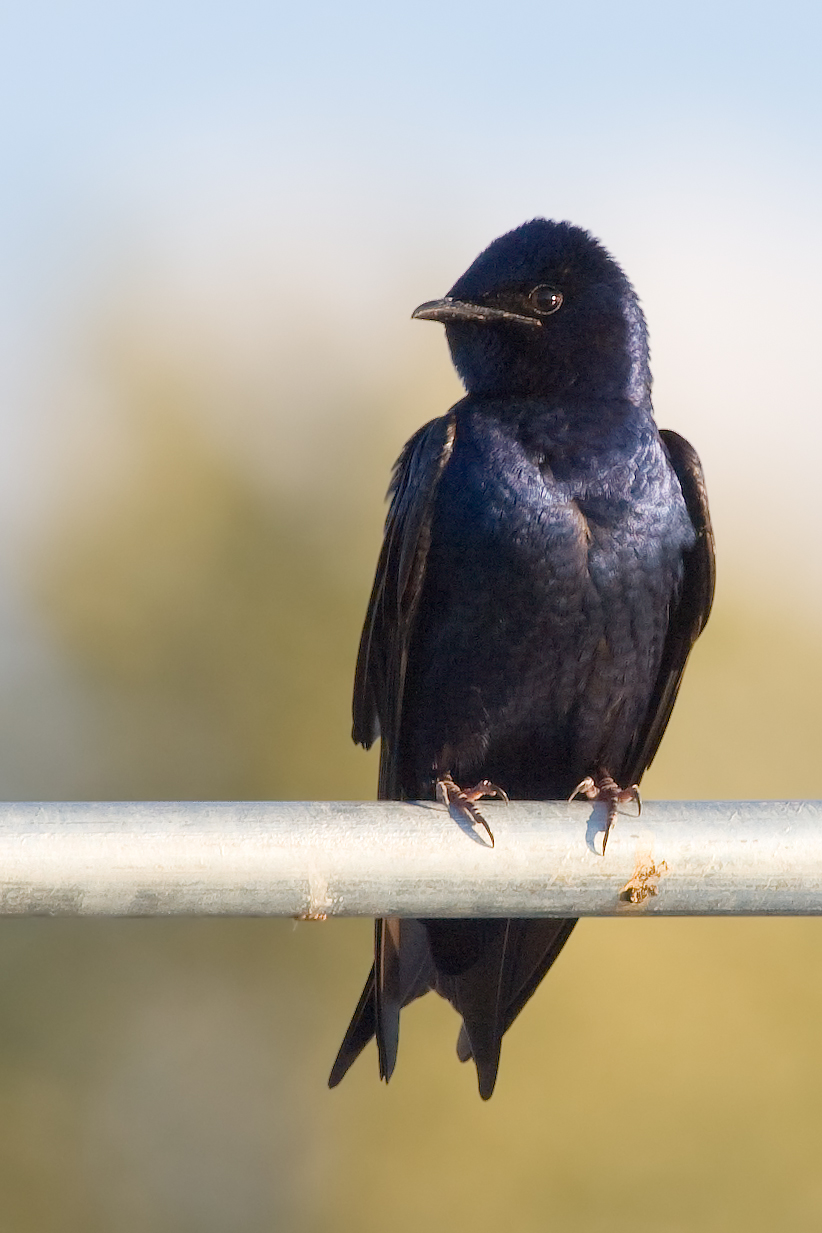


Side by side
| Grey-rumped Swallow | Purple Martin | |
|---|---|---|
| Scientific name | Pseudhirundo griseopyga (Sundevall, 1850) | Progne subis (Linnaeus, 1758) |
| English name | Grey-rumped Swallow | Purple Martin |
| Group | Birds | Birds |
| Class | Aves Bird | Aves Bird |
| Order | Passeriformes Passerine | Passeriformes Passerine |
| Family | Hirundinidae Swallow | Hirundinidae Swallow |
| Genus | Pseudhirundo | Progne Martin |
| Named in | 1850 | 1758 |
| Red List category | Least Concern | Least Concern |
| Environment | Not recorded | terrestrial |
| Countries on record | 30 countries | 25 countries |
| GBIF occurrence records | 15,810 records | 2,079,443 records |
Rows where the two agree are shown in grey.
Where each is found
Only Grey-rumped Swallow (30)
- Angola
- Benin
- Botswana
- Burkina Faso
- Burundi
- Cameroon
- Central African Republic
- Chad
- Democratic Republic of the Congo
- Equatorial Guinea
- Eswatini
- Ethiopia
- Gabon
- Gambia
- Guinea
- Guinea-Bissau
- Kenya
- Liberia
- Malawi
- Mozambique
- Namibia
- Nigeria
- Republic of the Congo
- Rwanda
- Senegal
- South Africa
- Tanzania
- Uganda
- Zambia
- Zimbabwe
Only Purple Martin (25)
- Aruba
- Bahamas
- Belize
- Bermuda
- Bonaire, Saint Eustatius and Saba
- Brazil
- Canada
- Cayman Islands
- Colombia
- Costa Rica
- Cuba
- Curacao
- Dominican Republic
- El Salvador
- Guadeloupe
- Guatemala
- Honduras
- Jamaica
- Mexico
- Nicaragua
- Panama
- Puerto Rico
- Saint Pierre and Miquelon
- Turks and Caicos Islands
- United States
From Catalogue of Life checklists and GBIF occurrence records. A country missing from a list means no record is held, which is not proof of absence.
Checked facts
| Grey-rumped Swallow | Purple Martin | |
|---|---|---|
| Appearance | No checked fact yet |
|
| Size | No checked fact yet |
|
| Habitat | No checked fact yet |
|
| Diet | No checked fact yet |
|
| Behaviour | No checked fact yet |
|
| Reproduction | No checked fact yet |
|
| Distribution | No checked fact yet |
|
| Conservation | No checked fact yet |
|
| Other | No checked fact yet |
|
In brief
Purple Martin
Progne subis breeds in eastern North America, southeastern Canada and specified western coastal locations, and winters in Brazil, Bolivia and parts of Peru. It is the largest swallow species in North America and has adult plumage that develops over two years. Full profile
Compare something else
Page built on 26 November 2026 from the data on the two species pages, where every source is listed.
Cite this page
ScientificNames.org. (2026). Grey-rumped Swallow vs Purple Martin. Retrieved November 26, 2026, from https://scientificnames.org/compare/grey-rumped-swallow-vs-purple-martin
“Grey-rumped Swallow vs Purple Martin.” ScientificNames.org, 2026, scientificnames.org/compare/grey-rumped-swallow-vs-purple-martin. Accessed 26 Nov. 2026.
ScientificNames.org. “Grey-rumped Swallow vs Purple Martin.” Accessed November 26, 2026. https://scientificnames.org/compare/grey-rumped-swallow-vs-purple-martin.
@misc{scientificnames_grey_rumped_swallow_vs_purple_martin,
  author = {{ScientificNames.org}},
  title = {Grey-rumped Swallow vs Purple Martin},
  year = {2026},
  url = {https://scientificnames.org/compare/grey-rumped-swallow-vs-purple-martin},
  note = {Accessed 2026-11-26}
}