Comparison
Ranunculus adoneus vs Creeping Buttercup
Ranunculus adoneus (Ranunculus adoneus) and Creeping Buttercup (Ranunculus repens) both belong to the genus Ranunculus (crowfoot) and part ways below it. Both are recorded in 1 country.

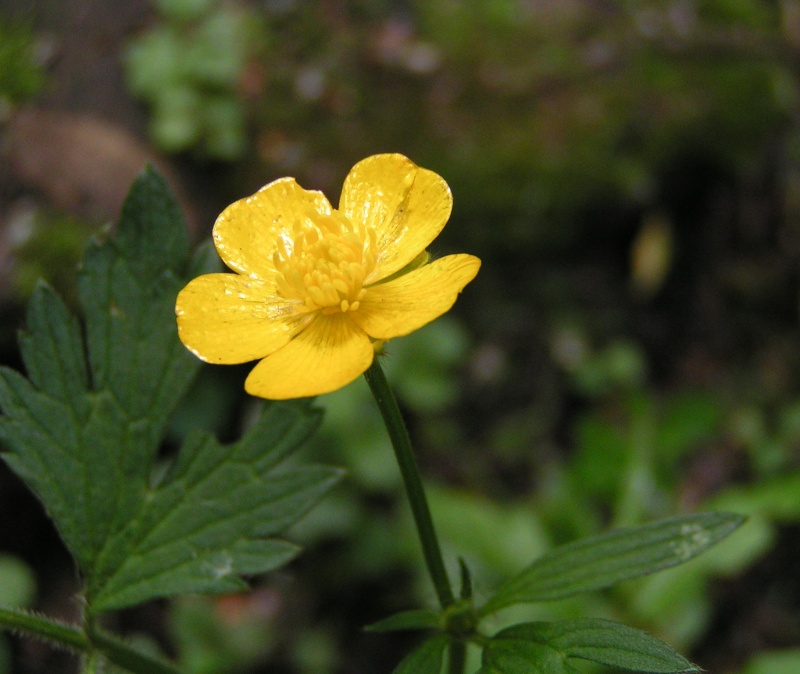


Side by side
| Ranunculus adoneus | Creeping Buttercup | |
|---|---|---|
| Scientific name | Ranunculus adoneus A.Gray | Ranunculus repens L. |
| English name | Not recorded | Creeping Buttercup |
| Group | Flowering plants | Flowering plants |
| Class | Magnoliopsida | Magnoliopsida |
| Order | Ranunculales | Ranunculales |
| Family | Ranunculaceae Crowfoot Family | Ranunculaceae Crowfoot Family |
| Genus | Ranunculus Crowfoot | Ranunculus Crowfoot |
| Countries on record | 1 country | 82 countries |
| GBIF occurrence records | 1,078 records | 1,681,854 records |
Rows where the two agree are shown in grey.
Where each is found
Both recorded in 1 country
Only Creeping Buttercup (81)
- Aland Islands
- Albania
- Algeria
- Andorra
- Argentina
- Armenia
- Australia
- Austria
- Azerbaijan
- Belarus
- Belgium
- Bolivia
- Bosnia and Herzegovina
- Brazil
- Bulgaria
- Canada
- Chile
- China
- Costa Rica
- Croatia
- Czechia
- Denmark
- Estonia
- Faroe Islands
- Finland
- France
- Georgia
- Germany
- Greece
- Greenland
- Guernsey
- Hungary
- Iceland
- India
- Iran
- Iraq
- Ireland
- Isle of Man
- Italy
- Jamaica
- Japan
- Jersey
- Kazakhstan
- Kosovo
- Kyrgyzstan
- Latvia
- Liechtenstein
- Lithuania
- Luxembourg
- Malta
- Mexico
- Moldova
- Mongolia
- Montenegro
- Morocco
- New Zealand
- North Korea
- North Macedonia
- Norway
- Pakistan
- Panama
- Peru
- Poland
- Portugal
- Romania
- Russia
- San Marino
- Serbia
- Slovakia
- Slovenia
- South Korea
- Spain
- Svalbard and Jan Mayen
- Sweden
- Switzerland
- Tajikistan
- The Netherlands
- Turkey
- Ukraine
- United Kingdom
- Uzbekistan
From Catalogue of Life checklists and GBIF occurrence records. A country missing from a list means no record is held, which is not proof of absence.
Checked facts
| Ranunculus adoneus | Creeping Buttercup | |
|---|---|---|
| Appearance |
|
|
| Size |
|
|
| Habitat |
|
|
| Diet | No checked fact yet |
|
| Behaviour |
|
|
| Reproduction |
|
|
| Lifespan |
| No checked fact yet |
| Distribution | No checked fact yet |
|
| Uses | No checked fact yet |
|
| Other |
| No checked fact yet |
In brief
Ranunculus adoneus
Ranunculus adoneus A.Gray is a long-lived perennial flowering plant in the family Ranunculaceae, order Ranunculales, and class Magnoliopsida. It produces yellow, cup-shaped flowers with five to ten wedge-shaped petals and five greenish-yellow sepals. Full profile
Creeping Buttercup
Creeping buttercup (Ranunculus repens L.) is a herbaceous perennial flowering plant in the family Ranunculaceae, order Ranunculales and class Magnoliopsida. It grows in marshes, roadsides, fields, gardens, lawns and neglected areas, frequently occurring in poorly drained, wet soils in sunny and shaded locations. It has three-lobed, toothed leaves, glossy yellow flowers and creeping stems that root and produce new plantlets. Full profile
Compare something else
Page built on 28 November 2026 from the data on the two species pages, where every source is listed.
Cite this page
ScientificNames.org. (2026). Ranunculus adoneus vs Creeping Buttercup. Retrieved November 28, 2026, from https://scientificnames.org/compare/ranunculus-adoneus-vs-creeping-buttercup
“Ranunculus adoneus vs Creeping Buttercup.” ScientificNames.org, 2026, scientificnames.org/compare/ranunculus-adoneus-vs-creeping-buttercup. Accessed 28 Nov. 2026.
ScientificNames.org. “Ranunculus adoneus vs Creeping Buttercup.” Accessed November 28, 2026. https://scientificnames.org/compare/ranunculus-adoneus-vs-creeping-buttercup.
@misc{scientificnames_ranunculus_adoneus_vs_creeping_buttercup,
  author = {{ScientificNames.org}},
  title = {Ranunculus adoneus vs Creeping Buttercup},
  year = {2026},
  url = {https://scientificnames.org/compare/ranunculus-adoneus-vs-creeping-buttercup},
  note = {Accessed 2026-11-28}
}