Comparison

Bushveld Horseshoe Bat vs Mediterranean Horseshoe Bat

Bushveld Horseshoe Bat (Rhinolophus simulator) and Mediterranean Horseshoe Bat (Rhinolophus euryale) both belong to the genus Rhinolophus (horseshoe bat) and part ways below it.

Bushveld Horseshoe Bat

Rhinolophus simulator
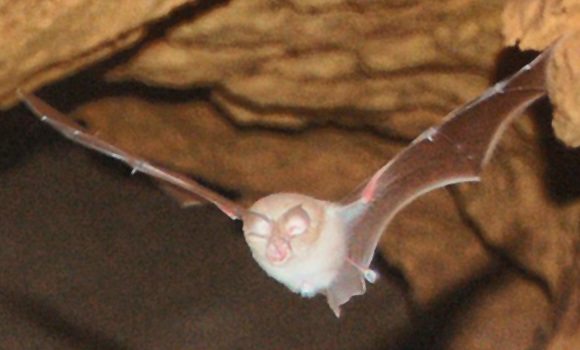
Mediterranean Horseshoe Bat

Mediterranean Horseshoe Bat

Rhinolophus euryale

Carlosblh, CC BY 3.0, via Wikimedia Commons

Side by side

Bushveld Horseshoe BatMediterranean Horseshoe Bat
Scientific nameRhinolophus simulator K. Andersen, 1904Rhinolophus euryale Blasius, 1853
English nameBushveld Horseshoe BatMediterranean Horseshoe Bat
GroupMammalsMammals
ClassMammalia MammalMammalia Mammal
OrderChiroptera BatChiroptera Bat
FamilyRhinolophidae Horseshoe BatRhinolophidae Horseshoe Bat
GenusRhinolophus Horseshoe BatRhinolophus Horseshoe Bat
Named in19041853
Red List categoryLeast ConcernNear Threatened
EnvironmentNot recordedterrestrial
Countries on record13 countries23 countries
GBIF occurrence records704 records13,968 records

Rows where the two agree are shown in grey.

Where each is found

Only Bushveld Horseshoe Bat (13)

Only Mediterranean Horseshoe Bat (23)

From Catalogue of Life checklists and GBIF occurrence records. A country missing from a list means no record is held, which is not proof of absence.

Checked facts

Bushveld Horseshoe BatMediterranean Horseshoe Bat
AppearanceNo checked fact yet
  • The Mediterranean horseshoe bat has fluffy fur with a light grey base. English Wikipedia
  • The Mediterranean horseshoe bat has grey-brown dorsal fur that sometimes has a slight reddish tinge. English Wikipedia
  • The Mediterranean horseshoe bat has grey-white or yellow-white fur on its underside. English Wikipedia
  • The upper connecting process of the Mediterranean horseshoe bat is pointed and slightly bent downwards. English Wikipedia
  • The upper connecting process is distinctly longer than the lower connecting process. English Wikipedia
  • The Mediterranean horseshoe bat has light brown horseshoe-shaped facial structures and lips. animaldiversity.org
  • The ears and wing membranes of the Mediterranean horseshoe bat are light grey. animaldiversity.org
  • The Mediterranean horseshoe bat has broad wings. animaldiversity.org
  • The second phalanx of the Mediterranean horseshoe bat's fourth finger is more than twice as long as the first phalanx. animaldiversity.org
  • The Mediterranean horseshoe bat cannot completely wrap its body in its wing membranes because of its wing anatomy. animaldiversity.org
SizeNo checked fact yet
Habitat
  • The Bushveld horseshoe bat inhabits moist savannas, caves, and other subterranean environments. English Wikipedia
  • The Bushveld horseshoe bat is classified as a terrestrial species. speciesstatus.sanbi.org
  • The Mediterranean horseshoe bat inhabits warm, forested foothills and mountain regions. animaldiversity.org
  • The Mediterranean horseshoe bat favors karst formations containing numerous caves near water sources. animaldiversity.org
  • The Mediterranean horseshoe bat favors broadleaved woodlands and olive groves. animaldiversity.org
  • The Mediterranean horseshoe bat uses caves and underground shelters as summer roosts. animaldiversity.org
  • The Mediterranean horseshoe bat uses warm attics as roosts in more northern parts of its range. animaldiversity.org
  • Winter roosts of the Mediterranean horseshoe bat include caves and tunnels with temperatures around 10°C. animaldiversity.org
DietNo checked fact yet
  • The Mediterranean horseshoe bat feeds on moths and other insects. animaldiversity.org
  • The Mediterranean horseshoe bat consumes large quantities of moths and other insects. animaldiversity.org
BehaviourNo checked fact yet
  • The Mediterranean horseshoe bat often roosts alongside other bat species, including other horseshoe bats. animaldiversity.org
  • The Mediterranean horseshoe bat generally remains in the same area but may migrate up to 134 km. animaldiversity.org
  • The Mediterranean horseshoe bat typically forages alone. animaldiversity.org
  • The Mediterranean horseshoe bat is nocturnal and uses echolocation to locate prey. animaldiversity.org
  • The Mediterranean horseshoe bat emerges in late twilight to feed. animaldiversity.org
  • The Mediterranean horseshoe bat hunts at low altitudes on warm slopes and among relatively dense trees or shrubs. animaldiversity.org
  • The Mediterranean horseshoe bat has slow, agile flight and can hover. animaldiversity.org
  • The Mediterranean horseshoe bat produces echolocation calls at frequencies of 101–108 kHz. animaldiversity.org
ReproductionNo checked fact yet
  • Maternity roosts of the Mediterranean horseshoe bat commonly contain 50–400 females, sometimes accompanied by males. English Wikipedia
  • Births in the Mediterranean horseshoe bat occur from mid-June or July. English Wikipedia
  • Young Mediterranean horseshoe bats become independent at approximately four weeks of age. English Wikipedia
  • Female Mediterranean horseshoe bats have their first offspring at two to three years of age. English Wikipedia
  • Mediterranean horseshoe bats mate in autumn, with mating potentially continuing into winter. English Wikipedia
  • Female Mediterranean horseshoe bats give birth to one offspring per breeding event. animaldiversity.org
  • A newborn Mediterranean horseshoe bat weighs approximately 4 g. animaldiversity.org
  • Young Mediterranean horseshoe bats are ready to fly in early to mid-August, or by mid-July in Bulgaria. animaldiversity.org
  • Breeding in the Mediterranean horseshoe bat is thought to occur once annually. animaldiversity.org
Distribution
  • The Bushveld horseshoe bat occurs in Botswana, Cameroon, Ivory Coast, Eswatini, Ethiopia, Guinea, Kenya, Liberia, Malawi, Mozambique, Nigeria, South Africa, South Sudan, Tanzania, Zambia, and Zimbabwe. English Wikipedia
  • The Mediterranean horseshoe bat occurs in the Mediterranean region and Balkan Peninsula. English Wikipedia
  • The Mediterranean horseshoe bat occurs on Sicily, Sardinia, and Corsica. animaldiversity.org
  • The northernmost reported range of the Mediterranean horseshoe bat includes Slovakia, northern Italy, and southern France. animaldiversity.org
  • The Mediterranean horseshoe bat has also been reported in northern Africa. animaldiversity.org
ConservationNo checked fact yet
  • The Mediterranean horseshoe bat was assessed as Near Threatened in the IUCN Red List account dated 2016. English Wikipedia
  • The Mediterranean horseshoe bat experienced a reported general population decline over 27 years. English Wikipedia
  • Agricultural expansion and urbanization are identified as contributors to the Mediterranean horseshoe bat's population decline through loss of foraging vegetation. English Wikipedia
  • Disturbance from caving and cave tourism threatens the Mediterranean horseshoe bat because it mainly roosts in caves and underground shelters. English Wikipedia
  • Protection of roosting sites is identified as an important long-term conservation strategy for the Mediterranean horseshoe bat. English Wikipedia
  • The Mediterranean horseshoe bat experienced a 70% population decline in France between 1940 and 1980. animaldiversity.org
  • Pesticide use is identified as a possible contributor to declines in Mediterranean horseshoe bat populations. animaldiversity.org
UsesNo checked fact yet
  • The Mediterranean horseshoe bat provides insect control within its ecosystem. animaldiversity.org
OtherNo checked fact yet

In brief

Bushveld Horseshoe Bat

The Bushveld Horseshoe Bat inhabits moist savannas, caves, and other subterranean environments. The Bushveld Horseshoe Bat has an elongated rostrum and a modular cranium. Full profile

Mediterranean Horseshoe Bat

Rhinolophus euryale occurs in the Mediterranean region and Balkan Peninsula, on Sicily, Sardinia, and Corsica, and in northern Africa. It has fluffy grey-based fur, broad wings, and distinctive horseshoe-shaped facial structures. Full profile

Compare something else

Page built on 27 November 2026 from the data on the two species pages, where every source is listed.

Cite this page

ScientificNames.org. (2026). Bushveld Horseshoe Bat vs Mediterranean Horseshoe Bat. Retrieved November 27, 2026, from https://scientificnames.org/compare/bushveld-horseshoe-bat-vs-mediterranean-horseshoe-bat