Comparison

Roscoea australis vs Roscoea auriculata

Roscoea australis (Roscoea australis) and Roscoea auriculata (Roscoea auriculata) both belong to the genus Roscoea and part ways below it.
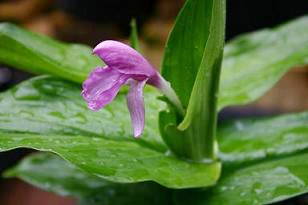
Roscoea australis

Roscoea australis

Original: "John Jearrard"Some image processing by w:User:Peter coxhead, CC0, via Wikimedia Commons

Roscoea auriculata

Roscoea auriculata

Roscoea_purpurea_20070810-1338-183.jpg: Keith Edkins derivative work: Peter coxhead (talk), CC BY 2.5, via Wikimedia Commons

Side by side

Roscoea australisRoscoea auriculata
Scientific nameRoscoea australis CowleyRoscoea auriculata K.Schum.
GroupFlowering plantsFlowering plants
ClassLiliopsidaLiliopsida
OrderZingiberalesZingiberales
FamilyZingiberaceae Ginger FamilyZingiberaceae Ginger Family
GenusRoscoeaRoscoea
Countries on record1 country4 countries
GBIF occurrence records6 records62 records

Rows where the two agree are shown in grey.

Where each is found

Only Roscoea australis (1)

Only Roscoea auriculata (4)

From Catalogue of Life checklists and GBIF occurrence records. A country missing from a list means no record is held, which is not proof of absence.

Checked facts

Roscoea australisRoscoea auriculata
Appearance
  • The leaf blades are usually 6–10 cm long and 2–3 cm wide. English Wikipedia
  • The leaf sheaths have small auriculate projections and a ligule approximately 1.5 mm long. English Wikipedia
  • The plant produces purple or white flowers that open individually. English Wikipedia
  • The flower spike is borne within the leaves. English Wikipedia
  • The flower's outer calyx is tubular, spotted, pink-brown and bluntly three-lobed at its apex. English Wikipedia
  • The corolla has a white tube that protrudes considerably beyond the calyx. English Wikipedia
  • The central upright corolla lobe is hooded and measures approximately 2.2–3 cm long and 1.7–2 cm wide. English Wikipedia
  • The two lateral staminodes form small upright purple petal-like structures. English Wikipedia
  • The two central staminodes are partially fused at their bases to form a labellum. English Wikipedia
  • The labellum measures 2–3 cm long and approximately 1.9–2.4 cm wide. English Wikipedia
  • The labellum is divided into two lobes along approximately half its length. English Wikipedia
  • The plant has one functional stamen with a white anther approximately 5–6 mm long. English Wikipedia
  • The anther has spurs measuring approximately 6–7 mm long. English Wikipedia
  • Roscoea auriculata is a perennial herbaceous plant. English Wikipedia
  • The plant dies back annually to a short vertical rhizome bearing tuberous roots. English Wikipedia
  • Its pseudostems are formed from tightly wrapped leaf bases rather than true stems. English Wikipedia
  • Each plant typically produces three to seven leaves. English Wikipedia
  • The leaf sheaths are smooth and purple. English Wikipedia
  • Ear-shaped outgrowths occur where the leaf blades meet their sheaths. English Wikipedia
  • The flower-spike peduncle remains enclosed within the leaf sheaths. English Wikipedia
  • The plant produces several purple or white flowers. English Wikipedia
  • The three corolla petals form a tube longer than the calyx and terminate in three lobes. English Wikipedia
  • The central corolla lobe is upright, while the two side lobes are slightly shorter. English Wikipedia
  • The flower has one functional stamen with a linear anther. English Wikipedia
  • A short spur is formed from the connective tissue between the two anther capsules. English Wikipedia
  • The species has deep violet-purple and white cultivated flower forms. English Wikipedia
  • The cultivar Roscoea auriculata 'Floriade' has large, richly coloured flowers. English Wikipedia
SizeNo checked fact yet
Habitat
  • The species grows at elevations of 2,100–2,800 m. English Wikipedia
  • The species grows in grassland and on mountain ridges in the Chin Hills. English Wikipedia
  • Nat Ma Taung, also known as Mt Victoria, is a documented locality for the species. English Wikipedia
  • The species occurs in Himalayan grasslands at elevations of 2,400–2,700 metres. English Wikipedia
  • The species grows in colder mountainous regions rather than exclusively in tropical environments. English Wikipedia
  • Cultivated plants generally require a relatively sunny position and moisture-retaining, well-drained soil. English Wikipedia
BehaviourNo checked fact yet
Reproduction
  • The species flowers in its native habitats between June and August. English Wikipedia
  • The plant produces a capsule containing brown seeds after flowering. English Wikipedia
Distribution
  • The species is distributed across Tibet, Bhutan, Nepal and Sikkim in the eastern Himalayas. English Wikipedia
ConservationNo checked fact yet
  • The species received an Award of Garden Merit from the Royal Horticultural Society. English Wikipedia
Uses
  • Roscoea australis has been described as difficult to grow in cultivation at the Royal Botanic Garden Edinburgh. English Wikipedia
  • Only seedlings of Roscoea australis were being grown at the Royal Botanic Gardens, Kew when Richard Wilford documented cultivation of the genus. English Wikipedia
Similar species
  • Roscoea australis belongs to the Chinese clade of the genus Roscoea. English Wikipedia
  • Roscoea australis is similar to Roscoea tibetica and Roscoea wardii. English Wikipedia
  • Roscoea australis differs from Roscoea tibetica and Roscoea wardii by having a corolla tube that protrudes considerably beyond the sheathing leaves. English Wikipedia
  • Roscoea australis has a broader upper petal lobe than Roscoea tibetica. English Wikipedia
  • Roscoea australis has smaller flowers than Roscoea wardii. English Wikipedia
  • Roscoea auriculata appears to be closely related to Roscoea alpina. English Wikipedia
  • Roscoea auriculata differs from Roscoea purpurea in having auriculate leaves, brighter purple flowers, shorter white lateral staminodes and a deflexed labellum. English Wikipedia
Name origin
  • The specific epithet australis means southern and refers to the species' position south of other members of its genus. English Wikipedia
  • The specific epithet auriculata refers to the ear-shaped outgrowths where the leaf blades join the sheaths. English Wikipedia
Other
  • Elizabeth Jill Cowley first scientifically described Roscoea australis in 1982. English Wikipedia
  • The type specimen was collected by Frank Kingdon-Ward in 1956 at Nat Ma Taung at an elevation of 2,800 m. English Wikipedia

In brief

Roscoea australis

The species occurs in Chin State, Burma, where it grows in grassland and on mountain ridges in the Chin Hills at elevations of 2,100–2,800 m. It is distinguished from Roscoea tibetica and Roscoea wardii by a corolla tube that protrudes considerably beyond the sheathing leaves. Full profile

Roscoea auriculata

Roscoea auriculata K.Schum. is a perennial herbaceous flowering plant in the family Zingiberaceae, order Zingiberales and class Liliopsida. It occurs in Himalayan grasslands at elevations of 2,400–2,700 metres across Tibet, Bhutan, Nepal and Sikkim in the eastern Himalayas. It is distinguished by ear-shaped outgrowths where the leaf blades meet their sheaths. Full profile

Compare something else

Page built on 28 November 2026 from the data on the two species pages, where every source is listed.

Cite this page

ScientificNames.org. (2026). Roscoea australis vs Roscoea auriculata. Retrieved November 28, 2026, from https://scientificnames.org/compare/roscoea-australis-vs-roscoea-auriculata