Comparison

Roscoea australis vs Kakoli Ginger

Roscoea australis (Roscoea australis) and Kakoli Ginger (Roscoea purpurea) both belong to the genus Roscoea and part ways below it.
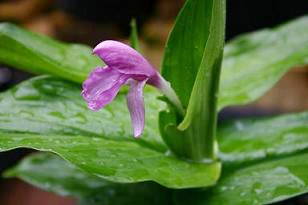
Roscoea australis

Roscoea australis

Original: "John Jearrard"Some image processing by w:User:Peter coxhead, CC0, via Wikimedia Commons

Kakoli Ginger

Roscoea purpurea

Side by side

Roscoea australisKakoli Ginger
Scientific nameRoscoea australis CowleyRoscoea purpurea Sm.
English nameNot recordedKakoli Ginger
GroupFlowering plantsFlowering plants
ClassLiliopsidaLiliopsida
OrderZingiberalesZingiberales
FamilyZingiberaceae Ginger FamilyZingiberaceae Ginger Family
GenusRoscoeaRoscoea
Countries on record1 country4 countries
GBIF occurrence records6 records304 records

Rows where the two agree are shown in grey.

Where each is found

Only Roscoea australis (1)

Only Kakoli Ginger (4)

From Catalogue of Life checklists and GBIF occurrence records. A country missing from a list means no record is held, which is not proof of absence.

Checked facts

Roscoea australisKakoli Ginger
Appearance
  • The leaf blades are usually 6–10 cm long and 2–3 cm wide. English Wikipedia
  • The leaf sheaths have small auriculate projections and a ligule approximately 1.5 mm long. English Wikipedia
  • The plant produces purple or white flowers that open individually. English Wikipedia
  • The flower spike is borne within the leaves. English Wikipedia
  • The flower's outer calyx is tubular, spotted, pink-brown and bluntly three-lobed at its apex. English Wikipedia
  • The corolla has a white tube that protrudes considerably beyond the calyx. English Wikipedia
  • The central upright corolla lobe is hooded and measures approximately 2.2–3 cm long and 1.7–2 cm wide. English Wikipedia
  • The two lateral staminodes form small upright purple petal-like structures. English Wikipedia
  • The two central staminodes are partially fused at their bases to form a labellum. English Wikipedia
  • The labellum measures 2–3 cm long and approximately 1.9–2.4 cm wide. English Wikipedia
  • The labellum is divided into two lobes along approximately half its length. English Wikipedia
  • The plant has one functional stamen with a white anther approximately 5–6 mm long. English Wikipedia
  • The anther has spurs measuring approximately 6–7 mm long. English Wikipedia
  • Roscoea purpurea is a perennial herbaceous plant. English Wikipedia
  • The plant produces a short vertical rhizome with attached tuberous roots when its above-ground growth dies back annually. English Wikipedia
  • Its pseudostems develop from tightly wrapped leaf bases rather than true stems. English Wikipedia
  • The plant has wide leaves and a stout pseudostem. English Wikipedia
  • Its leaf sheaths are pale green or may have a dark reddish-purple tint. English Wikipedia
  • The flower spike's peduncle is concealed by the leaf sheaths. English Wikipedia
  • Its flowers are the largest among species of the genus Roscoea. English Wikipedia
  • The flowers are usually purple or mauve. English Wikipedia
  • White-flowered forms of the species have been found in Nepal. English Wikipedia
  • Red-flowered forms of the species have been found in Nepal. English Wikipedia
  • Each flower has a tube-shaped outer calyx. English Wikipedia
  • The flower's three petals form a tube slightly longer than the calyx and terminate in three lobes. English Wikipedia
  • The flower has an upright hooded central petal lobe and two slightly smaller lateral lobes. English Wikipedia
  • Four sterile stamens form structures inside the petals. English Wikipedia
  • The two central staminodes are partially fused at their bases to form a lip or labellum. English Wikipedia
SizeNo checked fact yet
Habitat
  • The species grows at elevations of 2,100–2,800 m. English Wikipedia
  • The species grows in grassland and on mountain ridges in the Chin Hills. English Wikipedia
  • Nat Ma Taung, also known as Mt Victoria, is a documented locality for the species. English Wikipedia
BehaviourNo checked fact yet
Reproduction
  • The long-tongued fly Philoliche longirostris is an obligate pollinator of the species. English Wikipedia
  • The seasonal prevalence of Philoliche longirostris closely coincides with the species' peak flowering period. English Wikipedia
  • Pollen transfer occurs when the visiting fly presses against staminal appendages at the entrance of the corolla tube. English Wikipedia
  • During pollination, the anther, style and stigma descend and touch the fly's back. English Wikipedia
Distribution
Uses
  • Roscoea australis has been described as difficult to grow in cultivation at the Royal Botanic Garden Edinburgh. English Wikipedia
  • Only seedlings of Roscoea australis were being grown at the Royal Botanic Gardens, Kew when Richard Wilford documented cultivation of the genus. English Wikipedia
Similar species
  • Roscoea australis belongs to the Chinese clade of the genus Roscoea. English Wikipedia
  • Roscoea australis is similar to Roscoea tibetica and Roscoea wardii. English Wikipedia
  • Roscoea australis differs from Roscoea tibetica and Roscoea wardii by having a corolla tube that protrudes considerably beyond the sheathing leaves. English Wikipedia
  • Roscoea australis has a broader upper petal lobe than Roscoea tibetica. English Wikipedia
  • Roscoea australis has smaller flowers than Roscoea wardii. English Wikipedia
No checked fact yet
Name origin
  • The specific epithet australis means southern and refers to the species' position south of other members of its genus. English Wikipedia
No checked fact yet
Other
  • Elizabeth Jill Cowley first scientifically described Roscoea australis in 1982. English Wikipedia
  • The type specimen was collected by Frank Kingdon-Ward in 1956 at Nat Ma Taung at an elevation of 2,800 m. English Wikipedia
No checked fact yet

In brief

Roscoea australis

The species occurs in Chin State, Burma, where it grows in grassland and on mountain ridges in the Chin Hills at elevations of 2,100–2,800 m. It is distinguished from Roscoea tibetica and Roscoea wardii by a corolla tube that protrudes considerably beyond the sheathing leaves. Full profile

Kakoli Ginger

Kakoli ginger (Roscoea purpurea Sm.) is a perennial herbaceous flowering plant in the family Zingiberaceae, order Zingiberales and class Liliopsida. The species is native to the Himalayas, particularly Nepal. It has wide leaves, a stout pseudostem and large flowers that are usually purple or mauve. Full profile

Compare something else

Page built on 29 November 2026 from the data on the two species pages, where every source is listed.

Cite this page

ScientificNames.org. (2026). Roscoea australis vs Kakoli Ginger. Retrieved November 29, 2026, from https://scientificnames.org/compare/roscoea-australis-vs-kakoli-ginger