Comparison

Alpine Salamander vs Lanza's Alpine Salamander

Alpine Salamander (Salamandra atra) and Lanza's Alpine Salamander (Salamandra lanzai) both belong to the genus Salamandra and part ways below it. Both are recorded in 2 countries.
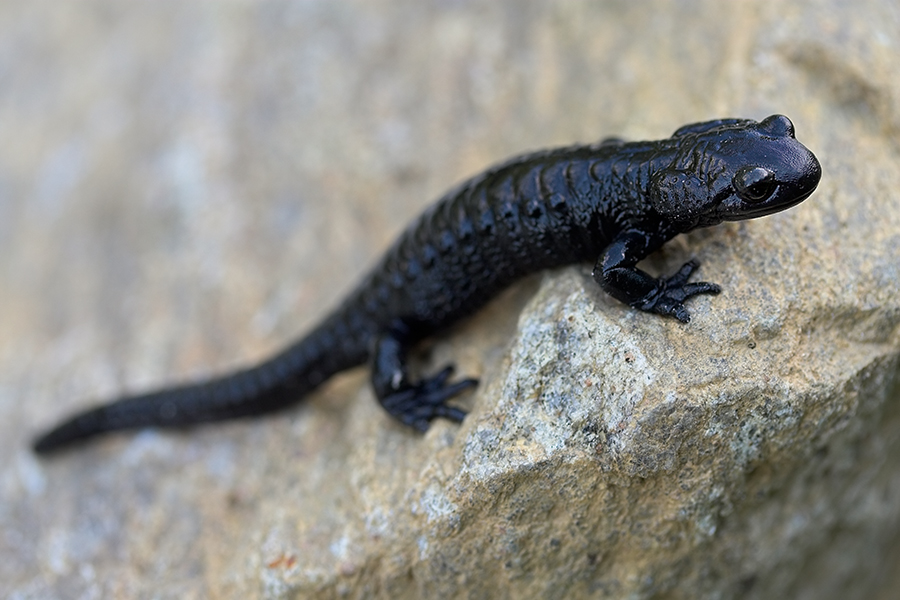
Alpine Salamander

Alpine Salamander

Salamandra atra

Thomas Huntke, Germany (der Uploader) http://www.huntke.de, CC BY-SA 3.0 de, via Wikimedia Commons

Lanza's Alpine Salamander

Lanza's Alpine Salamander

Salamandra lanzai

Unknown author, CC BY-SA 2.5, via Wikimedia Commons

Side by side

Alpine SalamanderLanza's Alpine Salamander
Scientific nameSalamandra atra Laurenti, 1768Salamandra lanzai Nascetti, Andreone, Capula & Bullini, 1988
English nameAlpine SalamanderLanza's Alpine Salamander
GroupAmphibiansAmphibians
ClassAmphibia AmphibiansAmphibia Amphibians
OrderCaudata SalamandersCaudata Salamanders
FamilySalamandridae NewtsSalamandridae Newts
GenusSalamandraSalamandra
Named in17681988
Red List categoryLeast ConcernCritically Endangered
Countries on record11 countries2 countries
GBIF occurrence records30,360 records3,650 records

Rows where the two agree are shown in grey.

Where each is found

Both recorded in 2 countries

Only Alpine Salamander (9)

From Catalogue of Life checklists and GBIF occurrence records. A country missing from a list means no record is held, which is not proof of absence.

Checked facts

Alpine SalamanderLanza's Alpine Salamander
Appearance
  • The Alpine Salamander is generally black or dark brown in colour. English Wikipedia
  • The subspecies Salamandra atra aurorae has bright yellow, white, or grey markings on its back and head. English Wikipedia
  • Females can grow larger than males. English Wikipedia
  • Males have more slender bodies and visibly swollen cloacae compared with females. English Wikipedia
  • Individuals generally have 11–13 costal grooves along each side of the body. English Wikipedia
  • Two rows of dorsal glands extend along the back beside the spine and continue to the tail tips. English Wikipedia
No checked fact yet
Size
  • Females can reach 151 mm in total length, including the tail. English Wikipedia
  • Males can reach approximately 144 mm in total length, including the tail. English Wikipedia
No checked fact yet
Habitat
  • The species inhabits mountainous terrestrial environments. English Wikipedia
  • Individuals commonly shelter beneath stones, logs, and in rocky crevices. English Wikipedia
  • The species inhabits forested environments, particularly mixed deciduous and coniferous forests. English Wikipedia
  • Mountain meadows and grasslands also provide habitat for the species. English Wikipedia
  • Forests containing silver fir and beech trees provide suitable habitat. English Wikipedia
  • Forests dominated by Norway spruce and European larch can also support the species. English Wikipedia
  • The species generally inhabits elevations above 700 metres and can occur at elevations reaching 2,000 metres. English Wikipedia
  • Rainy or post-rain conditions at temperatures between 3 and 18 °C are described as ideal for the species. English Wikipedia
No checked fact yet
Diet
  • The species feeds on terrestrial invertebrates including beetles, snails, millipedes, and spiders. English Wikipedia
  • Coleoptera and Mollusca are particularly important components of its diet. English Wikipedia
  • The species tends to select larger prey, consistent with its own relatively large body size. English Wikipedia
No checked fact yet
Behaviour
  • The species is primarily active during daylight hours and generally rests or sleeps at night. English Wikipedia
  • Individuals may also become active at night depending on weather conditions. English Wikipedia
  • The species is relatively sedentary, with a maximum observed summer movement distance of 12 metres for one individual. English Wikipedia
  • Individuals frequently return to the same terrestrial refuge sites throughout their lives. English Wikipedia
  • The species uses faecal pellets for scent-based territorial marking. English Wikipedia
No checked fact yet
Reproduction
  • The species reproduces through internal fertilisation following mating on land. English Wikipedia
  • The species is viviparous and gives birth to live young. English Wikipedia
  • Females generally give birth to two offspring, although litters of three or four can occur. English Wikipedia
  • Newborn individuals can measure up to 50 mm in length. English Wikipedia
  • Pregnancy generally lasts approximately two years at elevations of 650–1,000 metres. English Wikipedia
  • Pregnancy generally lasts approximately three years at elevations of 1,400–1,700 metres. English Wikipedia
No checked fact yet
LifespanNo checked fact yet
Distribution
  • The species occurs from the France–Switzerland border eastward through Switzerland and Austria to the Dinaric Alps. English Wikipedia
No checked fact yet
Conservation
  • The Alpine Salamander is classified as Least Concern on the IUCN Red List in the document's account. English Wikipedia
  • The population of the species is reported to be decreasing. English Wikipedia
  • Commercial deforestation is identified as a major threat to the species. English Wikipedia
  • Forestry machinery can damage habitat by compacting soil and eliminating small prey and potential shelters. English Wikipedia
  • The Golden Alpine Salamander is classified as Endangered because of its restricted distribution and declining population trend. pmc.ncbi.nlm.nih.gov
  • The Golden Alpine Salamander is designated a priority taxon under the European Union Habitats Directive. pmc.ncbi.nlm.nih.gov
  • The Golden Alpine Salamander is threatened by forestry practices that compact soil and remove cavities and potential refuges. pmc.ncbi.nlm.nih.gov
No checked fact yet
Similar species
  • Salamandra lanzai is described as a similar species inhabiting the western Alps. English Wikipedia
No checked fact yet

In brief

Alpine Salamander

Salamandra atra occurs from the France–Switzerland border eastward through Switzerland and Austria to the Dinaric Alps. It is generally black or dark brown, although the subspecies Salamandra atra aurorae has bright yellow, white, or grey markings on its back and head. Full profile

Compare something else

Page built on 26 November 2026 from the data on the two species pages, where every source is listed.

Cite this page

ScientificNames.org. (2026). Alpine Salamander vs Lanza's Alpine Salamander. Retrieved November 26, 2026, from https://scientificnames.org/compare/alpine-salamander-vs-lanzas-alpine-salamander