Comparison

Steppe Lemming vs Winter White Dwarf Hamster

Steppe Lemming (Lagurus lagurus) and Winter White Dwarf Hamster (Phodopus sungorus) both belong to the family Cricetidae (new world mice and rats) and part ways below it. Both are recorded in 2 countries.
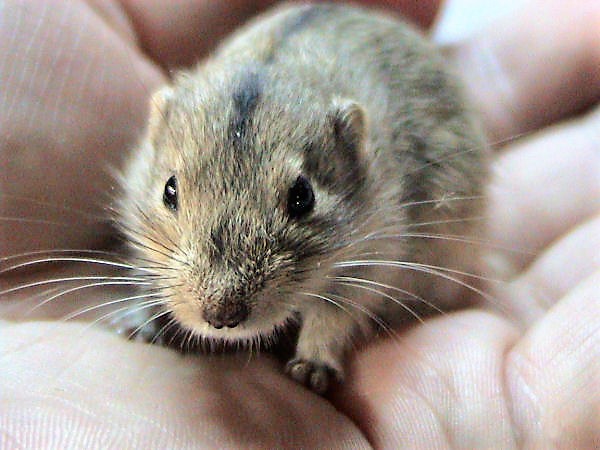
Steppe Lemming

Steppe Lemming

Lagurus lagurus

User:Dawson at the English Wikipedia, CC BY-SA 2.5, via Wikimedia Commons

Winter White Dwarf Hamster

Winter White Dwarf Hamster

Phodopus sungorus

Dirk Goldhahn, CC BY-SA 2.5, via Wikimedia Commons

Side by side

Steppe LemmingWinter White Dwarf Hamster
Scientific nameLagurus lagurus (Pallas, 1773)Phodopus sungorus (Pallas, 1773)
English nameSteppe LemmingWinter White Dwarf Hamster
GroupMammalsMammals
ClassMammalia MammalMammalia Mammal
OrderRodentia RodentRodentia Rodent
FamilyCricetidae New World Mice and RatsCricetidae New World Mice and Rats
GenusLagurus Sagebrush VolesPhodopus Small Desert Hamsters
Named in17731773
Red List categoryLeast ConcernLeast Concern
Countries on record5 countries4 countries
GBIF occurrence records830 records133 records

Rows where the two agree are shown in grey.

Where each is found

Both recorded in 2 countries

Only Steppe Lemming (3)

Only Winter White Dwarf Hamster (2)

From Catalogue of Life checklists and GBIF occurrence records. A country missing from a list means no record is held, which is not proof of absence.

Checked facts

Steppe LemmingWinter White Dwarf Hamster
Appearance
  • The species has a ball-shaped body and is typically half the size of a golden hamster. English Wikipedia
  • Its coat typically features a thick, dark grey dorsal stripe and furry feet. English Wikipedia
  • Its winter coat changes from dark fur to predominantly white fur as daylight hours shorten. English Wikipedia
  • Its coat is less woolly than that of Campbell's dwarf hamster. English Wikipedia
  • Its coat can occur in sapphire, sapphire pearl, and normal pearl colourations in addition to normal colouring. English Wikipedia
Size
Habitat
DietNo checked fact yet
Behaviour
  • The steppe lemming is more active at night but is not exclusively nocturnal. English Wikipedia
  • The steppe lemming is a colonial species that digs burrows. English Wikipedia
  • The steppe lemming emerges from its burrow only briefly during daytime activity. English Wikipedia
  • The steppe lemming exhibits migrations during years of population outbreaks. English Wikipedia
  • The steppe lemming's population numbers vary according to climatic conditions and available resources. English Wikipedia
  • The species digs tunnels approximately one metre deep that lead to underground burrows. English Wikipedia
  • Its underground burrows provide places for sleeping, raising young, and hiding from predators. English Wikipedia
  • Most of its burrows have six entrances. English Wikipedia
  • In summer, the species lines its burrows with moss. English Wikipedia
  • During winter, it closes all but one burrow entrance and uses animal fur or wool as insulation. English Wikipedia
  • The temperature inside its burrows is usually approximately 16.7 °C. English Wikipedia
  • Its seasonal coat colour change helps it avoid predators in snow-covered environments. English Wikipedia
  • The species is among the most tamable types of hamsters. English Wikipedia
  • Individuals of the same sex can sometimes be housed together, although co-housing can cause stress and aggression. English Wikipedia
  • Individuals raised together from a young age or belonging to the same litter are more likely to tolerate one another. English Wikipedia
Reproduction
  • The steppe lemming reaches sexual maturity at approximately six weeks of age. English Wikipedia
  • The steppe lemming can produce up to six broods annually. English Wikipedia
  • Each brood of the steppe lemming typically contains five or six young. English Wikipedia
  • The steppe lemming can reproduce throughout the year under suitable conditions. English Wikipedia
  • The species reproduces more frequently than golden hamsters. English Wikipedia
  • The species has no fixed breeding season and can produce offspring throughout the year. English Wikipedia
  • Females may become aggressive towards males during breeding. English Wikipedia
  • The estrous cycle of females lasts four days. English Wikipedia
  • Females may become receptive to mating again every four days. English Wikipedia
  • In the wild, breeding is restricted to the long days of spring and summer. English Wikipedia
  • The species does not exhibit biparental care according to the cited research. English Wikipedia
  • Young individuals are separated from their mother after weaning because frequent fighting can occur between them. English Wikipedia
LifespanNo checked fact yet
  • Its average lifespan in captivity is one to three years, although some individuals live longer. English Wikipedia
  • Wild individuals may live as little as one year. English Wikipedia
Distribution
  • The steppe lemming occurs in western Mongolia and northwestern China. English Wikipedia
  • The steppe lemming occurs in western and eastern Siberia. English Wikipedia
  • The steppe lemming occurs in the southern and middle Ural regions. English Wikipedia
  • Fossil remains of the steppe lemming have been discovered as far west as Great Britain. English Wikipedia
  • The species occurs in Kazakhstan, Mongolia, Siberia, and Manchuria. English Wikipedia
ConservationNo checked fact yet
  • The species is classified as Least Concern by the International Union for Conservation of Nature. English Wikipedia
  • No major or widespread threats to the species are known. English Wikipedia
Uses
  • The steppe lemming is commonly kept as a domestic vole, particularly in Europe. English Wikipedia
Similar species
  • The winter white dwarf hamster is physically similar to Campbell's dwarf hamster. English Wikipedia
  • The winter white dwarf hamster and Campbell's dwarf hamster are capable of interbreeding and producing live hybrid offspring. English Wikipedia
OtherNo checked fact yet

In brief

Steppe Lemming

The Steppe Lemming (Lagurus lagurus) is a small rodent in the family Cricetidae, order Rodentia, and class Mammalia. It inhabits Eurasian steppes, including semiarid, forest-steppe and semidesert environments. It is a colonial species that digs burrows and exhibits migrations during years of population outbreaks. Full profile

Winter White Dwarf Hamster

Phodopus sungorus occurs in Kazakhstan, Mongolia, Siberia, and Manchuria. It is distinguished by a seasonal coat change from dark fur to predominantly white fur as daylight hours shorten. Full profile

Compare something else

Page built on 27 November 2026 from the data on the two species pages, where every source is listed.

Cite this page

ScientificNames.org. (2026). Steppe Lemming vs Winter White Dwarf Hamster. Retrieved November 27, 2026, from https://scientificnames.org/compare/steppe-lemming-vs-winter-white-dwarf-hamster