Comparison
Monkey Orange vs St. Ignatius Bean
Monkey Orange (Strychnos spinosa) and St. Ignatius Bean (Strychnos ignatii) both belong to the genus Strychnos (curare and strychnine plants) and part ways below it.

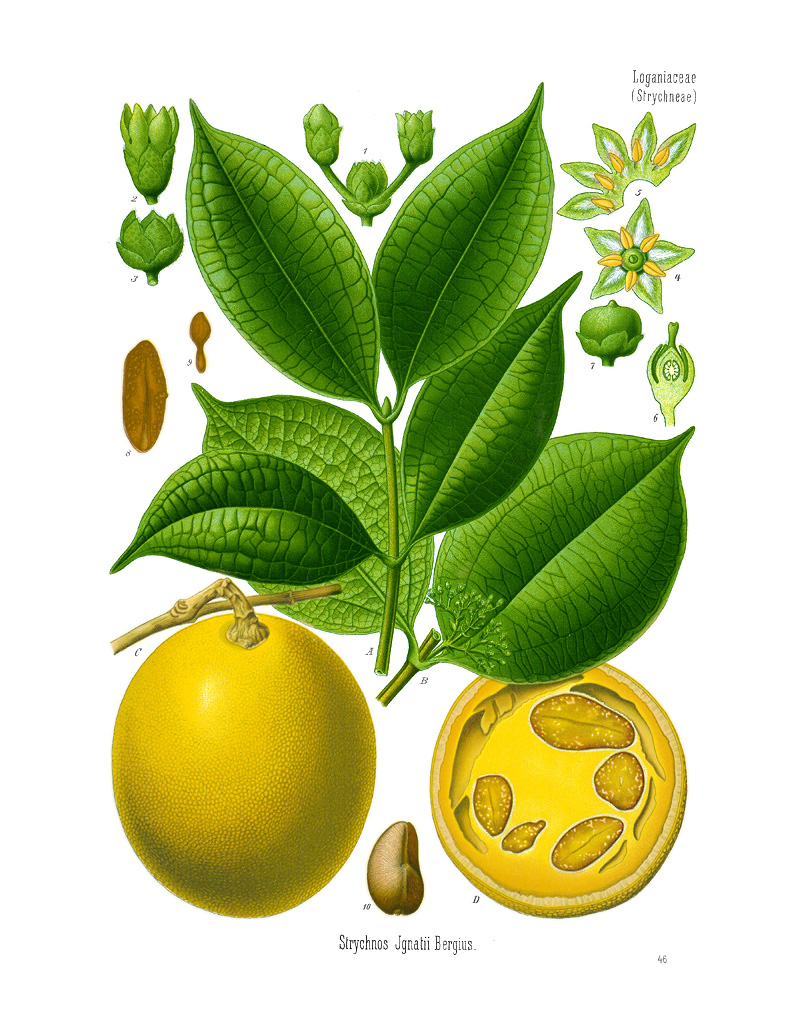


Side by side
| Monkey Orange | St. Ignatius Bean | |
|---|---|---|
| Scientific name | Strychnos spinosa Lam. | Strychnos ignatii Bergius |
| English name | Monkey Orange | St. Ignatius Bean |
| Group | Flowering plants | Flowering plants |
| Class | Magnoliopsida | Magnoliopsida |
| Order | Gentianales | Gentianales |
| Family | Loganiaceae Logania Family | Loganiaceae Logania Family |
| Genus | Strychnos Curare and Strychnine Plants | Strychnos Curare and Strychnine Plants |
| Countries on record | 45 countries | 10 countries |
| GBIF occurrence records | 5,793 records | 442 records |
Rows where the two agree are shown in grey.
Where each is found
Only Monkey Orange (45)
- Angola
- Benin
- Botswana
- Burkina Faso
- Burundi
- Cameroon
- Central African Republic
- Chad
- Comoros
- Democratic Republic of the Congo
- Equatorial Guinea
- Eswatini
- Ethiopia
- Gabon
- Gambia
- Ghana
- Guinea
- Guinea-Bissau
- Ivory Coast
- Kenya
- Liberia
- Madagascar
- Malawi
- Mali
- Mauritius
- Mayotte
- Mozambique
- Namibia
- Niger
- Nigeria
- Reunion
- Rwanda
- Senegal
- Seychelles
- Sierra Leone
- Somalia
- South Africa
- South Sudan
- Sudan
- Tanzania
- Togo
- Uganda
- United States
- Zambia
- Zimbabwe
Only St. Ignatius Bean (10)
From Catalogue of Life checklists and GBIF occurrence records. A country missing from a list means no record is held, which is not proof of absence.
Checked facts
| Monkey Orange | St. Ignatius Bean | |
|---|---|---|
| Appearance |
|
|
| Habitat |
|
|
| Diet |
| No checked fact yet |
| Reproduction |
| No checked fact yet |
| Distribution |
|
|
| Conservation |
| No checked fact yet |
| Uses |
| No checked fact yet |
| Name origin |
| No checked fact yet |
| Other |
|
|
In brief
Monkey Orange
Monkey orange is one of the indigenous fruit trees of Southern Africa. It is indigenous to tropical and subtropical Africa, with a recorded distribution extending from South Africa's Eastern Cape and KwaZulu-Natal northwards into Mozambique. It produces large, smooth, firm fruits that ripen from green to yellow and contain tightly packed seeds surrounded by edible brown flesh. Full profile
St. Ignatius Bean
St. Ignatius bean is a tree belonging to the Loganiaceae family. It is native to the Philippines and parts of China. It produces pear-shaped fruits with seeds that resemble almonds. Full profile
Compare something else
Page built on 29 November 2026 from the data on the two species pages, where every source is listed.
Cite this page
ScientificNames.org. (2026). Monkey Orange vs St. Ignatius Bean. Retrieved November 29, 2026, from https://scientificnames.org/compare/monkey-orange-vs-st-ignatius-bean
“Monkey Orange vs St. Ignatius Bean.” ScientificNames.org, 2026, scientificnames.org/compare/monkey-orange-vs-st-ignatius-bean. Accessed 29 Nov. 2026.
ScientificNames.org. “Monkey Orange vs St. Ignatius Bean.” Accessed November 29, 2026. https://scientificnames.org/compare/monkey-orange-vs-st-ignatius-bean.
@misc{scientificnames_monkey_orange_vs_st_ignatius_bean,
  author = {{ScientificNames.org}},
  title = {Monkey Orange vs St. Ignatius Bean},
  year = {2026},
  url = {https://scientificnames.org/compare/monkey-orange-vs-st-ignatius-bean},
  note = {Accessed 2026-11-29}
}