Comparison

Yellow Buckeye vs Ohio Buckeye

Yellow Buckeye (Aesculus flava) and Ohio Buckeye (Aesculus glabra) both belong to the genus Aesculus (buckeye) and part ways below it. Both are recorded in 3 countries.

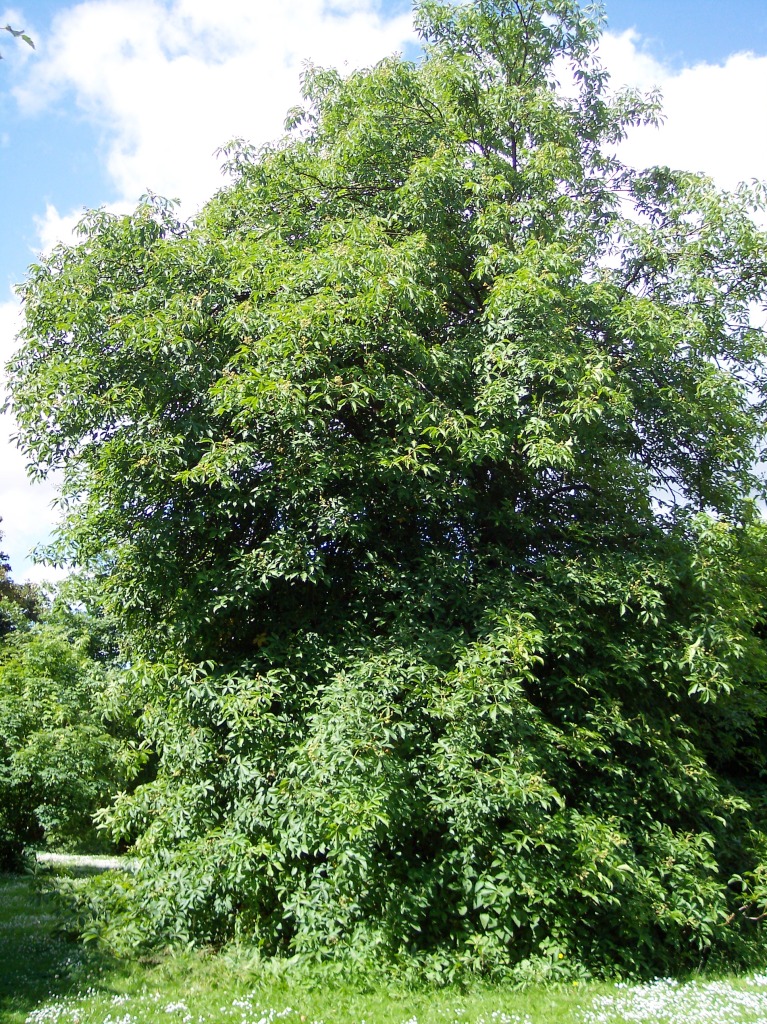
Yellow Buckeye

Yellow Buckeye

Aesculus flava

PixOnTrax at English Wikipedia, Public domain, via Wikimedia Commons

Ohio Buckeye

Ohio Buckeye

Aesculus glabra

Unknown author, CC BY-SA 3.0, via Wikimedia Commons

Side by side

Yellow BuckeyeOhio Buckeye
Scientific nameAesculus flava Sol.Aesculus glabra Willd.
English nameYellow BuckeyeOhio Buckeye
GroupFlowering plantsFlowering plants
ClassMagnoliopsidaMagnoliopsida
OrderSapindalesSapindales
FamilySapindaceae Soapberry FamilySapindaceae Soapberry Family
GenusAesculus BuckeyeAesculus Buckeye
Red List categoryLeast ConcernLeast Concern
Countries on record4 countries3 countries
GBIF occurrence records3,574 records10,515 records

Rows where the two agree are shown in grey.

Where each is found

Both recorded in 3 countries

Only Yellow Buckeye (1)

From Catalogue of Life checklists and GBIF occurrence records. A country missing from a list means no record is held, which is not proof of absence.

Checked facts

Yellow BuckeyeOhio Buckeye
Appearance
  • Yellow buckeye is a deciduous canopy tree with an irregular to upright-oval crown and stout branches that tend to sweep toward the ground. English Wikipedia
  • Its leaves are palmately compound and usually have five leaflets, although seven leaflets occur rarely. English Wikipedia
  • Its leaves typically turn orange to red during autumn. English Wikipedia
  • Its flowers are yellow to yellow-green and grow in panicles during spring. English Wikipedia
  • Individual flowers measure approximately 2–3 cm in length. English Wikipedia
  • Its fruit is a smooth, spineless, round or oblong capsule. English Wikipedia
  • Its fruit capsule contains one to three nut-like seeds. English Wikipedia
  • Its mature trunk develops a scaly and platy surface. English Wikipedia
Size
  • Each leaflet measures 8–16 cm in length and width. English Wikipedia
  • Fifty trees measured in Jefferson County, Indiana, averaged 20.7 m in height and 84 cm in diameter at breast height. research.fs.usda.gov
  • On dry habitats in eastern Oklahoma, the species grows as a shrub measuring 1.2–1.5 m tall. research.fs.usda.gov
Habitat
  • Yellow buckeye grows in mesophytic forests and floodplains. English Wikipedia
  • The species generally grows in acidic to circumneutral soils. English Wikipedia
  • It grows successfully in moist, rich, well-drained soils that are slightly acidic. English Wikipedia
  • Its habitats include river bottoms, stream banks, and mountain slopes. English Wikipedia
  • Yellow buckeye can tolerate short periods of flooding and urban growing conditions. English Wikipedia
  • The species occurs along streambanks, in upland mesic forests, and beside old fields. English Wikipedia
  • The species is typically associated with calcareous areas. English Wikipedia
  • The species is most frequently found along river bottoms and in streambank soils. research.fs.usda.gov
  • The species most commonly grows on Alfisol soils. research.fs.usda.gov
  • The species also occurs in hardwood stands on moist sites in Kentucky's limestone-sink-and-cave section of the Bluegrass region. research.fs.usda.gov
  • The species can occur on drier and clayey sites, although it usually grows slowly there and rarely becomes dominant. research.fs.usda.gov
  • The species develops best as an isolated individual in openings along streambanks and other moist sites. research.fs.usda.gov
Diet
  • The seeds contain tannic acid and are poisonous to humans and cattle. English Wikipedia
  • The young foliage, shoots, and bark are also poisonous to some degree. English Wikipedia
  • The bark and seeds contain a narcotic glucoside considered poisonous to livestock. research.fs.usda.gov
BehaviourNo checked fact yet
Reproduction
  • The species produces flowers in spring. English Wikipedia
  • Its flowers develop into buckeye fruits containing one to two buckeyes in a leathery, light-brown partitioned husk. English Wikipedia
Distribution
  • The species is native to the Ohio Valley and Appalachian Mountains in the eastern United States. English Wikipedia
  • Its range extends westward along the Ohio River Valley to Illinois. English Wikipedia
  • The species is native to North America. English Wikipedia
  • Its natural range is concentrated in the Midwestern and lower Great Plains regions of the United States. English Wikipedia
  • Its natural range extends southeast into the Black Belt of Alabama and Mississippi. English Wikipedia
  • The species occurs locally in extreme southwestern Ontario, including Walpole Island in Lake St. Clair. English Wikipedia
  • Its range extends from western Pennsylvania, Ohio, and southern Michigan westward to Illinois and central Iowa. research.fs.usda.gov
  • Its southern distribution reaches eastern Kansas, southwestern Oklahoma, and central Texas. research.fs.usda.gov
  • Its eastern distribution reaches western Arkansas, Tennessee, central Alabama, and one location in eastern Mississippi. research.fs.usda.gov
Conservation
  • The species has received the Royal Horticultural Society's Award of Garden Merit. English Wikipedia
No checked fact yet
Uses
  • Yellow buckeye is cultivated as an ornamental tree. English Wikipedia
  • Its showy yellow flowers and autumn foliage color make it attractive for large gardens and parks. English Wikipedia
  • Historically, Native Americans processed its seeds into food by removing toxins through roasting and soaking. English Wikipedia
  • The seed saponins can be used as a substitute for soap. English Wikipedia
  • Its wood can be used to produce pulpwood and woodenware. English Wikipedia
  • Its wood has also been used to make artificial limbs. English Wikipedia
  • A paste made from its seeds has been used in bookbinding to deter insect damage. English Wikipedia
  • Native Americans reportedly consumed the fruit after boiling it to remove tannin. English Wikipedia
  • The Lenape carried the nuts in their pockets as a traditional remedy for rheumatism. English Wikipedia
  • An infusion of ground nuts was traditionally mixed with sweet oil or mutton tallow for treating earaches. English Wikipedia
  • Native Americans ground the nuts and used them to poison fish in streams. English Wikipedia
  • The nuts were blanched to extract tannic acid for leather production. English Wikipedia
  • Dried nuts were used to make necklaces. English Wikipedia
  • The species has limited commercial value as sawtimber because its wood is soft and light. research.fs.usda.gov
  • The species is cultivated as an ornamental tree. research.fs.usda.gov
  • Extracts from the species have demonstrated anti-cancer properties. English Wikipedia
Similar species
  • Yellow buckeye has shorter flower stamens than petals, unlike Ohio buckeye. English Wikipedia
No checked fact yet
OtherNo checked fact yet

In brief

Yellow Buckeye

Yellow Buckeye (Aesculus flava Sol.) is a flowering plant in the family Sapindaceae, order Sapindales, and class Magnoliopsida. It is native to the Ohio Valley and Appalachian Mountains in the eastern United States, with a range extending westward along the Ohio River Valley to Illinois. It is a deciduous canopy tree distinguished by yellow to yellow-green spring flowers and leaves that typically turn orange to red in autumn. Full profile

Ohio Buckeye

Aesculus glabra is native to North America, with its natural range concentrated in the Midwestern and lower Great Plains regions of the United States. It has palmately compound leaves with five leaflets and produces brown, eye-marked seeds inside round fruit capsules. Full profile

Compare something else

Page built on 27 November 2026 from the data on the two species pages, where every source is listed.

Cite this page

ScientificNames.org. (2026). Yellow Buckeye vs Ohio Buckeye. Retrieved November 27, 2026, from https://scientificnames.org/compare/yellow-buckeye-vs-ohio-buckeye