Comparison

Blackneck Garter Snake vs Plains Garter Snake

Blackneck Garter Snake (Thamnophis cyrtopsis) and Plains Garter Snake (Thamnophis radix) both belong to the genus Thamnophis (garter snake) and part ways below it. Both are recorded in 1 country.

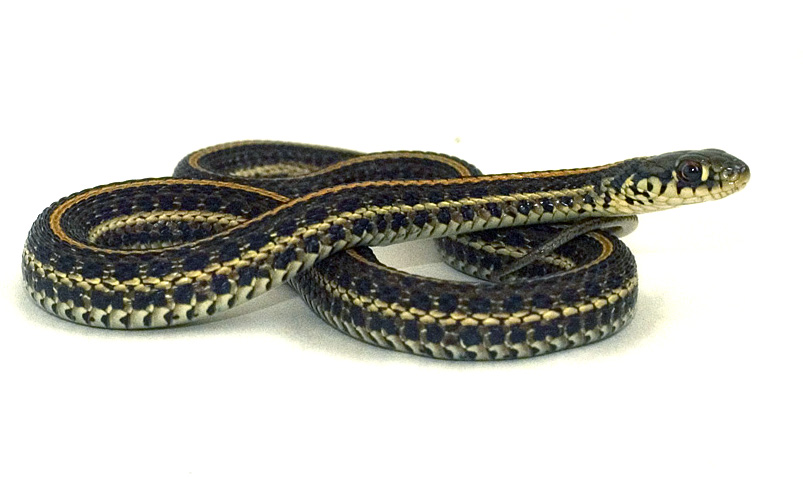
Blackneck Garter Snake

Blackneck Garter Snake

Thamnophis cyrtopsis

Dawson, CC BY-SA 2.5, via Wikimedia Commons

Plains Garter Snake

Plains Garter Snake

Thamnophis radix

Thamnophis, CC BY-SA 3.0, via Wikimedia Commons

Side by side

Blackneck Garter SnakePlains Garter Snake
Scientific nameThamnophis cyrtopsis (Kennicott, 1860)Thamnophis radix (Baird & Girard, 1853)
English nameBlackneck Garter SnakePlains Garter Snake
GroupReptilesReptiles
ClassReptilia ReptileReptilia Reptile
OrderSquamata SnakesSquamata Snakes
FamilyColubridae ColubridColubridae Colubrid
GenusThamnophis Garter SnakeThamnophis Garter Snake
Named in18601853
Red List categoryLeast ConcernLeast Concern
Countries on record4 countries2 countries
GBIF occurrence records9,100 records14,658 records

Rows where the two agree are shown in grey.

Where each is found

Both recorded in 1 country

Only Blackneck Garter Snake (3)

Only Plains Garter Snake (1)

From Catalogue of Life checklists and GBIF occurrence records. A country missing from a list means no record is held, which is not proof of absence.

Checked facts

Blackneck Garter SnakePlains Garter Snake
Appearance
SizeNo checked fact yet
Habitat
  • The species is semi-aquatic and is commonly found near streams and ponds. animaldiversity.org
  • Preferred aquatic habitats include streams in valleys and canyons and shallow rocky pools. animaldiversity.org
  • The species sometimes uses cattle tanks and other artificial containers as water sources when natural water levels recede. animaldiversity.org
  • At night, individuals shelter among exposed stream-bank roots, crevices, rodent holes, and debris. animaldiversity.org
  • Habitats include riparian woodland, pine-oak forests, scrub, desert scrub, dry grasslands, tropical lowlands, and mountainous cloud forests. animaldiversity.org
  • The species occurs at elevations from sea level to 2,700 m. animaldiversity.org
  • The species inhabits meadows and prairies near marshes, streams, and ponds. English Wikipedia
  • It occurs in grasslands near ponds, streams, marshes, and sloughs. animaldiversity.org
  • The species can inhabit swampy areas and riverbanks. animaldiversity.org
  • It can occur in vacant lots in suburban and urban areas. animaldiversity.org
  • In the Chicago area, individuals have been observed in abandoned buildings, trash heaps, and vacant lots. English Wikipedia
  • Individuals may use drier habitats when they occur alongside common garter snakes. animaldiversity.org
  • The species hibernates in burrows and rock crevices. animaldiversity.org
  • Hibernation sites can include rodent burrows, ant mounds, crayfish burrows, and artificial crevices. animaldiversity.org
Diet
  • The species hunts for small fish, amphibians, other snakes, and invertebrates. English Wikipedia
  • Its diet includes earthworms, slugs, and small amphibians. English Wikipedia
  • The species has been recorded eating frogs, toads, salamanders, fish, birds, small rodents, leeches, earthworms, and grasshoppers. animaldiversity.org
  • Its recorded fish prey include mosquitofish, southern redbelly dace, and bluntnose minnows. animaldiversity.org
  • Recorded bird prey include bank swallows and eastern meadowlarks. animaldiversity.org
Behaviour
  • The species is primarily active during daylight, although nighttime activity also occurs. animaldiversity.org
  • When threatened, individuals attempt to escape into nearby cover or water. animaldiversity.org
  • When pursued by predators, individuals flatten and broaden their heads to appear larger. animaldiversity.org
  • When closely threatened or captured, individuals release pungent musk from their anal glands, sometimes accompanied by feces. animaldiversity.org
  • The species is non-venomous and rarely bites with its teeth. animaldiversity.org
  • Individuals hibernate in dens during winter. animaldiversity.org
  • Individuals have been observed returning daily to the same basking locations, typically grassy areas along streams. animaldiversity.org
  • The species is active during the day when temperatures are warm. animaldiversity.org
  • Its daytime activity generally occurs at air temperatures between 21 and 29 degrees Celsius. animaldiversity.org
  • It switches to nighttime activity when air temperatures exceed 31 degrees Celsius. animaldiversity.org
  • Individuals may emerge from hibernation to bask during warm winter days. English Wikipedia
  • The species is active from March to November, depending on its geographic region. animaldiversity.org
  • Individuals are generally solitary except during mating interactions and communal hibernation. animaldiversity.org
  • Individuals may move no more than 76 meters over periods exceeding one year. animaldiversity.org
  • The species uses chemical trails to locate prey, mates, and hibernation sites. animaldiversity.org
  • When threatened, individuals may bite, release foul-smelling musk, or defecate. animaldiversity.org
  • The species is described as mildly venomous, with venom that is not toxic to humans. English Wikipedia
Reproduction
  • The species is ovoviviparous, with internal fertilization and embryonic development supported by nutrient exchange between maternal and embryonic membranes. animaldiversity.org
  • Females generally give birth to live young between June and August. animaldiversity.org
  • A female produces between 3 and 24 offspring per reproductive event. animaldiversity.org
  • The average litter size is eight offspring. animaldiversity.org
  • Females have been observed with enlarged ovarian follicles or developing embryos between March and June. animaldiversity.org
  • The estimated embryonic development period is approximately three months. animaldiversity.org
  • The species generally breeds once yearly after emerging from hibernation. biokids.umich.edu
  • Females typically reach sexual maturity at two to three years of age. biokids.umich.edu
  • Males typically reach sexual maturity at two to three years of age. biokids.umich.edu
  • After mating, males do not participate further in raising their offspring. animaldiversity.org
  • Newborn snakes disperse after birth and have no further association with their mothers. animaldiversity.org
Distribution
  • The species occurs in southern Colorado, southwestern Utah, central and eastern Arizona, New Mexico excluding its far eastern portion, and western and central Texas. animaldiversity.org
  • The species is widespread in Mexico and extends southward to Guatemala. animaldiversity.org
  • The species occurs across the central United States, extending north into Canada and south to Texas. English Wikipedia
  • Its documented Canadian range includes southern Alberta, Saskatchewan, and Manitoba. animaldiversity.org
  • Its documented United States range includes the Oklahoma panhandle, northern Texas, northeastern New Mexico, Minnesota, Wisconsin, and Indiana. animaldiversity.org
  • The species occurs at elevations from 400 to 7,500 feet. English Wikipedia
  • The species generally prefers elevations below 6,000 feet. English Wikipedia
ConservationNo checked fact yet
Similar speciesNo checked fact yet
  • The species shares portions of its habitat with the common garter snake. English Wikipedia
  • The plains garter snake and common garter snake may hybridize where their ranges overlap. English Wikipedia

In brief

Blackneck Garter Snake

The Blackneck Garter Snake is a semi-aquatic snake. It occurs in southern Colorado, southwestern Utah, central and eastern Arizona, New Mexico excluding its far eastern portion, western and central Texas, Mexico, and Guatemala. It has a yellow-to-white dorsal stripe that becomes orange toward the head and separates two black blotches on opposite sides of the neck. Full profile

Plains Garter Snake

Thamnophis radix occurs across the central United States, extending north into Canada and south to Texas. It is distinguished by a yellow or orange stripe running along the middle of its back and distinctive black bars on its lips. Full profile

Compare something else

Page built on 27 November 2026 from the data on the two species pages, where every source is listed.

Cite this page

ScientificNames.org. (2026). Blackneck Garter Snake vs Plains Garter Snake. Retrieved November 27, 2026, from https://scientificnames.org/compare/blackneck-garter-snake-vs-plains-garter-snake