Comparison

Albacore vs Southern Bluefin Tuna

Albacore (Thunnus alalunga) and Southern Bluefin Tuna (Thunnus maccoyii) both belong to the genus Thunnus (tunas) and part ways below it. Both are recorded in 3 countries.

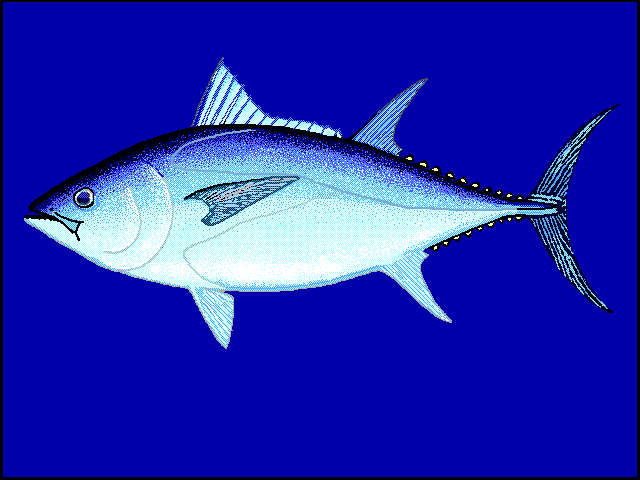
Albacore

Albacore

Thunnus alalunga

Unknown authorUnknown author, Public domain, via Wikimedia Commons

Southern Bluefin Tuna

Southern Bluefin Tuna

Thunnus maccoyii

Unknown author, Public domain, via Wikimedia Commons

Side by side

AlbacoreSouthern Bluefin Tuna
Scientific nameThunnus alalunga (Bonnaterre, 1788)Thunnus maccoyii (Castelnau, 1872)
English nameAlbacoreSouthern Bluefin Tuna
GroupFishesFishes
ClassTeleostei TeleostTeleostei Teleost
OrderScombriformesScombriformes
FamilyScombridae AlbacoresScombridae Albacores
GenusThunnus TunasThunnus Tunas
Named in17881872
Red List categoryLeast ConcernEndangered
Environmentmarinemarine
Countries on record49 countries3 countries
GBIF occurrence records31,432 records2,254 records

Rows where the two agree are shown in grey.

Where each is found

Both recorded in 3 countries

Only Albacore (46)

From Catalogue of Life checklists and GBIF occurrence records. A country missing from a list means no record is held, which is not proof of absence.

Checked facts

AlbacoreSouthern Bluefin Tuna
Appearance
  • The albacore has an elongated, streamlined body with a conical snout, large mouth, and large eyes. English Wikipedia
  • Its first dorsal fin is deep yellow, while its second dorsal and anal fins are light yellow. English Wikipedia
  • The species has 7–9 dorsal finlets and 7–8 anal finlets. English Wikipedia
  • Albacore males and females do not exhibit external sexual dimorphism. English Wikipedia
  • Individuals have very small scales covering their bodies. animaldiversity.org
  • The species has 11 to 14 dorsal spines and 12 to 16 dorsal soft rays. animaldiversity.org
  • Its anal fin has 11 to 16 soft rays and no spines. animaldiversity.org
No checked fact yet
SizeNo checked fact yet
Habitat
  • Albacore inhabit epipelagic and mesopelagic waters at depths ranging from the surface to 600 m. English Wikipedia
  • The species most frequently occupies surface waters with temperatures between 15.6 and 19.4 °C. English Wikipedia
  • Albacore favor marine areas where warm and cool water masses mix. English Wikipedia
  • Large albacore weighing approximately 21 kg typically occupy depths of 0 to 450 m. animaldiversity.org
  • Large individuals have their greatest abundance between 250 and 300 m depth. animaldiversity.org
  • Albacore are pelagic and do not depend on the sea floor for their habitat. animaldiversity.org
Diet
  • Albacore feed on fish, crustaceans, and cephalopods, with cephalopods forming their primary food source. English Wikipedia
  • The deep-water squid Heteroteuthis dispar is the most abundant cephalopod recorded in the albacore diet. English Wikipedia
  • Berryteuthis anonychus is another cephalopod species consumed by albacore. English Wikipedia
  • Recorded fish prey include Cololabis saira, Engraulis japonicus, and Engraulis mordax. English Wikipedia
  • The primary diet includes Pacific saury, northern anchovy, crustacean zooplankton, gonatid squid, and Japanese anchovy. animaldiversity.org
  • Anchovies can account for up to 96% of albacore stomach contents. animaldiversity.org
Behaviour
  • Albacore form migratory schools that can include skipjack, yellowfin, and bluefin tuna. English Wikipedia
  • Schools of albacore are segregated according to maturity, with older individuals forming more compact groups. English Wikipedia
  • Albacore sometimes form schools around floating objects such as sargassum weeds. English Wikipedia
  • Albacore in Baja California frequently dive deeper than 200 m during daylight and remain near the surface at night. English Wikipedia
  • Albacore off Washington and Oregon remain near the surface throughout the day. English Wikipedia
  • Albacore maintain continuous movement because they require a constant supply of oxygen. English Wikipedia
  • Albacore exhibit diel vertical migration, following prey through the water column. animaldiversity.org
  • The species migrates between tropical and cool temperate waters in search of food. English Wikipedia
  • The species undertakes seasonal migrations between Australian coastal waters and the Indian Ocean. English Wikipedia
  • The species swims continuously and at high speeds. English Wikipedia
  • The species maintains its body core temperature up to 10 °C above the surrounding water temperature. English Wikipedia
  • The species uses ram ventilation, moving water over its gills while swimming. English Wikipedia
  • The species obtains water by drinking seawater. English Wikipedia
Reproduction
  • Albacore reproduce by laying eggs that develop and hatch outside the female's body. English Wikipedia
  • Spawning generally occurs between November and February. English Wikipedia
  • A 20 kg female can produce between two and three million eggs per spawning. English Wikipedia
  • Albacore reach reproductive maturity at approximately five to six years of age. English Wikipedia
  • Albacore release their eggs and sperm into the water during group spawning. animaldiversity.org
  • Albacore eggs are fertilized externally and scattered throughout the ocean. animaldiversity.org
  • Albacore provide no parental investment beyond producing gametes and migrating to spawning grounds. animaldiversity.org
No checked fact yet
Distribution
  • Albacore occur in tropical and temperate waters across all oceans and the Mediterranean Sea. English Wikipedia
  • The species' latitudinal distribution extends from 59°N to 46°S. English Wikipedia
No checked fact yet
ConservationNo checked fact yet
  • The species is classified as Endangered by the IUCN according to the first document. English Wikipedia
  • The species' stock is classified as overfished, although overfishing is not currently occurring. pmc.ncbi.nlm.nih.gov
  • The species is managed by the Commission for the Conservation of Southern Bluefin Tuna. pmc.ncbi.nlm.nih.gov
Uses
  • Albacore are commercially harvested and sold fresh, frozen, or canned. animaldiversity.org
  • Albacore is the only tuna species that can be marketed as white meat tuna. English Wikipedia
Similar species
  • Juvenile bigeye tuna are sometimes confused with albacore because both have exceptionally long pectoral fins. animaldiversity.org
  • Juvenile bigeye tuna have rounded pectoral-fin tips, whereas albacore have more pointed tips. animaldiversity.org
No checked fact yet
OtherNo checked fact yet
  • The species has a relatively low minimum population doubling rate, estimated at 4.5–14 years. fishbase.se

In brief

Albacore

Albacore is a fish in the family Scombridae, order Scombriformes, and class Teleostei. It inhabits tropical and temperate waters across all oceans and the Mediterranean Sea. Full profile

Southern Bluefin Tuna

Thunnus maccoyii inhabits open waters of the Southern Hemisphere and is pelagic. It swims continuously and at high speeds. Full profile

Compare something else

Page built on 29 November 2026 from the data on the two species pages, where every source is listed.

Cite this page

ScientificNames.org. (2026). Albacore vs Southern Bluefin Tuna. Retrieved November 29, 2026, from https://scientificnames.org/compare/albacore-vs-southern-bluefin-tuna