Comparison

Southern Bluefin Tuna vs Pacific Bluefin Tuna

Southern Bluefin Tuna (Thunnus maccoyii) and Pacific Bluefin Tuna (Thunnus orientalis) both belong to the genus Thunnus (tunas) and part ways below it. Both are recorded in 2 countries.
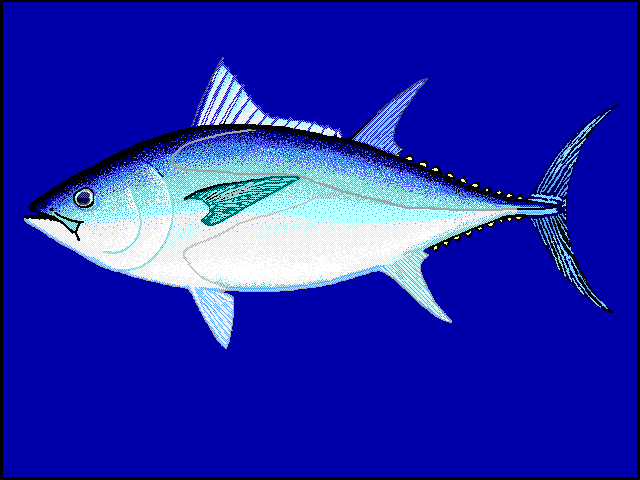
Southern Bluefin Tuna

Southern Bluefin Tuna

Thunnus maccoyii

Unknown author, Public domain, via Wikimedia Commons

Pacific Bluefin Tuna

Pacific Bluefin Tuna

Thunnus orientalis

DataBase Center for Life Science (DBCLS), CC BY 4.0, via Wikimedia Commons

Side by side

Southern Bluefin TunaPacific Bluefin Tuna
Scientific nameThunnus maccoyii (Castelnau, 1872)Thunnus orientalis (Temminck & Schlegel, 1844)
English nameSouthern Bluefin TunaPacific Bluefin Tuna
GroupFishesFishes
ClassTeleostei TeleostTeleostei Teleost
OrderScombriformesScombriformes
FamilyScombridae AlbacoresScombridae Albacores
GenusThunnus TunasThunnus Tunas
Named in18721844
Red List categoryEndangeredNear Threatened
Environmentmarinebrackish, marine
Countries on record3 countries12 countries
GBIF occurrence records2,254 records921 records

Rows where the two agree are shown in grey.

Where each is found

Both recorded in 2 countries

Only Southern Bluefin Tuna (1)

Only Pacific Bluefin Tuna (10)

From Catalogue of Life checklists and GBIF occurrence records. A country missing from a list means no record is held, which is not proof of absence.

Checked facts

Southern Bluefin TunaPacific Bluefin Tuna
AppearanceNo checked fact yet
  • The dorsal surface is black or dark blue with grayish-green iridescence, while the belly has silver or gray spots. animaldiversity.org
  • Small yellow fins edged in black extend from behind the second dorsal fin toward the tail. animaldiversity.org
  • The species has relatively small pectoral fins and eyes compared with other tuna species. animaldiversity.org
  • Its tail is crescent-shaped and lunate. animaldiversity.org
SizeNo checked fact yet
Habitat
Diet
  • The species consumes small schooling squid, including Abraliopsis felis. English Wikipedia
  • Its fish prey include anchovies, jack mackerel, Pacific mackerel, lanternfish, Pacific saury, rockfish and sardines. English Wikipedia
  • The species also consumes pelagic red crabs, krill and Daphnia. English Wikipedia
  • Its diet in the Southern California Bight during 2008 was dominated by midwater lanternfishes and enoploteuthid squids. pmc.ncbi.nlm.nih.gov
  • Between 2009 and 2014, individuals in the Southern California Bight consumed diverse fishes, cephalopods and crustaceans. pmc.ncbi.nlm.nih.gov
  • During 2015–2016, individuals in the Southern California Bight specialized on relatively high-energy schooling prey near the surface, including anchovies and pelagic red crabs. pmc.ncbi.nlm.nih.gov
Behaviour
  • The species migrates between tropical and cool temperate waters in search of food. English Wikipedia
  • The species undertakes seasonal migrations between Australian coastal waters and the Indian Ocean. English Wikipedia
  • The species swims continuously and at high speeds. English Wikipedia
  • The species maintains its body core temperature up to 10 °C above the surrounding water temperature. English Wikipedia
  • The species uses ram ventilation, moving water over its gills while swimming. English Wikipedia
  • The species obtains water by drinking seawater. English Wikipedia
  • The species is an opportunistic predator capable of exploiting diverse food resources. pmc.ncbi.nlm.nih.gov
  • Individuals commonly swim in schools with other tuna species, including Atlantic and southern bluefin tuna. animaldiversity.org
  • Seasonal migration is influenced by changes in water temperature and food availability. animaldiversity.org
  • The species migrates during daylight hours. animaldiversity.org
  • Individuals can tolerate water temperatures as low as 9°C during migration. animaldiversity.org
  • The species is endothermic and can regulate its body temperature. English Wikipedia
  • Individuals can maintain body temperatures up to 20°C above the surrounding water in cold conditions. English Wikipedia
ReproductionNo checked fact yet
  • The species spawns in the northwestern Philippine Sea and the Sea of Japan. English Wikipedia
  • Spawning occurs between April and August, with timing varying by geographic region. English Wikipedia
  • Spawning in the Ryukyu Islands generally occurs between April and July, while spawning in the Sea of Japan occurs between June and August. animaldiversity.org
  • Spawning generally takes place at water temperatures between 23.5 and 29.5°C. animaldiversity.org
  • Fertilization occurs externally. animaldiversity.org
  • The species has separate sexes and exhibits polygynandrous mating. animaldiversity.org
  • Female individuals can produce between 780,000 and 35 million eggs per clutch. animaldiversity.org
  • Eggs generally hatch approximately 38 hours after spawning. animaldiversity.org
  • Young individuals are independent from birth and swim alone or in schools. animaldiversity.org
  • Males and females provide no parental investment beyond mating. animaldiversity.org
  • Sexual maturity typically occurs at approximately five years of age. animaldiversity.org
DistributionNo checked fact yet
  • Some juveniles migrate from the western Pacific to Australia or the western coast of the United States at approximately one year of age. animaldiversity.org
  • The migration from the western coast of the United States to Japan covers approximately 8,000 km. animaldiversity.org
Conservation
  • The species is classified as Endangered by the IUCN according to the first document. English Wikipedia
  • The species' stock is classified as overfished, although overfishing is not currently occurring. pmc.ncbi.nlm.nih.gov
  • The species is managed by the Commission for the Conservation of Southern Bluefin Tuna. pmc.ncbi.nlm.nih.gov
  • The species is currently classified as Near Threatened by the IUCN. English Wikipedia
  • A 2024 stock assessment determined that the population had rebuilt and was no longer overfished or subject to overfishing. English Wikipedia
  • The population increased from approximately 2 percent of historic levels in 2010 to approximately 23 percent in 2020. English Wikipedia
Uses
Other
  • The species has a relatively low minimum population doubling rate, estimated at 4.5–14 years. fishbase.se
No checked fact yet

In brief

Southern Bluefin Tuna

Thunnus maccoyii inhabits open waters of the Southern Hemisphere and is pelagic. It swims continuously and at high speeds. Full profile

Pacific Bluefin Tuna

Thunnus orientalis has a black or dark blue dorsal surface, silver or gray spots on its belly, and a crescent-shaped tail. Full profile

Compare something else

Page built on 29 November 2026 from the data on the two species pages, where every source is listed.

Cite this page

ScientificNames.org. (2026). Southern Bluefin Tuna vs Pacific Bluefin Tuna. Retrieved November 29, 2026, from https://scientificnames.org/compare/southern-bluefin-tuna-vs-pacific-bluefin-tuna