Comparison
Marx Pirate Spider vs Wetland Giant Wolf Spider
Marx Pirate Spider (Trebacosa marxi) and Wetland Giant Wolf Spider (Tigrosa helluo) both belong to the family Lycosidae (wolf spider) and part ways below it. Both are recorded in 2 countries.

Marx Pirate Spider
Trebacosa marxi
James Henry Emerton (1847 – 1931), Public domain, via Wikimedia Commons

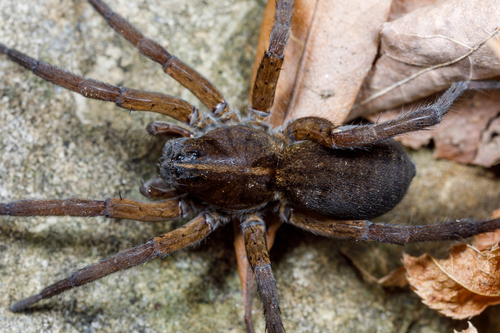
Wetland Giant Wolf Spider
Tigrosa helluo
(c) Meghan Cassidy, some rights reserved (CC BY-SA), uploaded by Meghan Cassidy, CC BY-SA 4.0, via iNaturalist
Side by side
| Marx Pirate Spider | Wetland Giant Wolf Spider | |
|---|---|---|
| Scientific name | Trebacosa marxi (Stone, 1890) | Tigrosa helluo (Walckenaer, 1837) |
| English name | Marx Pirate Spider | Wetland Giant Wolf Spider |
| Group | Spiders and other arachnids | Spiders and other arachnids |
| Class | Arachnida Arachnid | Arachnida Arachnid |
| Order | Araneae Spider | Araneae Spider |
| Family | Lycosidae Wolf Spider | Lycosidae Wolf Spider |
| Genus | Trebacosa | Tigrosa |
| Named in | 1890 | 1837 |
| Countries on record | 2 countries | 3 countries |
| GBIF occurrence records | 63 records | 10,585 records |
Rows where the two agree are shown in grey.
Where each is found
Both recorded in 2 countries
Only Wetland Giant Wolf Spider (1)
From Catalogue of Life checklists and GBIF occurrence records. A country missing from a list means no record is held, which is not proof of absence.
Checked facts
| Marx Pirate Spider | Wetland Giant Wolf Spider | |
|---|---|---|
| Appearance | No checked fact yet |
|
| Size | No checked fact yet |
|
| Habitat | No checked fact yet |
|
| Diet | No checked fact yet |
|
| Behaviour | No checked fact yet |
|
| Reproduction | No checked fact yet |
|
| Distribution |
| No checked fact yet |
| Similar species | No checked fact yet |
|
| Name origin | No checked fact yet |
|
| Other |
|
|
In brief
Marx Pirate Spider
The Marx pirate spider is an arachnid in the wolf spider family Lycosidae. It occurs in the United States and Canada. Full profile
Wetland Giant Wolf Spider
Tigrosa helluo inhabits woods, marshes, fields, and riparian areas, generally preferring wetter environments. It is distinguished by a brown carapace with a yellow stripe extending from the anterior eyes down the cephalothorax and distinct black spots on the underside of its abdomen. Full profile
Compare something else
Page built on 28 November 2026 from the data on the two species pages, where every source is listed.
Cite this page
ScientificNames.org. (2026). Marx Pirate Spider vs Wetland Giant Wolf Spider. Retrieved November 28, 2026, from https://scientificnames.org/compare/marx-pirate-spider-vs-wetland-giant-wolf-spider
“Marx Pirate Spider vs Wetland Giant Wolf Spider.” ScientificNames.org, 2026, scientificnames.org/compare/marx-pirate-spider-vs-wetland-giant-wolf-spider. Accessed 28 Nov. 2026.
ScientificNames.org. “Marx Pirate Spider vs Wetland Giant Wolf Spider.” Accessed November 28, 2026. https://scientificnames.org/compare/marx-pirate-spider-vs-wetland-giant-wolf-spider.
@misc{scientificnames_marx_pirate_spider_vs_wetland_giant_wolf_spider,
  author = {{ScientificNames.org}},
  title = {Marx Pirate Spider vs Wetland Giant Wolf Spider},
  year = {2026},
  url = {https://scientificnames.org/compare/marx-pirate-spider-vs-wetland-giant-wolf-spider},
  note = {Accessed 2026-11-28}
}