Comparison
Fenugreek vs Blue Fenugreek
Fenugreek (Trigonella foenum-graecum) and Blue Fenugreek (Trigonella caerulea) both belong to the genus Trigonella (fenugreek) and part ways below it. Both are recorded in 17 countries.
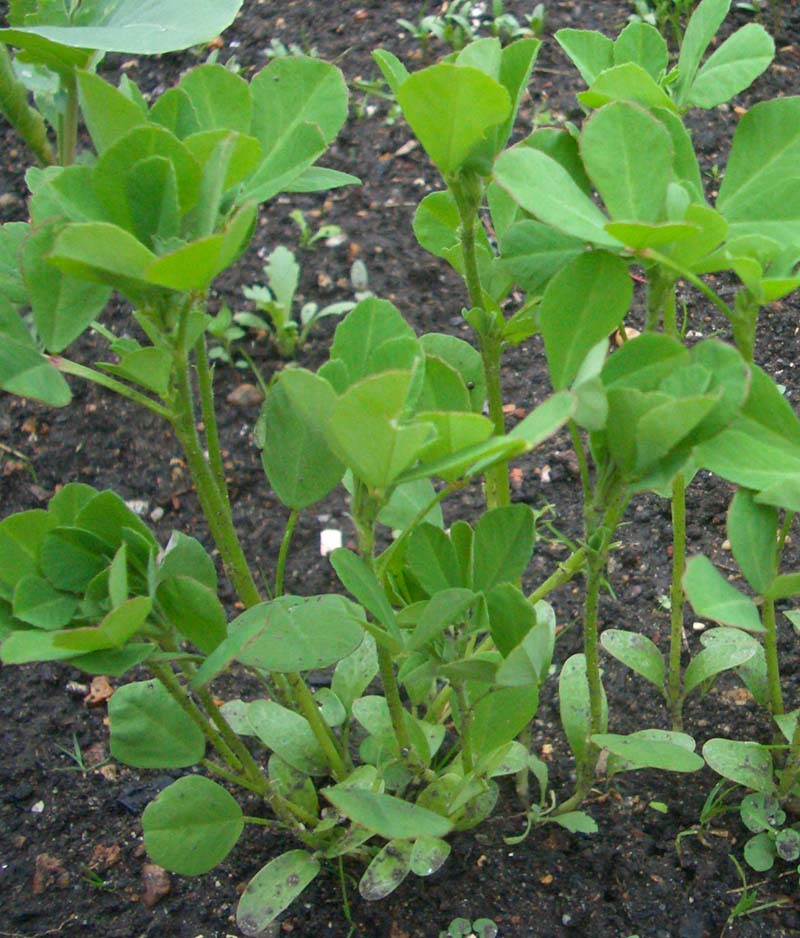


Side by side
| Fenugreek | Blue Fenugreek | |
|---|---|---|
| Scientific name | Trigonella foenum-graecum L. | Trigonella caerulea (L.) Ser. |
| English name | Fenugreek | Blue Fenugreek |
| Group | Flowering plants | Flowering plants |
| Class | Magnoliopsida | Magnoliopsida |
| Order | Fabales | Fabales |
| Family | Fabaceae Bean | Fabaceae Bean |
| Genus | Trigonella Fenugreek | Trigonella Fenugreek |
| Countries on record | 58 countries | 30 countries |
| GBIF occurrence records | 3,750 records | 1,300 records |
Rows where the two agree are shown in grey.
Where each is found
Both recorded in 17 countries
- Austria
- Belgium
- Bulgaria
- China
- France
- Germany
- Greece
- Hungary
- Italy
- Portugal
- Romania
- Russia
- Spain
- Switzerland
- Ukraine
- United Kingdom
- United States
Only Fenugreek (41)
- Afghanistan
- Albania
- Algeria
- Armenia
- Azerbaijan
- Bangladesh
- Cyprus
- Egypt
- Ethiopia
- Fiji
- India
- Iran
- Iraq
- Israel
- Jordan
- Kazakhstan
- Kenya
- Kuwait
- Kyrgyzstan
- Lebanon
- Libya
- Mali
- Morocco
- Mozambique
- Myanmar
- Nepal
- Oman
- Pakistan
- Palestinian Territory
- Saudi Arabia
- South Africa
- Sudan
- Syria
- Tajikistan
- Tanzania
- Tunisia
- Turkey
- Turkmenistan
- Uzbekistan
- Yemen
- Zimbabwe
Only Blue Fenugreek (13)
From Catalogue of Life checklists and GBIF occurrence records. A country missing from a list means no record is held, which is not proof of absence.
Checked facts
| Fenugreek | Blue Fenugreek | |
|---|---|---|
| Appearance |
|
|
| Size |
|
|
| Habitat |
|
|
| Behaviour | No checked fact yet |
|
| Reproduction |
|
|
| Distribution |
|
|
| Uses |
|
|
| Other | No checked fact yet |
|
In brief
Fenugreek
Fenugreek is an insect-pollinated flowering plant. It grows on dry grasslands, cultivated and uncultivated land, hillsides, plains and field edges. It has aromatic growth, trifoliate leaves and white to yellowish-white flowers. Full profile
Blue Fenugreek
Trigonella caerulea occurs in the Alps and the mountains of eastern and southeastern Europe. It has blue flowers arranged in compact, globular racemes and a smell and taste resembling common fenugreek but milder. Full profile
Compare something else
Page built on 27 November 2026 from the data on the two species pages, where every source is listed.
Cite this page
ScientificNames.org. (2026). Fenugreek vs Blue Fenugreek. Retrieved November 27, 2026, from https://scientificnames.org/compare/fenugreek-vs-blue-fenugreek
“Fenugreek vs Blue Fenugreek.” ScientificNames.org, 2026, scientificnames.org/compare/fenugreek-vs-blue-fenugreek. Accessed 27 Nov. 2026.
ScientificNames.org. “Fenugreek vs Blue Fenugreek.” Accessed November 27, 2026. https://scientificnames.org/compare/fenugreek-vs-blue-fenugreek.
@misc{scientificnames_fenugreek_vs_blue_fenugreek,
  author = {{ScientificNames.org}},
  title = {Fenugreek vs Blue Fenugreek},
  year = {2026},
  url = {https://scientificnames.org/compare/fenugreek-vs-blue-fenugreek},
  note = {Accessed 2026-11-27}
}