Comparison

Water Elm vs White Elm

Water Elm (Planera aquatica) and White Elm (Ulmus americana) both belong to the family Ulmaceae (elm family) and part ways below it. Both are recorded in 1 country.

Water Elm

Water Elm

Planera aquatica

François André Michaux (book author), Augustus Lucas Hillhouse (translator), Henri-Joseph Redouté (illustrator), Gabriel (engraver), Nonenmac (eraser), Public domain, via Wikimedia Commons
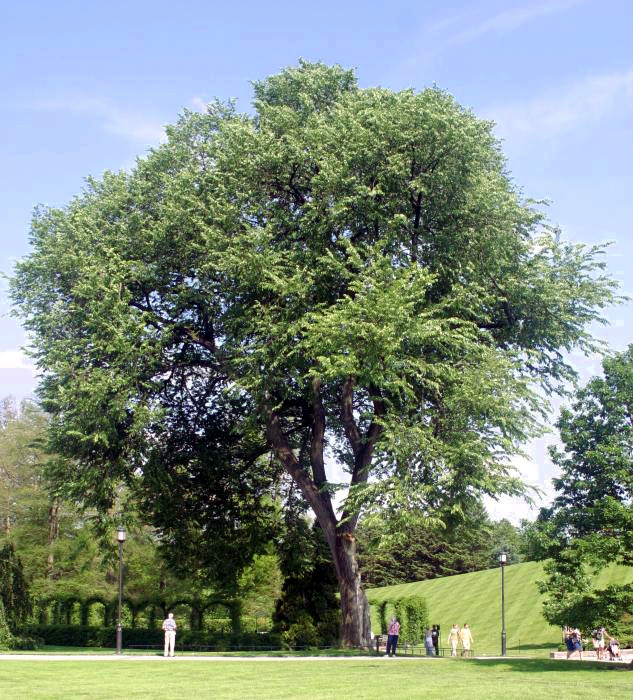
White Elm

White Elm

Ulmus americana

User Henryhartley on en.wikipedia, CC BY-SA 3.0, via Wikimedia Commons

Side by side

Water ElmWhite Elm
Scientific namePlanera aquatica J.F.Gmel.Ulmus americana L.
English nameWater ElmWhite Elm
GroupFlowering plantsFlowering plants
ClassMagnoliopsidaMagnoliopsida
OrderRosalesRosales
FamilyUlmaceae Elm FamilyUlmaceae Elm Family
GenusPlanera Water ElmsUlmus Elm
Red List categoryLeast ConcernEndangered
Countries on record1 country3 countries
GBIF occurrence records2,369 records52,846 records

Rows where the two agree are shown in grey.

Where each is found

Both recorded in 1 country

Only White Elm (2)

From Catalogue of Life checklists and GBIF occurrence records. A country missing from a list means no record is held, which is not proof of absence.

Checked facts

Water ElmWhite Elm
Appearance
  • Ulmus americana is a deciduous tree with a high, spreading, umbrella-shaped canopy. English Wikipedia
  • The leaves are alternately arranged and have double-serrated margins and an oblique base. English Wikipedia
  • The leaves turn yellow during autumn. English Wikipedia
  • The flowers are small, purple-brown, petal-less and wind-pollinated. English Wikipedia
  • The flowers emerge in early spring before the leaves. English Wikipedia
  • The fruit is a flattened samara with a circular papery wing surrounding one seed. English Wikipedia
SizeNo checked fact yet
Habitat
  • The species typically occurs on alluvial floodplains exposed to seasonal or temporary flooding. English Wikipedia
  • It is often found in swamps, streams, lakes, and riparian areas. English Wikipedia
  • It prefers moist sandy or gravelly soils. English Wikipedia
  • The species is classified as an obligate wetland plant. English Wikipedia
  • The species is associated with the waters of streams and lakes and with floodplains. warcapps.usgs.gov
  • The species commonly grows in rich bottomlands, floodplains, stream banks and swampy ground. English Wikipedia
  • The species also grows on hillsides, uplands and well-drained soils. English Wikipedia
  • In the Appalachian Mountains, the species is most frequently found alongside rivers. English Wikipedia
  • American elm commonly occurs in bottomlands with rich, productive alluvial soils. ufi.mgcafe.uky.edu
  • The species can also grow in moist upland soils and abandoned pastureland. ufi.mgcafe.uky.edu
  • American elm can tolerate inundation for several weeks during the growing season and several months during dormancy. ufi.mgcafe.uky.edu
DietNo checked fact yet
BehaviourNo checked fact yet
  • American elm can continue growing into autumn until frost causes injury. English Wikipedia
ReproductionNo checked fact yet
  • The flowers are protogynous, with female reproductive parts maturing before male parts. English Wikipedia
  • The species produces wind-dispersed seeds that can spread rapidly into newly suitable habitats. English Wikipedia
  • The seeds generally germinate immediately after fruiting without requiring cold stratification. English Wikipedia
  • American elm can reach reproductive maturity and produce seeds by approximately ten years of age. ufi.mgcafe.uky.edu
  • The species produces large quantities of lightweight, single-seeded samaras that are dispersed by wind. ufi.mgcafe.uky.edu
  • American elm flowers approximately two to three weeks before leaf emergence in mid-March. ufi.mgcafe.uky.edu
  • The samaras generally appear in April and disperse within a few weeks. ufi.mgcafe.uky.edu
  • American elm begins producing a good seed crop before reaching twenty years of age. ufi.mgcafe.uky.edu
Conservation
  • The American elm population was severely reduced by Dutch elm disease beginning in the 1920s. English Wikipedia
  • American elm is susceptible to Dutch elm disease and elm yellows. English Wikipedia
  • Approximately one in every 100,000 American elm trees is estimated to tolerate Dutch elm disease. English Wikipedia
  • American elm trees in natural forest areas have been less affected by Dutch elm disease than those in urban environments. English Wikipedia
UsesNo checked fact yet
  • American elm was widely planted as a street and park tree because of its rapid growth, graceful form and tolerance of urban conditions. English Wikipedia
  • American elm wood has been used to manufacture hoops, barrel staves, boat keels and steam-bent furniture. ufi.mgcafe.uky.edu
  • Before European settlement, Native Americans used American elm trees as council trees marking significant tribal gatherings. ufi.mgcafe.uky.edu
Similar species
  • Planera aquatica is closely related to trees in the genus Ulmus but is not a true elm. English Wikipedia
  • The species can be distinguished from true elms by its drupe fruits rather than samaras. English Wikipedia
  • Its flaky bark distinguishes it from true elms when fruits are absent. English Wikipedia
  • Water elm can also be confused with hackberries, but its leaves lack their pronounced lower lateral veins. English Wikipedia
No checked fact yet

In brief

Water Elm

Planera aquatica occurs on alluvial floodplains and in swamps, streams, lakes, and riparian areas. It has flaky bark and drupe fruits rather than the samaras of true elms. Full profile

White Elm

The small, purple-brown flowers are petal-less and wind-pollinated. Full profile

Compare something else

Page built on 29 November 2026 from the data on the two species pages, where every source is listed.

Cite this page

ScientificNames.org. (2026). Water Elm vs White Elm. Retrieved November 29, 2026, from https://scientificnames.org/compare/water-elm-vs-white-elm