Comparison
White Mulberry vs King White Mulberry
White Mulberry (Morus alba) and King White Mulberry (Morus macroura) both belong to the genus Morus (mulberry) and part ways below it. Both are recorded in 12 countries.

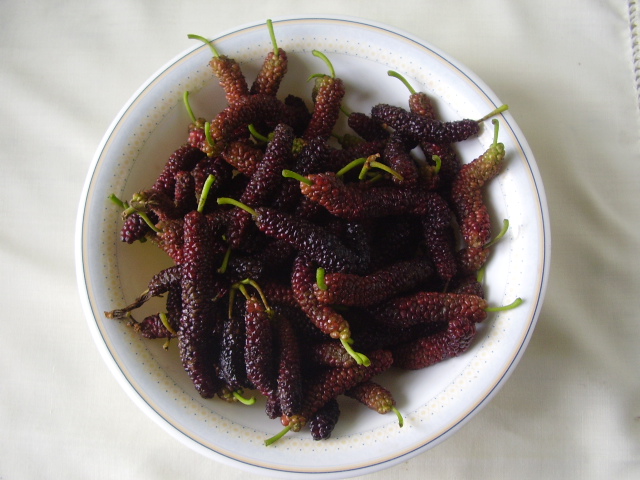


Side by side
| White Mulberry | King White Mulberry | |
|---|---|---|
| Scientific name | Morus alba L. | Morus macroura Miq. |
| English name | White Mulberry | King White Mulberry |
| Group | Flowering plants | Flowering plants |
| Class | Magnoliopsida | Magnoliopsida |
| Order | Rosales | Rosales |
| Family | Moraceae Mulberry Family | Moraceae Mulberry Family |
| Genus | Morus Mulberry | Morus Mulberry |
| Red List category | Not recorded | Least Concern |
| Countries on record | 133 countries | 14 countries |
| GBIF occurrence records | 50,995 records | 384 records |
Rows where the two agree are shown in grey.
Where each is found
Both recorded in 12 countries
Only White Mulberry (121)
- Afghanistan
- Albania
- Algeria
- Andorra
- Argentina
- Armenia
- Australia
- Austria
- Azerbaijan
- Belarus
- Belgium
- Bolivia
- Bosnia and Herzegovina
- Brazil
- Bulgaria
- Cameroon
- Canada
- Central African Republic
- Chile
- Colombia
- Cook Islands
- Costa Rica
- Croatia
- Cuba
- Cyprus
- Czechia
- Democratic Republic of the Congo
- Denmark
- Dominican Republic
- Ecuador
- Egypt
- El Salvador
- Estonia
- Eswatini
- Ethiopia
- France
- French Polynesia
- Gambia
- Georgia
- Germany
- Greece
- Guam
- Guatemala
- Haiti
- Honduras
- Hong Kong
- Hungary
- Iran
- Iraq
- Ireland
- Israel
- Italy
- Japan
- Jordan
- Kazakhstan
- Kosovo
- Kyrgyzstan
- Latvia
- Lebanon
- Libya
- Luxembourg
- Macao
- Madagascar
- Malawi
- Malta
- Mauritius
- Mayotte
- Mexico
- Moldova
- Montenegro
- Morocco
- Mozambique
- Namibia
- New Caledonia
- New Zealand
- Nicaragua
- North Korea
- North Macedonia
- Oman
- Palestinian Territory
- Paraguay
- Peru
- Philippines
- Poland
- Portugal
- Puerto Rico
- Reunion
- Romania
- Russia
- Rwanda
- San Marino
- Saudi Arabia
- Serbia
- Seychelles
- Singapore
- Slovakia
- Slovenia
- South Africa
- South Korea
- South Sudan
- Spain
- Sri Lanka
- Sudan
- Sweden
- Switzerland
- Syria
- Tajikistan
- Tanzania
- The Netherlands
- Tonga
- Tunisia
- Turkey
- Turkmenistan
- Ukraine
- United Kingdom
- United States
- Uruguay
- Uzbekistan
- Vanuatu
- Venezuela
- Zambia
Only King White Mulberry (2)
From Catalogue of Life checklists and GBIF occurrence records. A country missing from a list means no record is held, which is not proof of absence.
Checked facts
| White Mulberry | King White Mulberry | |
|---|---|---|
| Appearance |
|
|
| Size |
| No checked fact yet |
| Habitat |
| No checked fact yet |
| Behaviour |
| No checked fact yet |
| Reproduction |
| No checked fact yet |
| Distribution |
|
|
| Uses |
| No checked fact yet |
| Similar species |
| No checked fact yet |
In brief
White Mulberry
Morus alba is cultivated for silkworm food and has variable foliage, separate male and female catkins, and sweet fruits. Full profile
King White Mulberry
Morus macroura is native to the Himalayas, Tibet, southern China, the rain forests of Indochina, and mountainous areas of Sumatra and Java in Indonesia. It is a medium-sized tree with a spreading canopy and a weeping growth habit, producing ripe fruits that can be white, pink, or red. Full profile
Compare something else
Page built on 27 November 2026 from the data on the two species pages, where every source is listed.
Cite this page
ScientificNames.org. (2026). White Mulberry vs King White Mulberry. Retrieved November 27, 2026, from https://scientificnames.org/compare/white-mulberry-vs-king-white-mulberry
“White Mulberry vs King White Mulberry.” ScientificNames.org, 2026, scientificnames.org/compare/white-mulberry-vs-king-white-mulberry. Accessed 27 Nov. 2026.
ScientificNames.org. “White Mulberry vs King White Mulberry.” Accessed November 27, 2026. https://scientificnames.org/compare/white-mulberry-vs-king-white-mulberry.
@misc{scientificnames_white_mulberry_vs_king_white_mulberry,
  author = {{ScientificNames.org}},
  title = {White Mulberry vs King White Mulberry},
  year = {2026},
  url = {https://scientificnames.org/compare/white-mulberry-vs-king-white-mulberry},
  note = {Accessed 2026-11-27}
}