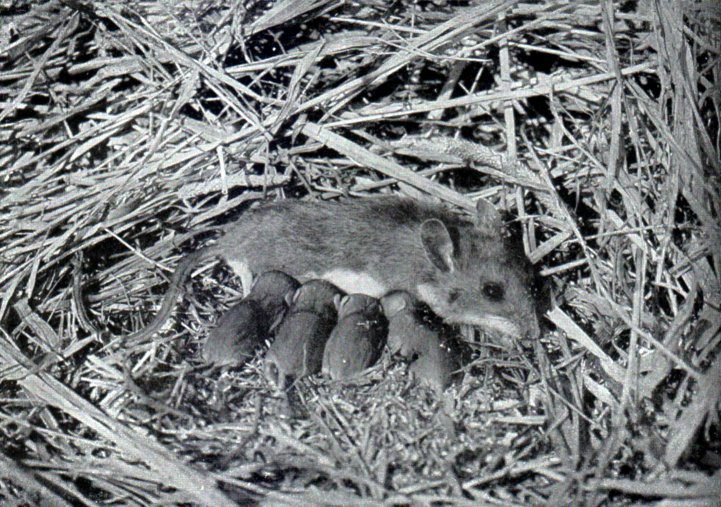
| Appearance | - Northern populations have light-brownish-yellow to pale orange-brown dorsal fur and yellow-white ventral fur. animaldiversity.org
- Southern populations, particularly in Campeche, have gray-brown dorsal fur transitioning to brown ochre on the sides and yellow-white ventral fur. animaldiversity.org
- Individuals throughout the Yucatan Peninsula have dusky hairs. animaldiversity.org
- The subspecies Peromyscus yucatanicus yucatanicus has ochre-colored fur, whereas P. y. badius has darker brown dorsal fur. animaldiversity.org
- Both recognized subspecies have white bellies and white feet extending from the wrists and ankles to the toes. animaldiversity.org
- Juveniles have gray coats that are replaced by dusky dorsal and pale gray-yellow ventral subadult coats. animaldiversity.org
- Adult individuals have brighter brownish-yellow fur on their sides and dorsum and yellowish-white ventral fur. animaldiversity.org
- The tail is bicolored and nearly hairless, with a dusky grayish dorsal surface and yellow underside. animaldiversity.org
- The ears are large, brown, and hairless. animaldiversity.org
- The species has narrow eyes surrounded by a dark orbital ring. animaldiversity.org
- Its braincase is long and narrow, while its auditory bullae and teeth are relatively small. animaldiversity.org
- The species possesses a moderately developed supraorbital ridge that distinguishes it from other members of Peromyscus. animaldiversity.org
| - The upperparts of this species range from pale to rich reddish brown, while its underside and feet are white. animaldiversity.org
- Its tail is darker on the upper surface and lighter underneath. biokids.umich.edu
|
|---|
| Size | No checked fact yet | |
|---|
| Habitat | - The species inhabits semi-deciduous forests, evergreen forests, humid rainforests, and secondary growth forests. animaldiversity.org
- The species also inhabits banana plantations and cornfields on the Yucatan Peninsula. animaldiversity.org
- The species has been recorded at elevations from sea level to 500 m. animaldiversity.org
- Individuals primarily live on the ground and seek shelter near fallen logs, thick brush, low branches, and dense grass. animaldiversity.org
- The Petenes mangroves ecoregion of the Yucatan is an example of the species' habitat. English Wikipedia
| - This species is most frequently encountered in warm, dry forests and brushlands at low and intermediate elevations. animaldiversity.org
- It can inhabit environments ranging from high-elevation forests to semi-desert landscapes. animaldiversity.org
- It also occupies suburban and agricultural environments. biokids.umich.edu
- In the southern and western portions of its range, this species mainly inhabits wooded areas and semi-desert scrub near waterways. animaldiversity.org
- In southern Mexico, this species is primarily associated with agricultural environments. biokids.umich.edu
- It constructs nests in warm, dry locations such as hollow trees and abandoned bird nests. animaldiversity.org
|
|---|
| Diet | No checked fact yet | - This species is omnivorous and consumes seeds, berries, nuts, insects, grains, fruits, and fungi. biokids.umich.edu
- Its diet includes seeds, nuts, fruits, berries, and insects. tn.gov
- It consumes the pupal stage of invasive gypsy moths. English Wikipedia
- It gathers and stores seeds and nuts during autumn for consumption during winter. biokids.umich.edu
|
|---|
| Behaviour | | - This species is primarily active during nighttime. animaldiversity.org
- Individuals are generally solitary and territorial, although neighboring home ranges can overlap. animaldiversity.org
- Its home ranges generally cover between 0.5 and 1.5 acres. biokids.umich.edu
- Its population density can range from 4 to 12 individuals per acre. animaldiversity.org
- Individuals are capable of climbing and swimming effectively. animaldiversity.org
- Captured individuals have demonstrated the ability to return to their original capture location after being released two miles away. animaldiversity.org
- Individuals produce a prolonged buzzing sound by striking hollow reeds or dry leaves with their forepaws. biokids.umich.edu
- Females transport threatened offspring individually by holding them around the neck with their teeth. biokids.umich.edu
|
|---|
| Reproduction | - The species breeds throughout the year in the wild at lower latitudes. animaldiversity.org
- Reproductive activity is greatest during the wet season from June through September. animaldiversity.org
- The species is viviparous and gives birth to live offspring. animaldiversity.org
- Typical litter sizes range from one to three offspring, but can reach five in older and larger-bodied females. animaldiversity.org
- The average gestation period from initial copulation to birth is 30 days. animaldiversity.org
- Gestation lasts 31–33 days in females that are already lactating. animaldiversity.org
- Female individuals reach sexual maturity at an average age of 51.5 days. animaldiversity.org
- Males reach the stage of maximum scrotal development at an average age of 74.4 days. animaldiversity.org
| |
|---|
| Distribution | No checked fact yet | - This species occurs across much of eastern North America, extending from Nova Scotia westward to Saskatchewan and Montana. animaldiversity.org
- Its geographical range extends southward into eastern and southern Mexico and the Yucatan Peninsula. biokids.umich.edu
|
|---|
| Conservation | - The species was assessed as Least Concern on the IUCN Red List in 2016. iucnredlist.org
| |
|---|
| Uses | No checked fact yet | - This species contributes to controlling populations of insect pests such as gypsy moths. animaldiversity.org
- It serves as an important prey species for numerous small predators. maine.gov
- It is commonly used as a laboratory animal, ranking among the most frequently used mouse species after the house mouse. English Wikipedia
- Domesticated individuals are also maintained as pets and have been selectively bred for different coat colors. English Wikipedia
|
|---|
| Similar species | No checked fact yet | - The eastern deer mouse (Peromyscus maniculatus) is a similar species. English Wikipedia
- Other closely related species that can be difficult to distinguish from it include Peromyscus maniculatus, P. eremicus, P. polionotus, and P. gossypinus. animaldiversity.org
|
|---|