Comparison

Western Jumping Mouse vs Baluchistan Pygmy Jerboa

Western Jumping Mouse (Zapus princeps) and Baluchistan Pygmy Jerboa (Salpingotulus michaelis) both belong to the family Dipodidae (jerboa) and part ways below it.
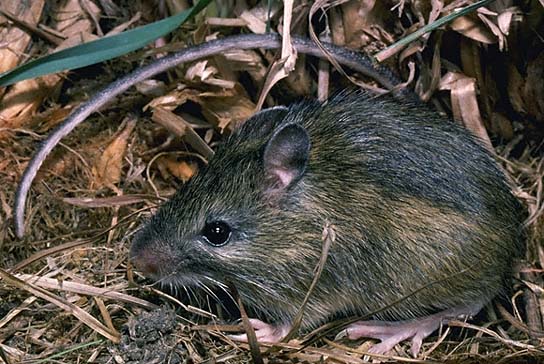
Western Jumping Mouse

Western Jumping Mouse

Zapus princeps

US Forest Service, Public domain, via Wikimedia Commons

Baluchistan Pygmy Jerboa

Baluchistan Pygmy Jerboa

Salpingotulus michaelis

awaytrent, CC BY 3.0, via Wikimedia Commons

Side by side

Western Jumping MouseBaluchistan Pygmy Jerboa
Scientific nameZapus princeps J. A. Allen, 1893Salpingotulus michaelis (Fitzgibbon, 1966)
English nameWestern Jumping MouseBaluchistan Pygmy Jerboa
GroupMammalsMammals
ClassMammalia MammalMammalia Mammal
OrderRodentia RodentRodentia Rodent
FamilyDipodidae JerboaDipodidae Jerboa
GenusZapus Jumping MiceSalpingotulus
Named in18931966
Red List categoryLeast ConcernData Deficient
Countries on record2 countries1 country
GBIF occurrence records10,784 records81 records

Rows where the two agree are shown in grey.

Where each is found

Only Western Jumping Mouse (2)

Only Baluchistan Pygmy Jerboa (1)

From Catalogue of Life checklists and GBIF occurrence records. A country missing from a list means no record is held, which is not proof of absence.

Checked facts

Western Jumping MouseBaluchistan Pygmy Jerboa
Appearance
  • The western jumping mouse has coarse, dark-greyish-brown fur on its upper body, a broad yellow-to-red band along its flanks, and pale yellowish-white underparts. English Wikipedia
  • The species has elongated hind feet and reduced forelimbs. English Wikipedia
  • Some individuals have white spots on their upper body or tail tip. English Wikipedia
  • Males and females are similar in appearance and size. English Wikipedia
  • The species has a dark dorsal band, yellow sides, and a usually white belly that may have a yellow tinge. animaldiversity.org
Size
Habitat
  • The species inhabits mountainous terrain with moderately damp climates. English Wikipedia
  • The species occurs in meadows and forests dominated by alder, aspen, or willow. English Wikipedia
  • Individuals are commonly found in dense vegetation near fresh water. English Wikipedia
  • The species inhabits moist fields, thickets, and woodlands with dense grass, sedge, or other green plant cover. animaldiversity.org
  • Individuals are usually found within 50 metres of streams, ponds, or lakes. animaldiversity.org
  • Individuals live in self-dug burrows or burrows made by other animals. animaldiversity.org
Diet
  • The species is omnivorous, with grass and herb seeds forming the largest part of its diet. English Wikipedia
  • Other food items include fruits, fungi, and insects. English Wikipedia
  • The main foods consumed include arthropods, seeds, and leaves. animaldiversity.org
  • Arthropods may replace seeds as an important food source when seeds are unavailable. animaldiversity.org
  • The species is mostly herbivorous and eats seeds, fruit, and occasionally insects. swap.dgf.nm.gov
Behaviour
  • The species is primarily nocturnal but may also forage during daylight. animaldiversity.org
  • Individuals are active during summer and hibernate during the remainder of the year. English Wikipedia
  • In some locations, individuals spend eight to ten months annually in hibernation. English Wikipedia
  • During hibernation, individuals rely entirely on stored body fat rather than cached food. English Wikipedia
  • During hibernation, individuals wake on average once every 38 days. English Wikipedia
  • Individuals generally enter their dens after the first snowfall if they have not entered earlier. English Wikipedia
  • Individuals emerge from hibernation when ground temperatures reach approximately 8–9.5 °C. English Wikipedia
  • When alarmed, individuals drum their tails against the ground. animaldiversity.org
  • When startled, individuals can escape through a series of jumps measuring 90–150 cm. animaldiversity.org
  • Individuals can swim and climb. animaldiversity.org
  • Individuals tend to use existing runways made by other animals. animaldiversity.org
  • Fat deposition begins approximately one month before hibernation. animaldiversity.org
  • The species is nocturnal. English Wikipedia
  • Individuals travel through their dry desert habitat by making long hops. English Wikipedia
  • Individuals use their tails for balance while hopping. English Wikipedia
  • Individuals live in burrows generally excavated beneath small bushes. English Wikipedia
  • The species undergoes daily physiological dormancy during which respiration and blood circulation slow considerably. English Wikipedia
  • Facultative hypothermia enables the species to survive on food with low nutritional value. English Wikipedia
Reproduction
Distribution
  • The species occurs in western North America from Yukon to New Mexico. English Wikipedia
  • The species occurs throughout western Canada and much of the western United States. animaldiversity.org
Conservation
  • The species is classified as less vulnerable to climate change under both RCP 4.5 and RCP 8.5 scenarios in the New Mexico assessment. swap.dgf.nm.gov
No checked fact yet
Uses
  • The species is an important component of healthy grass-dominated habitats throughout its range. animaldiversity.org
No checked fact yet
Similar speciesNo checked fact yet
  • The species is also known by the English common name dwarf three-toed jerboa. English Wikipedia
  • The species is also known as the dwarf three-toed jerboa. inaturalist.org
OtherNo checked fact yet

In brief

Western Jumping Mouse

Zapus princeps occurs in western North America from Yukon to New Mexico. It has elongated hind feet, reduced forelimbs, dark upper fur, yellow sides, and pale underparts. Full profile

Baluchistan Pygmy Jerboa

The Baluchistan Pygmy Jerboa is a mammal in the rodent family Dipodidae and the sole member of the genus Salpingotulus. The species is currently considered endemic to Pakistan. It has an average adult head and body length of 4.3 cm and an average adult tail length of 8 cm. Full profile

Compare something else

Page built on 26 November 2026 from the data on the two species pages, where every source is listed.

Cite this page

ScientificNames.org. (2026). Western Jumping Mouse vs Baluchistan Pygmy Jerboa. Retrieved November 26, 2026, from https://scientificnames.org/compare/western-jumping-mouse-vs-baluchistan-pygmy-jerboa