Species · Flowering plants
Chinese Angelica Angelica sinensis
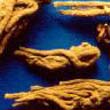
The scientific name of the Chinese Angelica is Angelica sinensis. It is a species of flowering plant in the family Apiaceae (umbellifer), order Apiales.
- Scientific name
- Angelica sinensis (Oliv.) Diels
- Common name
- Chinese Angelica
- Genus
- Angelica
- Family
- Apiaceae (Umbellifer)
- Order
- Apiales
- Class
- Magnoliopsida
- Recorded in
- 3 countries
- Name status
- accepted in the Catalogue of Life
Overview
The species naturally grows in cool, high-altitude mountains in East Asia and occurs naturally in the Chinese provinces of Gansu, Hubei, Shaanxi, Sichuan, and Yunnan.
Written 26 November 2026 from the sources listed below. Each statement was checked against the passage it cites; statements that could not be supported were removed.
Habitat
Chinese angelica naturally grows in cool, high-altitude mountainous regions in East Asia. It can be cultivated at elevations between 1,500 and 3,000 metres.[1][2][3]
The species naturally occurs in the Chinese provinces of Gansu, Hubei, Shaanxi, Sichuan, and Yunnan. It is cultivated in Qinghai, Gansu, Sichuan, and Yunnan.[4][5]
Uses
The roots have been investigated for antioxidant activities, anti-inflammatory effects, potential anticancer activities, potential treatment of diabetes mellitus, and relationships to Alzheimer's disease. There is no scientific evidence establishing the effectiveness of the species for medicinal purposes.[6][7][8][9][10][11]
The species has traditionally been used with the belief that it benefits cardiovascular conditions.[12]
Classification of the Chinese Angelica
| Kingdom | Plantae |
|---|---|
| Subkingdom | Pteridobiotina |
| Phylum | Tracheophyta |
| Class | Magnoliopsida |
| Order | Apiales |
| Family | Apiaceae (Umbellifer) |
| Subfamily | Apioideae |
| Tribe | Selineae |
| Subtribe | Angelicinae |
| Genus | Angelica (Angelicas) |
| Species | Angelica sinensis (Oliv.) Diels |
Where the Chinese Angelica is found
Checklists and occurrence records place Angelica sinensis in 3 countries across Asia. GBIF holds 343 georeferenced records of it.
Countries
Regions and cities with the most records
- Sichuan, China 94
- Gansu, China 65
- Hubei, China 30
- Chongqing, China 26
- Yunnan, China 24
- Tanchang Chengguanzhen, China 22
- Gecheng, China 12
- Shaanxi, China 12
- Songbai, China 12
- Enshi, China 9
- Longfeng, China 9
- Guandu, China 8
- Liangping, China 8
- Longjing, China 8
- Shuanglong, China 8
- Wushan, China 8
- Dachang, China 7
- Wenxian Chengguanzhen, China 6
- Barkam, China 5
- Huangshan, China 5
- Lijiang, China 5
- Anhua, China 4
- Chengjiao, China 4
- Dongjiang, China 4
- Hanwang, China 4
- Liangshui, China 4
- Longnan, China 4
- Majie, China 4
- Puchi, China 4
- Guangxi, China 3
- Guizhou, China 2
- Henan, China 2
- Anhui, China
- Guangdong, China
- Heilongjiang, China
1 more country has a few records outside this range
These countries hold a few records of Angelica sinensis but lie outside the range the checklists give for it. Such records are often zoo or garden specimens, museum material or vagrants, so the species is not counted as occurring there.
Range as the checklists state it
China (Gansu, Hubei, Shaanxi, Sichuan, Yunnan, Heilongjiang, Henan, Anhui, Guizhou, Guangxi, Guangdong); Vietnam
A number beside a place is its count of GBIF occurrence records. A place without a number comes from a checklist alone. Records show where a species has been observed or collected, which can include escapes and vagrants.
Common names
English
- Chinese Angelica
Names in 7 other languages
- Chinese
- dang qui, 當歸
- Dutch
- Dong quai
- Finnish
- kiinankarhunputki
- German
- Chinesische Engelwurz
- Japanese
- ホントウキ
- Slovak
- angelika čínska
- Swedish
- kinakvanne
Synonyms
One other scientific name has been used for this species and is now treated as a synonym of Angelica sinensis.
- Angelica polymorpha var. sinensis Oliv.
Subspecies and varieties
- Angelica sinensis var. sinensis variety
Related species
-
 AngelicaAngelica archangelica
-
 Dahurian AngelicaAngelica dahurica
-
 Korean AngelicaAngelica gigas
-
 Wild AngelicaAngelica sylvestris
-
 American AngelicaAngelica atropurpurea
-
 Acutelobed AngelicaAngelica acutiloba
-
 Seabeach AngelicaAngelica lucida
- Smooth AngelicaAngelica glauca
Compare
Questions and answers
What is the scientific name of the Chinese Angelica?
The scientific name of the Chinese Angelica is Angelica sinensis. Written with its author, the full name is Angelica sinensis (Oliv.) Diels.
Which family does the Chinese Angelica belong to?
Angelica sinensis belongs to the family Apiaceae, in the order Apiales and the class Magnoliopsida.
Where is the Chinese Angelica found?
Checklists and occurrence records place Angelica sinensis in 3 countries: China, Japan and Vietnam.
What does Angelica sinensis do for the body?
Traditional Chinese medicine attributes blood-nourishing effects and menstrual regulation to the roots of Chinese angelica. The roots are also used for constipation and abdominal pain. There is no scientific evidence establishing the effectiveness of the species for medicinal purposes.[13][14][15][11]
Sources
Passages the profile rests on
- The species can be cultivated at elevations between 1,500 and 3,000 metres. Source passage: “can be cultivated at elevations of 1,500 to 3,000 metres (5,000–10,000 ft).” — English Wikipedia
- The species naturally grows in cool, high-altitude mountainous regions. Source passage: “Angelica sinensis naturally grows in cool, high-altitude mountainous regions between 2500 m and 3000 m” — pmc.ncbi.nlm.nih.gov
- The species grows in cool, high-altitude mountains in East Asia. Source passage: “A. sinensis grows in cool high altitude mountains in East Asia.” — English Wikipedia
- The species naturally occurs in the Chinese provinces of Gansu, Hubei, Shaanxi, Sichuan, and Yunnan. Source passage: “in Gansu, Hubei, Shaanxi, Sichuan and Yunnan Provinces” — pmc.ncbi.nlm.nih.gov
- The species is cultivated in the Chinese provinces of Qinghai, Gansu, Sichuan, and Yunnan. Source passage: “It is cultivated in several provinces of China, namely Qinghai, Gansu, Sichuan and Yunnan” — pmc.ncbi.nlm.nih.gov
- The species' roots have been investigated for antioxidant activities. Source passage: “Antioxidant activities [14,17,18]” — pmc.ncbi.nlm.nih.gov
- The species' roots have been investigated for anti-inflammatory effects. Source passage: “Anti-inflammatory effects [17,18,19]” — pmc.ncbi.nlm.nih.gov
- The species' roots have been investigated for potential anticancer activities. Source passage: “Anticancer activities [15,16]” — pmc.ncbi.nlm.nih.gov
- The species' roots have been investigated as a potential treatment for diabetes mellitus. Source passage: “Potential treatment of diabetes mellitus [1,20]” — pmc.ncbi.nlm.nih.gov
- The species' roots have been investigated in relation to Alzheimer's disease. Source passage: “Alzheimer’s disease [18,21,22,23]” — pmc.ncbi.nlm.nih.gov
- There is no scientific evidence establishing the effectiveness of the species for medicinal purposes. Source passage: “There is no scientific evidence that A. sinensis is effective for any medicinal purpose.” — English Wikipedia
- The species has traditionally been used with the belief that it benefits cardiovascular conditions. Source passage: “is widely used in Chinese traditional medicine in the belief it benefits women's health, cardiovascular conditions” — English Wikipedia
- Traditional Chinese medicine attributes menstrual regulation to the species' roots. Source passage: “Regulates the menses; Menstrual disorders like irregular menstruation, amenorrhea and dysmenorrhea” — pmc.ncbi.nlm.nih.gov
- Traditional Chinese medicine uses the species' roots for constipation and abdominal pain. Source passage: “Constipation, abdominal pain” — pmc.ncbi.nlm.nih.gov
- Traditional Chinese medicine attributes blood-nourishing effects to the species' roots. Source passage: “Strengthens and invigorates the blood, tonifies the blood” — pmc.ncbi.nlm.nih.gov
Data
- Catalogue of Life, 2026-10-16 XR cc by
- Global Biodiversity Information Facility CC BY 4.0
- Wikidata CC0
- GeoNames CC BY 4.0
- Wikimedia Commons per image; credit shown with each image
- Within the Catalogue of Life, this name comes from Synonymic Checklists of the Vascular Plants of the World cc by
References
- Diels. (1900). Bot. Jahrb. Syst. 29(3-4): 500 (1900). where the name was published
This species in other databases
- Catalogue of Life DYYG
- Wikidata Q2051387
- iNaturalist 785992
- World Flora Online wfo-0000536403
- GRIN 406655
Page built on 29 November 2026. See how the catalog is made and all sources and licences.
Cite this page
ScientificNames.org. (2026). Angelica sinensis (Chinese Angelica). Retrieved November 29, 2026, from https://scientificnames.org/species/angelica-sinensis
“Angelica sinensis (Chinese Angelica).” ScientificNames.org, 2026, scientificnames.org/species/angelica-sinensis. Accessed 29 Nov. 2026.
ScientificNames.org. “Angelica sinensis (Chinese Angelica).” Accessed November 29, 2026. https://scientificnames.org/species/angelica-sinensis.
@misc{scientificnames_angelica_sinensis_chinese_angelica,
  author = {{ScientificNames.org}},
  title = {Angelica sinensis (Chinese Angelica)},
  year = {2026},
  url = {https://scientificnames.org/species/angelica-sinensis},
  note = {Accessed 2026-11-29}
}