Species · Other invertebrates
Anurida olaensis
Anurida olaensis has no English name on record in the checklists used here. It is a species of animal in the family Neanuridae (short-legged springtails), order Poduromorpha. The name dates from 2019.
- Scientific name
- Anurida olaensis Babenko, AB, Shveenkova, YB & Kuznetsova, NA, 2019
- Genus
- Anurida
- Family
- Neanuridae (Short-legged Springtails)
- Order
- Poduromorpha
- Class
- Collembola
- Environment
- terrestrial
- Name status
- accepted in the Catalogue of Life
Classification of Anurida olaensis
| Kingdom | Animalia |
|---|---|
| Phylum | Arthropoda |
| Subphylum | Hexapoda |
| Class | Collembola |
| Order | Poduromorpha |
| Superfamily | Neanuroidea |
| Family | Neanuridae (Short-legged Springtails) |
| Subfamily | Pseudachorutinae |
| Genus | Anurida |
| Species | Anurida olaensis Babenko, AB, Shveenkova, YB & Kuznetsova, NA, 2019 |
Where Anurida olaensis is found
Range as the checklists state it
N. Eurasia
A number beside a place is its count of GBIF occurrence records. A place without a number comes from a checklist alone. Records show where a species has been observed or collected, which can include escapes and vagrants.
Related species
-
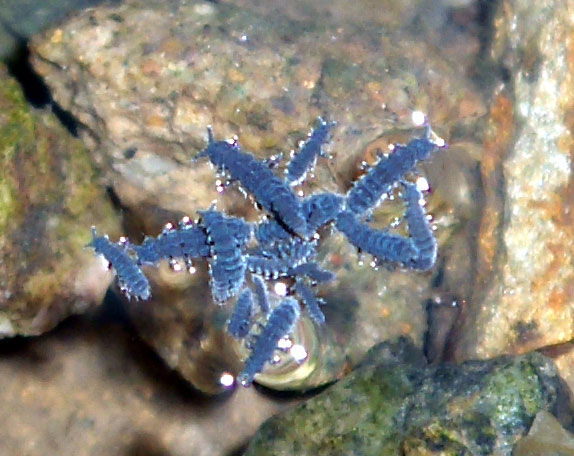 Seashore SpringtailAnurida maritima
- Anurida stereoodorata
- Anurida amorita
- Anurida decemoculata
- Anurida dentata
- Anurida weberi
- Anurida thalassophila
- Anurida polaris
Compare
Sources
Data
- Catalogue of Life, 2026-10-16 XR cc by
- Within the Catalogue of Life, this name comes from Checklist of the Collembola of the World cc by
This species in other databases
Page built on 27 November 2026. See how the catalog is made and all sources and licences.
Cite this page
ScientificNames.org. (2026). Anurida olaensis. Retrieved November 27, 2026, from https://scientificnames.org/species/anurida-olaensis
“Anurida olaensis.” ScientificNames.org, 2026, scientificnames.org/species/anurida-olaensis. Accessed 27 Nov. 2026.
ScientificNames.org. “Anurida olaensis.” Accessed November 27, 2026. https://scientificnames.org/species/anurida-olaensis.
@misc{scientificnames_anurida_olaensis,
  author = {{ScientificNames.org}},
  title = {Anurida olaensis},
  year = {2026},
  url = {https://scientificnames.org/species/anurida-olaensis},
  note = {Accessed 2026-11-27}
}