Species · Insects
Western Apamea Apamea occidens
The scientific name of the Western Apamea is Apamea occidens. It is a species of insect in the family Noctuidae (cutworms), order Lepidoptera. The name dates from 1878.
- Scientific name
- Apamea occidens Grote, 1878
- Common name
- Western Apamea
- Genus
- Apamea
- Family
- Noctuidae (Cutworms)
- Order
- Lepidoptera
- Class
- Insecta
- Recorded in
- 2 countries
- Name status
- accepted in the Catalogue of Life
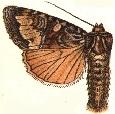
Overview
The Western Apamea is a moth belonging to the family Noctuidae. It is native to western North America, with its range extending eastward to Alberta and Kansas. It was first described by Augustus Radcliffe Grote in 1878.
Written 28 November 2026 from the sources listed below. Each statement was checked against the passage it cites; statements that could not be supported were removed.
Appearance
The Western Apamea is a moth belonging to the family Noctuidae.[1]
Habitat
The Western Apamea is native to western North America, with its range extending eastward to Alberta and Kansas.[2]
Classification of the Western Apamea
| Kingdom | Animalia |
|---|---|
| Phylum | Arthropoda |
| Subphylum | Hexapoda |
| Class | Insecta (Insect) |
| Order | Lepidoptera |
| Superfamily | Noctuoidea |
| Family | Noctuidae (Cutworms) |
| Subfamily | Noctuinae |
| Tribe | Apameini |
| Genus | Apamea |
| Species | Apamea occidens Grote, 1878 |
Where the Western Apamea is found
Checklists and occurrence records place Apamea occidens in 2 countries. GBIF holds 664 georeferenced records of it.
Countries
Regions and cities with the most records
- Montana, United States 142
- Wyoming, United States 113
- Idaho, United States 87
- Laramie, United States 59
- Oregon, United States 56
- Colorado, United States 46
- California, United States 39
- Moscow, United States 31
- Pullman, United States 30
- Utah, United States 24
- Washington, United States 17
- Missoula, United States 15
- Nevada, United States 15
- British Columbia, Canada 12
- New Mexico, United States 12
- Pocatello, United States 8
- Arizona, United States 7
- South Dakota, United States 6
- Alberta, Canada 5
- Bend, United States 5
- Billings, United States 4
- Bountiful, United States 4
- Centerville, United States 4
- Farmington, United States 4
- Kamloops, Canada 4
- Kaysville, United States 4
- Layton, United States 4
- North Salt Lake, United States 4
- Sheridan, United States 4
- Redmond, United States 3
A number beside a place is its count of GBIF occurrence records. A place without a number comes from a checklist alone. Records show where a species has been observed or collected, which can include escapes and vagrants.
Common names
English
- Western Apamea
- Western Apamea Moth
Synonyms
One other scientific name has been used for this species and is now treated as a synonym of Apamea occidens.
- Apamea coloradensis Strand, 1921
Related species
-
 Glassy Cutworm MothApamea devastator
-
 Dark ArchesApamea (Apamea) monoglypha
-
 Rustic Shoulder-KnotApamea (Apamea) sordens
-
 Clouded-Bordered BrindleApamea (Apamea) crenata
- Light ArchesApamea (Apamea) lithoxylaea
-
 Rice Worm MothApamea apamiformis
- Large NutmegApamea (Apamea) anceps
-
 Dusky BrocadeApamea (Apamea) remissa
Compare
Questions and answers
What is the scientific name of the Western Apamea?
The scientific name of the Western Apamea is Apamea occidens. Written with its author, the full name is Apamea occidens Grote, 1878.
Which family does the Western Apamea belong to?
Apamea occidens belongs to the family Noctuidae, in the order Lepidoptera and the class Insecta.
Where is the Western Apamea found?
Checklists and occurrence records place Apamea occidens in 2 countries: United States and Canada.
What other names does the Western Apamea have?
Apamea occidens is also known in English as Western Apamea Moth.
Who first described the Western Apamea and when?
Augustus Radcliffe Grote first described the species in 1878.[3]
Where is the Western Apamea native?
It is native to western North America, with its range extending eastward to Alberta and Kansas.[2]
What family does the Western Apamea belong to?
It belongs to the family Noctuidae.[1]
Sources
Passages the profile rests on
- The species is a moth belonging to the family Noctuidae. Source passage: “Apamea occidens, the western apamea, is a moth of the family Noctuidae.” — English Wikipedia
- The species is native to western North America, with its range extending eastward to Alberta and Kansas. Source passage: “It is native to western North America as far east as Alberta and Kansas.” — English Wikipedia
- The species was first described by Augustus Radcliffe Grote in 1878. Source passage: “The species was first described by Augustus Radcliffe Grote in 1878.” — English Wikipedia
Data
- Catalogue of Life, 2026-10-16 XR cc by
- Global Biodiversity Information Facility CC BY 4.0
- Wikidata CC0
- GeoNames CC BY 4.0
- Wikimedia Commons per image; credit shown with each image
- Within the Catalogue of Life, this name comes from Global Lepidoptera Index cc by
This species in other databases
Page built on 28 November 2026. See how the catalog is made and all sources and licences.
Cite this page
ScientificNames.org. (2026). Apamea occidens (Western Apamea). Retrieved November 28, 2026, from https://scientificnames.org/species/apamea-occidens
“Apamea occidens (Western Apamea).” ScientificNames.org, 2026, scientificnames.org/species/apamea-occidens. Accessed 28 Nov. 2026.
ScientificNames.org. “Apamea occidens (Western Apamea).” Accessed November 28, 2026. https://scientificnames.org/species/apamea-occidens.
@misc{scientificnames_apamea_occidens_western_apamea,
  author = {{ScientificNames.org}},
  title = {Apamea occidens (Western Apamea)},
  year = {2026},
  url = {https://scientificnames.org/species/apamea-occidens},
  note = {Accessed 2026-11-28}
}