Species · Insects
Apporasa atkinsoni
Apporasa atkinsoni has no English name on record in the checklists used here. It is a species of insect in the family Lycaenidae (blues), order Lepidoptera. The name dates from 1869.
- Scientific name
- Apporasa atkinsoni (Hewitson, 1869)
- Genus
- Apporasa
- Family
- Lycaenidae (Blues)
- Order
- Lepidoptera
- Class
- Insecta
- Recorded in
- 1 country
- Name status
- accepted in the Catalogue of Life

Overview
The species occurs from Manipur through southern Myanmar to Thailand. It is the only species in the genus Apporasa.
Written 27 November 2026 from the sources listed below. Each statement was checked against the passage it cites; statements that could not be supported were removed.
Appearance
The male has black antennae, head, thorax and abdomen. The underside of its palpi, thorax and abdomen has a median longitudinal white line.[1][2]
The female has a broader median white transverse band across both wings than the male, extending to vein 7 on the forewing. It lacks the blue inner edging and iridescent light-blue speckling present in the male's upper wing pattern.[3][4][5]
The female has less intensely shaded, more brownish-black markings at the wing bases and margins than the male. Its basal oblique bands on the forewing are generally farther apart than those of the male.[6][7]
The larva has a flattened, woodlouse-like body covered densely with white hairs. It is greenish white with a faint green dorsal band.[8][9]
The pupa is bright apple-green with a dark-green central line and small red dots along the edges of its wing cases. It is smaller and narrower than that of Castalius rosimon.[10][11]
Diet
The larva feeds on young shoots of Ziziphus jujuba.[12]
Habitat
The species is found in the Indomalayan realm.[13]
Classification of Apporasa atkinsoni
| Kingdom | Animalia |
|---|---|
| Phylum | Arthropoda |
| Subphylum | Hexapoda |
| Class | Insecta (Insect) |
| Order | Lepidoptera |
| Superfamily | Papilionoidea |
| Family | Lycaenidae (Blues) |
| Subfamily | Theclinae |
| Tribe | Arhopalini |
| Genus | Apporasa |
| Species | Apporasa atkinsoni (Hewitson, 1869) |
Where Apporasa atkinsoni is found
Checklists and occurrence records place Apporasa atkinsoni in 1 country. GBIF holds 4 georeferenced records of it.
Countries
Regions and cities with the most records
A number beside a place is its count of GBIF occurrence records. A place without a number comes from a checklist alone. Records show where a species has been observed or collected, which can include escapes and vagrants.
Common names
Names in 1 other language
- Thai
- ผีเสื้อฟ้าขอบเว้าปีกหยัก
Synonyms
One other scientific name has been used for this species and is now treated as a synonym of Apporasa atkinsoni.
- Amblypodia atkinsoni Hewitson, 1869
Related species
-
 Common BluePolyommatus icarus
-
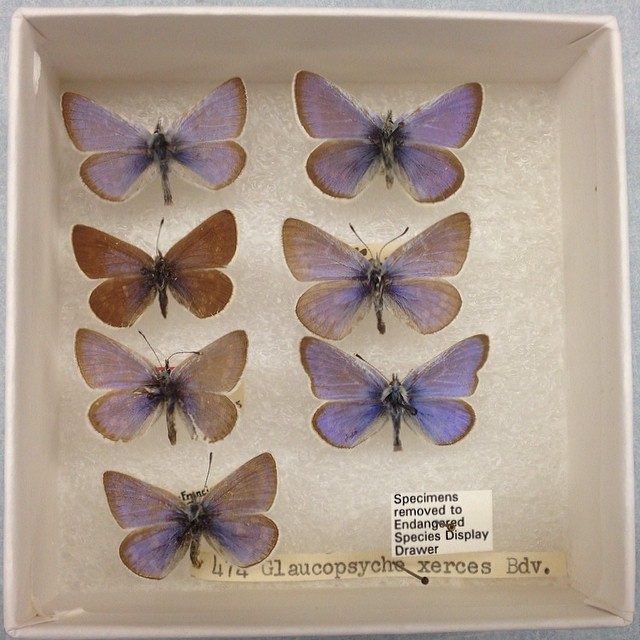 Xerces BlueGlaucopsyche xerces
-
 Adonis BlueLysandra bellargus
-
 Western Pygmy BlueBrephidium exilis
-
 AtalaEumaeus atala
-
 Holly BlueCelastrina argiolus
-
 Long-tailed BlueLampides boeticus
-
 HarvesterFeniseca tarquinius
Compare
Questions and answers
Where does Apporasa atkinsoni occur?
It occurs from Manipur through southern Myanmar to Thailand.[14]
What does the larva feed on?
The larva feeds on young shoots of Ziziphus jujuba.[12]
How does the female differ from the male?
The female has a broader white transverse wing band extending to vein 7 on the forewing. It lacks the male's blue inner edging and iridescent light-blue speckling, and has less intensely shaded, more brownish-black markings at the wing bases and margins.[3][4][5][6]
What distinguishes the pupa?
The pupa is bright apple-green with a dark-green central line and small red dots along the edges of its wing cases. It is smaller and narrower than that of Castalius rosimon.[10][11]
How many species are in the genus Apporasa?
Apporasa atkinsoni is the only species in the genus Apporasa.[15]
Sources
Passages the profile rests on
- The male has black antennae, head, thorax and abdomen. Source passage: “Antennae, head, thorax and abdomen black;” — English Wikipedia
- The underside of the male's palpi, thorax and abdomen has a median longitudinal white line. Source passage: “beneath: the palpi, thorax and abdomen with a median longitudinal white line.” — English Wikipedia
- The female has a broader median white transverse band across both wings than the male. Source passage: “the median white transverse band across both wings broader” — English Wikipedia
- The female's median white wing band extends to vein 7 on the forewing. Source passage: “extended on the forewing up to vein 7” — English Wikipedia
- The female lacks the blue inner edging and iridescent light-blue speckling present in the male's upper wing pattern. Source passage: “with no inner edging of blue or iridescent light blue irroration (speckling)” — English Wikipedia
- The female has less intensely shaded, more brownish-black markings at the wing bases and margins than the male. Source passage: “the black at the bases of the wings and on the margins not so intense in shade, more of a brownish black.” — English Wikipedia
- The female's basal oblique bands on the forewing are generally farther apart than those of the male. Source passage: “the basal two oblique bands on the forewing generally farther from one another than in the male.” — English Wikipedia
- The larva has a flattened, woodlouse-like body covered densely with white hairs. Source passage: “of the woodlouse form but flattened. Its texture though apparently smooth is, if looked at with a lens, found to be thickly covered with white hairs” — English Wikipedia
- The larva is greenish white with a faint green dorsal band. Source passage: “its colour is greenish white with a faint green dorsal band.” — English Wikipedia
- The pupa is bright apple-green with a dark-green central line and small red dots along the edges of its wing cases. Source passage: “It is of a bright apple-green with a darkish green line down the centre. There are some small red dots on the edges of the wing-cases.” — English Wikipedia
- The pupa is smaller and narrower than that of Castalius rosimon. Source passage: “Similar in shape to that of Castalius rosimon, Fabricius, but smaller and narrower.” — English Wikipedia
- The larva feeds on young shoots of Ziziphus jujuba. Source passage: “feeds on young shoots of Ziziphus jujuba” — English Wikipedia
- The species is found in the Indomalayan realm. Source passage: “It is found in the Indomalayan realm.” — English Wikipedia
- The species occurs from Manipur through southern Myanmar to Thailand. Source passage: “Manipur to southern Myanmar and Thailand.” — English Wikipedia
- Apporasa atkinsoni is the only species in the genus Apporasa. Source passage: “The genus is monotypic containing only Apporasa atkinsoni” — English Wikipedia
Data
- Catalogue of Life, 2026-10-16 XR cc by
- Global Biodiversity Information Facility CC BY 4.0
- Wikidata CC0
- GeoNames CC BY 4.0
- Wikimedia Commons per image; credit shown with each image
- Within the Catalogue of Life, this name comes from Global Lepidoptera Index cc by
References
- Hewitson. (1869). Illustrations of diurnal Lepidoptera. Lycaenidae. 1. http://www.biodiversitylibrary.org/item/95252#page/166/mode/2up Link where the name was published
This species in other databases
Page built on 29 November 2026. See how the catalog is made and all sources and licences.
Cite this page
ScientificNames.org. (2026). Apporasa atkinsoni. Retrieved November 29, 2026, from https://scientificnames.org/species/apporasa-atkinsoni
“Apporasa atkinsoni.” ScientificNames.org, 2026, scientificnames.org/species/apporasa-atkinsoni. Accessed 29 Nov. 2026.
ScientificNames.org. “Apporasa atkinsoni.” Accessed November 29, 2026. https://scientificnames.org/species/apporasa-atkinsoni.
@misc{scientificnames_apporasa_atkinsoni,
  author = {{ScientificNames.org}},
  title = {Apporasa atkinsoni},
  year = {2026},
  url = {https://scientificnames.org/species/apporasa-atkinsoni},
  note = {Accessed 2026-11-29}
}