Species · Insects
Inland Sandgrinder Arenopsaltria dryas
The scientific name of the Inland Sandgrinder is Arenopsaltria dryas. It is a species of insect in the family Cicadidae (cicada), order Hemiptera. The name dates from 2025.
- Scientific name
- Arenopsaltria dryas Moulds & Marshall, 2025
- Common name
- Inland Sandgrinder
- Genus
- Arenopsaltria
- Family
- Cicadidae (Cicada)
- Order
- Hemiptera
- Class
- Insecta
- Name status
- accepted in the Catalogue of Life
Overview
The species is endemic to Australia and occurs in the Mid West region of Western Australia. Adults produce coarse, whining, buzzing calls.
Written 28 November 2026 from the sources listed below. Each statement was checked against the passage it cites; statements that could not be supported were removed.
Habitat
The Inland Sandgrinder has been recorded in the Murchison and Yalgoo bioregions.[1]
Adults occupy Acacia, Eucalyptus and Grevillea trees.[2][3][4]
Appearance
Male forewings measure 31.8–38.3 mm in length. Male body length ranges from 24.5 to 31.0 mm.[5][6]
Female forewings measure 33.0–38.9 mm in length. Female body length ranges from 25.9 to 32.7 mm.[7][8]
Behaviour
Adults produce coarse, whining, buzzing calls.[9]
Classification of the Inland Sandgrinder
| Kingdom | Animalia |
|---|---|
| Phylum | Arthropoda |
| Subphylum | Hexapoda |
| Class | Insecta (Insect) |
| Order | Hemiptera |
| Suborder | Auchenorrhyncha (True Hoppers) |
| Infraorder | Cicadomorpha |
| Parvorder | Clypeata |
| Superfamily | Cicadoidea |
| Family | Cicadidae (Cicada) |
| Subfamily | Cicadinae |
| Tribe | Arenopsaltriini |
| Genus | Arenopsaltria (Sandgrinders) |
| Species | Arenopsaltria dryas Moulds & Marshall, 2025 |
Common names
English
- Inland Sandgrinder
Related species
- SandgrinderArenopsaltria fullo
- Exmouth SandgrinderArenopsaltria exmouthensis
- Eastern SandgrinderArenopsaltria nubivena
- Pygmy SandgrinderArenopsaltria pygmaea
-
 Evening CicadaTanna japonensis
-
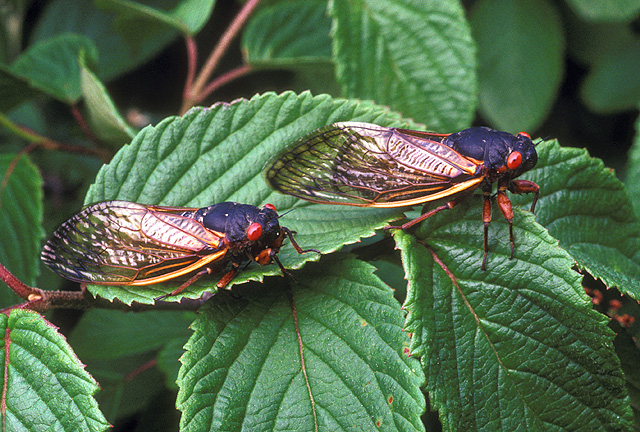 17-year Decim CicadaMagicicada septendecim
-
 Green GrocerCyclochila australasiae
-
 Double DrummerThopha saccata
Compare
Questions and answers
What is the scientific name of the Inland Sandgrinder?
The scientific name of the Inland Sandgrinder is Arenopsaltria dryas. Written with its author, the full name is Arenopsaltria dryas Moulds & Marshall, 2025.
Which family does the Inland Sandgrinder belong to?
Arenopsaltria dryas belongs to the family Cicadidae, in the order Hemiptera and the class Insecta.
Sources
Passages the profile rests on
- The species has been recorded in the Murchison and Yalgoo bioregions. Source passage: “where it has been recorded from the Murchison and Yalgoo bioregions.” — English Wikipedia
- Adults occupy Acacia trees. Source passage: “Adults occupy Acacia, Eucalyptus and Grevillea trees” — English Wikipedia
- Adults occupy Eucalyptus trees. Source passage: “Adults occupy Acacia, Eucalyptus and Grevillea trees” — English Wikipedia
- Adults occupy Grevillea trees. Source passage: “Adults occupy Acacia, Eucalyptus and Grevillea trees” — English Wikipedia
- Male forewings measure 31.8–38.3 mm in length. Source passage: “Measured forewing length was 31.8–38.3 mm in males” — English Wikipedia
- Male body length ranges from 24.5 to 31.0 mm. Source passage: “body length 24.5–31.0 mm in males” — English Wikipedia
- Female forewings measure 33.0–38.9 mm in length. Source passage: “33.0–38.9 mm in females” — English Wikipedia
- Female body length ranges from 25.9 to 32.7 mm. Source passage: “25.9–32.7 mm in females” — English Wikipedia
- Adults produce coarse, whining, buzzing calls. Source passage: “uttering coarse, whining, buzzing calls.” — English Wikipedia
Data
- Catalogue of Life, 2026-10-16 XR cc by
- Wikidata CC0
- Within the Catalogue of Life, this name comes from 3i World Auchenorrhyncha Database cc0
References
- Moulds, M.S. & Marshall, D.C. (2025) New genera and species of cicadas from arid Australia (Hemiptera: Cicadoidea: Cicadidae). Megataxa, 17(1), 1–40. https://doi.org/10.11646/megataxa.17.1.1 where the name was published
This species in other databases
Page built on 29 November 2026. See how the catalog is made and all sources and licences.
Cite this page
ScientificNames.org. (2026). Arenopsaltria dryas (Inland Sandgrinder). Retrieved November 29, 2026, from https://scientificnames.org/species/arenopsaltria-dryas
“Arenopsaltria dryas (Inland Sandgrinder).” ScientificNames.org, 2026, scientificnames.org/species/arenopsaltria-dryas. Accessed 29 Nov. 2026.
ScientificNames.org. “Arenopsaltria dryas (Inland Sandgrinder).” Accessed November 29, 2026. https://scientificnames.org/species/arenopsaltria-dryas.
@misc{scientificnames_arenopsaltria_dryas_inland_sandgrinder,
  author = {{ScientificNames.org}},
  title = {Arenopsaltria dryas (Inland Sandgrinder)},
  year = {2026},
  url = {https://scientificnames.org/species/arenopsaltria-dryas},
  note = {Accessed 2026-11-29}
}