Species · Birds
Green-backed Sparrow Arremonops chloronotus
The scientific name of the Green-backed Sparrow is Arremonops chloronotus. It is a species of bird in the family Passerellidae (new world sparrow), order Passeriformes. The name dates from 1861.
- Scientific name
- Arremonops chloronotus (Salvin, 1861)
- Common name
- Green-backed Sparrow
- Genus
- Arremonops
- Family
- Passerellidae (New World Sparrow)
- Order
- Passeriformes
- Class
- Aves
- Red List category
- LC Least Concern
- Environment
- terrestrial
- Recorded in
- 5 countries
- Name status
- accepted in the Catalogue of Life

Overview
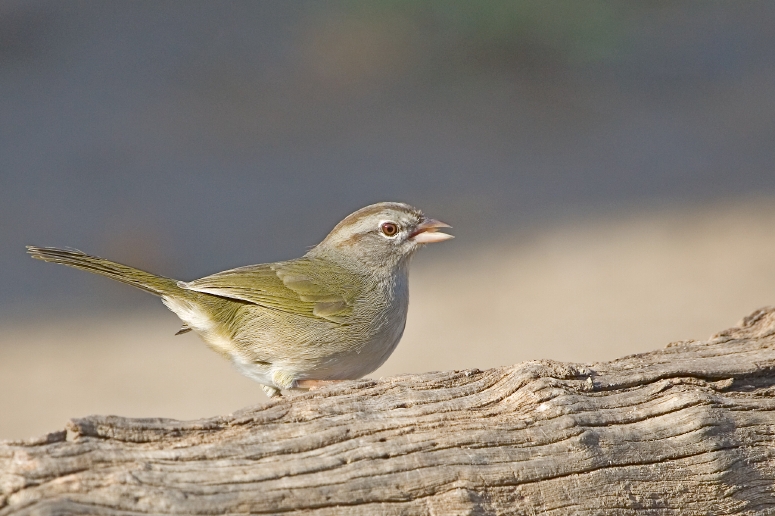
Arremonops chloronotus occurs in Belize, Guatemala, Honduras, and Mexico. It is distinguished by its bright olive-green upperparts, slate-gray head, and broad black or brownish-black crown stripes.
Written 26 November 2026 from the sources listed below. Each statement was checked against the passage it cites; statements that could not be supported were removed.
Appearance
The Green-backed Sparrow measures 15–16 cm in length and weighs between 24 and 31 g. The sexes have identical plumage.[1][2][3]
Adults of the nominate subspecies have predominantly slate-gray heads with broad black or brownish-black crown stripes. Their upperparts, tails, and wings are bright olive-green, and the wings have canary-yellow edges.[4][5][6]
Adults have dull-white chins and throats, grayish breasts and sides, pale olive-green flanks, and white bellies. Their undertail coverts are yellowish olive or olive yellowish.[7][8]
The subspecies A. c. twomeyi has a paler grayish-white head and brighter green upperparts than the nominate subspecies. Its breast and flank plumage is paler, with a buff rather than gray wash.[9][10][11]
Juveniles have duller upperparts than adults. Their underparts are grayish except for their brighter green flanks and undertail coverts.[12][13]
Both subspecies have brown irises, black or brownish-black maxillae, blue-gray mandibles, and pinkish legs and feet.[14]
Habitat
The Green-backed Sparrow inhabits the edges of tropical semi-deciduous and evergreen forests, savannas, and secondary forests across most of its range. It is also associated with subtropical or tropical dry forests and subtropical or tropical moist lowland forests.[15][16]
The subspecies A. c. twomeyi inhabits arid scrub and thorn forest. The species also occurs in heavily degraded former forest.[17][18]
Published estimates of the species' upper elevation limit differ between 750 and 900 m.[19]
Diet
The Green-backed Sparrow's diet has not been studied, but it is presumed to include insects, seeds, berries, and soft fruit.[20]
Behaviour
The Green-backed Sparrow is a year-round resident. It forages on the ground, usually alone or in pairs.[21][22]
The songs of the two subspecies differ from one another. Both produce a soft, high-pitched call described as tit or tip.[23][24]
Reproduction and life cycle
The breeding season has not been precisely established but extends at least from May through July.[25]
The Green-backed Sparrow builds its nest on the ground. The nest is domed, constructed from plant fibers, leaves, and bark, and has a side entrance.[26][27]
Clutches contain two plain white eggs. The incubation period, fledging time, and parental-care details are unknown.[28][29]
Conservation
The Green-backed Sparrow was assessed as Least Concern by the IUCN. Its estimated population is at least 20,000 mature individuals, although the population is believed to be decreasing.[30][31][32]
No immediate threats have been identified, and the species is considered fairly common overall. It is fairly common to common in Belize and Guatemala but uncommon and locally distributed in Honduras.[33][34][35]
Similar species
The Green-backed Sparrow has brighter greenish upperparts and a cleaner gray head with well-defined black stripes than the Olive Sparrow. Song is considered the best way to distinguish the two species.[36][37]
Classification of the Green-backed Sparrow
| Kingdom | Animalia |
|---|---|
| Phylum | Chordata |
| Subphylum | Vertebrata |
| Infraphylum | Gnathostomata |
| Parvphylum | Osteichthyes |
| Megaclass | Tetrapoda |
| Class | Aves (Bird) |
| Order | Passeriformes (Passerine) |
| Family | Passerellidae (New World Sparrow) |
| Genus | Arremonops (Olive Sparrows) |
| Species | Arremonops chloronotus (Salvin, 1861) |
Where the Green-backed Sparrow is found
Checklists and occurrence records place Arremonops chloronotus in 5 countries across North America. GBIF holds 38,786 georeferenced records of it.
Countries
Regions and cities with the most records
- Cayo District, Belize 15,705
- San Ignacio, Belize 10,821
- Petén, Guatemala 6,115
- Quintana Roo, Mexico 3,649
- Orange Walk District, Belize 3,411
- Belmopan, Belize 3,350
- Chiapas, Mexico 2,082
- Campeche, Mexico 1,645
- Toledo District, Belize 1,492
- Belize District, Belize 1,210
- Flores, Guatemala 1,104
- San Benito, Guatemala 1,103
- Stann Creek, Belize 1,026
- Palenque, Mexico 765
- Corozal District, Belize 575
- Yucatán, Mexico 473
- Felipe Carrillo Puerto, Mexico 395
- Alta Verapaz, Guatemala 364
- Cortés Department, Honduras 359
- Santa Cruz de Yojoa, Honduras 346
- San Francisco de Yojoa, Honduras 344
- Tabasco, Mexico 196
- Orange Walk, Belize 164
- Izabal Department, Guatemala 163
- Tulum, Mexico 130
- Chisec, Guatemala 126
- Poptún, Guatemala 113
- Cobán, Guatemala 96
- San Pedro Carchá, Guatemala 96
- Olancho Department, Honduras 85
- Morales, Guatemala 76
- Playa del Carmen, Mexico 60
- Valladolid, Mexico 57
- Chetumal, Mexico 53
- Campeche, Mexico 44
- Cancún, Mexico 42
1 more country has a few records outside this range
These countries hold a few records of Arremonops chloronotus but lie outside the range the checklists give for it. Such records are often zoo or garden specimens, museum material or vagrants, so the species is not counted as occurring there.
Range as the checklists state it
Middle America
A number beside a place is its count of GBIF occurrence records. A place without a number comes from a checklist alone. Records show where a species has been observed or collected, which can include escapes and vagrants.
Common names
English
- Green-backed Sparrow
Names in 24 other languages
- Catalan
- Toquí dorsiverd, toquí de dors verd
- Chinese
- 綠背紋頭雀, 绿背纹头雀
- Croatian
- jukatanski strnadar
- Czech
- habije zelenohřbetá
- Danish
- Grønrygget Olivenspurv
- Dutch
- Groenruggors
- Esperanto
- verdadorsa paserelo
- Finnish
- viherselkäsirkku
- French
- Bruantin à dos vert, Tohi à dos vert
- German
- Grünrückenammer
- Italian
- Passero dorsoverde
- Japanese
- ミドリオリーブシトド
- Lithuanian
- žaliasis aremonopsas
- Norwegian
- grønnryggspurv
- Polish
- ciszek zielonawy
- Portuguese
- tico-tico-de-costas-verdes, tico-tico-de-dorso-verde
- Russian
- Зеленоспинная риджвея, Зеленоспинный тохи
- Serbian
- Zelenoleđi strnad
- Slovak
- strnádlik zelenochrbtý
- Spanish
- Cerquero dorsiverde, Rascador dorso verde
- Swedish
- grönryggig sparv
- Turkish
- Belize Yeşil Sırtlı Serçesi
- Ukrainian
- риджвея зеленоспинна
- Welsh
- bras cefnwyrdd
Subspecies and varieties
- Arremonops chloronotus chloronotus subspecies
- Arremonops chloronotus twomeyi subspecies
Related species
-
 Olive SparrowArremonops rufivirgatus
-
 Black-striped SparrowArremonops conirostris
-
 Tocuyo SparrowArremonops tocuyensis
-
 Dark-eyed JuncoJunco hyemalis
-
 White-throated SparrowZonotrichia albicollis
-
 White-crowned SparrowZonotrichia leucophrys
-
 Song SparrowMelospiza melodia
-
 Spotted TowheePipilo maculatus
Compare
Questions and answers
What is the scientific name of the Green-backed Sparrow?
The scientific name of the Green-backed Sparrow is Arremonops chloronotus. Written with its author, the full name is Arremonops chloronotus (Salvin, 1861).
Which family does the Green-backed Sparrow belong to?
Arremonops chloronotus belongs to the family Passerellidae, in the order Passeriformes and the class Aves.
Where is the Green-backed Sparrow found?
Checklists and occurrence records place Arremonops chloronotus in 5 countries: Belize, Mexico, Guatemala, Honduras and Costa Rica.
What is the conservation status of the Green-backed Sparrow?
The IUCN Red List category recorded for Arremonops chloronotus is Least Concern (LC).
What are the little green birds called?
The Green-backed Sparrow is a bird with bright olive-green upperparts, tails, and wings.[5]
What kind of food does a sparrow eat?
The Green-backed Sparrow is presumed to eat insects, seeds, berries, and soft fruit.[20]
Sources
Passages the profile rests on
- The sexes of the Green-backed Sparrow have identical plumage. Source passage: “The sexes have the same plumage.” — English Wikipedia
- The Green-backed Sparrow measures 15–16 cm in length. Source passage: “The green-backed sparrow is 15 to 16 cm (5.9 to 6.3 in) long” — English Wikipedia
- The Green-backed Sparrow weighs between 24 and 31 g. Source passage: “weighs 24 to 31 g (0.85 to 1.1 oz).” — English Wikipedia
- Adult nominate Green-backed Sparrows have predominantly slate-gray heads with broad black or brownish-black crown stripes. Source passage: “Adults of the nominate subspecies have a mostly slate gray head with wide black or brownish black strips on each side of the crown” — English Wikipedia
- Adult nominate Green-backed Sparrows have bright olive-green upperparts, tails, and wings. Source passage: “Their upperparts, tail, and wings are bright olive green” — English Wikipedia
- The wings of adult nominate Green-backed Sparrows have canary-yellow edges. Source passage: “with canary yellow on the edge of the wings.” — English Wikipedia
- Adult nominate Green-backed Sparrows have dull-white chins and throats, grayish breasts and sides, pale olive-green flanks, and white bellies. Source passage: “Their chin and throat are dull white, their breast and sides grayish, their flanks pale olive green, their belly white” — English Wikipedia
- The undertail coverts of adult nominate Green-backed Sparrows are yellowish olive or olive yellowish. Source passage: “their undertail coverts yellowish olive or olive yellowish.” — English Wikipedia
- The subspecies A. c. twomeyi has a paler grayish-white head than the nominate subspecies. Source passage: “Subspecies A. c. twomeyi has a paler grayish white head than the nominate” — English Wikipedia
- The upperparts of A. c. twomeyi are brighter green than those of the nominate subspecies. Source passage: “Its upperparts are a brighter green” — English Wikipedia
- A. c. twomeyi has paler breast and flank plumage with a buff rather than gray wash. Source passage: “its breast and flanks are paler with a buff rather than gray wash.” — English Wikipedia
- Juvenile Green-backed Sparrows have duller upperparts than adults. Source passage: “Juveniles have duller upperparts than adults” — English Wikipedia
- Juvenile Green-backed Sparrows have grayish underparts except for their brighter green flanks and undertail coverts. Source passage: “with grayish underparts except for brighter green flanks and undertail coverts.” — English Wikipedia
- Both subspecies have brown irises, black or brownish-black maxillae, blue-gray mandibles, and pinkish legs and feet. Source passage: “Both subspecies have a brown iris, a black or brownish black maxilla, a blue-gray mandible, and pinkish legs and feet.” — English Wikipedia
- The Green-backed Sparrow inhabits the edges of tropical semi-deciduous and evergreen forests, savannas, and secondary forests across most of its range. Source passage: “In most of its range the green-backed sparrow inhabits the edges of tropical semi-deciduous and evergreen forest, savanna, and secondary forest.” — English Wikipedia
- The Green-backed Sparrow is associated with subtropical or tropical dry forests and subtropical or tropical moist lowland forests. Source passage: “Its natural habitats are subtropical or tropical dry forest, subtropical or tropical moist lowland forest” — birdnet.cornell.edu
- A. c. twomeyi inhabits arid scrub and thorn forest. Source passage: “Subspecies A. c. twomeyi inhabits arid scrub and thorn forest.” — English Wikipedia
- The Green-backed Sparrow also occurs in heavily degraded former forest. Source passage: “and heavily degraded former forest.” — birdnet.cornell.edu
- Published estimates of the Green-backed Sparrow's upper elevation limit differ between 750 and 900 m. Source passage: “One states it is 900 m (3,000 ft) and two others say it is 750 m (2,500 ft).” — English Wikipedia
- The Green-backed Sparrow's diet has not been studied, but it is presumed to include insects, seeds, berries, and soft fruit. Source passage: “The green-backed sparrow's diet has not been studied but is assumed to include insects, seeds, berries, and soft fruit.” — English Wikipedia
- The Green-backed Sparrow is a year-round resident. Source passage: “The green-backed sparrow is a year-round resident.” — English Wikipedia
- The Green-backed Sparrow forages on the ground, usually alone or in pairs. Source passage: “It forages on the ground, usually singly or in pairs.” — English Wikipedia
- The songs of the two Green-backed Sparrow subspecies differ from one another. Source passage: “The subspecies of the green-backed sparrow have different songs.” — English Wikipedia
- Both Green-backed Sparrow subspecies produce a soft, high-pitched call described as tit or tip. Source passage: “Both subspecies make a "soft, high-pitched tit or tip" call.” — English Wikipedia
- The Green-backed Sparrow's breeding season has not been precisely established but extends at least from May through July. Source passage: “The green-backed sparrow's breeding season has not been defined but spans at least May to July.” — English Wikipedia
- The Green-backed Sparrow builds its nest on the ground. Source passage: “Its nest is on the ground” — English Wikipedia
- The Green-backed Sparrow constructs a domed nest from plant fibers, leaves, and bark, with a side entrance. Source passage: “a dome made from plant fibers, leaves, and bark with a side entrance.” — English Wikipedia
- The Green-backed Sparrow lays clutches of two plain white eggs. Source passage: “The clutch is two plain white eggs.” — English Wikipedia
- The incubation period, fledging time, and parental-care details of the Green-backed Sparrow are unknown. Source passage: “The incubation period, time to fledging, and details of parental care are not known.” — English Wikipedia
- The Green-backed Sparrow was assessed as Least Concern by the IUCN. Source passage: “The IUCN has assessed the green-backed sparrow as being of Least Concern.” — English Wikipedia
- The Green-backed Sparrow has an estimated population of at least 20,000 mature individuals. Source passage: “its estimated population of at least 20,000 mature individuals” — English Wikipedia
- The Green-backed Sparrow's population is believed to be decreasing. Source passage: “is believed to be decreasing.” — English Wikipedia
- No immediate threats to the Green-backed Sparrow have been identified. Source passage: “No immediate threats have been identified.” — English Wikipedia
- The Green-backed Sparrow is considered fairly common overall. Source passage: “It is considered fairly common overall.” — English Wikipedia
- The Green-backed Sparrow is fairly common to common in Belize and Guatemala but uncommon and locally distributed in Honduras. Source passage: “It is fairly common to common in Belize and Guatemala and uncommon and local in Honduras.” — English Wikipedia
- The Green-backed Sparrow has brighter greenish upperparts and a cleaner gray head with well-defined black stripes than the Olive Sparrow. Source passage: “Green-backed has brighter greenish upperparts and a cleaner gray head with well-defined black stripes” — ebird.org
- Song is considered the best way to distinguish the Green-backed Sparrow from the Olive Sparrow. Source passage: “but best told by song. notes of Olive Sparrow.” — ebird.org
Data
- Catalogue of Life, 2026-10-16 XR cc by
- Global Biodiversity Information Facility CC BY 4.0
- Wikidata CC0
- GeoNames CC BY 4.0
- Wikimedia Commons per image; credit shown with each image
- Within the Catalogue of Life, this name comes from The Integrated Taxonomic Information System cc0
References
- Proc. Zool. Soc. London: 202. 1861 where the name was published
- Gill, Frank, & and Minturn Wright. (2006). Birds of the World: Recommended English Names.
- Dickinson, E. C., and L. Christidis, eds. (2014). The Howard and Moore Complete Checklist of the Birds of the World, 4th Edition, Vol. 2 Passerines.
This species in other databases
Page built on 28 November 2026. See how the catalog is made and all sources and licences.
Cite this page
ScientificNames.org. (2026). Arremonops chloronotus (Green-backed Sparrow). Retrieved November 28, 2026, from https://scientificnames.org/species/arremonops-chloronotus
“Arremonops chloronotus (Green-backed Sparrow).” ScientificNames.org, 2026, scientificnames.org/species/arremonops-chloronotus. Accessed 28 Nov. 2026.
ScientificNames.org. “Arremonops chloronotus (Green-backed Sparrow).” Accessed November 28, 2026. https://scientificnames.org/species/arremonops-chloronotus.
@misc{scientificnames_arremonops_chloronotus_green_backed_sparrow,
  author = {{ScientificNames.org}},
  title = {Arremonops chloronotus (Green-backed Sparrow)},
  year = {2026},
  url = {https://scientificnames.org/species/arremonops-chloronotus},
  note = {Accessed 2026-11-28}
}