Species · Spiders and other arachnids
Asemonea pinangensis
Asemonea pinangensis has no English name on record in the checklists used here. It is a species of arachnid in the family Salticidae (jumping spider), order Araneae. The name dates from 1980.
- Scientific name
- Asemonea pinangensis Wanless, 1980
- Genus
- Asemonea
- Family
- Salticidae (Jumping Spider)
- Order
- Araneae
- Class
- Arachnida
- Recorded in
- 1 country
- Name status
- accepted in the Catalogue of Life
Overview
The species is endemic to Malaysia. It is distinguished by its whitish-yellow carapace with heavy black markings, distinctive palpal femoral appendage, and characteristic lip on the dorsal tibial apophysis.
Written 27 November 2026 from the sources listed below. Each statement was checked against the passage it cites; statements that could not be supported were removed.
Similar species
Asemonea pinangensis differs from Asemonea minuta in coloration, the shape of its palpal femoral appendage, and the lip on its dorsal tibial apophysis.[1]
It resembles Asemonea maculata and Asemonea tanikawai but differs in the form of its dorsal tibial and femoral apophyses.[2]
Appearance
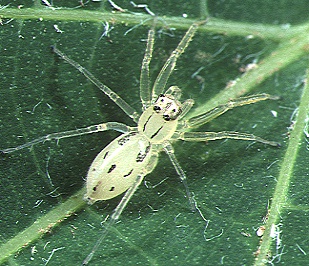
The chelicerae are shiny whitish-yellow with light bluish-grey markings. The labium and sternum are shiny whitish-yellow.[3][4]
The abdomen is black, covered with grey-black hairs, and has whitish-yellow patches on its dorsal surface. The spinnerets are black and covered with grey-black hairs.[5][6]
The legs are long, thin, pale yellow, and marked with blackish coloration. They bear pale spines.[7][8]
The pedipalp is pale yellow with black markings and has a distinctive appendage on its femur. The dorsal tibial apophysis has a characteristic lip.[9][10]
Habitat
The holotype was collected from vegetation alongside a road near Teluk Bahang on Pinang Island.[11]
Diet
Asemonea pinangensis is predominantly a diurnal hunter. It is considered likely to consume nectar.[12][13]
Behaviour
Spiders in the genus Asemonea rarely jump and generally walk or run instead.[14]
Reproduction and life cycle
The female of Asemonea pinangensis has not been described.[15]
Spiders in the genus Asemonea lay their eggs on the undersides of leaves where they spin sheet webs.[16]
Classification of Asemonea pinangensis
| Kingdom | Animalia |
|---|---|
| Phylum | Arthropoda |
| Subphylum | Chelicerata |
| Class | Arachnida (Arachnid) |
| Order | Araneae (Spider) |
| Family | Salticidae (Jumping Spider) |
| Genus | Asemonea (Tailed Jumping Spiders) |
| Species | Asemonea pinangensis Wanless, 1980 |
Where Asemonea pinangensis is found
Checklists and occurrence records place Asemonea pinangensis in 1 country across Asia. GBIF holds 1 georeferenced records of it.
Countries
Range as the checklists state it
Malaysia
A number beside a place is its count of GBIF occurrence records. A place without a number comes from a checklist alone. Records show where a species has been observed or collected, which can include escapes and vagrants.
Related species
- Oribi Gorge Asemonea Jumping SpiderAsemonea clara
- Asemonea murphyae
- Asemonea stella
-
 Asemonea tanikawai
- Asemonea amatola
- Asemonea cristata
- Asemonea mirpurensis
- Asemonea cuprea
Compare
Questions and answers
What is the typical body length of Asemonea pinangensis?
The typical total body length is 2.36 mm.[17]
What are the male's carapace and abdomen measurements?
The male carapace is typically 1.16 mm long and 0.92 mm wide. The male abdomen is typically 1.2 mm long.[18][19]
Who described Asemonea pinangensis and when?
Fred Wanless first described the species in 1980.[20]
When was the holotype collected?
The holotype specimen was collected in 1979.[21]
Sources
Passages the profile rests on
- Asemonea pinangensis differs from Asemonea minuta in coloration, the shape of its palpal femoral appendage, and the lip on its dorsal tibial apophysis. Source passage: “The species is similar to Asemonea minuta but can be distinguished by its coloration, the shape of the appendage on its palpal femora and the lip on its dorsal tibial apophysis.” — English Wikipedia
- Asemonea pinangensis resembles Asemonea maculata and Asemonea tanikawai but differs in the form of its dorsal tibial and femoral apophyses. Source passage: “The spider resembles both Asemonea maculata and Asemonea tanikawai but likewise differs in the form of its dorsal tibial apophysis and femoral apophysis.” — English Wikipedia
- The chelicerae are shiny whitish-yellow with light bluish-grey markings. Source passage: “The chelicerae is a shiny whitish yellow with light bluish-grey markings.” — English Wikipedia
- The labium and sternum are shiny whitish-yellow. Source passage: “The labium and sternum are also shiny whitish yellow.” — English Wikipedia
- The abdomen is black, covered with grey-black hairs, and has whitish-yellow patches on its dorsal surface. Source passage: “The abdomen is black and covered with grey-black hairs, typically 1.2 mm (0.047 in) long. It has a pattern on its back consisting of whitish-yellow patches.” — English Wikipedia
- The spinnerets are black and covered with grey-black hairs. Source passage: “The spinnerets are also black with grey-black hairs.” — English Wikipedia
- The legs are long, thin, pale yellow, and marked with blackish coloration. Source passage: “The spider has long thin pale yellow legs that also have blackish markings.” — English Wikipedia
- The legs bear pale spines. Source passage: “The legs have pale spines.” — English Wikipedia
- The pedipalp is pale yellow with black markings and has a distinctive appendage on its femur. Source passage: “The pedipalp is also pale yellow with black markings and a distinctive apophysis, or appendage, on its femur.” — English Wikipedia
- The dorsal tibial apophysis has a characteristic lip. Source passage: “The dorsal tibial apophysis also has a characteristic lip.” — English Wikipedia
- The holotype was collected from vegetation alongside a road near Teluk Bahang on Pinang Island. Source passage: “The holotype was found in Pinang Island in 1979 in vegetation along the road near Teluk Bahang.” — English Wikipedia
- Asemonea pinangensis is predominantly a diurnal hunter. Source passage: “Although predominantly a diurnal hunter, the spider is also likely to eat nectar.” — English Wikipedia
- Asemonea pinangensis is considered likely to consume nectar. Source passage: “Although predominantly a diurnal hunter, the spider is also likely to eat nectar.” — English Wikipedia
- Spiders in the genus Asemonea rarely jump and generally walk or run instead. Source passage: “Asemonea spiders rarely jump. Instead, they generally walk and run.” — English Wikipedia
- The female of Asemonea pinangensis has not been described. Source passage: “The female has not been described.” — English Wikipedia
- Spiders in the genus Asemonea lay their eggs on the undersides of leaves where they spin sheet webs. Source passage: “They spin sheet webs on the underside of leaves, where they also lay their eggs.” — English Wikipedia
- The spider has a typical total body length of 2.36 mm. Source passage: “The spider is small, with a typical total length of 2.36 mm (0.093 in).” — English Wikipedia
- The male carapace is typically 1.16 mm long and 0.92 mm wide. Source passage: “The male has a carapace that is typically 1.16 mm (0.046 in) long and 0.92 mm (0.036 in) wide.” — English Wikipedia
- The male abdomen is typically 1.2 mm long. Source passage: “The abdomen is black and covered with grey-black hairs, typically 1.2 mm (0.047 in) long.” — English Wikipedia
- The species was first described by Fred Wanless in 1980. Source passage: “The spider was first defined in 1980 by Fred Wanless.” — English Wikipedia
- The holotype specimen was collected in 1979. Source passage: “The holotype was found in Pinang Island in 1979 in vegetation along the road near Teluk Bahang.” — English Wikipedia
Data
- Catalogue of Life, 2026-10-16 XR cc by
- Global Biodiversity Information Facility CC BY 4.0
- Wikidata CC0
- GeoNames CC BY 4.0
- Within the Catalogue of Life, this name comes from The World Spider Catalog cc by
References
- Wanless, F. R. (1980d). A revision of the spider genera Asemonea and Pandisus (Araneae: Salticidae). Bulletin of the British Museum of Natural History (Zool.) 39(4): 213-257. Link where the name was published
This species in other databases
Page built on 28 November 2026. See how the catalog is made and all sources and licences.
Cite this page
ScientificNames.org. (2026). Asemonea pinangensis. Retrieved November 28, 2026, from https://scientificnames.org/species/asemonea-pinangensis
“Asemonea pinangensis.” ScientificNames.org, 2026, scientificnames.org/species/asemonea-pinangensis. Accessed 28 Nov. 2026.
ScientificNames.org. “Asemonea pinangensis.” Accessed November 28, 2026. https://scientificnames.org/species/asemonea-pinangensis.
@misc{scientificnames_asemonea_pinangensis,
  author = {{ScientificNames.org}},
  title = {Asemonea pinangensis},
  year = {2026},
  url = {https://scientificnames.org/species/asemonea-pinangensis},
  note = {Accessed 2026-11-28}
}