Species · Flowering plants
Pawpaw Asimina triloba
The scientific name of the Pawpaw is Asimina triloba. It is a species of flowering plant in the family Annonaceae (pawpaw family), order Magnoliales.
- Scientific name
- Asimina triloba (L.) Dunal
- Common name
- Pawpaw
- Genus
- Asimina
- Family
- Annonaceae (Pawpaw Family)
- Order
- Magnoliales
- Class
- Magnoliopsida
- Red List category
- LC Least Concern
- Recorded in
- 2 countries
- Name status
- accepted in the Catalogue of Life

Overview
Pawpaw (Asimina triloba) is a large shrub or small tree in the family Annonaceae, order Magnoliales, and class Magnoliopsida. Pawpaw produces banana-shaped fruits with sweet, edible pulp and a custard-like texture.
Written 24 November 2026 from the sources listed below. Each statement was checked against the passage it cites; statements that could not be supported were removed.
Appearance
Pawpaw is a large shrub or small tree with a slender trunk and broad crown. It can reach approximately 35 feet in height, with exceptional individuals reaching 45 feet, and its trunk typically measures 8–12 inches in diameter or more.[1][2][3]
The leaves are simple and alternate, with smooth margins without teeth. Their upper surfaces are green and their lower surfaces are pale, and they emit an odor when bruised.[4][5][6]
The leaves measure approximately 10–12 inches long and 4–5 inches wide. They turn yellow during autumn.[7][8]
The bark is initially thin and smooth, with coloration ranging from light ash to dark brown. It develops warty blotches with age.[9]
The flowers are solitary, drooping, and dark reddish-purple, with an odor resembling fermenting purple grapes. They measure approximately 1–2 inches across.[10][11][12]
The fruit is banana-shaped and cylindrical, initially green and yellow when ripe. It measures approximately 2–6 inches long and 1–3 inches wide, with individual fruits weighing approximately 20–510 grams.[13][14][15]
The ripe fruit has sweet, edible pulp with a custard-like texture. It contains several brown or black seeds measuring approximately 15–25 millimeters in diameter.[16][17]
Habitat
Pawpaw grows as an understory tree in hardwood forests. It occurs in well-drained, deep, fertile bottomland soils and hilly upland habitats.[18][19]
The species grows along floodplains, stream banks, and shaded, nutrient-rich bottomlands. It also occurs on moist lower slopes, in ravines and valleys, and along wooded stream margins.[20][21]
Pawpaw grows in dense shade but can also grow in full sun or light shade when soil conditions are suitable.[21][22]
Diet
The ripe fruit pulp is sweet and edible. The fruit is consumed by opossums, foxes, squirrels, and raccoons.[23][24]
The larvae of the zebra swallowtail butterfly feed on young pawpaw leaves. The larvae of the pawpaw sphinx moth also feed on its leaves.[25][26]
Behaviour
The leaves turn yellow during autumn.[8]
The species produces natural toxins called acetogenins that deter herbivores.[27]
Reproduction and life cycle
The flowers contain both male and female reproductive organs and generally appear before the leaves emerge. Beetles are considered likely effective pollinators.[28][29][30]
Pawpaw is self-incompatible, so pollen cannot fertilize flowers on the same plant. Cross-pollination between two unrelated trees is necessary for fruit production.[31][32]
Grafted trees can produce fruit within two to three years, whereas seed-grown trees may require up to ten years.[33]
The fruits generally mature in September or October. Ripe fruits often complete ripening after falling naturally.[34][35]
Conservation
Pawpaw provides an essential larval food plant for the zebra swallowtail butterfly.[36]
Uses
The ripe fruit is commonly eaten raw. Its pulp is used to prepare ice cream and baked desserts, and the fruit is also used in breads, oatmeal bars, ice cream, and sorbet.[37][38][39]
Pawpaw is increasingly planted as a native landscaping and fruit-bearing ornamental tree.[40]
The species' wood has no commercial use.[41]
Classification of the Pawpaw
| Kingdom | Plantae |
|---|---|
| Subkingdom | Pteridobiotina |
| Phylum | Tracheophyta |
| Class | Magnoliopsida |
| Order | Magnoliales |
| Family | Annonaceae (Pawpaw Family) |
| Subfamily | Annonoideae |
| Tribe | Annoneae |
| Subtribe | Annoninae |
| Genus | Asimina (Pawpaw) |
| Species | Asimina triloba (L.) Dunal |
Where the Pawpaw is found
Checklists and occurrence records place Asimina triloba in 2 countries across North America. GBIF holds 46,538 georeferenced records of it.
Countries
Regions and cities with the most records
- Virginia, United States 6,279
- Ohio, United States 5,490
- Maryland, United States 5,023
- Indiana, United States 3,209
- McLean, United States 2,957
- Potomac, United States 2,930
- Bethesda, United States 2,863
- North Carolina, United States 2,666
- Arlington, United States 2,645
- Silver Spring, United States 2,572
- Wheaton, United States 2,563
- Tennessee, United States 2,347
- Rockville, United States 2,273
- Washington, United States 2,209
- Aspen Hill, United States 2,197
- Downtown DC, United States 2,174
- Pennsylvania, United States 2,170
- Missouri, United States 2,085
- Reston, United States 2,037
- Kentucky, United States 1,952
- Illinois, United States 1,888
- Alexandria, United States 1,646
- Gaithersburg, United States 1,485
- Michigan, United States 1,105
- Germantown, United States 1,094
- West Virginia, United States 1,024
- Arkansas, United States 948
- District of Columbia, United States 846
- Bowie, United States 789
- Leesburg, United States 722
- South Carolina, United States 715
- Georgia, United States 701
- Carmel, United States 691
- Cincinnati, United States 677
- Dale City, United States 671
- Indianapolis, United States 662
7 more countries have a few records outside this range
These countries hold a few records of Asimina triloba but lie outside the range the checklists give for it. Such records are often zoo or garden specimens, museum material or vagrants, so the species is not counted as occurring there.
Range as the checklists state it
Canada (Ontario); USA (Alabama, Arkansas, District of Columbia, Delaware, Florida, Georgia, Iowa, Illinois, Indiana, Kansas, Kentucky, Louisiana, Maryland, Michigan, Missouri, Mississippi, North Carolina, Nebraska, New Jersey, New York, Ohio, Oklahoma, Pennsylvania, South Carolina, Tennessee, Texas, Virginia, Wisconsin, West Virginia)
A number beside a place is its count of GBIF occurrence records. A place without a number comes from a checklist alone. Records show where a species has been observed or collected, which can include escapes and vagrants.
Common names
English
- Pawpaw
- American Paw Paw
- Indian-banana
- Indiana Banana
- Bandango
- Common Paw Paw
- Custard Apple
- Dog-banana
- False-banana
- Fetid-bush
- Papaw
- Paw-paw
- Pawpawtree
Names in 18 other languages
- Chinese
- 巴婆果, 巴婆树, 泡泡樹
- Czech
- muďoul trojlaločný
- Finnish
- Papavi, metsäpapavi
- French
- aciminier, asiminier, asiminier trilobé
- German
- Dreilappige Papau, Indianerbanane, Papau
- Italian
- Banano del nord
- Japanese
- アケビガキ, ポポー, ポーポー
- Lithuanian
- Triskiautė azimina
- Polish
- asymina trójklapowa
- Russian
- Азимина трёхлопастная
- Slovak
- asimina ovocná
- Spanish
- chirimoyo de la Florida
- Swedish
- asimina
- Turkish
- Bayağı Papav, Papav
- Ukrainian
- Азиміна трилопатева
- cho
- Umbi
- mia
- mihsiimišaahkwi
- tun
- Yukula
Synonyms
11 other scientific names have been used for this species and are now treated as synonyms of Asimina triloba.
- Annona pendula Salisb.
- Annona triloba L.
- Asimina campaniflora Spach
- Asimina conoidea Spach
- Asimina glabra K.Koch
- Asimina virginiana Poit. & Turpin
- Asimina virginiana Adans. ex P.N.Jacq.
- Orchidocarpum arietinum Michx.
- Porcelia triloba (L.) Pers.
- Uvaria conoidea (Spach) Lem.
- Uvaria triloba (L.) Torr. & A.Gray
Related species
-
 Dwarf PawpawAsimina parviflora
-
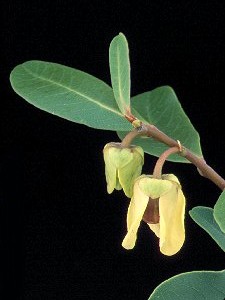 Four-petal PawpawAsimina tetramera
-
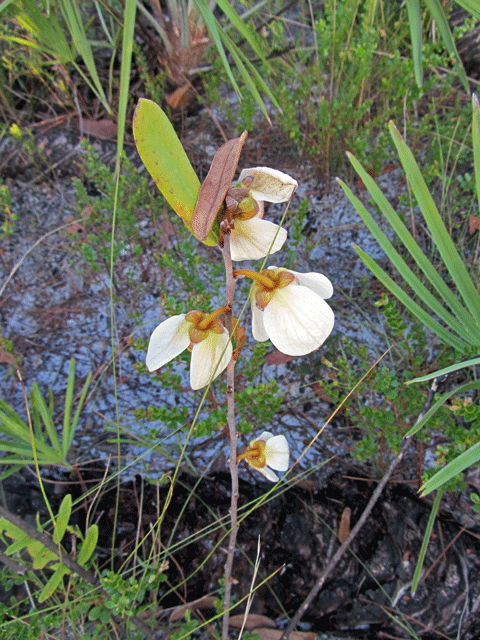 Flag PawpawAsimina obovata
- Flag PawpawAsimina incana
- Flag PawpawAsimina reticulata
- Asimina pulchella
- GopherberryAsimina pygmaea
- Manasota PawpawAsimina manasota
Compare
Questions and answers
What is the scientific name of the Pawpaw?
The scientific name of the Pawpaw is Asimina triloba. Written with its author, the full name is Asimina triloba (L.) Dunal.
Which family does the Pawpaw belong to?
Asimina triloba belongs to the family Annonaceae, in the order Magnoliales and the class Magnoliopsida.
Where is the Pawpaw found?
Checklists and occurrence records place Asimina triloba in 2 countries: United States and Canada.
What is the conservation status of the Pawpaw?
The IUCN Red List category recorded for Asimina triloba is Least Concern (LC).
What other names does the Pawpaw have?
Asimina triloba is also known in English as American Paw Paw, Indian-banana, Indiana Banana, Bandango, Common Paw Paw and Custard Apple.
Why is papaya called pawpaw?
The common name pawpaw probably derives from the Spanish word papaya.[42]
What states do pawpaws grow in?
In Missouri, pawpaw occurs statewide except in some far northern counties. Its natural North American range extends from New York westward to southeastern Nebraska and southward to eastern Texas and Florida's panhandle.[43][44]
What is the habitat of pawpaws?
Pawpaw grows as an understory tree in hardwood forests, particularly in deep, fertile bottomland soils and hilly upland habitats. It occurs along floodplains, stream banks, shaded bottomlands, moist lower slopes, ravines, and valleys.[18][19][20][21]
What animals eat paw paws?
Opossums, foxes, squirrels, and raccoons consume the ripe fruit. The larvae of the zebra swallowtail butterfly and pawpaw sphinx moth feed on the leaves.[24][25][26]
Sources
Passages the profile rests on
- Asimina triloba is a large shrub or small tree with a slender trunk and broad crown. Source passage: “Pawpaw is a large shrub to small tree with a slender trunk and broad crown; grows in colonies.” — mdc.mo.gov
- The tree can reach approximately 35 feet in height, with exceptional individuals reaching 45 feet. Source passage: “growing to a height of 35 ft (11 m), rarely as tall as 45 ft (14 m),” — English Wikipedia
- The trunk typically measures 8–12 inches in diameter or more. Source passage: “with trunks 8–12 in (20–30 cm) or more in diameter.” — English Wikipedia
- The leaves are simple, alternate, and have smooth margins without teeth. Source passage: “Leaves are alternate, simple, 6–12 inches long, 3–5 inches wide, broadest above the middle; margin lacking teeth;” — mdc.mo.gov
- The upper leaf surfaces are green, while the lower surfaces are pale. Source passage: “upper surface green; lower surface pale;” — mdc.mo.gov
- The leaves emit an odor when bruised. Source passage: “emitting an odor when bruised.” — mdc.mo.gov
- The leaves measure approximately 10–12 inches long and 4–5 inches wide. Source passage: “10–12 in (25–30 cm) long, 4–5 in (10–13 cm) broad,” — English Wikipedia
- The leaves turn yellow during autumn. Source passage: “The leaves turn yellow in autumn and remain on the tree late into the season.” — mdc.mo.gov
- The bark is initially thin and smooth, with coloration ranging from light ash to dark brown, and develops warty blotches with age. Source passage: “Bark is light ash to dark brown, thin, smooth, later becoming warty with blotches.” — mdc.mo.gov
- The flowers are dark reddish-purple, solitary, drooping, and approximately one inch across. Source passage: “Flowers March–May; perfect (with male and female parts in same flower), dark reddish purple, solitary, drooping, about 1 inch across,” — mdc.mo.gov
- The flowers have an odor resembling fermenting purple grapes. Source passage: “appearing before the leaves and with an odor of fermenting purple grapes.” — mdc.mo.gov
- The flowers measure approximately 1–2 inches across. Source passage: “about 1–2 in (3–5 cm) across,” — English Wikipedia
- The fruit is banana-shaped and cylindrical, initially green and yellow when ripe. Source passage: “Fruits September–October. Banana-shaped, cylindrical, 3–5 inches long, green at first and yellow when ripe;” — mdc.mo.gov
- The fruit measures approximately 2–6 inches long and 1–3 inches wide. Source passage: “2–6 in (5–15 cm) long and 1–3 in (3–8 cm) broad,” — English Wikipedia
- Individual fruits weigh approximately 20–510 grams. Source passage: “weighing from 0.7–18 oz (20–510 g),” — English Wikipedia
- The ripe fruit has sweet, edible pulp with a custard-like texture. Source passage: “pulp sweet, edible, with custardy texture.” — mdc.mo.gov
- The fruit contains several brown or black seeds measuring approximately 15–25 millimeters in diameter. Source passage: “containing several brown or black seeds 1⁄2–1 in (15–25 mm) in diameter” — English Wikipedia
- The species grows as an understory tree in hardwood forests. Source passage: “a patch-forming (clonal) understory tree of hardwood forests,” — English Wikipedia
- The species occurs in well-drained, deep, fertile bottomland soils and hilly upland habitats. Source passage: “being found in well-drained, deep, fertile bottomland and also hilly upland habitat.” — English Wikipedia
- The species grows along floodplains, stream banks, and shaded, nutrient-rich bottomlands. Source passage: “Pawpaws are also found along floodplains, stream banks, and shaded, nutrient-rich bottomlands,” — English Wikipedia
- The species grows in dense shade on moist lower slopes, ravines, valleys, and wooded stream margins. Source passage: “Grows in dense shade on moist lower slopes, ravines, valleys, along streams, and at the base of wooded bluffs.” — mdc.mo.gov
- The species can grow in full sun or light shade when soil conditions are suitable. Source passage: “Pawpaws (Asimina triloba)grow well in full sun or light shade and well-drained or moist soils.” — extension.psu.edu
- The ripe fruit pulp is edible and sweet. Source passage: “the ripe fruits are edible. They are sweet,” — English Wikipedia
- The ripe fruit is consumed by opossums, foxes, squirrels, and raccoons. Source passage: “The fruit pulp is readily consumed by mammals, including opossums, foxes, squirrels and raccoons.” — English Wikipedia
- The larvae of the zebra swallowtail butterfly feed on the young leaves of the species. Source passage: “Larvae of the zebra swallowtail (Eurytides marcellus), a butterfly, feed exclusively on young leaves of A. triloba” — English Wikipedia
- The larvae of the pawpaw sphinx moth feed on the leaves. Source passage: “However, the larva of the Pawpaw sphinx moth feeds on pawpaw leaves” — English Wikipedia
- The species produces natural toxins called acetogenins that deter herbivores. Source passage: “Pawpaws produce toxic chemicals called acetogenins in their sap, which function to prevent insects and other herbivores from chewing their leaves.” — mdc.mo.gov
- The flowers contain both male and female reproductive organs. Source passage: “perfect (with male and female parts in same flower),” — mdc.mo.gov
- The flowers generally appear before the leaves emerge. Source passage: “appearing before the leaves” — mdc.mo.gov
- Beetles are considered likely effective pollinators of the species. Source passage: “Nitidulid beetles are described by Clemson University as likely "night flying" pollinators of pawpaw.” — English Wikipedia
- The species is self-incompatible, so pollen cannot fertilize flowers on the same plant. Source passage: “Pawpaw are self-incompatible, meaning pollen cannot fertilize flowers on the same plant.” — English Wikipedia
- Cross-pollination between two unrelated trees is necessary for fruit production. Source passage: “If you want fruit, plant two unrelated trees so they can cross-pollinate.” — mdc.mo.gov
- Grafted trees can produce fruit within two to three years, whereas seed-grown trees may require up to ten years. Source passage: “Grafted trees produce fruit in two to three years, while seedling trees may take up to 10 years to bear fruit.” — extension.psu.edu
- The fruits generally mature in September or October. Source passage: “Fruits September–October.” — mdc.mo.gov
- The species produces fruit after flowering, with ripe fruits often completing ripening after falling naturally. Source passage: “Full ripening often happens only after the fruit falls naturally,” — English Wikipedia
- The species provides an essential larval food plant for the zebra swallowtail butterfly. Source passage: “Pawpaw is an important food source for Zebra swallowtail (Eurytides marcellus) larvae.” — plants.ces.ncsu.edu
- The ripe fruit is commonly eaten raw. Source passage: “They are commonly eaten raw,” — English Wikipedia
- The fruit pulp is used to prepare ice cream and baked desserts. Source passage: “but are also used to make ice cream and baked desserts.” — English Wikipedia
- The fruit is used in breads, oatmeal bars, ice cream, and sorbet. Source passage: “Bake it into quick breads and oatmeal bars by substituting pawpaws for bananas in your favorite recipe. Make ice cream, sorbet,” — extension.psu.edu
- The species is increasingly planted as a native landscaping and fruit-bearing ornamental tree. Source passage: “This species is becoming increasingly popular as a landscaping tree and fruit-bearing ornamental.” — mdc.mo.gov
- The species' wood has no commercial use. Source passage: “The wood has no commercial use,” — mdc.mo.gov
- The common name pawpaw probably derives from the Spanish word papaya. Source passage: “probably derives from the Spanish papaya” — English Wikipedia
- The natural North American range extends from New York westward to southeastern Nebraska and southward to eastern Texas and Florida's panhandle. Source passage: “ranging from New York westward to southeastern Nebraska, southward to eastern Texas and the panhandle of Florida.” — English Wikipedia
- In Missouri, the species occurs statewide except in some far northern counties. Source passage: “Statewide, except for some of the far northern counties.” — mdc.mo.gov
Data
- Catalogue of Life, 2026-10-16 XR cc by
- Global Biodiversity Information Facility CC BY 4.0
- Wikidata CC0
- GeoNames CC BY 4.0
- Wikimedia Commons per image; credit shown with each image
- iNaturalist per image; credit shown with each image
- Within the Catalogue of Life, this name comes from Synonymic Checklists of the Vascular Plants of the World cc by
References
- Dunal. Monogr. Anonac. [Dunal] 83 (1817). where the name was published
This species in other databases
Page built on 24 November 2026. See how the catalog is made and all sources and licences.
Cite this page
ScientificNames.org. (2026). Asimina triloba (Pawpaw). Retrieved November 24, 2026, from https://scientificnames.org/species/asimina-triloba
“Asimina triloba (Pawpaw).” ScientificNames.org, 2026, scientificnames.org/species/asimina-triloba. Accessed 24 Nov. 2026.
ScientificNames.org. “Asimina triloba (Pawpaw).” Accessed November 24, 2026. https://scientificnames.org/species/asimina-triloba.
@misc{scientificnames_asimina_triloba_pawpaw,
  author = {{ScientificNames.org}},
  title = {Asimina triloba (Pawpaw)},
  year = {2026},
  url = {https://scientificnames.org/species/asimina-triloba},
  note = {Accessed 2026-11-24}
}