Species · Insects
Aspasiodes plectrantha
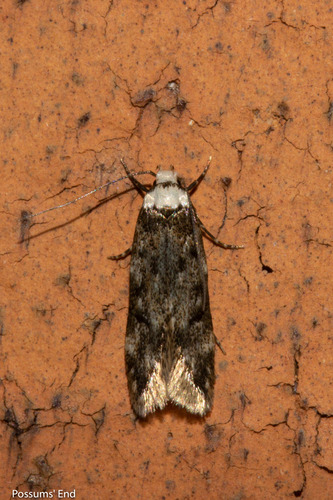
Aspasiodes plectrantha has no English name on record in the checklists used here. It is a species of insect in the family Oecophoridae (concealer moths), order Lepidoptera. The name dates from 1913.
- Scientific name
- Aspasiodes plectrantha (Meyrick, 1913)
- Genus
- Aspasiodes
- Family
- Oecophoridae (Concealer Moths)
- Order
- Lepidoptera
- Class
- Insecta
- Name status
- accepted in the Catalogue of Life
Overview
Wikidata describes Aspasiodes plectrantha as “taxon, (Meyrick, 1913), species of oecophoridae”.
Classification of Aspasiodes plectrantha
| Kingdom | Animalia |
|---|---|
| Phylum | Arthropoda |
| Subphylum | Hexapoda |
| Class | Insecta (Insect) |
| Order | Lepidoptera |
| Superfamily | Gelechioidea |
| Family | Oecophoridae (Concealer Moths) |
| Subfamily | Oecophorinae |
| Genus | Aspasiodes |
| Species | Aspasiodes plectrantha (Meyrick, 1913) |
Synonyms
3 other scientific names have been used for this species and are now treated as synonyms of Aspasiodes plectrantha.
- Aspasiodes epicompsa Turner, 1944
- Aspasiodes plectanthra Meyrick, 1913
- Coesyra plectrantha Meyrick, 1913
Related species
- Aspasiodes gennaea
-
 Brown House MothHofmannophila pseudospretella
-
 White-shouldered House MothEndrosis sarcitrella
-
 Sulphur TubicEsperia sulphurella
- Forked TabbyHarpella forficella
-
 Gold-base TubicOecophora bractella
-
 Ruddy StreakTachystola acroxantha
-
 Green Lichen Tuft MothIzatha peroneanella
Compare
Sources
Data
- Catalogue of Life, 2026-10-16 XR cc by
- Wikidata CC0
- Within the Catalogue of Life, this name comes from Global Lepidoptera Index cc by
This species in other databases
Page built on 27 November 2026. See how the catalog is made and all sources and licences.
Cite this page
ScientificNames.org. (2026). Aspasiodes plectrantha. Retrieved November 27, 2026, from https://scientificnames.org/species/aspasiodes-plectrantha
“Aspasiodes plectrantha.” ScientificNames.org, 2026, scientificnames.org/species/aspasiodes-plectrantha. Accessed 27 Nov. 2026.
ScientificNames.org. “Aspasiodes plectrantha.” Accessed November 27, 2026. https://scientificnames.org/species/aspasiodes-plectrantha.
@misc{scientificnames_aspasiodes_plectrantha,
  author = {{ScientificNames.org}},
  title = {Aspasiodes plectrantha},
  year = {2026},
  url = {https://scientificnames.org/species/aspasiodes-plectrantha},
  note = {Accessed 2026-11-27}
}