Species · Insects
Field Skipper Atalopedes campestris
The scientific name of the Field Skipper is Atalopedes campestris. It is a species of insect in the family Hesperiidae (skipper), order Lepidoptera. The name dates from 1852.
- Scientific name
- Atalopedes campestris (Boisduval, 1852)
- Common name
- Field Skipper
- Genus
- Atalopedes
- Family
- Hesperiidae (Skipper)
- Order
- Lepidoptera
- Class
- Insecta
- Recorded in
- 9 countries
- Name status
- accepted in the Catalogue of Life

Overview
The Field Skipper (Atalopedes campestris (Boisduval, 1852)) is an insect in the family Hesperiidae, order Lepidoptera, and class Insecta. It occurs in open, sunny habitats, including fields, parks, pastures, roadsides, and suburban gardens. Adults have a wingspan of 35–41 mm, with males showing tawny orange upper surfaces and females having dark wings with golden or transparent spots.
Written 26 November 2026 from the sources listed below. Each statement was checked against the passage it cites; statements that could not be supported were removed.
Appearance
Male adults have tawny orange upper surfaces with wide dark borders and a prominent black stigma. Their forewings are orange and bordered with brown.[1][2]
Female adults have dark brown wings with golden central spots and variable coloration. Their forewings have a distinctive square, transparent white spot at the end of the wing cell, while another described pattern includes two transparent spots near the center and an orange forewing edge.[3][4][5]
The underside is yellow-brown with a faint chevron pattern on the hindwing. The female hindwing underside is brown with light-colored four-sided spots.[6][7]
The pupa is dark brown to almost black, with a cream-colored abdominal end bearing brown dots. It measures 18.0–22.5 mm long and 4.30–5.83 mm wide, and its proboscis extends 2 mm beyond the wings.[8][9][10]
Adult butterflies have a wingspan of 35–41 mm. The final-instar caterpillar measures 18–40 mm in length.[11][12]
Habitat
The Field Skipper occurs in open, disturbed habitats, including roadsides, lawns, pastures, parks, oil fields, and landfills. It is frequently found in human-impacted habitats.[13][14]
It also occurs in open, sunny habitats such as fields, utility corridors, and railroad corridors. It commonly occurs in suburban gardens and lawns.[15][16]
Adults are often found breeding in mowed lawns and visiting garden flowers.[17]
Diet
Caterpillars use Bermuda grass, hairy crabgrass, red fescue, St. Augustine grass, Indian goosegrass, seashore saltgrass, and Imperata cylindrica as host plants. Host plants reported in nearby states include Bermuda grass, crabgrasses, and St. Augustine grass.[18][19]
Behaviour
Male adults perch on grasses during the day while waiting for females. They also perch low to the ground while waiting for potential mates.[20][21]
Adult sachems are quick and highly active. They undergo three flight periods between May and November in the northern part of their range and four to five flight periods between March and December in the southern part of their range.[22][23][24]
The species undergoes northward migration, with one known mass migration occurring in late summer.[25]
Caterpillars construct shelters from folded or joined grass leaves and silk. They spend most of their lives inside these shelters and build new ones as they grow through successive instars.[26][27][28]
The caterpillar's final abdominal segment has a fan-shaped anal comb that launches frass away from the body. The anal comb can propel frass several feet away.[29][30]
Caterpillars may develop red spots near the base of their heads that resemble eyes and possibly deter predators.[31]
Reproduction and life cycle
The Field Skipper undergoes complete metamorphosis with four life stages. Caterpillars pass through five developmental instars.[32][33]
Females lay individual eggs on or near the leaves of host plants and rapidly deposit individual eggs in grass clumps.[34][35]
The pupa develops inside the same silk-lined leaf nest used by the caterpillar. Partially grown caterpillars overwinter.[36][37]
Similar species
The Field Skipper is often confused with skipper butterflies belonging to the genus Hesperia. Sachems resemble Whirlabout and Fiery Skipper butterflies in size, coloration, and behavior.[38][39]
Classification of the Field Skipper
| Kingdom | Animalia |
|---|---|
| Phylum | Arthropoda |
| Subphylum | Hexapoda |
| Class | Insecta (Insect) |
| Order | Lepidoptera |
| Superfamily | Papilionoidea |
| Family | Hesperiidae (Skipper) |
| Subfamily | Hesperiinae |
| Genus | Atalopedes (Sachems and Allies) |
| Species | Atalopedes campestris (Boisduval, 1852) |
Where the Field Skipper is found
Checklists and occurrence records place Atalopedes campestris in 9 countries across North America and South America. GBIF holds 8,711 georeferenced records of it.
Countries
- Brazil 3
- Canada 97
- Colombia 33
- Costa Rica 18
- Curacao 5
- Guatemala 5
- Mexico 484
- Panama 3
- United States 8,063
Regions and cities with the most records
- California, United States 1,235
- Texas, United States 736
- Washington, United States 569
- Maryland, United States 524
- Oregon, United States 428
- Virginia, United States 398
- South Laurel, United States 330
- Scaggsville, United States 326
- Calverton, United States 325
- Fairland, United States 323
- Maryland City, United States 319
- Laurel, United States 314
- Richland, United States 310
- Cloverly, United States 292
- Tri-Cities, United States 274
- North Carolina, United States 272
- Pasco, United States 272
- Kennewick, United States 270
- Beltsville, United States 268
- Odenton, United States 268
- Ohio, United States 264
- Greenbelt, United States 223
- Hanover, United States 217
- White Oak, United States 214
- East Riverdale, United States 210
- Landover, United States 210
- Lanham-Seabrook, United States 210
- Seabrook, United States 210
- Bowie, United States 208
- Crofton, United States 208
- West Elkridge, United States 204
- Elkridge, United States 203
- College Park, United States 201
- Severn, United States 199
- Adelphi, United States 198
- Columbia, United States 194
Range as the checklists state it
Middle America
North America
South America
A number beside a place is its count of GBIF occurrence records. A place without a number comes from a checklist alone. Records show where a species has been observed or collected, which can include escapes and vagrants.
Common names
English
- Field Skipper
- Casachem
- Field Sachem
- Flaveola Skipper
- Sachem
Names in 1 other language
- Spanish
- Saltarina Campestre de Casachem Norte Americana, Saltarina campestre de California
Synonyms
9 other scientific names have been used for this species and are now treated as synonyms of Atalopedes campestris.
- Atalopedes campestris huron (W. H. Edwards, 1863)
- Atalopedes clarkei Burns, 1989
- Atalopedes flaveola (Mabille, 1891)
- Hesperia amphissa Plötz, 1883
- Hesperia campestris Boisduval, 1852
- Hesperia huron Edwards, 1863
- Pamphila flaveola Mabille, 1891
- Pamphila kedema Butler, 1870
- Hesperia augustus Plötz, 1883 ambiguous synonym
Subspecies and varieties
- Atalopedes campestris campestris subspecies
Related species
-
 SachemAtalopedes huron
-
 Mesogramma SkipperAtalopedes mesogramma
- Atalopedes nabokavi
-
 Long-tailed SkipperUrbanus proteus
-
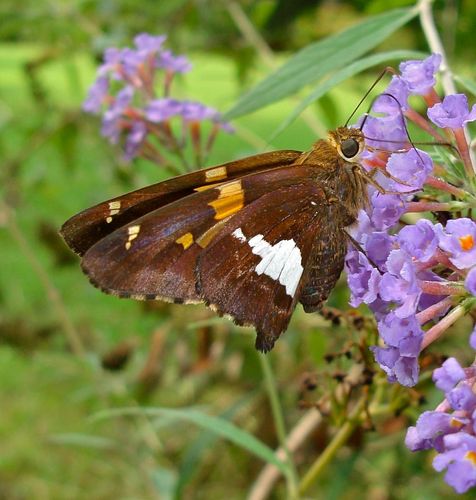 Silver-spotted SkipperEpargyreus clarus
-
 Common Checkered SkipperBurnsius communis
-
 Common Branded SkipperHesperia comma
-
 Arctic SkipperCarterocephalus palaemon
Compare
Questions and answers
What is the scientific name of the Field Skipper?
The scientific name of the Field Skipper is Atalopedes campestris. Written with its author, the full name is Atalopedes campestris (Boisduval, 1852).
Which family does the Field Skipper belong to?
Atalopedes campestris belongs to the family Hesperiidae, in the order Lepidoptera and the class Insecta.
Where is the Field Skipper found?
Checklists and occurrence records place Atalopedes campestris in 9 countries, including United States, Mexico, Canada, Colombia, Costa Rica and Curacao.
What other names does the Field Skipper have?
Atalopedes campestris is also known in English as Casachem, Field Sachem, Flaveola Skipper and Sachem.
Sources
Passages the profile rests on
- Male adults have orange forewings bordered with brown and a prominent black stigma. Source passage: “The uppersides of the male forewing are orange bordered with brown and have a large four sided black stigma.” — English Wikipedia
- Male adults have tawny orange upper surfaces with wide dark borders and a prominent black stigma. Source passage: “Male is tawny orange with wide dark borders. Prominent wide black stigma.” — alabama.butterflyatlas.usf.edu
- Female adults have dark brown wings with golden central spots and variable coloration. Source passage: “The color of the uppersides of the female wings are dark brown with golden spots in the center but are highly variable, light to very dark.” — English Wikipedia
- Female forewings have a distinctive square, transparent white spot at the end of the wing cell. Source passage: “Females can always be identified by the square white transparent spot at the end of the forewing cell.” — English Wikipedia
- Female adults have dark wings with an orange forewing edge and two transparent spots near the center. Source passage: “Female dark with orange forewing edge; two glassy (hyaline) spots near center and smaller spots near tip.” — alabama.butterflyatlas.usf.edu
- The female hindwing underside is brown with light-colored four-sided spots. Source passage: “Underside of wings on both sexes are variable but the female hindwing is brown with light colored four-sided spots.” — English Wikipedia
- The underside is yellow-brown and has a faint chevron pattern on the hindwing. Source passage: “UNDER SURFACE (ventral) Yellow bown with faint hindwing chevron pattern that frames a yellow brown spot in middle of hindwing bottom edge.” — alabama.butterflyatlas.usf.edu
- The pupa is dark brown to almost black, with a cream-colored abdominal end bearing brown dots. Source passage: “The pupa is dark brown, almost black and is cream colored on the end of the abdomen which has brown dots.” — English Wikipedia
- The pupa measures 18.0–22.5 mm long and 4.30–5.83 mm wide. Source passage: “The length of the pupa is 18.0–22.5 mm (23⁄32–7⁄8 in) with a width of 4.30–5.83 mm (1⁄8–1⁄4 in).” — English Wikipedia
- The pupal proboscis extends 2 mm beyond the wings. Source passage: “The proboscis extends 2 mm (5⁄64 in) beyond the wings.” — English Wikipedia
- Adult butterflies have a wingspan of 35–41 mm. Source passage: “The sachem's wingspan is 35–41 mm (1+3⁄8–1+5⁄8 in).” — English Wikipedia
- The final-instar caterpillar measures 18–40 mm in length. Source passage: “The length of the larvae in the last instar varies from 18 to 40 mm (3⁄4 to 1+5⁄8 in).” — English Wikipedia
- The species occurs in open, disturbed habitats including roadsides, lawns, pastures, parks, oil fields, and landfills. Source passage: “Atalopedes campestris can be found in open, disturbed areas such as roadsides, lawns, pastures, parks, oil fields, and landfills.” — English Wikipedia
- The species is frequently found in human-impacted habitats. Source passage: “Sachems are almost always found in habitats impacted by humans.” — alabama.butterflyatlas.usf.edu
- The species occurs in open, sunny habitats such as fields, parks, pastures, roadsides, utility corridors, and railroad corridors. Source passage: “A wide-variety of open, sunny habitats including fields, parks, pastures, roadsides, utility right-of-ways, and railroad corridors.” — alabama.butterflyatlas.usf.edu
- The species commonly occurs in suburban gardens and lawns. Source passage: “It is common in suburban gardens and lawns.” — alabama.butterflyatlas.usf.edu
- Adults are often found breeding in mowed lawns and visiting garden flowers. Source passage: “Somewhat weedy, this robust skipper is often found breeding in mowed lawns and visiting garden flowers” — butterfly.ucdavis.edu
- The caterpillars use Bermuda grass, hairy crabgrass, red fescue, St. Augustine grass, Indian goosegrass, seashore saltgrass, and Imperata cylindrica as host plants. Source passage: “The host plants used by the sachem caterpillar are various grasses including Bermuda grass, hairy crabgrass, red fescue, St. Augustine grass, Indian goosegrass, seashore saltgrass, and Imperata cylindrica.” — English Wikipedia
- Host plants reported in nearby states include Bermuda grass, crabgrasses, and St. Augustine grass. Source passage: “In nearby states, the Sachem's host plants include Bermuda Grass (Cynodon dactylon), crabgrasses (Digitaria spp.), and St. Augustine Grass (Stenotaphrum secundatum).” — alabama.butterflyatlas.usf.edu
- Male adults perch on grasses during the day while waiting for females. Source passage: “Males perch on grasses during the day to await females.” — English Wikipedia
- Male adults perch low to the ground while waiting for potential mates. Source passage: “Males perch low to the ground to wait for potential mates.” — alabama.butterflyatlas.usf.edu
- Adult sachems undergo three flight periods between May and November in the northern part of their range. Source passage: “This happens three times, May through November, in the northern part of their range.” — English Wikipedia
- Adult sachems undergo four to five flight periods between March and December in the southern part of their range. Source passage: “In the southern part of their range, flights occur four to five times, March through December.” — English Wikipedia
- Adult sachems are quick and highly active. Source passage: “Sachems are quick, highly active butterflies that are often encountered at flowers.” — alabama.butterflyatlas.usf.edu
- The species undergoes northward migration, with one known mass migration occurring in late summer. Source passage: “Migration occurs to the north and only one mass migration is known to occur in late summer.” — English Wikipedia
- Caterpillars construct shelters from folded or joined grass leaves and silk. Source passage: “The larvae construct nests made of a host plant leaf (or leaves) and silk that they excrete.” — English Wikipedia
- Caterpillars spend most of their lives inside their shelters. Source passage: “The larvae spend most of their lives in these shelters.” — English Wikipedia
- Caterpillars build new shelters as they grow through successive instars. Source passage: “They build new shelters as they grow and move through their different instars.” — English Wikipedia
- The final abdominal segment of the caterpillar has a fan-shaped anal comb that launches frass away from the body. Source passage: “The anal comb is shaped like a fan and located near the anus to launch the caterpillar excrement, or frass, away from the caterpillar.” — English Wikipedia
- The caterpillar's final abdominal segment has an anal comb that can propel frass several feet away. Source passage: “Sometimes the frass is propelled several feet away.” — English Wikipedia
- Caterpillars may develop red spots near the base of their heads that resemble eyes and possibly deter predators. Source passage: “As caterpillars molt and grow larger, they develop red spots near they base of their heads that appear to be eyes, possibly firghtening predators away.” — alabama.butterflyatlas.usf.edu
- The species undergoes complete metamorphosis with four life stages. Source passage: “The sachem butterfly undergoes fours stages of complete metamorphosis:” — English Wikipedia
- Caterpillars pass through five developmental instars. Source passage: “The Atalopedes campestris larva (or caterpillar) goes through five stages called instars.” — English Wikipedia
- Females lay individual eggs on or near the leaves of host plants. Source passage: “Eggs are greenish-white and are laid singly on or near the host plant leaves.” — English Wikipedia
- Female sachems rapidly deposit individual eggs in grass clumps. Source passage: “Females raidly deposit single eggs in grass clumps.” — alabama.butterflyatlas.usf.edu
- The pupa develops inside the same silk-lined leaf nest used by the caterpillar. Source passage: “The sachem larva pupates in the same silked-leaf nest where it spends most of its life.” — English Wikipedia
- Partially grown caterpillars overwinter. Source passage: “Partially grown caterpillars overwinter.” — alabama.butterflyatlas.usf.edu
- The species is often confused with skipper butterflies belonging to the genus Hesperia. Source passage: “The sachem is often mistaken for other skipper butterflies in the genus Hesperia.” — English Wikipedia
- Sachems resemble Whirlabout and Fiery Skipper butterflies in size, coloration, and behavior. Source passage: “They resemble two other common garden butterflies, Whirlabout and Fiery Skipper, in size, color, and behavior.” — alabama.butterflyatlas.usf.edu
Data
- Catalogue of Life, 2026-10-16 XR cc by
- Global Biodiversity Information Facility CC BY 4.0
- Wikidata CC0
- GeoNames CC BY 4.0
- Wikimedia Commons per image; credit shown with each image
- Within the Catalogue of Life, this name comes from Global Lepidoptera Index cc by
This species in other databases
Page built on 29 November 2026. See how the catalog is made and all sources and licences.
Cite this page
ScientificNames.org. (2026). Atalopedes campestris (Field Skipper). Retrieved November 29, 2026, from https://scientificnames.org/species/atalopedes-campestris
“Atalopedes campestris (Field Skipper).” ScientificNames.org, 2026, scientificnames.org/species/atalopedes-campestris. Accessed 29 Nov. 2026.
ScientificNames.org. “Atalopedes campestris (Field Skipper).” Accessed November 29, 2026. https://scientificnames.org/species/atalopedes-campestris.
@misc{scientificnames_atalopedes_campestris_field_skipper,
  author = {{ScientificNames.org}},
  title = {Atalopedes campestris (Field Skipper)},
  year = {2026},
  url = {https://scientificnames.org/species/atalopedes-campestris},
  note = {Accessed 2026-11-29}
}