Species · Flowering plants
Yellow Screwstem Bartonia virginica
The scientific name of the Yellow Screwstem is Bartonia virginica. It is a species of flowering plant in the family Gentianaceae (gentian family), order Gentianales.
- Scientific name
- Bartonia virginica (L.) Britton, Sterns & Poggenb.
- Common name
- Yellow Screwstem
- Genus
- Bartonia
- Family
- Gentianaceae (Gentian Family)
- Order
- Gentianales
- Class
- Magnoliopsida
- Recorded in
- 3 countries
- Name status
- accepted in the Catalogue of Life

Overview
Yellow screwstem (Bartonia virginica) is an annual flowering plant in the family Gentianaceae, order Gentianales, and class Magnoliopsida. It grows in sphagnum bogs, acidic bogs, wet meadows, pocosins, and dune swale wetlands. It has small pale-colored flowers, scale-like opposite leaves, and erect greenish-yellow stems.
Written 27 November 2026 from the sources listed below. Each statement was checked against the passage it cites; statements that could not be supported were removed.
Appearance
Yellow screwstem grows between 0.4 and 4.5 dm tall. Its erect stems are greenish-yellow and sometimes purplish at the base, with round or angled cross-sections, and may be simple or branched.[1][2][3]
Its scale-like leaves measure 0.9–4.7 mm in length and are usually arranged oppositely along the stems. They are more densely concentrated near the stem bases.[4][5][6]
Its flowers are 2.3–4.4 mm long and range from white to greenish or yellowish, sometimes with purple tinges. They have oblong petals measuring 1.6–3.2 mm, with irregularly toothed margins and rounded or obtuse tips that often bear mucros.[7][8][9][10]
Its stamens measure 1.5–3.5 mm and bear oblong anthers tinged with purple. The sepals measure 2–4.5 mm, and the pistil measures 2.5–4.5 mm.[11][12][13][14]
Its roots are reduced and lack hairs.[15]
Habitat
Yellow screwstem grows in sphagnum bogs and wet meadows. It occurs in acidic bogs containing sphagnum or Polytrichum mosses.[16][17]
In the southeastern part of its range, it also grows in pocosins and dune swale wetlands. It is recorded among the forbs of coastal plain marsh communities.[18][19]
Behaviour
Yellow screwstem obtains some of its carbon through photosynthesis while relying on underground fungi for a significant share of its carbon. Its dependence on fungal partners compensates for the limited photosynthetic capacity associated with its small leaves and reduced root system.[20][21]
Reproduction and life cycle
Yellow screwstem is an annual plant. Its flowering period extends from late summer through autumn, and its flowers are arranged in upright racemose or thyrsiform inflorescences.[22][23][24]
Fruiting takes place between August and November. Each flower produces numerous brown, irregularly shaped seeds inside a capsule that splits open medially.[25][26][27]
Its seeds are approximately 0.14 mm long and 0.08 mm wide.[28]
Conservation
Yellow screwstem is considered globally secure despite being rare or threatened in many parts of its range. It is classified as critically imperiled or endangered in Minnesota, Missouri, Newfoundland, and New Brunswick.[29][30]
It is considered imperiled in Ontario, Quebec, Vermont, and Kentucky. It is considered vulnerable in South Carolina and Nova Scotia.[31][32]
Similar species
Yellow screwstem differs from Bartonia paniculata in having opposite leaves rather than alternate leaves. Its petals have irregularly toothed margins and sharp, spine-like tips.[33][34]
Classification of the Yellow Screwstem
| Kingdom | Plantae |
|---|---|
| Subkingdom | Pteridobiotina |
| Phylum | Tracheophyta |
| Class | Magnoliopsida |
| Order | Gentianales |
| Family | Gentianaceae (Gentian Family) |
| Tribe | Gentianeae |
| Subtribe | Swertiinae |
| Genus | Bartonia (Screwstem) |
| Species | Bartonia virginica (L.) Britton, Sterns & Poggenb. |
Where the Yellow Screwstem is found
Checklists and occurrence records place Bartonia virginica in 3 countries across North America. GBIF holds 3,705 georeferenced records of it.
Countries
Regions and cities with the most records
- Pennsylvania, United States 372
- New Jersey, United States 211
- Connecticut, United States 146
- New York, United States 136
- Wisconsin, United States 123
- Massachusetts, United States 77
- Ohio, United States 77
- Michigan, United States 74
- Nova Scotia, Canada 71
- Virginia, United States 70
- Maryland, United States 65
- Ontario, Canada 62
- Indiana, United States 56
- Illinois, United States 49
- Kent, United States 49
- Tallmadge, United States 48
- Camden, United States 45
- Mount Laurel, United States 43
- Quebec, Canada 43
- Florida, United States 42
- Stow, United States 42
- Streetsboro, United States 42
- Bensalem, United States 41
- Cuyahoga Falls, United States 40
- North Carolina, United States 39
- Pennsauken, United States 38
- Sicklerville, United States 36
- Willingboro, United States 36
- Jackson, United States 35
- Maple Shade, United States 35
- Philadelphia, United States 35
- Maine, United States 34
- Akron, United States 33
- Cherry Hill, United States 33
- Hudson, United States 33
- Lindenwold, United States 32
Range as the checklists state it
Canada (New Brunswick, Newfoundland, Nova Scotia, Ontario, Québec); St. Pierre et Miquelon; USA (Alabama, Connecticut, District of Columbia, Delaware, Florida, Georgia, Illinois, Indiana, Kentucky, Louisiana, Massachusetts, Maryland, Maine, Michigan, Minnesota, Missouri, Mississippi, North Carolina, New Hampshire, New Jersey, New York, Ohio, Pennsylvania, Rhode Island, South Carolina, Tennessee, Virginia, Vermont, Wisconsin, West Virginia)
A number beside a place is its count of GBIF occurrence records. A place without a number comes from a checklist alone. Records show where a species has been observed or collected, which can include escapes and vagrants.
Common names
English
- Yellow Screwstem
- Virginia Bartonia
- Late-flowering Bartonia
- Yellow Bartonia
Names in 2 other languages
- Finnish
- virginianlenkonen
- French
- bartonie de Virginie
Synonyms
10 other scientific names have been used for this species and are now treated as synonyms of Bartonia virginica.
- Andrewsia autumnalis Spreng.
- Bartonia moseri (Steud. & Hochst. ex Griseb.) B.L.Rob. & Greenm. ex Gilg
- Bartonia pentandra Barton
- Bartonia tenella Muhl. ex Willd.
- Bartonia virginica f. abortiva Vict.
- Bartonia virginica var. virginica
- Centaurella autumnalis Pursh
- Centaurella autumnalis var. brachysepala Griseb.
- Centaurella moseri Steud. & Hochst.
- Sagina virginica L.
Related species
-
 Twining ScrewstemBartonia paniculata
-
 White ScrewstemBartonia verna
-
 Great Yellow GentianGentiana lutea
-
 Japanese GentianGentiana scabra
-
 Common CentauryCentaurium erythraea
-
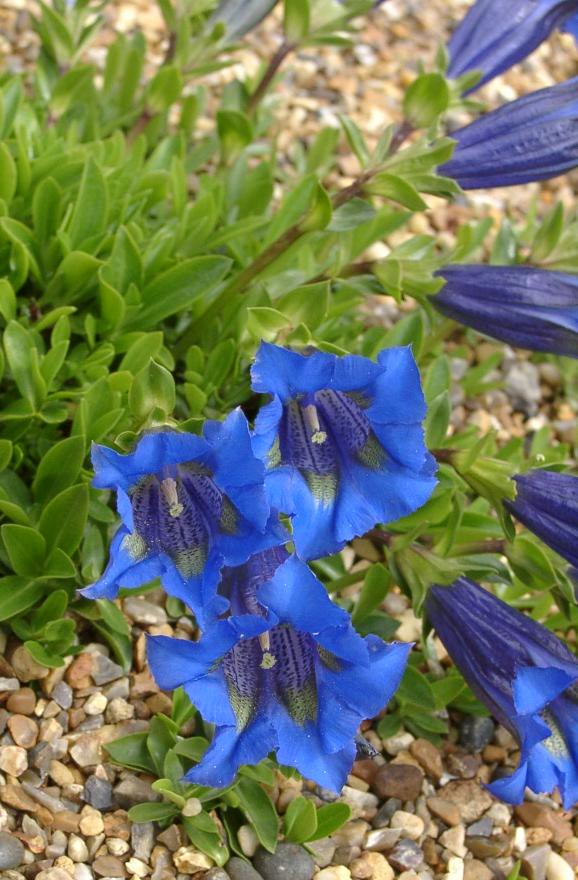 Stemless GentianGentiana acaulis
-
 Spring GentianGentiana verna
-
 Cape JittaFagraea berteroana
Compare
Questions and answers
What is the scientific name of the Yellow Screwstem?
The scientific name of the Yellow Screwstem is Bartonia virginica. Written with its author, the full name is Bartonia virginica (L.) Britton, Sterns & Poggenb..
Which family does the Yellow Screwstem belong to?
Bartonia virginica belongs to the family Gentianaceae, in the order Gentianales and the class Magnoliopsida.
Where is the Yellow Screwstem found?
Checklists and occurrence records place Bartonia virginica in 3 countries: United States, Canada and Saint Pierre and Miquelon.
What other names does the Yellow Screwstem have?
Bartonia virginica is also known in English as Virginia Bartonia, Late-flowering Bartonia and Yellow Bartonia.
What are some names for some yellow wildflowers?
Yellow screwstem is a common name for Bartonia virginica, which has flowers that can be yellowish.[7][35]
What are some common names for yellow plants?
Yellow screwstem is a common name recorded for Bartonia virginica.[35]
Sources
Passages the profile rests on
- Its stems are erect, greenish-yellow, and sometimes purplish at the base. Source passage: “Its stems are erect and greenish-yellow, sometimes with purplish bases” — English Wikipedia
- Its stems can have round or angled cross-sections and may be simple or branched. Source passage: “have either round or angled cross-sections, and are often twisted, explaining the common name "screwstem." The stems may be either simple or branched.” — English Wikipedia
- Bartonia virginica grows between 0.4 and 4.5 dm tall. Source passage: “growing 0.4–4.5 dm tall.” — English Wikipedia
- Bartonia virginica has small pale green to yellow flowers and scale-like leaves. Source passage: “B. virginica grows in wetland habitats, especially bogs, wet meadows, and swales. It is an annual species with small pale green to yellow flowers, scale-like leaves” — English Wikipedia
- Its leaves measure 0.9–4.7 mm in length and are usually arranged oppositely along the stems. Source passage: “The leaves are 0.9–4.7 mm long, scale-like, and arranged oppositely on the stems” — English Wikipedia
- Its leaves are more densely concentrated near the stem bases. Source passage: “The leaves are more densely arranged near the bases of the stems.” — English Wikipedia
- Its flowers are pale-colored and range from white to greenish or yellowish, sometimes with purple tinges. Source passage: “Each flower is 2.3–4.4 mm long and pale in color, ranging from white to greenish, yellowish, or sometimes purple-tinged.” — English Wikipedia
- Its flowers have oblong petals with irregularly toothed margins and rounded or obtuse tips that often bear mucros. Source passage: “the petals are oblong and 1.6–3.2 mm long, with denticulate margins and rounded or obtuse, often mucronate tips.” — English Wikipedia
- Its individual flowers measure 2.3–4.4 mm in length. Source passage: “Each flower is 2.3–4.4 mm long” — English Wikipedia
- Its petals measure 1.6–3.2 mm in length. Source passage: “the petals are oblong and 1.6–3.2 mm long” — English Wikipedia
- Its stamens bear oblong anthers that are tinged with purple. Source passage: “The stamens are 1.5–3.5 mm long, bearing oblong, purple-tinged anthers.” — English Wikipedia
- Its sepals measure 2–4.5 mm in length. Source passage: “The sepals are lanceolate and 2–4.5 mm long” — English Wikipedia
- Its stamens measure 1.5–3.5 mm in length. Source passage: “The stamens are 1.5–3.5 mm long” — English Wikipedia
- Its pistil measures 2.5–4.5 mm in length. Source passage: “The pistil is 2.5–4.5 mm long” — English Wikipedia
- Its roots are reduced and lack hairs. Source passage: “reduced, hairless roots.” — English Wikipedia
- Bartonia virginica grows in sphagnum bogs and wet meadows. Source passage: “B. virginica grows in sphagnum bogs and wet meadows” — English Wikipedia
- It occurs in acidic bogs containing sphagnum or Polytrichum mosses. Source passage: “where it is found in acid bogs with sphagnum or Polytrichum mosses.” — English Wikipedia
- In the southeastern part of its range, it also grows in pocosins and dune swale wetlands. Source passage: “In the southeastern parts of its range, B. virginica also grows in pocosins and dune swale wetlands.” — English Wikipedia
- It is recorded among the forbs of coastal plain marsh communities. Source passage: “Forbs. screw-stem (Bartonia virginica); water-shield (Brasenia schreberi)” — mnfi.anr.msu.edu
- Bartonia virginica obtains some of its carbon through photosynthesis while relying on underground fungi for a significant share of its carbon. Source passage: “it photosynthesizes to produce some of its own carbon while also depending on underground fungi for a significant share of its carbon.” — English Wikipedia
- Its dependence on fungal partners compensates for the limited photosynthetic capacity associated with its small leaves and reduced root system. Source passage: “This partial dependence on fungal partners compensates for the lower photosynthetic capacity of B. virginica's small leaves, reduced root system, and absence of root hairs.” — English Wikipedia
- Bartonia virginica is an annual plant. Source passage: “It is an annual species” — English Wikipedia
- Its flowering period extends from late summer through autumn. Source passage: “The flowering period for Bartonia virginica is late summer to autumn.” — English Wikipedia
- Its flowers are arranged in upright racemose or thyrsiform inflorescences. Source passage: “The flowers are arranged in upright, racemose or thyrsiform inflorescences.” — English Wikipedia
- Fruiting takes place between August and November. Source passage: “Fruiting occurs from August to November.” — English Wikipedia
- Each flower produces numerous seeds inside a capsule that splits open medially. Source passage: “Each flower produces many seeds, held in a capsule that splits open medially.” — English Wikipedia
- Its seeds are brown and irregularly shaped. Source passage: “The seeds are brown, irregularly shaped” — English Wikipedia
- Its seeds are approximately 0.14 mm long and 0.08 mm wide. Source passage: “approximately 0.14 mm long and 0.08 mm wide.” — English Wikipedia
- Bartonia virginica is considered globally secure despite being rare or threatened in many parts of its range. Source passage: “Globally, Bartonia virginica is considered secure, although it is considered rare or threatened in many parts of its range.” — English Wikipedia
- It is classified as critically imperiled or endangered in Minnesota, Missouri, Newfoundland, and New Brunswick. Source passage: “B. virginica is listed as critically imperiled or endangered in Minnesota, Missouri, Newfoundland, and New Brunswick.” — English Wikipedia
- It is considered imperiled in Ontario, Quebec, Vermont, and Kentucky. Source passage: “B. virginica is also considered imperiled in Ontario, owing to its rarity there, Quebec, Vermont, and Kentucky” — English Wikipedia
- It is considered vulnerable in South Carolina and Nova Scotia. Source passage: “it is considered vulnerable in South Carolina and Nova Scotia.” — English Wikipedia
- Bartonia virginica has opposite leaves, whereas Bartonia paniculata has alternate leaves. Source passage: “B. virginica having opposite leaves and B. paniculata having alternate leaves.” — English Wikipedia
- Bartonia virginica differs from Bartonia paniculata in having irregularly toothed petals with sharp, spine-like tips. Source passage: “B. virginica petals having irregularly toothed edges and sharp, spine-like tips called mucros” — English Wikipedia
- The common name screwstem refers to the often-twisted stems of Bartonia virginica. Source passage: “are often twisted, explaining the common name "screwstem."” — English Wikipedia
Data
- Catalogue of Life, 2026-10-16 XR cc by
- Global Biodiversity Information Facility CC BY 4.0
- Wikidata CC0
- GeoNames CC BY 4.0
- Wikimedia Commons per image; credit shown with each image
- Within the Catalogue of Life, this name comes from Synonymic Checklists of the Vascular Plants of the World cc by
References
- Britton, Sterns & Poggenb. Prelim. Cat. 36 (1888). where the name was published
This species in other databases
Page built on 27 November 2026. See how the catalog is made and all sources and licences.
Cite this page
ScientificNames.org. (2026). Bartonia virginica (Yellow Screwstem). Retrieved November 27, 2026, from https://scientificnames.org/species/bartonia-virginica
“Bartonia virginica (Yellow Screwstem).” ScientificNames.org, 2026, scientificnames.org/species/bartonia-virginica. Accessed 27 Nov. 2026.
ScientificNames.org. “Bartonia virginica (Yellow Screwstem).” Accessed November 27, 2026. https://scientificnames.org/species/bartonia-virginica.
@misc{scientificnames_bartonia_virginica_yellow_screwstem,
  author = {{ScientificNames.org}},
  title = {Bartonia virginica (Yellow Screwstem)},
  year = {2026},
  url = {https://scientificnames.org/species/bartonia-virginica},
  note = {Accessed 2026-11-27}
}