Species · Mammals
Southern Short-tailed Shrew Blarina carolinensis
The scientific name of the Southern Short-tailed Shrew is Blarina carolinensis. It is a species of mammal in the family Soricidae (shrew), order Eulipotyphla. The name dates from 1837.
- Scientific name
- Blarina carolinensis (Bachman, 1837)
- Common name
- Southern Short-tailed Shrew
- Genus
- Blarina
- Family
- Soricidae (Shrew)
- Order
- Eulipotyphla
- Class
- Mammalia
- Red List category
- LC Least Concern
- Recorded in
- 1 country
- Name status
- accepted in the Catalogue of Life

Overview
Blarina carolinensis inhabits pine forests, disturbed forests, and abandoned agricultural land in the southeastern United States, from southern Virginia to central Florida, westward to eastern Texas and central Oklahoma, and northward to southern Illinois in the Mississippi Valley. It has slate-gray fur, a comparatively heavy body, short limbs, and a long, pointed snout.
Written 26 November 2026 from the sources listed below. Each statement was checked against the passage it cites; statements that could not be supported were removed.
Similar species
Blarina carolinensis has 36–46 chromosomes, compared with 48–50 in Blarina brevicauda and 52 in Blarina hylophaga.[1]
Appearance
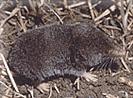
The Southern Short-tailed Shrew has slate-gray fur that is paler on its underside. Its body is comparatively heavy, with short limbs, a thick neck, and a long, pointed snout.[2][3]
Its ears are nearly hidden by soft, dense fur, and it has small eyes, a long, highly movable nose, and small ears. Its feet have five toes ending in sharp, curved claws adapted for digging.[4][5][6]
Habitat
The species primarily inhabits pine forests, including dry, wet, and swampy environments. It also occurs in disturbed forests and abandoned agricultural land.[7][8]
It commonly occupies moist, well-drained habitats containing woody vegetation. Well-drained soils facilitate underground burrowing and nest construction.[9][10]
Nests occur underground or beneath decomposing logs and stumps.[11]
Diet
The Southern Short-tailed Shrew is primarily carnivorous, and its diet consists mainly of soil invertebrates. Documented food items include insects, annelids, earthworms, centipedes, slugs, snails, and spiders.[12][13][14][15]
Its diet also includes underground fungi and berries, and it may consume vegetable matter.[12][13][15]
Behaviour
The species uses echolocation to navigate and locate prey. It consumes approximately half its body weight in food each day.[16][17]
Individuals have been observed sharing burrow systems with several other shrews. Males and females live together during the prebreeding season.[18][19]
Southern Short-tailed Shrews are described as solitary and potentially territorial.[20]
Reproduction and life cycle
The breeding season extends from March through November. Females produce two or three litters annually, each containing between two and six young.[21][22][23]
Gestation lasts between 21 and 30 days. Females reach sexual maturity at approximately six weeks of age, while males reach sexual maturity at approximately twelve weeks.[24][25][26]
Newborn young are naked and unable to see. They begin leaving the nest after 18–20 days and are weaned shortly afterward.[27][28]
Young are raised in nests made of grasses and leaves, located in underground tunnels or rotten logs.[29]
Conservation
The species is described as abundant in suitable habitats throughout its geographic range.[30]
Uses
The Southern Short-tailed Shrew helps control insect populations.[31]
Classification of the Southern Short-tailed Shrew
| Kingdom | Animalia |
|---|---|
| Phylum | Chordata |
| Subphylum | Vertebrata |
| Infraphylum | Gnathostomata |
| Parvphylum | Osteichthyes |
| Megaclass | Tetrapoda |
| Class | Mammalia (Mammal) |
| Subclass | Theria |
| Infraclass | Eutheria |
| Order | Eulipotyphla |
| Family | Soricidae (Shrew) |
| Subfamily | Soricinae |
| Tribe | Blarinini (Small-eared Shrews) |
| Genus | Blarina (American Short-tailed Shrews) |
| Species | Blarina carolinensis (Bachman, 1837) |
Where the Southern Short-tailed Shrew is found
Checklists and occurrence records place Blarina carolinensis in 1 country across North America. GBIF holds 4,688 georeferenced records of it.
Countries
Regions and cities with the most records
- Tennessee, United States 1,211
- Louisiana, United States 383
- North Carolina, United States 360
- Florida, United States 344
- Alabama, United States 251
- Oklahoma, United States 242
- Texas, United States 186
- South Carolina, United States 151
- Morrisville, United States 147
- Cary, United States 133
- Baton Rouge, United States 126
- Raleigh, United States 126
- Shenandoah, United States 116
- Garner, United States 108
- Mississippi, United States 99
- Arkansas, United States 97
- Georgia, United States 91
- Chapel Hill, United States 87
- Durham, United States 86
- Apex, United States 83
- Carrboro, United States 80
- Illinois, United States 70
- Gainesville, United States 67
- Memphis, United States 67
- Bartlett, United States 63
- Cordova, United States 60
- Ellendale, United States 59
- East Chattanooga, United States 58
- East Ridge, United States 58
- Central, United States 57
- Southaven, United States 57
- Germantown, United States 53
- East Brainerd, United States 52
- Chattanooga, United States 50
- Prairieville, United States 47
- Holly Springs, United States 44
Range as the checklists state it
North America
A number beside a place is its count of GBIF occurrence records. A place without a number comes from a checklist alone. Records show where a species has been observed or collected, which can include escapes and vagrants.
Common names
English
- Southern Short-tailed Shrew
Names in 9 other languages
- Chinese
- 南方短尾鼩鼱
- Dutch
- Zuidelijke Kortstaartspitsmuis
- Finnish
- etelänisopäästäinen
- French
- Musaraigne à queue courte du sud
- German
- Südliche Kurzschwanz-Spitzmaus, Südliche Kurzschwanzspitzmaus
- Greek
- Νότια Κοντόουρη Μυγαλή
- Japanese
- ミナミブラリナトガリネズミ
- Polish
- Blarina południowa
- Russian
- Южная короткохвостая бурозубка
Synonyms
One other scientific name has been used for this species and is now treated as a synonym of Blarina carolinensis.
- Sorex carolinensis Bachman, 1837
Subspecies and varieties
- Blarina carolinensis carolinensis subspecies
- Blarina carolinensis minima subspecies
Related species
-
 Elliot's Short-tailed ShrewBlarina hylophaga
- Everglades Short-tailed ShrewBlarina peninsulae
- Northern Short-tailed ShrewBlarina brevicaudus
- Sherman's Short-tailed ShrewBlarina shermani
-
 Etruscan ShrewSuncus etruscus
-
 Asian House ShrewSuncus murinus
-
 Common ShrewSorex araneus
-
 Arctic ShrewSorex arcticus
Compare
Questions and answers
What is the scientific name of the Southern Short-tailed Shrew?
The scientific name of the Southern Short-tailed Shrew is Blarina carolinensis. Written with its author, the full name is Blarina carolinensis (Bachman, 1837).
Which family does the Southern Short-tailed Shrew belong to?
Blarina carolinensis belongs to the family Soricidae, in the order Eulipotyphla and the class Mammalia.
Where is the Southern Short-tailed Shrew found?
Checklists and occurrence records place Blarina carolinensis in 1 country: United States.
What is the conservation status of the Southern Short-tailed Shrew?
The IUCN Red List category recorded for Blarina carolinensis is Least Concern (LC).
What do short-tailed shrews eat?
Their diet consists mainly of soil invertebrates, including insects, annelids, earthworms, centipedes, slugs, snails, and spiders. They also consume underground fungi and berries.[12][14][15]
What is the habitat of a shrew?
The Southern Short-tailed Shrew primarily inhabits pine forests, including dry, wet, and swampy environments. It also occupies disturbed forests, abandoned agricultural land, and moist, well-drained habitats containing woody vegetation.[7][8][9]
Sources
Passages the profile rests on
- Blarina carolinensis has 36–46 chromosomes, compared with 48–50 in Blarina brevicauda and 52 in Blarina hylophaga. Source passage: “Blarina carolinensis has 36-46 chromosomes, while Blarina brevicauda , found in northeastern North America, has 48 to 50 chromosomes, and Blarina hylophaga , found in the central United States, has 52 chromosomes” — animaldiversity.org
- The southern short-tailed shrew has slate-gray fur that is paler on its underside. Source passage: “The fur is slate gray, being paler on the underparts.” — English Wikipedia
- The species has a comparatively heavy body, short limbs, a thick neck, and a long, pointed snout. Source passage: “It has a comparatively heavy body, with short limbs and a thick neck, a long, pointed snout” — English Wikipedia
- Its ears are nearly hidden by its soft, dense fur. Source passage: “ears that are nearly concealed by its soft, dense fur.” — English Wikipedia
- Its feet have five toes ending in sharp, curved claws adapted for digging. Source passage: “The feet are adapted for digging, with five toes ending in sharp, curved claws.” — English Wikipedia
- The species has small eyes, a long, highly movable nose, and small ears. Source passage: “They have small eyes, a long, highly moveable nose, and small ears” — animaldiversity.org
- The species primarily inhabits pine forests, including dry, wet, and swampy environments. Source passage: “it is found primarily in pine forests. However, these range from dry to wet and even swampy habitats” — English Wikipedia
- It also inhabits disturbed forests and abandoned agricultural land. Source passage: “as well as disturbed forests and abandoned agricultural land.” — English Wikipedia
- The species commonly occupies moist, well-drained habitats containing woody vegetation. Source passage: “Southern short-tailed shrews are most commonly found in moist, well-drained habitats containing woody vegetation” — animaldiversity.org
- Its well-drained habitat soils facilitate underground burrowing and nest construction. Source passage: “The well-drained soil allows Blarina carolinensis to burrow underground and construct nests.” — animaldiversity.org
- Its nests occur underground or beneath decomposing logs and stumps. Source passage: “The nest (located either underground or beneath decomposing logs or stumps)” — animaldiversity.org
- Its diet includes insects, annelids, underground fungi, slugs, snails, centipedes, and spiders. Source passage: “diet consists of insects, annelids, hypogeous fungi, slugs and snails, centipedes, and spiders.” — English Wikipedia
- The species is primarily carnivorous and may also consume vegetable matter. Source passage: “Southern short-tailed shrews are primarily carnivorous, though some vegetable matter may be taken” — animaldiversity.org
- Its diet consists mainly of soil invertebrates. Source passage: “Their diet is composed mainly of soil invertebrates.” — animaldiversity.org
- Earthworms, centipedes, and berries are documented food items. Source passage: “Earthworms, centipedes, and berries are examples of this shrew's diet” — animaldiversity.org
- The species uses echolocation to navigate and locate prey. Source passage: “It navigates and locates prey by echolocation.” — English Wikipedia
- It consumes approximately half its body weight in food each day. Source passage: “eats about half its body weight in a day.” — English Wikipedia
- Individuals have been observed sharing burrow systems with several other shrews. Source passage: “it has been known to share its burrow systems with several individuals.” — English Wikipedia
- Males and females live together during the prebreeding season. Source passage: “The male and female live together during the prebreeding season.” — English Wikipedia
- Southern short-tailed shrews are described as solitary and potentially territorial. Source passage: “They are solitary and maybe territorial.” — animaldiversity.org
- The breeding season extends from March through November. Source passage: “The breeding season lasts from March to November” — English Wikipedia
- Females produce two or three litters annually. Source passage: “females have two or three litters per year.” — English Wikipedia
- Each litter contains between two and six young. Source passage: “Each litter consists of two to six young.” — English Wikipedia
- Gestation lasts between 21 and 30 days. Source passage: “Gestation ranges between 21 and 30 days.” — animaldiversity.org
- Females reach sexual maturity at approximately six weeks of age. Source passage: “Females reach sexual maturity at about six weeks of life” — animaldiversity.org
- Males reach sexual maturity at approximately twelve weeks of age. Source passage: “males become sexually mature at around twelve weeks of age” — animaldiversity.org
- Newborn young are naked and unable to see. Source passage: “Young are born naked and unable to see” — animaldiversity.org
- Young begin leaving the nest after 18–20 days and are weaned shortly afterward. Source passage: “After 18-20 days of life the young begin to venture from the nest and are weaned shortly after that” — animaldiversity.org
- Young are raised in nests made of grasses and leaves, located in underground tunnels or rotten logs. Source passage: “The young are reared in nests of grasses and leaves at the end of a tunnel reaching about 30 cm (12 in) below the ground, or in rotten logs.” — English Wikipedia
- The species is described as abundant in suitable habitats throughout its geographic range. Source passage: “Southern short-tailed shrews are abundant in suitable habitats throughout their range.” — animaldiversity.org
- The species helps control insect populations. Source passage: “Southern short-tailed shrews help control insect populations.” — animaldiversity.org
Data
- Catalogue of Life, 2026-10-16 XR cc by
- Global Biodiversity Information Facility CC BY 4.0
- Wikidata CC0
- GeoNames CC BY 4.0
- Wikimedia Commons per image; credit shown with each image
- Within the Catalogue of Life, this name comes from The Integrated Taxonomic Information System cc0
References
- J. Acad. Nat. Sci. Philadelphia vol.7 p.366 where the name was published
- Banks, R. C., R. W. McDiarmid, and A. L. Gardner. (1987). Checklist of Vertebrates of the United States, the U.S. Territories, and Canada. Resource Publication, No. 166.
- Wilson, Don E., and DeeAnn M. Reeder, eds. (1993). Mammal Species of the World: A Taxonomic and Geographic Reference, 2nd Ed., 3rd Printing.
- Wilson, Don E., and Sue Ruff, eds. (1999). The Smithsonian Book of North American Mammals.
- Wilson, Don E., and F. Russell Cole. (2000). Common Names of Mammals of the World.
- Wilson, Don E., and DeeAnn M. Reeder, eds. (2005). Mammal Species of the World: A Taxonomic and Geographic Reference, 3rd Ed., Vols. 1 & 2.
- Burgin, Connor, Kai He, Rudolf Haslauer, et al. / Don E. Wilson and Russell A. Mittermeier, eds. (2018). Family Soricidae (Shrews). Handbook of the Mammals of the World. Vol. 8: Insectivores, Sloths and Colugos.
This species in other databases
Page built on 28 November 2026. See how the catalog is made and all sources and licences.
Cite this page
ScientificNames.org. (2026). Blarina carolinensis (Southern Short-tailed Shrew). Retrieved November 28, 2026, from https://scientificnames.org/species/blarina-carolinensis
“Blarina carolinensis (Southern Short-tailed Shrew).” ScientificNames.org, 2026, scientificnames.org/species/blarina-carolinensis. Accessed 28 Nov. 2026.
ScientificNames.org. “Blarina carolinensis (Southern Short-tailed Shrew).” Accessed November 28, 2026. https://scientificnames.org/species/blarina-carolinensis.
@misc{scientificnames_blarina_carolinensis_southern_short_tailed_shrew,
  author = {{ScientificNames.org}},
  title = {Blarina carolinensis (Southern Short-tailed Shrew)},
  year = {2026},
  url = {https://scientificnames.org/species/blarina-carolinensis},
  note = {Accessed 2026-11-28}
}