Species · Flowering plants
Tuberous Grasspink Calopogon tuberosus
The scientific name of the Tuberous Grasspink is Calopogon tuberosus. It is a species of flowering plant in the family Orchidaceae (orchid), order Asparagales.
- Scientific name
- Calopogon tuberosus (L.) Britton, Sterns & Poggenb.
- Common name
- Tuberous Grasspink
- Genus
- Calopogon
- Family
- Orchidaceae (Orchid)
- Order
- Asparagales
- Class
- Liliopsida
- Red List category
- LC Least Concern
- Recorded in
- 6 countries
- Name status
- accepted in the Catalogue of Life

Overview
Calopogon tuberosus occurs in the United States, Canada, Saint Pierre and Miquelon, Cuba, and the Bahamas. Its flowers have prominent hairs on an upward-facing floral lip.
Written 26 November 2026 from the sources listed below. Each statement was checked against the passage it cites; statements that could not be supported were removed.
Appearance
The flowers are magenta, pink, or occasionally white. They have an oblong-elliptic middle petal and an upper lip that faces upward rather than downward.[1][2][3]
Each flower has three spreading sepals, two lower petals, and an upper lip. Numerous orange, stamen-like structures occur on the upper lip, beneath which a curved column containing the male and female flower parts arches.[4][5][6]
The upper floral lip bears a patch of club-shaped hairs. The patch nearest the outer tip is white, yellow, or orange, while the more basal patches are usually yellow.[7][8]
The plant has a bulb-like corm resembling a tuber. It usually has one smooth, basal leaf that is linear to lance-shaped, although individual plants occasionally have two basal linear leaves.[9][10][11]
Flowering stems bear one to several flowers, with several typically blooming simultaneously. The flowering stem is noticeably longer than the leaf.[12][13]
Habitat
Tuberous Grasspink occurs in sandhill seeps, floating peat mats, savannas, fens, bogs, pine flatwoods, and marl prairies. It also occurs in wet meadows, calcareous fens, and acidic bogs.[14][15][16]
Behaviour
Bumblebees pollinate Tuberous Grasspink even though its flowers offer no nectar. Various bumblebees and some leafcutter bees are its main pollinators.[17][18]
Reproduction and life cycle
The flowers bloom from mid-May through July.[19]
When a bumblebee lands on the hinged floral lip, its weight causes contact with the pollinarium. Bumblebees landing on the upper lip are thrown backward and acquire pollen on their backs.[20][21]
The sticky pollinarium can be transported by a visiting bee to another orchid.[22]
When pollination succeeds, the plant produces thousands of tiny seeds that lack energy reserves. The seeds require suitable habitat and particular symbiotic fungi to germinate successfully.[23][24][25]
Tuberous Grasspink has obligate relationships with soil-borne mycorrhizal fungi.[26]
Conservation
Tuberous Grasspink is classified as G5 (Secure) under the NatureServe conservation status system. It is considered imperiled within Missouri.[27][28]
The species is listed as endangered in Illinois, Kentucky, and Maryland. New York classifies it as exploitably vulnerable.[29][30]
Its populations are threatened by habitat destruction and fragmentation.[31]
Uses
Some collectors have dug up showy wild orchids for use in gardens.[32]
Classification of the Tuberous Grasspink
| Kingdom | Plantae |
|---|---|
| Subkingdom | Pteridobiotina |
| Phylum | Tracheophyta |
| Class | Liliopsida |
| Order | Asparagales |
| Family | Orchidaceae (Orchid) |
| Genus | Calopogon (Grass-pink) |
| Species | Calopogon tuberosus (L.) Britton, Sterns & Poggenb. |
Where the Tuberous Grasspink is found
Checklists and occurrence records place Calopogon tuberosus in 6 countries across North America. GBIF holds 14,339 georeferenced records of it.
Countries
Regions and cities with the most records
- Florida, United States 1,025
- Ontario, Canada 950
- Wisconsin, United States 698
- Michigan, United States 696
- Nova Scotia, Canada 685
- Maine, United States 430
- Quebec, Canada 399
- Mississippi, United States 333
- North Carolina, United States 316
- New York, United States 308
- New Jersey, United States 307
- Massachusetts, United States 297
- Pennsylvania, United States 260
- New Hampshire, United States 238
- South Carolina, United States 224
- New Brunswick, Canada 223
- Minnesota, United States 219
- Texas, United States 203
- Ohio, United States 190
- Gautier, United States 172
- Pascagoula, United States 162
- Connecticut, United States 158
- Bangor, United States 151
- Ocean Springs, United States 144
- West Virginia, United States 139
- Vermont, United States 136
- Alabama, United States 134
- Indiana, United States 114
- Georgia, United States 109
- Illinois, United States 106
- London, Canada 99
- Griffith, United States 86
- Highland, United States 86
- Louisiana, United States 85
- Newfoundland and Labrador, Canada 85
- Lansing, United States 84
A number beside a place is its count of GBIF occurrence records. A place without a number comes from a checklist alone. Records show where a species has been observed or collected, which can include escapes and vagrants.
Common names
English
- Tuberous Grasspink
- Grass Pink Orchid
- Grass-pink
- Tuberous Grass-pink
Names in 1 other language
- French
- calopogon gracieux, calopogon tubéreux
Synonyms
4 other scientific names have been used for this species and are now treated as synonyms of Calopogon tuberosus.
- Bletia tuberosa (L.) Ames
- Cathea tuberosa (L.) Morong
- Helleborine tuberosa (L.) Kuntze
- Limodorum tuberosum L. ambiguous synonym
Subspecies and varieties
- Calopogon tuberosus var. simpsonii (Simpson's Grasspink) variety
- Calopogon tuberosus var. tuberosus (Tuberous Grass-pink) variety
Related species
-
 Many-flowered Grass-pink OrchidCalopogon multiflorus
-
 Oklahoma Grass PinkCalopogon oklahomensis
-
 Bearded GrasspinkCalopogon barbatus
-
 Pale GrasspinkCalopogon pallidus
-
 VanillaVanilla planifolia
-
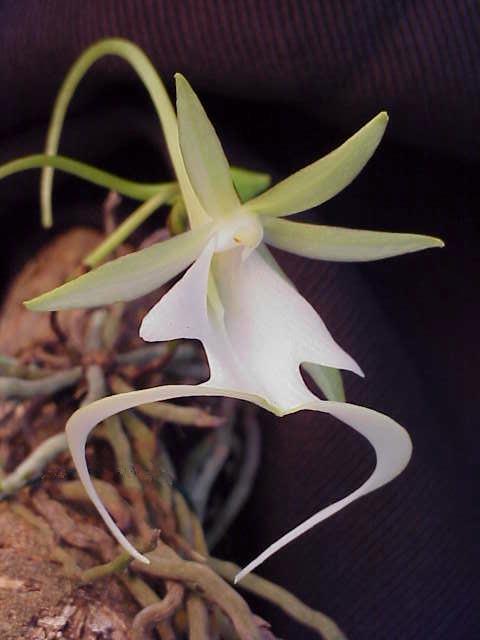 Ghost OrchidDendrophylax lindenii
-
 Noble DendrobiumDendrobium nobile
-
 Bee OrchidOphrys apifera
Compare
Questions and answers
What is the scientific name of the Tuberous Grasspink?
The scientific name of the Tuberous Grasspink is Calopogon tuberosus. Written with its author, the full name is Calopogon tuberosus (L.) Britton, Sterns & Poggenb..
Which family does the Tuberous Grasspink belong to?
Calopogon tuberosus belongs to the family Orchidaceae, in the order Asparagales and the class Liliopsida.
Where is the Tuberous Grasspink found?
Checklists and occurrence records place Calopogon tuberosus in 6 countries: United States, Canada, Bahamas, Cuba, Saint Pierre and Miquelon and Mexico.
What is the conservation status of the Tuberous Grasspink?
The IUCN Red List category recorded for Calopogon tuberosus is Least Concern (LC).
What other names does the Tuberous Grasspink have?
Calopogon tuberosus is also known in English as Grass Pink Orchid, Grass-pink and Tuberous Grass-pink.
Why is it called Tuberous Grasspink?
The name tuberosus refers to the plant's tuberous rootstock. The genus name Calopogon derives from Greek words meaning beautiful and bearded, referring to the hairs on the floral lip.[33][34]
How deep do its roots grow?
The average maximum root depth is approximately 7 centimeters.[35]
Where does it occur in Missouri?
It occurs in the Ozark and Ozark border regions, particularly in Shannon, Reynolds, Iron, and St. Francois counties.[36]
How widespread is Tuberous Grasspink?
It is the most widespread of the five North American Calopogon species.[37]
Sources
Passages the profile rests on
- Its flowers are magenta, pink, or occasionally white. Source passage: “Flowers are magenta, pink, or rarely white in color” — English Wikipedia
- Its flowers have an oblong-elliptic middle petal. Source passage: “the middle petal is distinctively oblong-elliptic in shape.” — English Wikipedia
- Its flower labellum faces upward rather than downward. Source passage: “The flowers of C. tuberosus have a labellum which faces upwards” — English Wikipedia
- Its flowers have three spreading sepals, two lower petals, and an upper lip. Source passage: “There are three spreading sepals and two lower petals, with one above called the upper lip.” — fs.usda.gov
- Numerous orange, stamen-like structures occur on the upper lip and attract pollinators. Source passage: “There are many orange stamen-like structures on the upper lip that attract pollinators.” — fs.usda.gov
- A curved column containing the male and female flower parts arches beneath the upper lip. Source passage: “A curved column with the male and female flower parts arches below the upper lip.” — fs.usda.gov
- Its upper floral lip bears a patch of club-shaped hairs. Source passage: “the lip petal, with its patch of club-shaped hairs, uppermost.” — mdc.mo.gov
- The hair patch nearest the outer tip of its floral lip is white, yellow, or orange, while the more basal patches are usually yellow. Source passage: “the patch of club-shaped hairs nearest the outer tip of the lip being white, yellow, or orange (with the more basal patches usually yellow)” — mdc.mo.gov
- Individual plants typically have one basal linear leaf, although occasionally they have two. Source passage: “Individuals have one (occasionally two) linear basal leaves.” — English Wikipedia
- The species has a bulb-like corm resembling a tuber. Source passage: “It has a bulb-like corm that resembles a tuber” — fs.usda.gov
- The species usually has one smooth, basal leaf that is linear to lance-shaped. Source passage: “There is usually only 1 leaf, which is basal, smooth, and linear to lance-shaped.” — mdc.mo.gov
- Its flowering stems bear one to several flowers, with several typically blooming simultaneously. Source passage: “Flowering stems have one to several flowers and typically several bloom at a time.” — fs.usda.gov
- The flowering stem is noticeably longer than the leaf. Source passage: “the flowering stem noticeably longer than the leaf.” — mdc.mo.gov
- The species occurs in sandhill seeps, floating peat mats, and savannas. Source passage: “habitats such as sandhill seeps, floating peat mats, and savannas.” — English Wikipedia
- Other habitats occupied by the species include fens, bogs, pine flatwoods, and marl prairies. Source passage: “It may also be found in habitats such as fens, bogs, pine flatwoods, and marl prairies.” — English Wikipedia
- The species occurs in wet meadows, calcareous fens, and acidic bogs. Source passage: “It prefers moist places like wet meadows, calcareous fens, and acidic bogs.” — fs.usda.gov
- Bumblebees pollinate the species despite its flowers offering no nectar. Source passage: “C. tuberosus is pollinated by bumblebees despite a lack of nectar incentive.” — English Wikipedia
- Various bumblebees and some leafcutter bees are the species' main pollinators. Source passage: “Various bumblebees, and some leafcutter bees, are the main pollinators.” — mdc.mo.gov
- Its flowers bloom from mid-May through July. Source passage: “Flowers bloom from mid-May to July.” — fs.usda.gov
- When a bumblebee lands on the hinged floral lip, its weight causes contact with the pollinarium. Source passage: “Bumblebees, while looking for nonexistent nectar, weigh down the hinged lip causing the bee to be moved into contact with the pollinarium.” — English Wikipedia
- Bumblebees landing on the upper lip are thrown backward and acquire pollen on their backs. Source passage: “Bumblebees land on the upper lip of the flower, and upon landing they are thrown backwards where their backs are dipped in pollen.” — fs.usda.gov
- The sticky pollinarium can be transported by a visiting bee to another orchid. Source passage: “The pollinarium is sticky and then can be flown by the bee to pollinate another orchid.” — English Wikipedia
- The species produces thousands of seeds when pollination succeeds. Source passage: “Although an orchid, when pollination is successful, may produce thousands of seeds” — mdc.mo.gov
- Its seeds are tiny and lack energy reserves. Source passage: “the seeds are tiny and have no energy reserves.” — mdc.mo.gov
- Its seeds require suitable habitat and particular symbiotic fungi to germinate successfully. Source passage: “They must germinate in a perfect habitat and in the presence of particular kinds of symbiotic fungi in order to survive.” — mdc.mo.gov
- The species has obligate relationships with soil-borne mycorrhizal fungi. Source passage: “all orchids have obligate relationships with soil-borne mycorrhizal fungi” — mdc.mo.gov
- The species is classified as G5 (Secure) under the NatureServe conservation status system. Source passage: “It is listed as "G5 - Secure" under the NatureServe conservation status system.” — English Wikipedia
- The species is considered imperiled within Missouri. Source passage: “A Missouri species of conservation concern, considered imperiled within the state.” — mdc.mo.gov
- The species is listed as endangered in Illinois, Kentucky, and Maryland. Source passage: “it is listed as an endangered species by the states of Illinois, Kentucky, and Maryland” — English Wikipedia
- New York classifies the species as exploitably vulnerable. Source passage: “and as exploitably vulnerable by New York.” — English Wikipedia
- The species' populations are threatened by habitat destruction and fragmentation. Source passage: “Humans have also destroyed and fragmented the habitats in which orchids live” — mdc.mo.gov
- Some collectors have dug up showy wild orchids for use in gardens. Source passage: “Unscrupulous collectors have dug up our showiest species for use in gardens.” — mdc.mo.gov
- The genus name Calopogon derives from Greek words meaning beautiful and bearded, referring to the hairs on the floral lip. Source passage: “The species name, Calopogon, is from the Greek calas (“beautiful”) and pogon (“bearded”), in reference to the hairs on the lip.” — mdc.mo.gov
- The name tuberosus refers to the plant's tuberous rootstock. Source passage: “The species name, tuberosus, refers to the tuberous rootstock.” — mdc.mo.gov
- The average maximum root depth is approximately 7 centimeters. Source passage: “The average maximum root depth has been found to be 7 centimeters” — English Wikipedia
- Within Missouri, the species occurs in the Ozark and Ozark border regions, particularly in Shannon, Reynolds, Iron, and St. Francois counties. Source passage: “Scattered in the Ozark and Ozark border regions, particularly in Shannon, Reynolds, Iron, and St. Francois counties.” — mdc.mo.gov
- The species is the most widespread of the five North American Calopogon species. Source passage: “There are five species of Calopogon in North America and this species is the most widespread.” — fs.usda.gov
Data
- Catalogue of Life, 2026-10-16 XR cc by
- Global Biodiversity Information Facility CC BY 4.0
- Wikidata CC0
- GeoNames CC BY 4.0
- Wikimedia Commons per image; credit shown with each image
- Within the Catalogue of Life, this name comes from The World Checklist of Vascular Plants (WCVP) cc by
References
- Prelim. Cat.: 52 (1888) where the name was published
This species in other databases
- Catalogue of Life Q28V
- Wikidata Q1596367
- iNaturalist 82578
- World Flora Online wfo-0000780265
- GRIN 404342
Page built on 28 November 2026. See how the catalog is made and all sources and licences.
Cite this page
ScientificNames.org. (2026). Calopogon tuberosus (Tuberous Grasspink). Retrieved November 28, 2026, from https://scientificnames.org/species/calopogon-tuberosus
“Calopogon tuberosus (Tuberous Grasspink).” ScientificNames.org, 2026, scientificnames.org/species/calopogon-tuberosus. Accessed 28 Nov. 2026.
ScientificNames.org. “Calopogon tuberosus (Tuberous Grasspink).” Accessed November 28, 2026. https://scientificnames.org/species/calopogon-tuberosus.
@misc{scientificnames_calopogon_tuberosus_tuberous_grasspink,
  author = {{ScientificNames.org}},
  title = {Calopogon tuberosus (Tuberous Grasspink)},
  year = {2026},
  url = {https://scientificnames.org/species/calopogon-tuberosus},
  note = {Accessed 2026-11-28}
}