Species · Flowering plants
Fairy-slipper Calypso bulbosa
The scientific name of the Fairy-slipper is Calypso bulbosa. It is a species of flowering plant in the family Orchidaceae (orchid), order Asparagales.
- Scientific name
- Calypso bulbosa (L.) Oakes
- Common name
- Fairy-slipper
- Genus
- Calypso
- Family
- Orchidaceae (Orchid)
- Order
- Asparagales
- Class
- Liliopsida
- Recorded in
- 10 countries
- Name status
- accepted in the Catalogue of Life

Overview
The species occurs in northern and montane forests, subarctic swamps and marshes, and shady subarctic coniferous forests across the Northern Hemisphere. Each plant produces a single slipper-shaped flower with rose-purple petals and a whitish lip marked by purple stripes and a yellow patch.
Written 26 November 2026 from the sources listed below. Each statement was checked against the passage it cites; statements that could not be supported were removed.
Appearance
The fairy-slipper is a low-growing herbaceous plant with a nearly egg-shaped underground storage organ called a corm. It has a single leaf that is nearly circular or egg-shaped in outline, with a base that is often heart-shaped.[1][2][3]
The plant typically grows to a height of 8–20 cm. Its single leaf measures 1–6.5 cm long and 1.2–5.2 cm wide.[4][5]
The flower is purple-pink and bilaterally symmetrical, with threefold floral organization. Its petals and sepals are pink to purple and measure approximately 10–12 mm long and 2–4 mm wide.[6][7]
The flower has a white-to-pink lip marked with pink or yellow spots. The lip measures approximately 15–25 mm long and has a wide, shoe-shaped cavity at its back.[8][9][10]
Habitat
The fairy-slipper occurs in undisturbed northern and montane forests, subarctic swamps and marshes, and shady locations within subarctic coniferous forests. It also occurs in moist montane coniferous forests.[11][12][13][14]
The species has a circumpolar distribution across the Northern Hemisphere. Its European distribution includes Sweden, Finland, the Baltic states, and northern European Russia.[15][16]
Its North American distribution includes California, the Rocky Mountain states, and most of the northernmost United States. Its Asian distribution includes China, Mongolia, Korea, and Japan.[17][18]
Behaviour
The leaf emerges in autumn and remains green throughout winter. It withers shortly after flowering.[19][20]
The fairy-slipper uses food deception by attracting insects without producing nectar. Insects quickly learn to avoid revisiting its flowers.[21][22]
Bumblebees typically visit one to three flowers before leaving. Most common bumblebee species appear to visit and pollinate the fairy-slipper, which is pollinated by naive bumblebee queens.[23][24][25]
Reproduction and life cycle
The fairy-slipper produces one flower per plant and generally flowers in May and June, usually after snowmelt. Its flowering period partly overlaps with the flowering periods of willows and bilberry.[26][27][28]
The plant produces a new corm each year. Corms from one or two previous years can remain attached and firm.[29][30]
Seed germination requires infection by a mycorrhizal root fungus. Individual plants seldom survive longer than five years.[31][32]
Conservation
NatureServe assessed the fairy-slipper as globally secure (G5) in 2025. It was assessed as vulnerable (S3) in Arizona, Wyoming, South Dakota, Minnesota, and Maine, and imperiled (S2) in Wisconsin and Michigan.[33][34][35]
The species is assessed as critically imperiled (S1) on the Island of Newfoundland and is considered possibly locally extinct in Nunavut.[36][37]
The fairy-slipper was listed as vulnerable in Sweden's 2020 Red List. Finland assessed it as vulnerable in its 2019 national Red Book.[38][39]
Uses
The fairy-slipper's corms have been used as food by Indigenous peoples of North America. The Nlaka'pamux people of British Columbia used the species to treat mild epilepsy.[40][41]
Attempts to cultivate the species in gardens have not been successful. Transplanting it usually kills the plants.[42][43]
Classification of the Fairy-slipper
| Kingdom | Plantae |
|---|---|
| Subkingdom | Pteridobiotina |
| Phylum | Tracheophyta |
| Class | Liliopsida |
| Order | Asparagales |
| Family | Orchidaceae (Orchid) |
| Genus | Calypso (Fairy-slipper) |
| Species | Calypso bulbosa (L.) Oakes |
Where the Fairy-slipper is found
Checklists and occurrence records place Calypso bulbosa in 10 countries across Asia, Europe and North America. GBIF holds 44,297 georeferenced records of it.
Countries
- Canada 9,694
- China 80
- Finland 10,852
- Japan 54
- Mongolia 3
- North Korea 12
- Russia 1,703
- South Korea 3
- Sweden 6,396
- United States 15,500
Regions and cities with the most records
- British Columbia, Canada 6,376
- Lapland, Finland 6,359
- Norrbotten, Sweden 3,363
- California, United States 3,358
- Oregon, United States 2,894
- Washington, United States 2,786
- Tornio, Finland 2,270
- Kemi, Finland 2,036
- Alberta, Canada 1,813
- Västerbotten, Sweden 1,583
- Langford, Canada 1,580
- Colwood, Canada 1,528
- Esquimalt, Canada 1,430
- Saanich, Canada 1,404
- Central Saanich, Canada 1,380
- Victoria, Canada 1,329
- Oak Bay, Canada 1,271
- Colorado, United States 1,246
- Montana, United States 1,169
- San Rafael, United States 1,113
- Irkutsk Oblast, Russia 778
- Idaho, United States 699
- Sooke, Canada 646
- Jämtland, Sweden 610
- Corvallis, United States 549
- Markova, Russia 450
- Duncan, Canada 442
- Albany, United States 430
- Irkutsk, Russia 414
- Anacortes, United States 412
- Västernorrland, Sweden 376
- Harewood, Canada 367
- Nanaimo, Canada 367
- North Cowichan, Canada 353
- Wyoming, United States 324
- Bozeman, United States 290
A number beside a place is its count of GBIF occurrence records. A place without a number comes from a checklist alone. Records show where a species has been observed or collected, which can include escapes and vagrants.
Common names
English
- Fairy-slipper
- Venus'-slipper
- Venus's Slipper
- Calypso
Names in 4 other languages
- Finnish
- neidonkenkä
- French
- calypso bulbeuse, calypso bulbeux
- Norwegian Bokmål
- norne
- Swedish
- norna
Synonyms
14 other scientific names have been used for this species and are now treated as synonyms of Calypso bulbosa.
- Calypso borealis Salisb.
- Calypso bulbosa (L.) Britton
- Calypso bulbosa (L.) Rchb.fil.
- Calypso bulbosa f. bulbosa
- Calypsodium boreale Link
- Cymbidium boreale Sw.
- Cypripedium bulbosum L.
- Cytherea borealis Salisb.
- Cytherea bulbosa (L.) House
- Limodorum boreale Sw.
- Norna borealis Wahlenb.
- Norna borealis var. europaea Wahlenb.
- Orchidium arcticum Sw.
- Orchidium boreale Sw.
Subspecies and varieties
- Calypso bulbosa nothovar. kostiukiae variety
- Calypso bulbosa var. americana (Calypso) variety
- Calypso bulbosa var. bulbosa variety
- Calypso bulbosa var. occidentalis variety
- Calypso bulbosa var. speciosa variety
Related species
-
 VanillaVanilla planifolia
-
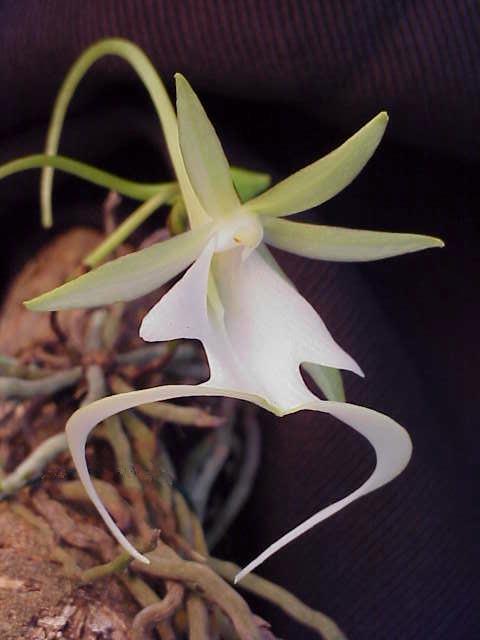 Ghost OrchidDendrophylax lindenii
-
 Noble DendrobiumDendrobium nobile
-
 Bee OrchidOphrys apifera
-
 Monkey-Face OrchidDracula simia
-
 Christmas OrchidCattleya trianae
-
 Chinese Crown OrchidEulophia graminea
-
 Pink Lady's SlipperCypripedium acaule
Compare
Questions and answers
What is the scientific name of the Fairy-slipper?
The scientific name of the Fairy-slipper is Calypso bulbosa. Written with its author, the full name is Calypso bulbosa (L.) Oakes.
Which family does the Fairy-slipper belong to?
Calypso bulbosa belongs to the family Orchidaceae, in the order Asparagales and the class Liliopsida.
Where is the Fairy-slipper found?
Checklists and occurrence records place Calypso bulbosa in 10 countries, including United States, Finland, Canada, Sweden, Russia and China.
What other names does the Fairy-slipper have?
Calypso bulbosa is also known in English as Venus'-slipper, Venus's Slipper and Calypso.
How rare are calypso orchids?
The fairy-slipper was assessed as globally secure (G5) in 2025. Its conservation assessments vary by location, ranging from vulnerable (S3) and imperiled (S2) to critically imperiled (S1) on the Island of Newfoundland.[33][34][35][36]
Sources
Passages the profile rests on
- Calypso bulbosa is a low-growing herbaceous plant with a nearly egg-shaped underground storage organ called a corm. Source passage: “Calypso bulbosa is a low growing herbaceous plant with a nearly egg-shaped underground storage organ called a corm.” — English Wikipedia
- The plant has a single leaf that is nearly circular or egg-shaped in outline. Source passage: “The leaf is suborbiculate, nearly circular, or ovate, egg shaped in outline.” — English Wikipedia
- The leaf base is often heart-shaped, with an indentation resembling the top of a heart. Source passage: “The base of the leaf is often cordate, having an indentation like the top of a heart.” — English Wikipedia
- The plant typically grows to a height of 8–20 cm. Source passage: “Calypso orchids are typically 8 to 20 cm in height.” — English Wikipedia
- The plant's single leaf measures 1–6.5 cm long and 1.2–5.2 cm wide. Source passage: “Plants have a single leaf that measures 1 to 6.5 centimeters long with a width of 1.2 to 5.2 cm.” — English Wikipedia
- The plant produces a purple-pink, bilaterally symmetrical flower with threefold floral organization. Source passage: “Plant blooms with a purple-pink hermaphroditic, zygomorphic and threefold flower.” — English Wikipedia
- The flower's petals and sepals are pink to purple and measure approximately 10–12 mm long and 2–4 mm wide. Source passage: “The protruding petals and sepals are pink to purple in color, about 10 to 12 millimeters long and about 2 to 4 millimeters wide.” — English Wikipedia
- The flower has a white-to-pink lip marked with pink or yellow spots. Source passage: “The lip (labellum) is white to pink with pink or yellow spots.” — English Wikipedia
- The flower's lip has a wide, shoe-shaped cavity at its back. Source passage: “It has a wide, shoe-shaped cavity in the back” — English Wikipedia
- The flower's lip measures approximately 15–25 mm long. Source passage: “The lip (labellum) is white to pink with pink or yellow spots. It has a wide, shoe-shaped cavity in the back and is about 15 to 25 millimeters long.” — English Wikipedia
- The species occurs in undisturbed northern and montane forests. Source passage: “It is a perennial member of the orchid family found in undisturbed northern and montane forests.” — English Wikipedia
- The species grows in subarctic swamps and marshes. Source passage: “It is found in subarctic swamps and marshes as well as shady places subarctic coniferous forests.” — English Wikipedia
- The species occurs in shady locations within subarctic coniferous forests. Source passage: “It is found in subarctic swamps and marshes as well as shady places subarctic coniferous forests.” — English Wikipedia
- The species occurs in moist montane coniferous forests. Source passage: “Habitat: Moist montane coniferous forests” — home.nps.gov
- The species has a circumpolar distribution across the Northern Hemisphere. Source passage: “This species' range is circumpolar, extending around the northern hemisphere.” — English Wikipedia
- Its European distribution includes Sweden, Finland, the Baltic states, and northern European Russia. Source passage: “In Europe this includes just Sweden, Finland, the Baltic states, and the northern parts of European Russia.” — English Wikipedia
- Its North American distribution includes California, the Rocky Mountain states, and most of the northernmost United States. Source passage: “It includes California, the Rocky Mountain states and most of the most northerly states of the United States;” — English Wikipedia
- Its Asian distribution includes China, Mongolia, Korea, and Japan. Source passage: “China, Mongolia, Korea and Japan” — English Wikipedia
- The plant's leaf emerges in autumn and remains green throughout winter. Source passage: “The leaf sprouts in the autumn and remains green over the winter.” — English Wikipedia
- The plant's leaf withers shortly after flowering. Source passage: “It withers a short time after flowering.” — English Wikipedia
- The species uses food deception by attracting insects without producing nectar. Source passage: “It relies on "pollination by deception", as it attracts insects to anther-like yellow hairs at the entrance to the pouch and forked nectary-like structures at the end of the pouch but produces no nectar that would nourish them.” — English Wikipedia
- Insects quickly learn to avoid revisiting the flowers. Source passage: “Insects quickly learn not to revisit it.” — English Wikipedia
- Bumblebees typically visit one to three flowers before leaving. Source passage: “Bumblebees typically visited one to three Calypso flowers before flying away” — pmc.ncbi.nlm.nih.gov
- Most common bumblebee species appear to visit and pollinate the species. Source passage: “Most common bumblebee species appeared to visit and thus pollinate Calypso.” — pmc.ncbi.nlm.nih.gov
- The species is pollinated by naive bumblebee queens. Source passage: “Calypso is a terrestrial orchid which flowers in late spring and early summer and which is pollinated by naive bumblebee queens” — pmc.ncbi.nlm.nih.gov
- The plant generally flowers in May and June, usually after snowmelt. Source passage: “They do not bloom until May and June usually after snow melt.” — English Wikipedia
- The species produces one flower per plant. Source passage: “a species with a single flower per plant” — pmc.ncbi.nlm.nih.gov
- The species' flowering period partly overlaps with the flowering periods of willows and bilberry. Source passage: “whose flowering period partly overlaps with rewarding, early flowering willows (Salix sp.) and later-flowering bilberry (Vaccinium myrtillus).” — pmc.ncbi.nlm.nih.gov
- The plant produces a new corm each year. Source passage: “A new bulb is formed by the plant each year” — English Wikipedia
- Corms from one or two previous years can remain attached and firm. Source passage: “but bulbs from one or two years prior can remain attached and firm.” — English Wikipedia
- Seed germination requires infection by a mycorrhizal root fungus. Source passage: “Since the orchid seed does not provide any nutrient tissue, germination only takes place when infected by a mycorrhizal root fungus.” — English Wikipedia
- Individual plants seldom survive longer than five years. Source passage: “Plants seldom live for longer than five years.” — English Wikipedia
- NatureServe assessed the species as globally secure (G5) in 2025. Source passage: “The conservation organization NatureServe evaluated the species in 2025 and found it to be secure at the global level (G5).” — English Wikipedia
- NatureServe assessed the species as vulnerable (S3) in Arizona, Wyoming, South Dakota, Minnesota, and Maine. Source passage: “In the United States they found it to be vulnerable (S3) in Arizona, Wyoming, South Dakota, Minnesota, and Maine.” — English Wikipedia
- NatureServe assessed the species as imperiled (S2) in Wisconsin and Michigan. Source passage: “In two other states, Wisconsin and Michigan, they rated it as imperiled (S2).” — English Wikipedia
- The species is assessed as critically imperiled (S1) on the Island of Newfoundland. Source passage: “More critically it is critically imperiled (S1) on the Island of Newfoundland” — English Wikipedia
- The species is considered possibly locally extinct in Nunavut. Source passage: “and possibly locally extinct in Nunavut.” — English Wikipedia
- The species was listed as vulnerable in Sweden's 2020 Red List. Source passage: “In Sweden it was listed as vulnerable in the 2020 Swedish Red List.” — English Wikipedia
- Finland assessed the species as vulnerable in its 2019 national Red Book. Source passage: “Similarly, Finland evaluated it as vulnerable in the 2019 national Red Book.” — English Wikipedia
- The species' corms have been used as food by Indigenous peoples of North America. Source passage: “The corms have been used as a food source by North American native peoples.” — English Wikipedia
- The Nlaka'pamux people of British Columbia used the species to treat mild epilepsy. Source passage: “The Nlaka'pamux of British Columbia used it as a treatment for mild epilepsy.” — English Wikipedia
- Attempts to cultivate the species in gardens have not been successful. Source passage: “Attempts at garden cultivation are not successful” — English Wikipedia
- Transplanting the species usually kills the plants. Source passage: “transplanting usually will kill plants.” — English Wikipedia
Data
- Catalogue of Life, 2026-10-16 XR cc by
- Global Biodiversity Information Facility CC BY 4.0
- Wikidata CC0
- GeoNames CC BY 4.0
- Wikimedia Commons per image; credit shown with each image
- Within the Catalogue of Life, this name comes from The World Checklist of Vascular Plants (WCVP) cc by
References
- Cat. Vermont Pl.: 28 (1842) where the name was published
This species in other databases
Page built on 28 November 2026. See how the catalog is made and all sources and licences.
Cite this page
ScientificNames.org. (2026). Calypso bulbosa (Fairy-slipper). Retrieved November 28, 2026, from https://scientificnames.org/species/calypso-bulbosa
“Calypso bulbosa (Fairy-slipper).” ScientificNames.org, 2026, scientificnames.org/species/calypso-bulbosa. Accessed 28 Nov. 2026.
ScientificNames.org. “Calypso bulbosa (Fairy-slipper).” Accessed November 28, 2026. https://scientificnames.org/species/calypso-bulbosa.
@misc{scientificnames_calypso_bulbosa_fairy_slipper,
  author = {{ScientificNames.org}},
  title = {Calypso bulbosa (Fairy-slipper)},
  year = {2026},
  url = {https://scientificnames.org/species/calypso-bulbosa},
  note = {Accessed 2026-11-28}
}