Species · Fishes
Bull Shark Carcharhinus leucas
The scientific name of the Bull Shark is Carcharhinus leucas. It is a species of fish in the family Carcharhinidae (requiem shark), order Carcharhiniformes. The name dates from 1839.
- Scientific name
- Carcharhinus leucas (Valenciennes, 1839)
- Common name
- Bull Shark
- Genus
- Carcharhinus
- Family
- Carcharhinidae (Requiem Shark)
- Order
- Carcharhiniformes
- Class
- Elasmobranchii
- Red List category
- VU Vulnerable
- Environment
- brackish, freshwater, marine
- Recorded in
- 19 countries
- Name status
- accepted in the Catalogue of Life

Overview
Written 24 November 2026 from the sources listed below. Each statement was checked against the passage it cites; statements that could not be supported were removed.
Appearance
Its second dorsal fin is smaller than its first dorsal fin.[1]
Newborn Bull sharks can measure up to 81 cm in length. Adult females average 2.4 m in length and 130 kg in weight, while adult males average 2.25 m and 95 kg.[2][3][4]
A recorded female specimen measured exactly 4.0 m in length. A pregnant Bull shark measuring 3.25 m weighed 450 kg.[5][6]
Habitat
Bull sharks inhabit warm, shallow coastal waters, estuaries, rivers and lakes. They can live in both freshwater and saltwater environments.[7][8]
They have been recorded at depths of up to 150 m, although they generally remain above 30 m.[9]
Young Bull sharks commonly use coastal lagoons, river mouths and low-salinity estuaries as nursery habitats. Juveniles also occur in estuarine nursery areas.[10][11]
Diet
Bull sharks primarily eat bony fishes, small sharks and stingrays. Fish constitute most of their diet, although they can consume almost any available food.[12][13]
Their diet also includes turtles, birds, dolphins, terrestrial mammals, crustaceans and echinoderms.[14]
Adult Bull sharks appear to feed at higher trophic levels than sub-adult individuals.[15]
Behaviour
Bull sharks can move between freshwater and saltwater environments because they tolerate a wide range of salinities. They can remain in low-salinity aquatic environments for extended periods.[16][17]
They are generally solitary hunters but may temporarily cooperate with another individual when hunting. They hunt in murky water, where prey have greater difficulty seeing them approach, and use a bump-and-bite hunting technique.[18][19][20]
Bull sharks may regurgitate stomach contents to distract predators and facilitate escape.[21]
They can undertake seasonal migrations across wide geographical areas and exhibit extended periods of fidelity to particular sites.[22][23]
Reproduction and life cycle
Bull sharks mate during late summer and early autumn, frequently in bays and estuaries. Gestation lasts approximately 12 months.[24][25]
Females can give birth to between one and thirteen live, free-swimming young per pregnancy. Newborn Bull sharks measure approximately 70 cm in length.[26][27][28]
Male Bull sharks can begin reproducing at approximately 15 years of age, while females can begin reproducing at approximately 18 years.[29][30]
Conservation
The Bull shark is classified as Vulnerable on the IUCN Red List. Its populations are declining partly because of ongoing shark-culling efforts near beaches.[31][32]
The species has a vulnerability score of 82 out of 100 in FishBase. Its minimum population doubling time is estimated to exceed 14 years.[33][34]
Classification of the Bull Shark
| Kingdom | Animalia |
|---|---|
| Phylum | Chordata |
| Subphylum | Vertebrata |
| Infraphylum | Gnathostomata |
| Parvphylum | Chondrichthyes |
| Class | Elasmobranchii |
| Subclass | Neoselachii |
| Infraclass | Selachii |
| Superorder | Galeomorphi |
| Order | Carcharhiniformes |
| Family | Carcharhinidae (Requiem Shark) |
| Genus | Carcharhinus (Gray Sharks) |
| Species | Carcharhinus leucas (Valenciennes, 1839) |
Where the Bull Shark is found
Checklists and occurrence records place Carcharhinus leucas in 19 countries. GBIF holds 107,882 georeferenced records of it.
Countries
- Australia 93,164
- Benin 30
- Cameroon 336
- Fiji 240
- French Polynesia 3
- Gabon 4
- Gambia 3
- Madagascar 8
- Mayotte 5
- Mexico 378
- Mozambique 6,165
- New Caledonia 13
- Palau 3
- Papua New Guinea 33
- Republic of the Congo 3
- Reunion 22
- Seychelles 18
- South Africa 2,959
- United States 4,495
Regions and cities with the most records
- Sydney, Australia 42,907
- Queensland, Australia 34,495
- Logan City, Australia 11,230
- New South Wales, Australia 10,580
- Texas, United States 994
- Northern Territory, Australia 379
- Douala, Cameroon 289
- Littoral, Cameroon 285
- Coffs Harbour, Australia 186
- Gladstone, Australia 169
- Central Coast, Australia 164
- Durban, South Africa 148
- Pinetown, South Africa 147
- Florida, United States 140
- Port Arthur, United States 133
- Townsville, Australia 132
- Baja California Sur, Mexico 99
- Louisiana, United States 99
- Playa del Carmen, Mexico 97
- Zambezia Province, Mozambique 85
- Quintana Roo, Mexico 75
- Central, Fiji 58
- Wollongong, Australia 55
- Ntuzuma, South Africa 44
- Cozumel, Mexico 41
- Fort Pierce, United States 39
- Quelimane, Mozambique 29
- KwaZulu-Natal, South Africa 27
- South-West, Cameroon 27
- Jupiter, United States 24
- Melbourne, United States 24
- Palm Bay, United States 24
- Palm Beach Gardens, United States 23
- Palm Coast, United States 23
- South Carolina, United States 22
- Buea, Cameroon 21
31 more countries have a few records outside this range
These countries hold a few records of Carcharhinus leucas but lie outside the range the checklists give for it. Such records are often zoo or garden specimens, museum material or vagrants, so the species is not counted as occurring there.
- Bahamas 48
- Bangladesh 45
- Belize 6
- Brazil 36
- Colombia 6
- Costa Rica 35
- Cuba 8
- Ecuador 6
- Faroe Islands 23
- French Guiana 236
- Guadeloupe 3
- Guatemala 7
- India 38
- Indonesia 15
- Iraq 3
- Japan 55
- Malaysia 30
- Maldives 4
- Martinique 3
- Myanmar 9
- Nicaragua 9
- Oman 7
- Panama 38
- Philippines 4
- Portugal 5
- Singapore 5
- Sri Lanka 82
- Svalbard and Jan Mayen 3
- Thailand 24
- United Arab Emirates 27
- United Kingdom 33
A number beside a place is its count of GBIF occurrence records. A place without a number comes from a checklist alone. Records show where a species has been observed or collected, which can include escapes and vagrants.
Common names
English
- Bull Shark
- Cub Shark
- Estuary Shark
- Estuary Whaler Shark
- Hervey Bay Whaler Shark
- Lake Nicaragua Shark
- River Shark
- River Whaler
- River Whaler Shark
- Swan River Shark
- Swan River Whaler Shark
- Van Rooyen's Shark
- Zambezi Shark
Names in 60 other languages
- Afrikaans
- Bulhaai, Van Rooyenshaai, Zambesihaai
- Arabic
- قرش الثور, قرش زامبيزي, قرش مصبات الانهار, قرش نيكاراغوا
- Armenian
- Ցուլ շնաձուկ
- Belarusian
- Акула-бык
- Bulgarian
- Бича акула
- Catalan
- tauró camús
- Chinese
- 低鰭真鯊(公牛真鯊), 公牛鯊
- Croatian
- Morski pas bik
- Czech
- žralok bělavý
- Danish
- Tyrehaj, Tyrehajen
- Dutch
- Atlantische grondhaai, Zambezi haai, stierhaai
- Esperanto
- Taŭrŝarko
- Estonian
- Tömpnina-hallhai
- Fijian
- Qio, qio tovuto
- Finnish
- Härkähai
- French
- Requin boule-dogue, Requin bouledogue, Requin chasseur, requin du Zambèze, requin-bouledogue
- Galician
- Tiburón touro
- German
- Bullenhai, Gemeine Grundhai, Gemeiner Grundhai, Sambesihai, Stierhai
- Greek
- Ταυροκαρχαρίας
- Hebrew
- כריש שורי
- Hungarian
- Bikacápa
- Icelandic
- Nautháfur
- Indonesian
- Hiu banteng
- Irish
- Tarbhsiorc
- Italian
- Carcarino, Squalo baleniere degli estuari, Squalo baleniere del Fitzroy, Squalo cucciolo, Squalo d'acqua dolce, Squalo dal naso a pala, Squalo del Lago Nicaragua, Squalo dello Swan
- Japanese
- Oomejiro zame, Ushi zame, ウシザメ, オオメジロザメ, オオメジロザメ/ウシザメ, シロナカー
- Khmer
- Trey chhlarm
- Korean
- 황소상어
- Lithuanian
- Bukasnukis ryklys
- Malagasy
- Boriloha
- Malay
- Jerung, Jerung sapi, Yu, Yu bekeng, Yu ganas, Yu garang
- Malayalam
- ബുൾ ഷാർക്ക്
- Mandarin Chinese
- 低鳍真鲨, 公牛白眼鮫, 公牛白眼鲛, 大沙, 尼加拉瓜真鯊, 尼加拉瓜真鲨, 白真鲨
- Norwegian Bokmål
- Oksehai
- Persian
- Kooseh, Sag Mahi, گاوکوسه
- Polish
- Żarłacz tępogłowy
- Portuguese
- Cação-fidalgo, Cação-flamengo, Marracho touro, Sicuri-branco, Tubarão-buldogue, tubarão-cabeça-chata, tubarão-do-zambeze, tubarão-touro
- Russian
- Серая бычья акула, Тупорылая акула
- Samoan
- Malie
- Serbian
- Pas trupan, Бик ајкула
- Slovak
- Žralok belavý
- Spanish
- Cabeza de batea, Gayarre, Madrecazón, Tiburon sarda, Tiburón chato, Tiburón ñato, Xmoa, tiburón sarda
- Swedish
- Tjurhaj
- Tagalog
- Pating
- Thai
- Chararm Hua-bart, ปลาฉลามหัวบาตร
- Turkish
- Boğa köpek balığı
- Ukrainian
- Акула-бик
- Vietnamese
- Cá Mập lơ - ca, Cá mập bò mắt trắng
- bck
- Ngan.gu
- bos
- Zambezi ajkula
- fan
- Nkwégnan
- fon
- Ehouatagbo
- grn
- Piraroto akãmbéva
- jav
- Cucut bekeman, Hius buas
- mnk
- Pattamó
- nyh
- Ngawoonkoo
- pnb
- سنڈا شارک
- seh
- Madjibundi
- wmt
- Ngangu
- wol
- Gaïdé guedj
Synonyms
23 other scientific names have been used for this species and are now treated as synonyms of Carcharhinus leucas.
- Carcharhinus azureus (Gilbert & Starks, 1904)
- Carcharhinus nicaraguensis (Gill, 1877)
- Carcharhinus vanrooyeni Smith, 1958
- Carcharhinus zambezensis (Peters, 1852)
- Carcharias azureus Gilbert & Starks, 1904
- Carcharias leucas Valenciennes, 1839
- Carcharias leucas Müller & Henle, 1839
- Carcharias spenceri Ogilby, 1910
- Carcharias zambesensis Peters, 1852
- Carcharias zambezensis Peters, 1852
- Carcharicus leucas (Valenciennes, 1839)
- Carcharinus leucas (Valenciennes, 1839)
- Carcharinus zambesensis (Peters, 1852)
- Carcharinus zambezensis (Peters, 1852)
- Eulamia nicaraguensis Gill, 1877
- Galeolamna bogimba Whitley, 1943
- Galeolamna greyi mckaili Whitley, 1945
- Galeolamna leucas (Müller & Henle, 1839)
- Galeolamna leucas (Valenciennes, 1839)
- Galeolamna mckaili Whitley, 1945
- Prionodon platyodon Poey, 1860
- Squalus obtusus Poey, 1861
- Squalus platyodon (Poey, 1860)
Related species
-
 Oceanic Whitetip SharkCarcharhinus longimanus
-
 Dusky SharkCarcharhinus obscurus
-
 Blacktip Reef SharkCarcharhinus melanopterus
-
 Copper SharkCarcharhinus brachyurus
-
 Blacktip SharkCarcharhinus limbatus
-
 Grey Reef SharkCarcharhinus amblyrhynchos
-
 Sandbar SharkCarcharhinus plumbeus
-
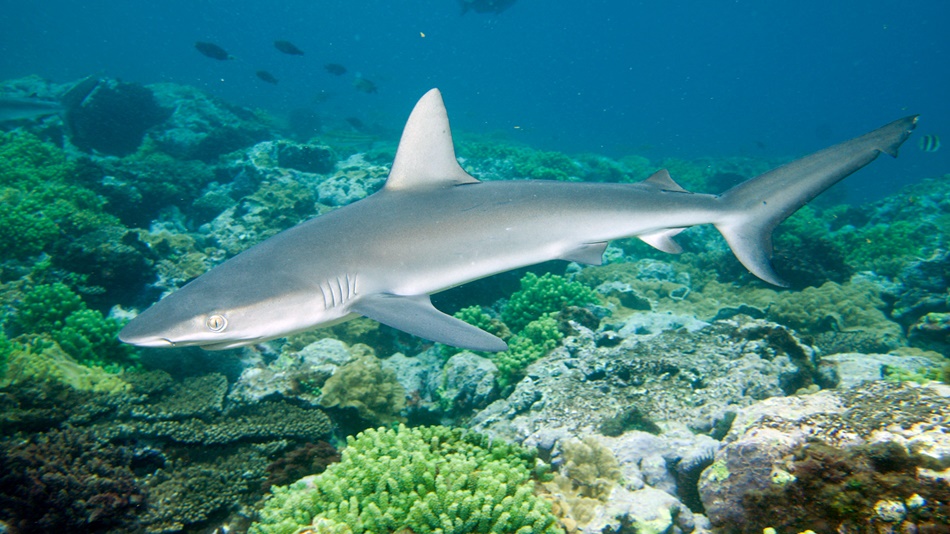 Galapagos SharkCarcharhinus galapagensis
Compare
Questions and answers
What is the scientific name of the Bull Shark?
The scientific name of the Bull Shark is Carcharhinus leucas. Written with its author, the full name is Carcharhinus leucas (Valenciennes, 1839).
Which family does the Bull Shark belong to?
Carcharhinus leucas belongs to the family Carcharhinidae, in the order Carcharhiniformes and the class Elasmobranchii.
Where is the Bull Shark found?
Checklists and occurrence records place Carcharhinus leucas in 19 countries, including Australia, Mozambique, United States, South Africa, Mexico and Cameroon.
What is the conservation status of the Bull Shark?
The IUCN Red List category recorded for Carcharhinus leucas is Vulnerable (VU).
What other names does the Bull Shark have?
Carcharhinus leucas is also known in English as Cub Shark, Estuary Shark, Estuary Whaler Shark, Hervey Bay Whaler Shark, Lake Nicaragua Shark and River Shark.
What is the bull shark's diet?
Bull sharks primarily eat bony fishes, small sharks and stingrays. They also consume turtles, birds, dolphins, terrestrial mammals, crustaceans and echinoderms.[12][14]
Sources
Passages the profile rests on
- The bull shark's second dorsal fin is smaller than its first dorsal fin. Source passage: “The second dorsal fin is smaller than the first.” — English Wikipedia
- Newborn bull sharks can measure up to 81 cm in length. Source passage: “The bull shark can be up to 81 cm (2 ft 8 in) in length at birth.” — English Wikipedia
- Adult female bull sharks average 2.4 m in length and 130 kg in weight. Source passage: “Adult female bull sharks average 2.4 m (8 ft) long and typically weigh 130 kg (290 lb)” — English Wikipedia
- Adult male bull sharks average 2.25 m in length and 95 kg in weight. Source passage: “the slightly smaller adult male averages 2.25 m (7 ft) and 95 kg (209 lb).” — English Wikipedia
- A recorded female bull shark specimen measured exactly 4.0 m in length. Source passage: “a single record exists of a female specimen of exactly 4.0 m (13 ft).” — English Wikipedia
- A pregnant bull shark measuring 3.25 m weighed 450 kg. Source passage: “A 3.25 m (10.7 ft) long pregnant individual reached 450 kg (990 lb).” — English Wikipedia
- Bull sharks inhabit warm, shallow coastal waters, estuaries, rivers and lakes. Source passage: “The bull shark is commonly found worldwide in coastal areas of warm oceans, in rivers and lakes” — English Wikipedia
- Bull sharks can inhabit both freshwater and saltwater environments. Source passage: “Bull sharks are euryhaline and can thrive in both salt and fresh water.” — English Wikipedia
- Bull sharks have been recorded at depths of up to 150 m, although they generally remain above 30 m. Source passage: “It is found to a depth of 150 m (490 ft), but does not usually swim deeper than 30 m (98 ft).” — English Wikipedia
- Young bull sharks commonly use coastal lagoons, river mouths and low-salinity estuaries as nursery habitats. Source passage: “Coastal lagoons, river mouths, and other low-salinity estuaries are common nursery habitats.” — English Wikipedia
- Juvenile bull sharks occur in estuarine nursery areas. Source passage: “Juveniles occur in estuarine nursery areas” — pmc.ncbi.nlm.nih.gov
- Bull sharks primarily eat bony fishes, small sharks and stingrays. Source passage: “The bull shark's diet consists mainly of bony fish and small sharks, including other bull sharks, and stingrays.” — English Wikipedia
- Bull sharks can consume almost any available food, although fish constitute most of their diet. Source passage: “Bull sharks will eat almost anything, but their diet consists mainly of fish.” — kids.nationalgeographic.com
- Bull sharks also consume turtles, birds, dolphins, terrestrial mammals, crustaceans and echinoderms. Source passage: “Their diet can also include turtles, birds, dolphins, terrestrial mammals, crustaceans, and echinoderms.” — English Wikipedia
- Adult bull sharks appear to feed at higher trophic levels than sub-adult individuals. Source passage: “Adult bull sharks appeared to exhibit a shift towards consistently higher trophic level prey” — pmc.ncbi.nlm.nih.gov
- Bull sharks can move between freshwater and saltwater environments because they tolerate a wide range of salinities. Source passage: “The bull shark is diadromous, meaning they can swim between salt and fresh water with ease, as they are euryhaline fish—able to quickly adapt to a wide range of salinities.” — English Wikipedia
- Bull sharks can remain in low-salinity aquatic environments for extended periods. Source passage: “demonstrating their ability to live indefinitely in low-salinity aquatic environments.” — English Wikipedia
- Bull sharks are generally solitary hunters but may temporarily cooperate with another individual when hunting. Source passage: “The bull shark is a solitary hunter, though may briefly pair with another bull shark to make hunting and tricking prey easier.” — English Wikipedia
- Bull sharks hunt in murky water where prey have greater difficulty seeing them approach. Source passage: “They hunt in murky waters where it is harder for the prey to see the shark coming.” — English Wikipedia
- Bull sharks use a bump-and-bite hunting technique. Source passage: “Bull sharks have been known to use the bump-and-bite technique to attack their prey.” — English Wikipedia
- Bull sharks may regurgitate stomach contents to distract predators and facilitate escape. Source passage: “As part of their survival mechanism, bull sharks will regurgitate the food in their stomachs in order to escape from a predator.” — English Wikipedia
- Bull sharks can undertake seasonal migrations across wide geographical areas. Source passage: “Bull sharks are capable of ranging over wide geographical areas [33,34] and undertake seasonal migrations [25,26,35]” — pmc.ncbi.nlm.nih.gov
- Bull sharks can exhibit extended periods of fidelity to particular sites. Source passage: “Bull sharks are known to exhibit periods of extended site fidelity” — pmc.ncbi.nlm.nih.gov
- Bull sharks mate during late summer and early autumn, frequently in bays and estuaries. Source passage: “Bull sharks mate during late summer and early autumn, often in bays and estuaries.” — English Wikipedia
- Bull shark gestation lasts approximately 12 months. Source passage: “After gestating for 12 months, a bull shark may give birth to 1 to 13 live young.” — English Wikipedia
- Female bull sharks can give birth to between one and thirteen live young per pregnancy. Source passage: “a bull shark may give birth to 1 to 13 live young.” — English Wikipedia
- Bull sharks give birth to live, free-swimming offspring. Source passage: “They are viviparous, born live and free-swimming.” — English Wikipedia
- Newborn bull sharks measure approximately 70 cm in length. Source passage: “The young are about 70 cm (27.6 in) at birth.” — English Wikipedia
- Male bull sharks can begin reproducing at approximately 15 years of age. Source passage: “The male bull shark is able to begin reproducing around the age of 15” — English Wikipedia
- Female bull sharks can begin reproducing at approximately 18 years of age. Source passage: “while the female cannot begin reproducing until 18.” — English Wikipedia
- The bull shark is classified as Vulnerable on the IUCN Red List. Source passage: “Bull sharks are listed as vulnerable on the IUCN Red List.” — English Wikipedia
- Bull shark populations are declining partly because of ongoing shark-culling efforts near beaches. Source passage: “Their aggressive nature has led to ongoing shark-culling efforts near beaches to protect beachgoers, which is one of the causes of bull shark populations continuing to decrease.” — English Wikipedia
- Bull sharks have a very high vulnerability score of 82 out of 100 in FishBase. Source passage: “Very high vulnerability (82 of 100).” — fishbase.se
- The minimum population doubling time for bull sharks is estimated to exceed 14 years. Source passage: “Very Low, minimum population doubling time more than 14 years” — fishbase.se
Data
- Catalogue of Life, 2026-10-16 XR cc by
- Global Biodiversity Information Facility CC BY 4.0
- Wikidata CC0
- GeoNames CC BY 4.0
- Wikimedia Commons per image; credit shown with each image
- Within the Catalogue of Life, this name comes from World Register of Marine Species cc by
This species in other databases
- Catalogue of Life KV3M5
- Wikidata Q190469
- iNaturalist 84996
- WoRMS urn:lsid:marinespecies.org:taxname:105792
Page built on 24 November 2026. See how the catalog is made and all sources and licences.
Cite this page
ScientificNames.org. (2026). Carcharhinus leucas (Bull Shark). Retrieved November 24, 2026, from https://scientificnames.org/species/carcharhinus-leucas
“Carcharhinus leucas (Bull Shark).” ScientificNames.org, 2026, scientificnames.org/species/carcharhinus-leucas. Accessed 24 Nov. 2026.
ScientificNames.org. “Carcharhinus leucas (Bull Shark).” Accessed November 24, 2026. https://scientificnames.org/species/carcharhinus-leucas.
@misc{scientificnames_carcharhinus_leucas_bull_shark,
  author = {{ScientificNames.org}},
  title = {Carcharhinus leucas (Bull Shark)},
  year = {2026},
  url = {https://scientificnames.org/species/carcharhinus-leucas},
  note = {Accessed 2026-11-24}
}