Species · Flowering plants
Caucasian Hackberry Celtis caucasica
The scientific name of the Caucasian Hackberry is Celtis caucasica. It is a species of flowering plant in the family Cannabaceae (hemp family), order Rosales.
- Scientific name
- Celtis caucasica Willd.
- Common name
- Caucasian Hackberry
- Genus
- Celtis
- Family
- Cannabaceae (Hemp Family)
- Order
- Rosales
- Class
- Magnoliopsida
- Red List category
- LC Least Concern
- Recorded in
- 18 countries
- Name status
- accepted in the Catalogue of Life
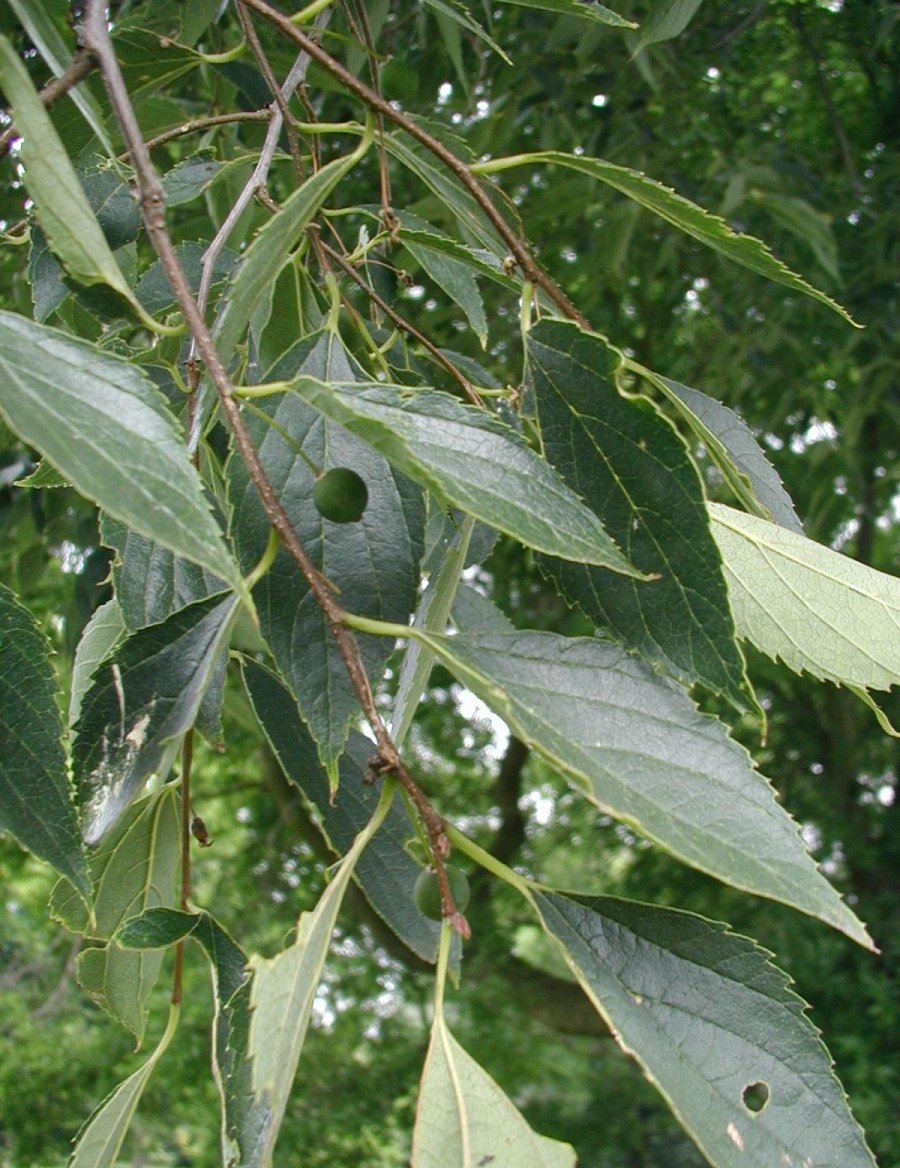
Overview
Caucasian hackberry is a flowering plant classified in the Cannabaceae family. It is native to the Caucasus region, Central Asia, and the western Himalaya. It is described as a nitrogen-fixer and forms symbiotic associations with the fungi Funneliformis mosseae and Rhizophagus intraradices.
Written 26 November 2026 from the sources listed below. Each statement was checked against the passage it cites; statements that could not be supported were removed.
Appearance
Caucasian hackberry is a flowering plant.[1]
Habitat
Caucasian hackberry tolerates poor soils and drought conditions.[2][3]
It is native to the Caucasus region, Central Asia, and the western Himalaya. It is not native to Great Britain or Ireland.[4][5]
Uses
Caucasian hackberry can be planted as a street tree.[6]
Classification of the Caucasian Hackberry
| Kingdom | Plantae |
|---|---|
| Subkingdom | Pteridobiotina |
| Phylum | Tracheophyta |
| Class | Magnoliopsida |
| Order | Rosales |
| Family | Cannabaceae (Hemp Family) |
| Genus | Celtis (Hackberry) |
| Species | Celtis caucasica Willd. |
Where the Caucasian Hackberry is found
Checklists and occurrence records place Celtis caucasica in 18 countries across Asia and Europe. GBIF holds 529 georeferenced records of it.
Countries where it is native or its origin is not stated
- Afghanistan 43
- Armenia 108
- Azerbaijan 16
- Bulgaria 7
- Georgia 52
- India 7
- Iran 32
- Iraq 10
- Kazakhstan 52
- Kyrgyzstan 24
- North Macedonia 1
- Pakistan 17
- Russia 29
- Tajikistan 31
- Turkey 22
- Turkmenistan 29
- Uzbekistan 41
Countries where it has been introduced
Regions and cities with the most records
- Almaty Region, Kazakhstan 21
- Tbilisi, Georgia 19
- Syunik, Armenia 16
- Tbilisi, Georgia 16
- Almaty, Kazakhstan 12
- Dagestan, Russia 10
- Zhambyl, Kazakhstan 9
- Jalal-Abad Region, Kyrgyzstan 8
- Kapan, Armenia 8
- Lori, Armenia 8
- Kakheti, Georgia 6
- Semender, Russia 6
- Tashkent, Uzbekistan 5
- Badakhshan, Afghanistan 4
- Enem, Russia 4
- Gorno-Badakhshan, Tajikistan 4
- Khyber Pakhtunkhwa, Pakistan 4
- Krasnodar, Russia 4
- Merke, Kazakhstan 4
- Mtskheta-Mtianeti, Georgia 4
- Nuristan, Afghanistan 4
- Tavush, Armenia 4
- Tehran, Iran 4
- Turar Ryskulov, Kazakhstan 4
- Yablonovskiy, Russia 4
- Abadan, Turkmenistan 3
- Aragatsotn, Armenia 3
- Ashgabat, Turkmenistan 3
- Ijevan, Armenia 3
- Tajrīsh, Iran 3
- Tehran, Iran 3
- Baghlan, Afghanistan 2
- Balkh, Afghanistan 2
- Kabul, Afghanistan 2
- Takhar, Afghanistan 2
- Bamyan, Afghanistan 1
1 more country has a few records outside this range
These countries hold a few records of Celtis caucasica but lie outside the range the checklists give for it. Such records are often zoo or garden specimens, museum material or vagrants, so the species is not counted as occurring there.
Range as the checklists state it
North Macedonia; E-Bulgaria; Ukraine [I]; Crimea [I]; Kazakhstan; Turkmenistan; Uzbekistan; Kyrgyzstan; Tajikistan; Northern Caucasus; Georgia [Caucasus]; Armenia; Azerbaijan; Turkey (E-Anatolia, Inner Anatolia, N-Anatolia, S-Anatolia); Iraq (NE-Iraq, NW-Iraq); Iran (EC-Iran, E-Iran, N-Iran, Iranian Aserbaijan, S-Iran); Afghanistan (Badakshan, Baghlan, Balkh, Bamyan, Faryab, Herat, Kabul, Kunar / Nuristan, Laghman, Wardak, Nangarhar, Parwan, Takhar); Pakistan (Baluchistan, Kurram, Swat, Pakistani Punjab); India (Himachal Pradesh, Meghalaya, Uttarakhand)
A number beside a place is its count of GBIF occurrence records. A place without a number comes from a checklist alone. Records show where a species has been observed or collected, which can include escapes and vagrants.
Common names
English
- Caucasian Hackberry
- Caucasian Nettletree
Names in 7 other languages
- Arabic
- ميس قوقازي
- Finnish
- kaukasiankeltis
- German
- kaukasischer Zürgelbaum
- Russian
- Каркас кавказский
- Slovak
- brestovec kaukazský
- Ukrainian
- Каркас кавказький
- kur
- تاوکی کەوکازی
Synonyms
8 other scientific names have been used for this species and are now treated as synonyms of Celtis caucasica.
- Celtis arcata Buch.-Ham. ex Wall.
- Celtis australis subsp. caucasica (Willd.) C.C.Towns.
- Celtis caucasica subsp. caudata (Planch.) Grudz.
- Celtis caucasica var. caudata Planch.
- Celtis caucasica var. cuspidata Planch.
- Celtis caucasica var. tupalangi (Vassilcz.) Bondarenko
- Celtis inglisii Royle
- Celtis tupalangi Vassilcz.
Related species
-
 Common HackberryCeltis occidentalis
-
 European HackberryCeltis australis
-
 SugarberryCeltis laevigata
-
 Chinese HackberryCeltis sinensis
-
 African White-StinkwoodCeltis africana
-
 Net-Leaf HackberryCeltis reticulata
-
 Dwarf HackberryCeltis tenuifolia
-
 SnakyCeltis iguanaea
Compare
Questions and answers
What is the scientific name of the Caucasian Hackberry?
The scientific name of the Caucasian Hackberry is Celtis caucasica. Written with its author, the full name is Celtis caucasica Willd..
Which family does the Caucasian Hackberry belong to?
Celtis caucasica belongs to the family Cannabaceae, in the order Rosales and the class Magnoliopsida.
Where is the Caucasian Hackberry found?
Checklists and occurrence records place Celtis caucasica in 18 countries, including Armenia, Georgia, Kazakhstan, Afghanistan, Uzbekistan and Iran.
What is the conservation status of the Caucasian Hackberry?
The IUCN Red List category recorded for Celtis caucasica is Least Concern (LC).
What other names does the Caucasian Hackberry have?
Celtis caucasica is also known in English as Caucasian Nettletree.
Where is the hackberry tree native to?
Caucasian hackberry is native to the Caucasus region, Central Asia, and the western Himalaya.[4]
Sources
Passages the profile rests on
- Celtis caucasica is a flowering plant. Source passage: “is a species of flowering plant in the family Cannabaceae.” — English Wikipedia
- Celtis caucasica tolerates poor soils. Source passage: “it tolerates poor soils, drought, and nearby paving” — English Wikipedia
- Celtis caucasica tolerates drought conditions. Source passage: “it tolerates poor soils, drought, and nearby paving” — English Wikipedia
- Celtis caucasica is native to the Caucasus region, Central Asia, and the western Himalaya. Source passage: “It is native to the Caucasus region, Central Asia, and on to the western Himalaya.” — English Wikipedia
- Celtis caucasica is not native to Great Britain or Ireland. Source passage: “Native to GB/Ireland: No” — rhs.org.uk
- Celtis caucasica can be planted as a street tree. Source passage: “can be used as street tree.” — English Wikipedia
Data
- Catalogue of Life, 2026-10-16 XR cc by
- Global Biodiversity Information Facility CC BY 4.0
- Wikidata CC0
- GeoNames CC BY 4.0
- Wikimedia Commons per image; credit shown with each image
- Within the Catalogue of Life, this name comes from Synonymic Checklists of the Vascular Plants of the World cc by
References
- Willd. (1806). Sp. Pl., ed. 4 [Willdenow] 4(2): 994 (1806). where the name was published
This species in other databases
- Catalogue of Life MHS2Y
- Wikidata Q4215118
- iNaturalist 190378
- World Flora Online wfo-0000593463
- GRIN 9760
Page built on 29 November 2026. See how the catalog is made and all sources and licences.
Cite this page
ScientificNames.org. (2026). Celtis caucasica (Caucasian Hackberry). Retrieved November 29, 2026, from https://scientificnames.org/species/celtis-caucasica
“Celtis caucasica (Caucasian Hackberry).” ScientificNames.org, 2026, scientificnames.org/species/celtis-caucasica. Accessed 29 Nov. 2026.
ScientificNames.org. “Celtis caucasica (Caucasian Hackberry).” Accessed November 29, 2026. https://scientificnames.org/species/celtis-caucasica.
@misc{scientificnames_celtis_caucasica_caucasian_hackberry,
  author = {{ScientificNames.org}},
  title = {Celtis caucasica (Caucasian Hackberry)},
  year = {2026},
  url = {https://scientificnames.org/species/celtis-caucasica},
  note = {Accessed 2026-11-29}
}