Species · Insects
Latticed Heath Chiasmia clathrata
The scientific name of the Latticed Heath is Chiasmia clathrata. It is a species of insect in the family Geometridae (geometer moth), order Lepidoptera. The name dates from 1758.
- Scientific name
- Chiasmia clathrata (Linnaeus, 1758)
- Common name
- Latticed Heath
- Genus
- Chiasmia
- Family
- Geometridae (Geometer Moth)
- Order
- Lepidoptera
- Class
- Insecta
- Environment
- terrestrial
- Recorded in
- 44 countries
- Name status
- accepted in the Catalogue of Life
Overview
Chiasmia clathrata inhabits open grasslands, moorland and waste ground. The adult moth has yellowish to white wings marked with a network of brown lines that vary in thickness.
Written 26 November 2026 from the sources listed below. Each statement was checked against the passage it cites; statements that could not be supported were removed.
Appearance
The adult moth has a wingspan of 20–25 mm. Its wings have a background colour ranging from yellowish to white, with a network of brown lines that vary in thickness and can make the wings almost entirely dark brown.[1][2][3]
The final-instar larva is pale green with white lateral and dorsal lines. The abdominal segments A1 through A5 each have a strong white line across their rear ends.[4][5]
Habitat
Latticed Heath inhabits open grasslands, moorland and waste ground.[6][7][8]
Diet
The larvae feed on common bedstraw (Galium mollugo) and lady's bedstraw (Galium verum).[9][10]
The larvae also feed on legumes, including clovers, trefoils, lucerne and meadow vetchling.[11]
Behaviour
The moths are active during the day. Adult moths can also be observed at night when attracted to artificial light.[12][13]
Reproduction and life cycle
In the British Isles, Latticed Heath produces one or two generations annually. Adult moths are observed from May through September.[14][15]
The species overwinters in the pupal stage.[16]
Classification of the Latticed Heath
| Kingdom | Animalia |
|---|---|
| Phylum | Arthropoda |
| Subphylum | Hexapoda |
| Class | Insecta (Insect) |
| Order | Lepidoptera |
| Superfamily | Geometroidea |
| Family | Geometridae (Geometer Moth) |
| Subfamily | Ennominae |
| Genus | Chiasmia |
| Species | Chiasmia clathrata (Linnaeus, 1758) |
Where the Latticed Heath is found
Checklists and occurrence records place Chiasmia clathrata in 44 countries. GBIF holds 261,300 georeferenced records of it.
Countries
- Aland Islands 887
- Albania 8
- Andorra 18
- Austria 16,802
- Belarus 110
- Belgium 713
- Bosnia and Herzegovina 11
- Bulgaria 64
- Croatia 69
- Czechia 784
- Denmark 15,998
- Estonia 2,147
- Finland 50,968
- France 17,824
- Germany 25,391
- Greece 68
- Guernsey 36
- Hungary 1,188
- Ireland 97
- Isle of Man 25
- Italy 1,499
- Jersey 24
- Kosovo 8
- Latvia 93
- Liechtenstein 225
- Lithuania 4,844
- Luxembourg 1,921
- Montenegro 21
- North Macedonia 4
- Norway 5,166
- Poland 1,176
- Portugal 21
- Romania 244
- Russia 3,494
- San Marino 6
- Serbia 737
- Slovakia 164
- Slovenia 177
- Spain 1,509
- Sweden 16,414
- Switzerland 23,519
- The Netherlands 22,760
- Ukraine 401
- United Kingdom 43,665
Regions and cities with the most records
- England, United Kingdom 35,188
- Capital Region, Denmark 4,748
- Bavaria, Germany 4,494
- Zealand, Denmark 4,168
- Baden-Wurttemberg, Germany 3,984
- Ticino, Switzerland 3,946
- Rheinland-Pfalz, Germany 3,725
- Occitanie, France 3,704
- Olten, Switzerland 3,685
- North Rhine-Westphalia, Germany 3,547
- Auvergne-Rhône-Alpes, France 3,463
- Lugano, Switzerland 3,417
- Upper Austria, Austria 3,113
- Gelderland, The Netherlands 3,087
- Scotland, United Kingdom 3,087
- Espoo, Finland 2,965
- Schaffhausen, Switzerland 2,941
- Maastricht, The Netherlands 2,848
- Varese, Italy 2,829
- Como, Italy 2,828
- Malnate, Italy 2,827
- Carinthia, Austria 2,760
- Styria, Austria 2,686
- Aarau, Switzerland 2,649
- Limburg, The Netherlands 2,625
- Maasmechelen, Belgium 2,465
- Lower Austria, Austria 2,463
- Solothurn, Switzerland 2,463
- Kalmar, Sweden 2,454
- Mechelen-aan-de-Maas, Belgium 2,434
- Grand Est, France 2,395
- Valais, Switzerland 2,391
- Schaffhausen, Switzerland 2,383
- Visé, Belgium 2,342
- Klaukkala, Finland 2,314
- Lanaken, Belgium 2,311
10 more countries have a few records outside this range
These countries hold a few records of Chiasmia clathrata but lie outside the range the checklists give for it. Such records are often zoo or garden specimens, museum material or vagrants, so the species is not counted as occurring there.
A number beside a place is its count of GBIF occurrence records. A place without a number comes from a checklist alone. Records show where a species has been observed or collected, which can include escapes and vagrants.
Common names
English
- Latticed Heath
Names in 20 other languages
- Czech
- kropenatec jetelový
- Danish
- Kløvermåler, Tremmemåler
- Dutch
- Klaverspanner
- Estonian
- Võrkvaksik
- Finnish
- ruutumittari
- French
- Géomètre à barreaux, Réseau
- German
- Gitterspanner, Klee-Gitterspanner, Kleekräuterrasen-Gitterstriemenspanner, Kleespanner
- Hungarian
- Rácsos rétiaraszoló
- Italian
- Geometra scacchiera
- Japanese
- ヒメアミメエダシャク
- Korean
- 그물가지나방
- Lithuanian
- Tinklasprindis
- Norwegian Bokmål
- rutemåler
- Norwegian Nynorsk
- rutemålar
- Polish
- Witalnik nostrzak, bażantek nostrzak
- Russian
- Пяденица клеверная, Пяденица решётчатая
- Slovak
- Listnatka ďatelinová
- Slovenian
- mreževček
- Swedish
- liten buskmätare, mindre buskmätare, rutig buskmätare
- Welsh
- Seffyr Delltog, Seffyrau Delltog
Synonyms
4 other scientific names have been used for this species and are now treated as synonyms of Chiasmia clathrata.
- Phalaena clathrata Linnaeus, 1758
- Phasiane clathrata (Linnaeus, 1758)
- Semiothisa clathrata (Linnaeus, 1758)
- Strenia clathrata (Linnaeus, 1758)
Subspecies and varieties
- Chiasmia clathrata albifenestra subspecies
- Chiasmia clathrata almacola subspecies
- Chiasmia clathrata aurata subspecies
- Chiasmia clathrata azrouensis subspecies
- Chiasmia clathrata centralasiae subspecies
- Chiasmia clathrata clathraria subspecies
- Chiasmia clathrata clathrata (Latticed Heath) subspecies
- Chiasmia clathrata djakonovi subspecies
- Chiasmia clathrata hoenei subspecies
- Chiasmia clathrata hugginsi subspecies
- Chiasmia clathrata kurilata subspecies
- Chiasmia clathrata punctata subspecies
- Chiasmia clathrata retata subspecies
- Chiasmia clathrata wehrlii subspecies
Related species
-
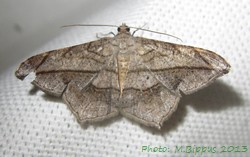 Oblique PeacockChiasmia simplicilinea
- Chiasmia streniata
-
 Triple-stripe PeacockChiasmia subcurvaria
- Chiasmia normata
-
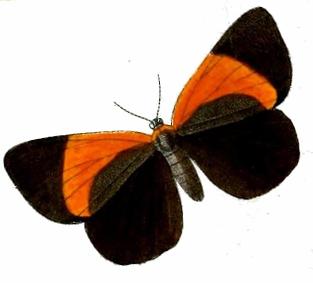 Chiasmia separata
- Chiasmia subvaria
- Chiasmia fidoniata
-
 Tamarisk PeacockChiasmia aestimaria
Compare
Questions and answers
What is the scientific name of the Latticed Heath?
The scientific name of the Latticed Heath is Chiasmia clathrata. Written with its author, the full name is Chiasmia clathrata (Linnaeus, 1758).
Which family does the Latticed Heath belong to?
Chiasmia clathrata belongs to the family Geometridae, in the order Lepidoptera and the class Insecta.
Where is the Latticed Heath found?
Checklists and occurrence records place Chiasmia clathrata in 44 countries, including Finland, United Kingdom, Germany, Switzerland, The Netherlands and France.
Where is Latticed Heath found?
It occurs throughout Europe, in the Near East and North Africa, and eastward through Russia and Siberia. It also occurs in northern Iran and Kazakhstan.[17][18][19][20]
How common is Latticed Heath in the British Isles?
It is fairly common in the British Isles.[21]
What is the classification of Latticed Heath within Geometridae?
It belongs to the subfamily Ennominae and the tribe Macariini. It is placed in the genus Chiasmia following a 2002 revision of the tribe Macariini by Malcolm J. Scoble, and molecular research has confirmed this placement.[22][23][24]
Have subspecies of Latticed Heath been described?
Several subspecies have been described.[25]
Is Latticed Heath considered a pest?
It is identified as a significant pest of alfalfa and other legumes in Bulgaria.[26]
Sources
Passages the profile rests on
- The adult moth has wings with a background colour ranging from yellowish to white and a network of brown lines. Source passage: “the background colour of the wings varies from yellowish to white, with a network of brown lines” — English Wikipedia
- The brown lines on the wings vary in thickness and can make the wings almost entirely dark brown. Source passage: “These lines vary in thickness and sometimes the wings are almost entirely dark brown.” — English Wikipedia
- The adult moth has a wingspan of 20–25 mm. Source passage: “Chiasmia clathrata has a wingspan of 20–25 mm.” — English Wikipedia
- The final-instar larva is pale green with white lateral and dorsal lines. Source passage: “The final instar larva is pale green with white lines, including a strong lateral line and thin dorsal lines along the body.” — English Wikipedia
- The larval abdominal segments A1 through A5 each have a strong white line across their rear ends. Source passage: “Abdominal segments A1 through A5 have a strong white line across the rear end of each segment” — English Wikipedia
- The species inhabits open grasslands. Source passage: “These moths inhabit a range of open areas, including grassland, moorland, and waste ground.” — English Wikipedia
- The species inhabits moorland. Source passage: “These moths inhabit a range of open areas, including grassland, moorland, and waste ground.” — English Wikipedia
- The species inhabits waste ground. Source passage: “These moths inhabit a range of open areas, including grassland, moorland, and waste ground.” — English Wikipedia
- The larvae feed on common bedstraw (Galium mollugo). Source passage: “Larvae feed on bedstraws (Galium mollugo, Galium verum)” — English Wikipedia
- The larvae feed on lady's bedstraw (Galium verum). Source passage: “Larvae feed on bedstraws (Galium mollugo, Galium verum)” — English Wikipedia
- The larvae feed on legumes, including clovers, trefoils, lucerne, and meadow vetchling. Source passage: “various legumes such as clovers (Trifolium medium, Trifolium pratense), trefoils, lucerne (Medicago sativa) and meadow vetchling” — English Wikipedia
- The moths are active during the day. Source passage: “These moths are diurnal” — English Wikipedia
- Adult moths can also be observed at night when attracted to artificial light. Source passage: “they can also be observed at night where they are attracted to artificial light.” — English Wikipedia
- The species produces one or two generations annually in the British Isles. Source passage: “In the British Isles there are one or two generations annually” — English Wikipedia
- Adult moths are observed from May through September in the British Isles. Source passage: “adults seen at any time from May to September.” — English Wikipedia
- The species overwinters in the pupal stage. Source passage: “The species overwinters as a pupa.” — English Wikipedia
- The species occurs throughout Europe. Source passage: “This species can be found throughout Europe” — English Wikipedia
- The species occurs in the Near East and North Africa. Source passage: “the Near East, North Africa” — English Wikipedia
- The species' range extends eastward through Russia and Siberia. Source passage: “east through Russia, Siberia” — English Wikipedia
- The species occurs in northern Iran and Kazakhstan. Source passage: “northern Iran, Kazakhstan” — English Wikipedia
- The species is fairly common in the British Isles. Source passage: “It is a fairly common species in the British Isles.” — English Wikipedia
- The species belongs to the subfamily Ennominae and the tribe Macariini. Source passage: “belonging to the subfamily Ennominae, placed in the tribe Macariini.” — English Wikipedia
- The species is placed in the genus Chiasmia following a 2002 revision of the tribe Macariini by Malcolm J. Scoble. Source passage: “The current placement of the latticed heath in the genus Chiasmia follows from the revision by Malcolm J. Scoble (2002) of the tribe Macariini” — English Wikipedia
- Molecular research has confirmed the species' placement within the genus Chiasmia. Source passage: “Molecular work has confirmed the placement of the species within Chiasmia.” — English Wikipedia
- Several subspecies of the species have been described. Source passage: “There are a number of described subspecies.” — English Wikipedia
- The species is identified as a significant pest of alfalfa and other legumes in Bulgaria. Source passage: “a significant pest of alfalfa and other legumes in Bulgaria” — academia.edu
Data
- Catalogue of Life, 2026-10-16 XR cc by
- Global Biodiversity Information Facility CC BY 4.0
- Wikidata CC0
- GeoNames CC BY 4.0
- Within the Catalogue of Life, this name comes from Online Taxonomic Facility of Geometridae cc by
This species in other databases
Page built on 28 November 2026. See how the catalog is made and all sources and licences.
Cite this page
ScientificNames.org. (2026). Chiasmia clathrata (Latticed Heath). Retrieved November 28, 2026, from https://scientificnames.org/species/chiasmia-clathrata
“Chiasmia clathrata (Latticed Heath).” ScientificNames.org, 2026, scientificnames.org/species/chiasmia-clathrata. Accessed 28 Nov. 2026.
ScientificNames.org. “Chiasmia clathrata (Latticed Heath).” Accessed November 28, 2026. https://scientificnames.org/species/chiasmia-clathrata.
@misc{scientificnames_chiasmia_clathrata_latticed_heath,
  author = {{ScientificNames.org}},
  title = {Chiasmia clathrata (Latticed Heath)},
  year = {2026},
  url = {https://scientificnames.org/species/chiasmia-clathrata},
  note = {Accessed 2026-11-28}
}