Species · Flowering plants
Pomelo Citrus maxima
The scientific name of the Pomelo is Citrus maxima. It is a species of flowering plant in the family Rutaceae (rue family), order Sapindales.
- Scientific name
- Citrus maxima (Burm.) Merr.
- Common name
- Pomelo
- Genus
- Citrus
- Family
- Rutaceae (Rue Family)
- Order
- Sapindales
- Class
- Magnoliopsida
- Red List category
- LC Least Concern
- Recorded in
- 76 countries
- Name status
- accepted in the Catalogue of Life

Overview
Pomelo is a natural, non-hybrid citrus species. Pomelo is native to Southeast Asia and Malaysia. Its fruits have thick peels, 11–18 segments, and edible flesh that can be pink or white.
Written 24 November 2026 from the sources listed below. Each statement was checked against the passage it cites; statements that could not be supported were removed.
Appearance
The pomelo tree has a trunk that is often crooked and branches that grow irregularly at relatively low heights. Its leaf stalks have distinctly developed wings, and its alternate leaves are ovate or elliptic, with leathery surfaces that are dull green above and hairy underneath.[1][2][3]
Its flowers are fragrant and yellow-white, growing individually or in clusters. Its fruits are large and round or somewhat pear-shaped, with thicker peels than grapefruits and 11–18 segments.[4][5][6]
The edible fruit flesh can be pink or white and is less acidic than grapefruit flesh. Fruits generally contain a small number of relatively large seeds, although some cultivars produce numerous seeds.[7][8][9]
Pomelo trees can reach heights of 5–15 metres, and their trunks can measure 10–30 centimetres in thickness. Fruits measure approximately 10–30 centimetres in diameter and weigh approximately 0.26 to 1.95 kilograms, depending on the cultivar.[10][11][12][13]
At least 60 pomelo cultivars have been identified. Characteristics vary considerably among populations and cultivars across South Asia.[14][15]
Habitat
Pomelo grows in climates with temperatures ranging from 25 to 32°C and approximately 1,500–2,500 millimetres of rainfall. Its cultivation is associated with a dry season lasting three to four months.[16][17][18]
Pomelo can grow in soils ranging from rough sand to heavy clay, although fertile soils are preferred.[19]
Pomelo is native to Southeast Asia and Malaysia and is indigenous to Asia. It is commercially cultivated in China, Nepal, Thailand, Malaysia, India, Vietnam, Indonesia, the Philippines, and Japan.[20][21][22]
Pomelo has been introduced to numerous tropical countries outside its original growing regions. Its seeds were first brought to the Americas during the late seventeenth century.[23][24]
Uses
Pomelo flesh and juice are consumed as food, while its peel can be candied. The fruit is consumed as a dessert and incorporated into salads.[25][26]
Pomelo and pineapple juices are combined to prepare a pink beverage in the Philippines. Pomelo pith is braised in Cantonese cuisine to prepare dishes with high fibre and low fat content.[27][28]
Pomelo fruit is traditionally used as a stomach tonic, appetizer, and cardiac stimulant. It also has traditional medicinal applications for cough, asthma, inflammation, and diarrhea.[29][30]
Pomelo pulp has traditionally been used for cosmetic purposes. Its seeds have traditionally been used to address lumbago, dyspepsia, and coughs.[31][32]
Pomelo leaves have traditionally been used in treatments for epilepsy, cholera, and convulsive cough. Peel decoctions have traditionally been used to address coughs, swellings, ulcers, and epilepsy.[33][34]
Pomelo is used in traditional and religious festivals in several Asian countries.[35]
Similar species
Pomelo is one of the wild ancestral citrus species contributing genetically to cultivated bitter orange and grapefruit. Grapefruit is a hybrid derived from pomelo and sweet orange.[36][37]
Reproduction and life cycle
Pomelo seeds are monoembryonic and produce seedlings containing genetic material from both parents. These seedlings generally do not reproduce the exact characteristics of their parent cultivar.[38][39]
Pomelo can be propagated through air-layering, cuttings, grafting, shield budding, and tissue culture. Its seeds can be stored for 80 days at 5°C under moderate relative humidity.[40][41]
Classification of the Pomelo
| Kingdom | Plantae |
|---|---|
| Subkingdom | Pteridobiotina |
| Phylum | Tracheophyta |
| Class | Magnoliopsida |
| Order | Sapindales |
| Family | Rutaceae (Rue Family) |
| Subfamily | Aurantioideae |
| Genus | Citrus (Kumquat) |
| Species | Citrus maxima (Burm.) Merr. |
Where the Pomelo is found
Checklists and occurrence records place Citrus maxima in 76 countries across Africa, Asia, Europe, North America, Oceania and South America. GBIF holds 3,723 georeferenced records of it.
Countries
- Afghanistan 15
- American Samoa
- Angola 4
- Australia 19
- Bahamas 4
- Bangladesh 7
- Benin 2
- Bhutan 3
- Bolivia 4
- Brazil 41
- Cambodia 4
- Cameroon 2
- China 295
- Christmas Island 11
- Colombia 58
- Cook Islands 5
- Costa Rica 5
- Cuba 7
- Democratic Republic of the Congo 3
- Dominican Republic 7
- Ecuador 19
- Ethiopia 9
- Fiji 33
- French Guiana 12
- French Polynesia 25
- Gambia
- Greece 3
- Guadeloupe 6
- Guam 2
- Guinea
- Haiti 10
- Honduras 2
- Hong Kong 26
- India 1,613
- Indonesia 169
- Iran 3
- Italy 9
- Jamaica 7
- Japan 46
- Laos 11
- Macao 7
- Madagascar 8
- Malaysia 28
- Maldives 1
- Martinique 6
- Mayotte 3
- Mexico 50
- Myanmar 3
- Nepal 13
- New Caledonia 9
- New Zealand 22
- Nicaragua 1
- Nigeria 8
- Niue
- Pakistan 7
- Panama 9
- Philippines 139
- Portugal 3
- Puerto Rico 23
- Reunion 11
- Seychelles 9
- Singapore 8
- South Africa 13
- South Korea 8
- Spain 6
- Sri Lanka 11
- Suriname 14
- Taiwan 49
- Thailand 287
- Tonga 18
- Trinidad and Tobago 7
- Turkey 1
- United States 310
- Vanuatu 8
- Venezuela 5
- Vietnam 117
Regions and cities with the most records
- Kerala, India 1,031
- Changanācheri, India 181
- Pallikal, India 181
- Tiruvalla, India 171
- Alangad, India 167
- Edattala, India 165
- Vazhakkala, India 163
- Kanayannur, India 161
- Alengād, India 155
- Kunnamangalam, India 152
- Madhya Pradesh, India 151
- Cheruvannur, India 147
- Tripunittura, India 145
- Maradu, India 144
- Kochi, India 141
- Kayamkulam, India 128
- Meghalaya, India 105
- Alappuzha, India 95
- Kodungallūr, India 74
- Ottapalam, India 61
- Beypore, India 54
- Kozhikode, India 53
- Kizhake Chālakudi, India 49
- Chirakkal, India 42
- Kannur, India 42
- Komalapuram, India 42
- Moonniyur, India 42
- Chhatarpur, India 40
- Deoli, India 40
- Tighri, India 40
- Tirūrangādi, India 40
- Vengara, India 40
- Pul Pehlad, India 38
- Taj Pul, India 38
- Gurugram, India 37
- Mīthepur, India 37
1 more country has a few records outside this range
These countries hold a few records of Citrus maxima but lie outside the range the checklists give for it. Such records are often zoo or garden specimens, museum material or vagrants, so the species is not counted as occurring there.
Range as the checklists state it
Portugal [c]; Spain [c]; Gambia [c]; Guinea [c]; Benin [c]; Cameroon [c]; Bioko Isl. [Fernando Poo] [c]; Madagascar [c]; Turkey [c]; China [c]; Japan [c]; Taiwan [c]; Pakistan [c]; Nepal [c]; Bhutan [c]; India [c]; Maldives [c]; Sri Lanka [c]; Bangladesh [c]; Andaman Isl. (South Andaman Isl.); Nicobar Isl. (Car Nicobar Isl.); Myanmar [c]; Myanmar [c]; Cambodia [c]; Borneo [c]; Sulawesi [c]; Philippines [c]; Jawa [c]; Lesser Sunda Isl. [c] (Bali [c]); Moluccas [c]; Christmas Isl. [Austr.] [c]; New Guinea [c]; Solomon Isl. [c]; Rotuma Isl. [c]; Vanuatu [c]; Tonga [c]; Niue [c]; American Samoa [c] (Ta'u [c]); Cook Isl. [c] (Rarotonga [c]); Society Isl. [c] (Tahiti [c], Moorea [c], Tupai [c]); Tuamotu Arch. [c] (Takapoto Atoll [c]); Guam [c]; Fed. States of Micronesia [c] (Pohnpei [c]); Mexico [c]; Honduras [c]; Nicaragua [c]; Panama [c]; Cuba [c]; Jamaica [c]; Dominican Republic [c]; Haiti [c]; Puerto Rico [c]; Virgin Isl. [c]; Trinidad & Tobago [c]; Colombia [c]; Venezuela [c]; Ecuador [c]; Bolivia [c]
A number beside a place is its count of GBIF occurrence records. A place without a number comes from a checklist alone. Records show where a species has been observed or collected, which can include escapes and vagrants.
Common names
English
- Pomelo
- Pummelo
Names in 9 other languages
- Chinese
- you, zhu luan, 化橘红, 柚, 柚叶, 柚子, 柚核, 柚根
- French
- pamplemoussier, shadek
- German
- Adamsapfel, Pumelo
- Indonesian
- limau
- Italian
- pompelmo
- Japanese
- buntan, zabon
- Portuguese
- jamboa
- Spanish
- toronja
- Swedish
- pompelmus
Synonyms
25 other scientific names have been used for this species and are now treated as synonyms of Citrus maxima.
- Aurantium decumana (L.) Mill.
- Aurantium maximum Burm.
- Bogenhardia grandis Tseng
- Citrus aurantium subsp. decumana (L.) Tanaka
- Citrus costata Raf.
- Citrus decumana L.
- Citrus grandis (L.) Osbeck
- Citrus grandis f. buntan Hayata
- Citrus grandis var. oblonga Hassk.
- Citrus grandis var. sabon (Seibert ex Hayata) Karaya
- Citrus grandis var. sabon (Siebold ex Hayata) Hayata
- Citrus grandis var. sphaerocarpos Hassk.
- Citrus grandis var. yamabuki (Yu.Tanaka) Karaya
- Citrus maxima (Burm.fil.) Osbeck
- Citrus obovoidea hort. ex Tanaka
- Citrus obovoidea Takahashi
- Citrus pampelmos Risso
- Citrus pompelmos Risso
- Citrus pompelmos var. pompelmos
- Citrus sabon Siebold ex Hayata
- Citrus yamabuki Yu.Tanaka
- Citrus × aurantium f. grandis (L.) M.Hiroe
- Citrus × aurantium var. decumana L.
- Citrus × aurantium var. grandis L.
- Citrus grandis var. racemosa (Roem.) B.C.Stone ambiguous synonym
Related species
-
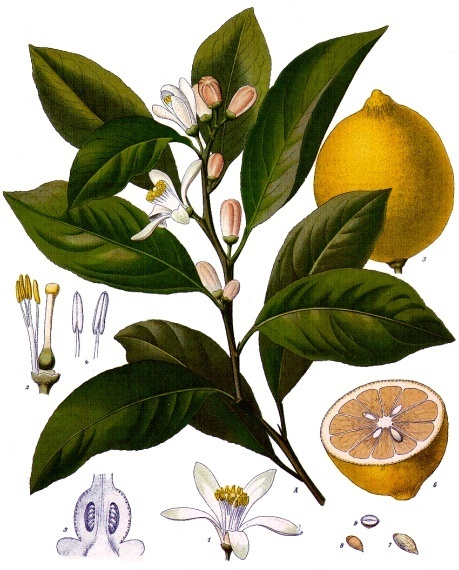 LemonCitrus × limon
- YuzuCitrus × junos
-
 Swatow OrangeCitrus × reticulata
- CitronCitrus medica
-
 Bitter OrangeCitrus × aurantium
-
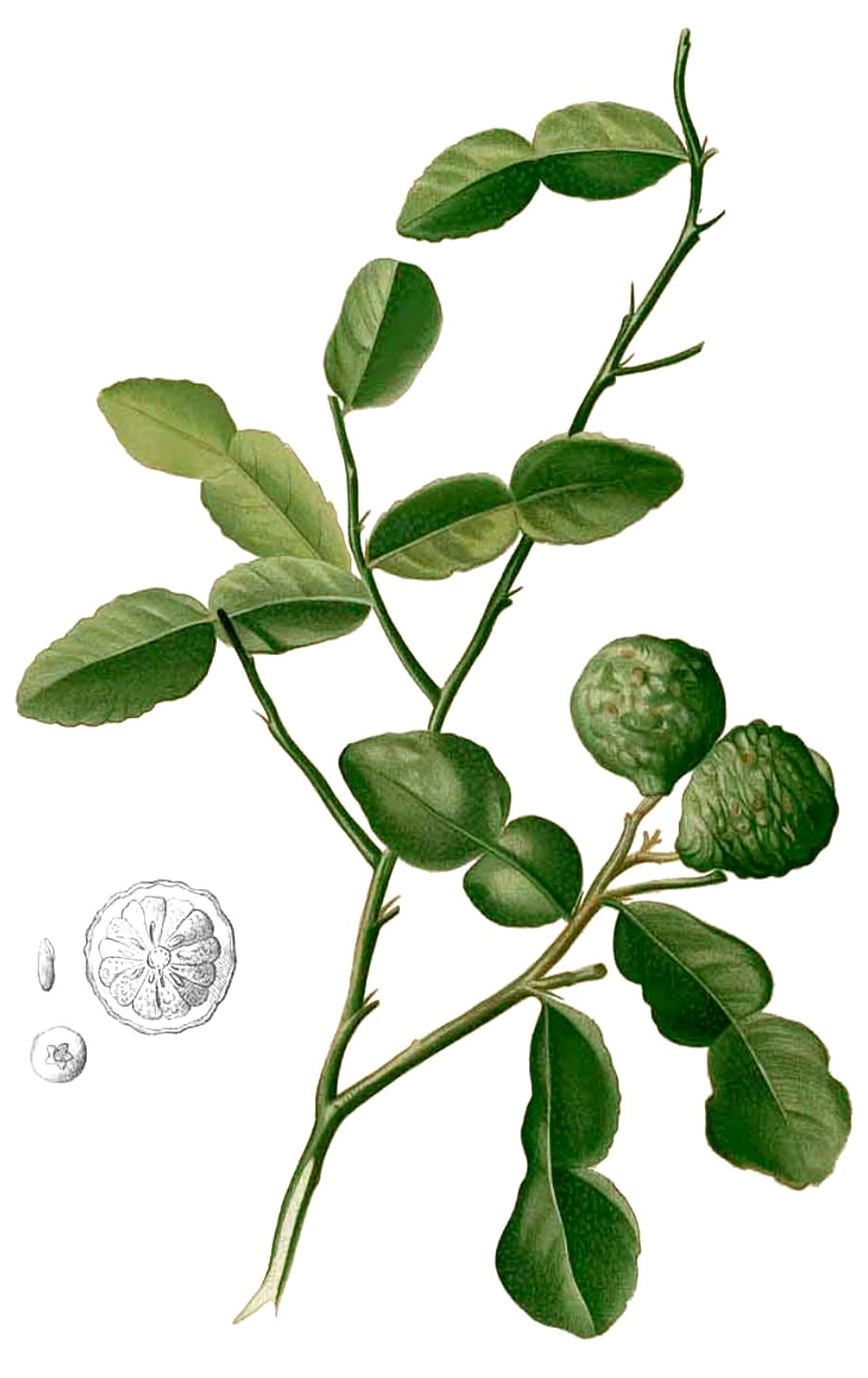 Kaffir LimeCitrus hystrix
-
 Key LimeCitrus × aurantiifolia
-
 Trifoliate OrangeCitrus trifoliata
Compare
Questions and answers
What is the scientific name of the Pomelo?
The scientific name of the Pomelo is Citrus maxima. Written with its author, the full name is Citrus maxima (Burm.) Merr..
Which family does the Pomelo belong to?
Citrus maxima belongs to the family Rutaceae, in the order Sapindales and the class Magnoliopsida.
Where is the Pomelo found?
Checklists and occurrence records place Citrus maxima in 76 countries, including India, United States, China, Thailand, Indonesia and Philippines.
What is the conservation status of the Pomelo?
The IUCN Red List category recorded for Citrus maxima is Least Concern (LC).
What other names does the Pomelo have?
Citrus maxima is also known in English as Pummelo.
What is another name for a pomelo?
Pomello is recorded as an alternative common name for Pomelo.[42]
Is a pomelo the same thing as a grapefruit?
No. Pomelo is a wild ancestral citrus species, while grapefruit is a hybrid derived from pomelo and sweet orange.[43][36][37]
What fruit is Citrus maxima?
Citrus maxima is Pomelo, a natural, non-hybrid citrus species.[43]
Where do pomelo trees grow?
Pomelo is native to Southeast Asia and Malaysia. It is commercially cultivated in China, Nepal, Thailand, Malaysia, India, Vietnam, Indonesia, the Philippines, and Japan, and has been introduced to numerous tropical countries outside its original growing regions.[20][22][23]
Sources
Passages the profile rests on
- The pomelo tree has a trunk that is often crooked and branches that grow irregularly at relatively low heights. Source passage: “with a trunk, often rather crooked, that is 10–30 centimetres (4–12 inches) thick, and low-hanging, irregular branches.” — English Wikipedia
- Its leaf stalks have distinctly developed wings. Source passage: “The petioles (leaf stalks) are distinctly winged.” — English Wikipedia
- Its leaves are alternate and ovate or elliptic, with leathery surfaces that are dull green above and hairy underneath. Source passage: “The leaves are alternate, ovate or elliptic in shape, and 5–20 cm (2–8 in) long; they are leathery and dull green above, hairy beneath.” — English Wikipedia
- Its flowers are fragrant, yellow-white, and grow individually or in clusters. Source passage: “The flowers, produced singly or in clusters, are fragrant and yellow-white.” — English Wikipedia
- Its fruits are large and have round or somewhat pear-shaped forms. Source passage: “The fruit is large, 10–30 cm (4–12 in) in diameter, round or somewhat pear-shaped.” — English Wikipedia
- Pomelo fruits have thicker peels than grapefruits and are divided into 11–18 segments. Source passage: “It has a thicker peel than a grapefruit, and is divided into 11 to 18 segments.” — English Wikipedia
- The edible fruit flesh can be pink or white. Source passage: “It has big round-shaped edible fruits with pink or white flesh.” — pmc.ncbi.nlm.nih.gov
- Pomelo fruit flesh is less acidic than grapefruit flesh. Source passage: “The flesh is less acidic than that of the grapefruit.” — English Wikipedia
- Pomelo fruits generally contain a small number of relatively large seeds, although some cultivars produce numerous seeds. Source passage: “The fruit generally contains a few, relatively large seeds, but some cultivars have numerous seeds.” — English Wikipedia
- Pomelo trees can reach heights of 5–15 metres. Source passage: “The pomelo tree can be 5–15 metres (16–50 feet) tall” — English Wikipedia
- The trunk of a pomelo tree can measure 10–30 centimetres in thickness. Source passage: “that is 10–30 centimetres (4–12 inches) thick” — English Wikipedia
- Pomelo fruits measure approximately 10–30 centimetres in diameter. Source passage: “10–30 cm (4–12 in) in diameter” — English Wikipedia
- The weight of pomelo fruits varies between approximately 0.26 and 1.95 kilograms depending on the cultivar. Source passage: “Its weight varies by cultivar from 0.26–1.95 kilograms (0.6–4.3 pounds).” — English Wikipedia
- At least 60 pomelo cultivars have been identified. Source passage: “The pomelo has at least sixty cultivars.” — English Wikipedia
- Pomelo characteristics vary considerably among populations and cultivars across South Asia. Source passage: “The characteristics of pomelo vary widely across South Asia.” — English Wikipedia
- Pomelo grows in climates with temperatures ranging from 25 to 32°C. Source passage: “It grows widely in temperatures 25–32°C” — pmc.ncbi.nlm.nih.gov
- Pomelo grows in areas receiving approximately 1,500–2,500 millimetres of rainfall. Source passage: “rainfall 1,500–2,500 mm” — pmc.ncbi.nlm.nih.gov
- Pomelo cultivation is associated with a dry season lasting three to four months. Source passage: “within a 3-4 months dry season.” — pmc.ncbi.nlm.nih.gov
- Pomelo can grow in soils ranging from rough sand to heavy clay, although fertile soils are preferred. Source passage: “It raises well in rough sand to heavy clay but favors fertile soils” — pmc.ncbi.nlm.nih.gov
- Pomelo is native to Southeast Asia and Malaysia. Source passage: “The pomelo is native to Southeast Asia and all of Malaysia.” — English Wikipedia
- Pomelo is indigenous to Asia. Source passage: “The plant is indigenous to Asia” — pmc.ncbi.nlm.nih.gov
- Pomelo is commercially cultivated in China, Nepal, Thailand, Malaysia, India, Vietnam, Indonesia, the Philippines, and Japan. Source passage: “commercially grown in China, Nepal, Thailand, Malaysia, India, Vietnam, Indonesia, Philippines, Japan” — pmc.ncbi.nlm.nih.gov
- Pomelo has been introduced to numerous tropical countries outside its original growing regions. Source passage: “Lately, it has been introduced to many tropical nations” — pmc.ncbi.nlm.nih.gov
- Pomelo seeds were first brought to the Americas during the late seventeenth century. Source passage: “Seeds of the tree were first brought to the Americas in the late 1600s.” — English Wikipedia
- Pomelo flesh and juice are consumed as food, while its peel can be candied. Source passage: “The flesh and juice are edible, and the peel may be candied.” — English Wikipedia
- Pomelo is consumed as a dessert and incorporated into salads. Source passage: “It is eaten as a dessert, or used in salads.” — English Wikipedia
- Pomelo and pineapple juices are combined to prepare a pink beverage in the Philippines. Source passage: “In the Philippines, a pink beverage is made from pomelo and pineapple juice.” — English Wikipedia
- Pomelo pith is braised in Cantonese cuisine to prepare dishes with high fibre and low fat content. Source passage: “braised pomelo pith is used to make dishes that are high in fibre and low in fat.” — English Wikipedia
- Pomelo fruit is traditionally used as a stomach tonic, appetizer, and cardiac stimulant. Source passage: “Fruits are used as stomach tonic, appetizer, cardiac stimulants” — pmc.ncbi.nlm.nih.gov
- Pomelo fruit has traditional medicinal applications for cough, asthma, inflammation, and diarrhea. Source passage: “for the treatment of inflammation, cough, asthma, obesity, leprosy, mental aberration, epilepsy, headache, diarrhea” — pmc.ncbi.nlm.nih.gov
- Pomelo pulp has traditionally been used for cosmetic purposes. Source passage: “Pulp has been used traditionally for cosmetic purpose.” — pmc.ncbi.nlm.nih.gov
- Pomelo seeds have traditionally been used to address lumbago, dyspepsia, and coughs. Source passage: “The seeds are used against lumbago, dyspepsia, and coughs.” — pmc.ncbi.nlm.nih.gov
- Pomelo leaves have traditionally been used in treatments for epilepsy, cholera, and convulsive cough. Source passage: “Leaves are used for the treatment of epilepsy, cholera, and convulsive cough” — pmc.ncbi.nlm.nih.gov
- Pomelo peel decoctions have traditionally been used to address coughs, swellings, ulcers, and epilepsy. Source passage: “A decoction of peel has been used to improve coughs, swellings, ulcers, and epilepsy” — pmc.ncbi.nlm.nih.gov
- Pomelo is used in traditional and religious festivals in several Asian countries. Source passage: “The pomelo features in cultural and spiritual festivals across Asia.” — English Wikipedia
- Pomelo is one of the wild ancestral citrus species contributing genetically to cultivated bitter orange and grapefruit. Source passage: “one of the three major wild ancestors of several cultivated hybrid Citrus species, including the bitter orange and the grapefruit” — English Wikipedia
- The grapefruit is a hybrid derived from pomelo and sweet orange. Source passage: “The grapefruit is a hybrid between a pomelo and a sweet orange” — English Wikipedia
- Pomelo seeds are monoembryonic and produce seedlings containing genetic material from both parents. Source passage: “The seeds of the pomelo are monoembryonic, producing seedlings with genes from both parents” — English Wikipedia
- Pomelo seedlings generally do not reproduce the exact characteristics of their parent cultivar. Source passage: “so they do not breed true to type.” — English Wikipedia
- Pomelo can be propagated through air-layering, cuttings, grafting, shield budding, and tissue culture. Source passage: “Pomelos can be propagated vegetatively by air-layering, by taking cuttings, by grafting, by shield budding, or by tissue culture.” — English Wikipedia
- Pomelo seeds can be stored for 80 days at 5°C under moderate relative humidity. Source passage: “Seeds can be stored for 80 days at a temperature of 5 °C (41 °F) with moderate relative humidity.” — English Wikipedia
- The name pomello is recorded as an alternative common name for Citrus maxima. Source passage: “also called pomello, pummelo, pommelo, pamplemousse, jabong (Hawaii), or shaddock” — inaturalist.org
- The pomelo is a natural, non-hybrid citrus species. Source passage: “It is a natural, non-hybrid citrus fruit” — English Wikipedia
Data
- Catalogue of Life, 2026-10-16 XR cc by
- Global Biodiversity Information Facility CC BY 4.0
- Wikidata CC0
- GeoNames CC BY 4.0
- Wikimedia Commons per image; credit shown with each image
- Within the Catalogue of Life, this name comes from Synonymic Checklists of the Vascular Plants of the World cc by
References
- Merr. Interpr. Herb. Amboin. 296 (1917). where the name was published
This species in other databases
Page built on 24 November 2026. See how the catalog is made and all sources and licences.
Cite this page
ScientificNames.org. (2026). Citrus maxima (Pomelo). Retrieved November 24, 2026, from https://scientificnames.org/species/citrus-maxima
“Citrus maxima (Pomelo).” ScientificNames.org, 2026, scientificnames.org/species/citrus-maxima. Accessed 24 Nov. 2026.
ScientificNames.org. “Citrus maxima (Pomelo).” Accessed November 24, 2026. https://scientificnames.org/species/citrus-maxima.
@misc{scientificnames_citrus_maxima_pomelo,
  author = {{ScientificNames.org}},
  title = {Citrus maxima (Pomelo)},
  year = {2026},
  url = {https://scientificnames.org/species/citrus-maxima},
  note = {Accessed 2026-11-24}
}