Species · Insects
Drain Fly Clogmia albipunctata
The scientific name of the Drain Fly is Clogmia albipunctata. It is a species of insect in the family Psychodidae (moth-flies), order Diptera. The name dates from 1893.
- Scientific name
- Clogmia albipunctata (Williston, 1893)
- Common name
- Drain Fly
- Genus
- Clogmia
- Family
- Psychodidae (Moth-flies)
- Order
- Diptera
- Class
- Insecta
- Environment
- terrestrial
- Recorded in
- 104 countries
- Name status
- accepted in the Catalogue of Life

Overview
Clogmia albipunctata inhabits moist environments containing decaying organic matter, including drains, sewage systems, bathrooms, kitchens, and wet natural habitats.
Written 26 November 2026 from the sources listed below. Each statement was checked against the passage it cites; statements that could not be supported were removed.
Appearance
The antennae are longer than the abdomen and covered with white hairs. The brown legs have white rings at the tips of the tibiae and metatarsi.[1][2]
Habitat
The species occurs near sewer drains, sewage treatment plants, plant pots, and swamps. It inhabits shaded places containing moist, decaying organic matter.[3][4]
Adults commonly perch near bathroom and kitchen sinks, tubs, and drains. The species also occurs in toilets, sewage systems, poorly maintained drains, and waste dumps.[5][6]
Outdoor breeding sites include clogged wet gutters, air conditioners, cooling towers, potted plant trays, and storm drains. Natural habitats include wet wooded areas, seeps, and stagnant waters near wetland margins.[7][8]
Larvae inhabit the slimy, gelatinous layer of wet sludge on the inner surfaces of drainpipes and sink traps.[9]
Diet
Adult flies sustain themselves by drinking water or consuming flower nectar.[10]
Larvae feed on decaying organic matter in aquatic environments. They consume algae, fungi, bacteria, soap scum, and other organic sludge accumulating inside drains and plumbing.[11][12][13]
Behaviour
Adults spend most of their time perched on walls and move infrequently. They are weak fliers and are attracted to light.[14][15][16]
Adults may be transported considerable distances by sustained winds. The species does not bite or sting humans.[17][18]
Reproduction and life cycle
Females deposit egg masses containing dozens of eggs in slime-coated damp drainpipes or other suitable habitats. They can lay between 200 and 300 eggs during their lifetimes.[19][20]
Eggs are transparent, measure no more than 1 mm, and hatch within 32–48 hours. The life cycle comprises four stages: egg, larva, pupa, and adult.[21][22]
Larvae pass through four instars before pupation. Larval development takes approximately 18 days, and pupation lasts about five days.[23][24]
Development from egg to adult emergence takes approximately 27 ± 5 days. Temperature and nutrient availability influence the timing of hatching, larval development, and pupation.[25][26]
Conservation
The larvae contribute substantially to wastewater purification at sewage treatment plants. Both larvae and adults contribute to the decomposition of organic matter.[27][28]
Uses
The larvae help purify water by decomposing organic material. The species provides food for insectivorous terrestrial animals, including spiders, birds, toads, frogs, and reptiles.[29][30]
Classification of the Drain Fly
| Kingdom | Animalia |
|---|---|
| Phylum | Arthropoda |
| Subphylum | Hexapoda |
| Class | Insecta (Insect) |
| Order | Diptera (Fly) |
| Family | Psychodidae (Moth-flies) |
| Subfamily | Psychodinae |
| Tribe | Telmatoscopini |
| Genus | Clogmia |
| Species | Clogmia albipunctata (Williston, 1893) |
Where the Drain Fly is found
Checklists and occurrence records place Clogmia albipunctata in 104 countries. GBIF holds 55,829 georeferenced records of it.
Countries
- Albania 30
- Argentina 483
- Australia 999
- Austria 702
- Azerbaijan 3
- Bahamas 5
- Bangladesh 21
- Belarus 36
- Belgium 231
- Belize 6
- Bermuda 8
- Bonaire, Saint Eustatius and Saba 13
- Bosnia and Herzegovina 11
- Brazil 847
- Brunei 3
- Bulgaria 49
- Cambodia 7
- Canada 1,404
- Cayman Islands 4
- China 311
- Costa Rica 181
- Croatia 179
- Cuba 19
- Cyprus 50
- Czechia 178
- Denmark 75
- Dominican Republic 31
- Egypt 431
- Estonia 3
- Finland 113
- France 1,614
- Georgia 26
- Germany 7,248
- Greece 436
- Guatemala 38
- Guernsey 4
- Honduras 18
- Hong Kong 108
- Hungary 171
- India 687
- Indonesia 148
- Iran 21
- Iraq 4
- Israel 94
- Italy 867
- Jamaica 15
- Japan 163
- Jersey 3
- Jordan 6
- Kosovo 3
- Kuwait 419
- Laos 6
- Latvia 3
- Lebanon 5
- Lithuania 19
- Luxembourg 74
- Macao 32
- Malaysia 65
- Malta 18
- Martinique 6
- Mexico 1,266
- Moldova 8
- Montenegro 33
- Myanmar 5
- Nepal 39
- New Zealand 302
- Nicaragua 14
- Pakistan 35
- Palestinian Territory 13
- Panama 35
- Philippines 106
- Poland 223
- Portugal 805
- Puerto Rico 19
- Qatar 111
- Romania 52
- Russia 526
- Saint Barthelemy 3
- Saint Kitts and Nevis 3
- Saint Martin 3
- Saudi Arabia 4
- Serbia 238
- Singapore 113
- Sint Maarten 5
- Slovakia 47
- Slovenia 45
- South Africa 307
- South Korea 45
- Spain 2,323
- Sri Lanka 41
- Sweden 234
- Switzerland 134
- Taiwan 203
- Thailand 125
- The Netherlands 16,410
- Trinidad and Tobago 10
- Turkey 129
- U.S. Virgin Islands 4
- Ukraine 139
- United Arab Emirates 33
- United Kingdom 587
- United States 12,198
- Uzbekistan 9
- Vietnam 91
Regions and cities with the most records
- Gelderland, The Netherlands 2,675
- North Rhine-Westphalia, Germany 2,280
- Berkel en Rodenrijs, The Netherlands 2,116
- Bergschenhoek, The Netherlands 2,095
- Pijnacker, The Netherlands 2,071
- Benthuizen, The Netherlands 1,948
- Zoetermeer, The Netherlands 1,943
- California, United States 1,897
- Rotterdam, The Netherlands 1,859
- Nootdorp, The Netherlands 1,836
- Delft, The Netherlands 1,808
- Ypenburg, The Netherlands 1,807
- Voorburg, The Netherlands 1,697
- Beuningen, The Netherlands 1,675
- Schiedam, The Netherlands 1,645
- Rijswijk, The Netherlands 1,640
- Utrecht, The Netherlands 1,631
- Capelle aan den IJssel, The Netherlands 1,628
- Elst, The Netherlands 1,603
- Waddinxveen, The Netherlands 1,574
- Krimpen aan den IJssel, The Netherlands 1,568
- Vlaardingen, The Netherlands 1,526
- Voorschoten, The Netherlands 1,500
- Utrecht, The Netherlands 1,486
- Zeist, The Netherlands 1,486
- Bilthoven, The Netherlands 1,473
- The Hague, The Netherlands 1,469
- Driebergen-Rijsenburg, The Netherlands 1,465
- Wageningen, The Netherlands 1,442
- Hilversum, The Netherlands 1,419
- Huissen, The Netherlands 1,409
- Wassenaar, The Netherlands 1,403
- Nijmegen, The Netherlands 1,402
- Soest, The Netherlands 1,388
- Boskoop, The Netherlands 1,366
- Baarn, The Netherlands 1,355
45 more countries have a few records outside this range
These countries hold a few records of Clogmia albipunctata but lie outside the range the checklists give for it. Such records are often zoo or garden specimens, museum material or vagrants, so the species is not counted as occurring there.
- Algeria 25
- Angola 3
- Benin 4
- Bolivia 31
- Botswana 15
- Cabo Verde 3
- Cameroon 9
- Chile 73
- Colombia 78
- Cook Islands 4
- Democratic Republic of the Congo 3
- Ecuador 80
- Ethiopia 5
- Fiji 5
- French Guiana 4
- French Polynesia 7
- Gambia 9
- Ghana 9
- Guam 5
- Guyana 4
- Ivory Coast 3
- Kenya 28
- Liberia 3
- Madagascar 23
- Malawi 4
- Mauritius 5
- Morocco 76
- Mozambique 3
- Namibia 9
- New Caledonia 5
- Northern Mariana Islands 3
- Papua New Guinea 5
- Peru 106
- Reunion 13
- Rwanda 6
- Senegal 5
- Suriname 4
- Tanzania 34
- Tunisia 7
- Uganda 29
- Uruguay 22
- Vanuatu 5
- Venezuela 50
- Zambia 12
- Zimbabwe 20
Range as the checklists state it
South African part of the Indian Ocean (Prince Edward Islands)
A number beside a place is its count of GBIF occurrence records. A place without a number comes from a checklist alone. Records show where a species has been observed or collected, which can include escapes and vagrants.
Common names
English
- Drain Fly
- Bathroom Moth Fly
- Filter Fly
- Sewer Gnats
- Toilet Mothfly
- White-spotted Moth Fly
Names in 16 other languages
- Afrikaans
- Kleinhuisiemotvlieg
- Arabic
- ذباب المجاري
- Chinese
- 白斑蛾蚋, 白斑蛾蚋 (大蛾蚋)
- Czech
- koutule skvrnitá
- Dutch
- Wc-motmug, Witgepunte clogmia
- French
- Mouche d'égout, Mouche des éviers, Mouche à drains, Moucheron papillon des éviers, Psychode
- German
- Weißpunktierte Schmetterlingsmücke
- Italian
- Mosca del bagno, Mosca dello scarico, Mosca di fogna, Mosca falena, Moscerino dello scarico
- Japanese
- オオケチョウバエ, オオチョウバエ
- Korean
- 흰점나방파리
- Polish
- ćmianka łazienkowa
- Portuguese
- Mosca-de-Banheiro
- Russian
- Бабочница бледноточечная
- Spanish
- Mosquita de la humedad
- Thai
- แมลงหวี่ขนจุดขาว
- Turkish
- Tuvalet Sineği
Synonyms
6 other scientific names have been used for this species and are now treated as synonyms of Clogmia albipunctata.
- Psychoda albipunctata Williston, 1893
- Psychoda guianica Curran, 1934
- Syntomolaba giesi Vargas, 1953
- Telmatoscopus albipunctatus (Williston, 1893)
- Telmatoscopus albipunctatus Quate, 1955
- Psychoda albipennis (Williston, 1893) ambiguous synonym
Related species
- Clogmia poncianicolus
- Clogmia (Clogmia) bidentata
- Clogmia (Cryptotelmatoscopus) caboverdeana
- Clogmia coronatus
- Clogmia fuscipennis
- Clogmia odontostylis
-
 Phlebotomus PapatasiPhlebotomus (Phlebotomus) papatasi
-
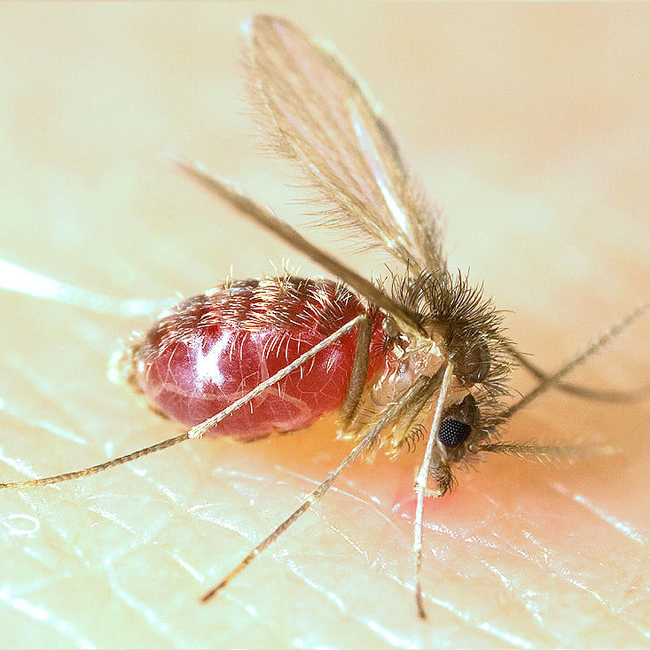 Lutzomyia LongipalpisLutzomyia (Lutzomyia) longipalpis
Compare
Questions and answers
What is the scientific name of the Drain Fly?
The scientific name of the Drain Fly is Clogmia albipunctata. Written with its author, the full name is Clogmia albipunctata (Williston, 1893).
Which family does the Drain Fly belong to?
Clogmia albipunctata belongs to the family Psychodidae, in the order Diptera and the class Insecta.
Where is the Drain Fly found?
Checklists and occurrence records place Clogmia albipunctata in 104 countries, including The Netherlands, United States, Germany, Spain, France and Canada.
What other names does the Drain Fly have?
Clogmia albipunctata is also known in English as Bathroom Moth Fly, Filter Fly, Sewer Gnats, Toilet Mothfly and White-spotted Moth Fly.
How do I get rid of sewer flies in my bathroom?
Larvae inhabit the slimy, gelatinous layer of wet sludge on the inner surfaces of drainpipes and sink traps. They feed on soap scum and other organic sludge accumulating inside drains and plumbing.[9][13]
Are bathroom moth flies harmful?
The species does not bite or sting humans and does not feed on blood. It has been reported as a potential mechanical vector of 45 bacterial species. Larvae have been reported in cases of myiasis affecting nasal, intestinal, and urinary sites, although the attribution of human myiasis to this species has been questioned because of insufficient epidemiological, entomological, and clinical evidence.[18][31][32][33][34]
Will drain flies eventually go away?
Adult flies live for approximately 12 days, while the total life span is approximately 35 days. Females can lay between 200 and 300 eggs during their lifetimes.[20][35][36]
What do drain gnats eat?
Adult flies drink water or consume flower nectar. Larvae feed on algae, fungi, bacteria, soap scum, and other decaying organic matter in wet environments.[10][11][12][13]
What do sewer flies eat?
Adult flies drink water or consume flower nectar. Larvae feed on decaying organic matter, including algae, fungi, bacteria, and organic sludge inside drains.[10][11][12][13]
Can drain flies live in a toilet?
The species occurs in toilets and sewage systems.[6]
Sources
Passages the profile rests on
- The antennae are longer than the abdomen and covered with white hairs. Source passage: “There is a pair of antennae which are longer than the abdomen and covered in white hairs.” — English Wikipedia
- The legs are brown and have white rings at the tips of the tibiae and metatarsi. Source passage: “The legs are brown with white annuli (rings) at the tips of the tibiae and metatarsi.” — English Wikipedia
- The species occurs near sewer drains, sewage treatment plants, plant pots, and swamps. Source passage: “The species can be found near sewer drains, sewage treatment plants, plant pots, swamps” — English Wikipedia
- The species inhabits shaded places containing moist, decaying organic matter. Source passage: “any other shaded place containing decaying, moist organic matter.” — English Wikipedia
- Adults commonly perch near bathroom and kitchen sinks, tubs, and drains. Source passage: “Indoors, people usually notice adult moth flies perching next to sinks, tubs, or drains in the bathroom or kitchen” — mdc.mo.gov
- The species occurs in bathrooms, kitchens, toilets, sewage systems, poorly maintained drains, and waste dumps. Source passage: “they are commonly found in anthropogenic dwellings such as bathrooms, kitchens, toilets, sewage, poorly maintained drains, or waste dumps” — pmc.ncbi.nlm.nih.gov
- Outdoor breeding sites include clogged wet gutters, air conditioners, cooling towers, potted plant trays, and storm drains. Source passage: “they may breed in clogged, wet gutters, air conditioners and cooling towers, potted plant trays, storm drains” — mdc.mo.gov
- Natural habitats include wet wooded areas, seeps, and stagnant waters near wetland margins. Source passage: “they occur in wet, wooded areas, around seeps, near stagnant waters at the margins of wetlands” — mdc.mo.gov
- Larvae inhabit the slimy, gelatinous layer of wet sludge on the inner surfaces of drainpipes and sink traps. Source passage: “Larvae live in and eat the organic material (algae, fungi, and bacteria) in the slimy, gelatinous layer of wet sludge that occurs on the inner surfaces of drainpipes of sinks and tubs, in sink traps” — mdc.mo.gov
- Adult flies sustain themselves by drinking water or consuming flower nectar. Source passage: “The adults can sustain themselves by drinking water or consuming flower nectar” — English Wikipedia
- Larvae feed on decaying organic matter in aquatic environments. Source passage: “The larvae live in aquatic environments, feeding on organic decaying matter” — English Wikipedia
- Larvae consume algae, fungi, and bacteria in wet organic sludge. Source passage: “Larvae live in and eat the organic material (algae, fungi, and bacteria)” — mdc.mo.gov
- Larvae feed on soap scum and other organic sludge accumulating inside drains and plumbing. Source passage: “Larvae develop in this stagnant water, feeding on soap scum and other organic sludge occurring on the inside surfaces of drains and plumbing (algae, fungi, bacteria).” — uaex.uada.edu
- Adults spend most of their time perched on walls and move infrequently. Source passage: “They spend most of their life perched on walls. They move rarely” — English Wikipedia
- Adults are weak fliers. Source passage: “and with weak flight.” — English Wikipedia
- Adults are attracted to light. Source passage: “Because of their attraction to light” — English Wikipedia
- Adults may be transported considerable distances by sustained winds. Source passage: “Adults reportedly may be blown great distances by sustained winds.” — mdc.mo.gov
- The species does not bite or sting humans. Source passage: “They are not attracted to human foods and do not bite or sting humans or other animals” — uaex.uada.edu
- Females deposit egg masses containing dozens of eggs in slime-coated damp drainpipes or other suitable habitats. Source passage: “Females fly into slime-coated, damp drainpipes or other suitable habitats and deposit masses containing dozens of eggs.” — mdc.mo.gov
- Females can lay between 200 and 300 eggs during their lifetimes. Source passage: “A female can lay from 200 to 300 eggs in her lifetime in sludge around sewage and drainage areas” — pmc.ncbi.nlm.nih.gov
- Eggs are transparent, measure no more than 1 mm, and hatch within 32–48 hours. Source passage: “Eggs are small and transparent, no larger than 1 mm and hatch within 32–48 h” — pmc.ncbi.nlm.nih.gov
- The life cycle comprises four stages: egg, larva, pupa, and adult. Source passage: “a four-stage life cycle including egg, larva (four instars), pupa, and adult” — pmc.ncbi.nlm.nih.gov
- Larvae pass through four instars before pupation. Source passage: “molting through 4 instars” — uaex.uada.edu
- Larval development takes approximately 18 days before pupation, which lasts about five days. Source passage: “feeding on decaying organic matter for approximately 18 days before pupating, which takes about 5 days.” — uaex.uada.edu
- Development from egg to adult emergence takes approximately 27 ± 5 days. Source passage: “with a growth period of 27 ± 5 days from egg to adult” — pmc.ncbi.nlm.nih.gov
- Temperature and nutrient availability influence the timing of hatching, larval development, and pupation. Source passage: “Timing of hatching, development of larvae, and pupation varies with temperature and amount of nutrients available.” — mdc.mo.gov
- The larvae contribute substantially to wastewater purification at sewage treatment plants. Source passage: “The larvae are important partners to humanity, because they play a large part in the wastewater-purification process at sewage treatment plants.” — mdc.mo.gov
- Both larvae and adults contribute to the decomposition of organic matter. Source passage: “Both larva and adults are important organic matter decomposers.” — pmc.ncbi.nlm.nih.gov
- The larvae help purify water by decomposing organic material. Source passage: “These humble insects help purify water, cleaning the environment and playing an important role in the decomposition process.” — mdc.mo.gov
- The species provides food for insectivorous terrestrial animals, including spiders, birds, toads, frogs, and reptiles. Source passage: “they convert some pretty foul materials into a form (their own bodies) that is palatable to a wide range of insectivorous terrestrial animals, including spiders, birds, toads, frogs, reptiles, and many others.” — mdc.mo.gov
- The species is non-hematophagous and does not feed on blood. Source passage: “Clogmia albipunctata are not a hematophagous species.” — pmc.ncbi.nlm.nih.gov
- The species has been reported as a potential mechanical vector of 45 bacterial species. Source passage: “Clogmia albipunctata may act as a potential mechanical vector of 45 bacterial species” — pmc.ncbi.nlm.nih.gov
- The larvae have been reported in cases of myiasis affecting nasal, intestinal, and urinary sites. Source passage: “some cases of myiasis caused by the larvae of this insect are reported in the literature, at the nasal, intestinal and urinary levels” — English Wikipedia
- The authors of a review questioned the attribution of human myiasis to this species because of insufficient epidemiological, entomological, and clinical evidence. Source passage: “The absence of a precise definition of myiasis and the lack of incontestable epidemiological, entomological, and clinical evidence in the articles introducing C. albipunctata as a causative agent led us to interrogate its role in human myiasis.” — pmc.ncbi.nlm.nih.gov
- Adult flies live for approximately 12 days. Source passage: “live for about 12 days.” — English Wikipedia
- The total life span is approximately 35 days. Source passage: “Their total life span is about 35 days.” — uaex.uada.edu
Data
- Catalogue of Life, 2026-10-16 XR cc by
- Global Biodiversity Information Facility CC BY 4.0
- Wikidata CC0
- GeoNames CC BY 4.0
- Wikimedia Commons per image; credit shown with each image
- Within the Catalogue of Life, this name comes from Systema Dipterorum cc by
References
- Williston, S.W. (1893) The North American Psychodidae. Entomological News 4: 113-114. [1893.04.30+]. where the name was published
This species in other databases
- Catalogue of Life 9H92P
- Wikidata Q3983062
- iNaturalist 258813
- WoRMS urn:lsid:marinespecies.org:taxname:1491119
Page built on 27 November 2026. See how the catalog is made and all sources and licences.
Cite this page
ScientificNames.org. (2026). Clogmia albipunctata (Drain Fly). Retrieved November 27, 2026, from https://scientificnames.org/species/clogmia-albipunctata
“Clogmia albipunctata (Drain Fly).” ScientificNames.org, 2026, scientificnames.org/species/clogmia-albipunctata. Accessed 27 Nov. 2026.
ScientificNames.org. “Clogmia albipunctata (Drain Fly).” Accessed November 27, 2026. https://scientificnames.org/species/clogmia-albipunctata.
@misc{scientificnames_clogmia_albipunctata_drain_fly,
  author = {{ScientificNames.org}},
  title = {Clogmia albipunctata (Drain Fly)},
  year = {2026},
  url = {https://scientificnames.org/species/clogmia-albipunctata},
  note = {Accessed 2026-11-27}
}