Species · Insects
Pink Spotted Lady Beetle Coleomegilla maculata
The scientific name of the Pink Spotted Lady Beetle is Coleomegilla maculata. It is a species of insect in the family Coccinellidae (ladybird beetles), order Coleoptera. The name dates from 1775.
- Scientific name
- Coleomegilla maculata (De Geer, 1775)
- Common name
- Pink Spotted Lady Beetle
- Genus
- Coleomegilla
- Family
- Coccinellidae (Ladybird Beetles)
- Order
- Coleoptera
- Class
- Insecta
- Recorded in
- 25 countries
- Name status
- accepted in the Catalogue of Life

Overview
Written 26 November 2026 from the sources listed below. Each statement was checked against the passage it cites; statements that could not be supported were removed.
Appearance
Larvae are dark-colored with orange or yellow markings on their thorax and abdomen. They have an alligator-like appearance.[1][2]
The eggs are spindle-shaped and light yellow, while the pupa is oval, black, and orange.[3][4]
Adults measure approximately 5–6 mm in body length. First-instar larvae measure approximately 1 mm, fourth-instar larvae reach approximately 6 mm, and larvae can reach up to 9 mm in length. Eggs measure approximately 1 mm, and pupae measure approximately 5 mm.[5][6][7][8][9][10]
Habitat
Adults and larvae occur in agricultural crops and personal gardens. The species prefers moist habitats and commonly inhabits low-growing field crops, garden ornamentals, and vegetables.[11][12][13]
The beetles commonly occur on host plants including corn and hophornbeam copperleaf. Adults overwinter beneath leaf litter and stones or in other protected sites along crop borders.[14][15]
The subspecies C. m. lengi occurs across most of the eastern United States, excluding New England and Florida. C. m. strenua occurs from Texas to southern California, while C. m. fubscilabris occurs in Florida and parts of the Gulf Coast.[16][17][18]
Diet
Aphids are a primary food source for adults and larvae. The beetles also consume pollen, which can account for approximately half their diet.[19][20]
The beetles also consume nectar, water, and honeydew in addition to prey and pollen.[21]
Behaviour
Adult beetles are active predators during daylight hours, while larvae feed during both daytime and nighttime. Adults climb host plants to feed in the morning and descend during the afternoon.[22][23][24]
Adults aggregate in large groups before overwintering. Larvae may travel as far as 12 m while searching for food and may cannibalize other larvae of their species.[25][26][27]
Reproduction and life cycle
The species reproduces through sexual reproduction with internal fertilization. Females can lay between 200 and 1,000 eggs over approximately three months, typically placing them in small clusters near prey on plant leaves or stems.[28][29][30]
The species produces between two and five generations annually. Development from egg to reproductive adult takes approximately three to four weeks in warm weather, and the pupal stage lasts approximately 3–12 days depending on temperature.[31][32][33]
Adult females have a lifespan of approximately one to three months.[34]
Conservation
The species is not considered endangered. Maintaining flowering plants such as dandelions and clover can help conserve beetle populations by providing alternative food.[35][36]
Broad-spectrum insecticides can harm adult and larval beetles.[37]
Uses
The Pink Spotted Lady Beetle is used as a biological control agent against agricultural pests. The beetles can help reduce agricultural pest populations through predation.[38][39]
Classification of the Pink Spotted Lady Beetle
| Kingdom | Animalia |
|---|---|
| Phylum | Arthropoda |
| Subphylum | Hexapoda |
| Class | Insecta (Insect) |
| Order | Coleoptera (Beetle) |
| Suborder | Polyphaga |
| Series | Cucujiformia |
| Superfamily | Coccinelloidea |
| Family | Coccinellidae (Ladybird Beetles) |
| Subfamily | Coccinellinae |
| Tribe | Coccinellini |
| Genus | Coleomegilla |
| Species | Coleomegilla maculata (De Geer, 1775) |
This name was added to the Catalogue of Life from a contributing dataset by automated merging and has not yet been reviewed by its editors.
Where the Pink Spotted Lady Beetle is found
Checklists and occurrence records place Coleomegilla maculata in 25 countries across North America and South America. GBIF holds 28,559 georeferenced records of it.
Countries
- Argentina 12
- Aruba 3
- Belize 4
- Bolivia 5
- Bonaire, Saint Eustatius and Saba 7
- Brazil 124
- Canada 5,514
- Colombia 159
- Costa Rica 111
- Cuba 4
- Curacao 6
- Ecuador 27
- French Guiana 13
- Guadeloupe 17
- Guatemala 11
- Guyana 3
- Honduras 42
- Martinique 15
- Mexico 458
- Nicaragua 7
- Panama 10
- Peru 57
- Saint Martin 3
- United States 21,932
- Venezuela 15
Regions and cities with the most records
- Ontario, Canada 4,671
- Ohio, United States 1,679
- Illinois, United States 1,446
- Vermont, United States 1,422
- Texas, United States 1,387
- Pennsylvania, United States 1,379
- New York, United States 1,335
- Michigan, United States 902
- Kentucky, United States 843
- Maryland, United States 814
- Virginia, United States 779
- Indiana, United States 778
- Wisconsin, United States 729
- North Carolina, United States 715
- South Burlington, United States 707
- Colchester, United States 701
- Quebec, Canada 690
- Burlington, United States 689
- Massachusetts, United States 656
- Minnesota, United States 639
- Missouri, United States 579
- Wasaga Beach, Canada 560
- Collingwood, Canada 550
- Tennessee, United States 457
- Kansas, United States 453
- Willowdale, Canada 426
- Thornhill, Canada 372
- Toronto, Canada 372
- Etobicoke, Canada 336
- New Jersey, United States 333
- Saint Matthews, United States 331
- Jeffersontown, United States 326
- Jeffersonville, United States 325
- Ottawa South, Canada 324
- Louisville, United States 322
- Newburg, United States 322
Range as the checklists state it
Middle America
North America
South America
A number beside a place is its count of GBIF occurrence records. A place without a number comes from a checklist alone. Records show where a species has been observed or collected, which can include escapes and vagrants.
Common names
English
- Pink Spotted Lady Beetle
- Pink Spotted Ladybug
- Spotted Pink Lady Beetle
- Spotted Pink Ladybug
- Spotted Lady Beetle
Names in 2 other languages
- French
- Coccinelle maculée
- Spanish
- Catarinita rosa manchada
Synonyms
3 other scientific names have been used for this species and are now treated as synonyms of Coleomegilla maculata.
- Coccinella bisexpunctata Latreille, 1833
- Coccinella decemmaculata Fabricius, 1781
- Coccinella maculata De Geer, 1775
Subspecies and varieties
- Coleomegilla maculata fuscilabris (Spotted Orange Lady Beetle) subspecies
- Coleomegilla maculata lengi subspecies
- Coleomegilla maculata strenua subspecies
Related species
- Coleomegilla cubensis
- Harmonia axyridis
-
 Seven-spot LadybirdCoccinella septempunctata
-
 Twice-stabbed Lady BeetleChilocorus stigma
-
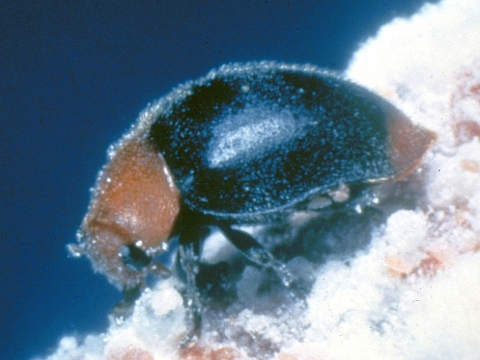 Mealybug DestroyerCryptolaemus montrouzieri
-
 22-spot LadybirdPsyllobora vigintiduopunctata
-
 Steelblue Lady BeetleHalmus chalybeus
-
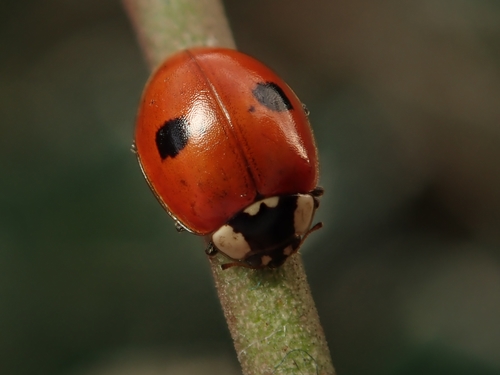 Two-spot LadybirdAdalia bipunctata
Compare
Questions and answers
What is the scientific name of the Pink Spotted Lady Beetle?
The scientific name of the Pink Spotted Lady Beetle is Coleomegilla maculata. Written with its author, the full name is Coleomegilla maculata (De Geer, 1775).
Which family does the Pink Spotted Lady Beetle belong to?
Coleomegilla maculata belongs to the family Coccinellidae, in the order Coleoptera and the class Insecta.
Where is the Pink Spotted Lady Beetle found?
Checklists and occurrence records place Coleomegilla maculata in 25 countries, including United States, Canada, Mexico, Colombia, Brazil and Costa Rica.
What other names does the Pink Spotted Lady Beetle have?
Coleomegilla maculata is also known in English as Pink Spotted Ladybug, Spotted Pink Lady Beetle, Spotted Pink Ladybug and Spotted Lady Beetle.
Sources
Passages the profile rests on
- Larvae are dark-colored and have orange or yellow markings on their thorax and abdomen. Source passage: “Larvae are blackish with orange or yellow on the thorax and abdomen.” — ipm.ucanr.edu
- The larvae have an alligator-like appearance. Source passage: “The larvae are long, dark, soft-bodied, and often described as alligator-like in appearance.” — cals.cornell.edu
- The eggs are spindle-shaped and light yellow. Source passage: “The eggs are spindle-shaped, rather than oval, and are typically light yellow in color.” — cals.cornell.edu
- The pupa is oval, black, and orange. Source passage: “The pupa is oval, black and orange, and about 1/5 inch (5 mm) long.” — ipm.ucanr.edu
- Adults measure approximately 5–6 mm in body length. Source passage: “The body is 1/5 to 1/4 inch (5–6 mm) long and elongate oval when viewed from above and convex when viewed from the side.” — ipm.ucanr.edu
- First-instar larvae measure approximately 1 mm in length. Source passage: “First instars are about 1/25 inch (1 mm) long” — ipm.ucanr.edu
- Fourth-instar larvae reach approximately 6 mm in length. Source passage: “last (fourth) instars are about 1/4 inch (6 mm) long.” — ipm.ucanr.edu
- Eggs measure approximately 1 mm in length. Source passage: “Each egg is about 1/25 inch (1 mm) long.” — ipm.ucanr.edu
- Pupae measure approximately 5 mm in length. Source passage: “The pupa is oval, black and orange, and about 1/5 inch (5 mm) long.” — ipm.ucanr.edu
- Larvae can reach up to 9 mm in length. Source passage: “Larvae are up to 9 millimeters in length.” — animaldiversity.org
- Adults and larvae occur in agricultural crops and personal gardens. Source passage: “Wide range of crops and in personal gardens, mostly outside.” — cals.cornell.edu
- The species prefers moist habitats. Source passage: “Spotted lady beetles prefer moist habitats.” — animaldiversity.org
- The species commonly inhabits low-growing field crops, garden ornamentals, and vegetables. Source passage: “Pink spotted lady beetle is most common in low-growing plants, such as field crops, garden ornamentals, and vegetables.” — ipm.ucanr.edu
- The beetles commonly occur on host plants including corn and hophornbeam copperleaf. Source passage: “Their host plants, which include crops like corn , hophornbeam copperleaf” — animaldiversity.org
- Adults overwinter beneath leaf litter and stones or in other protected sites along crop borders. Source passage: “Adults overwinter in large groups under leaf litter, stones, and protected or shaded sites along crop borders” — cals.cornell.edu
- The subspecies C. m. lengi occurs across most of the eastern United States, excluding New England and Florida. Source passage: “C.m. lengi is found throughout most of the eastern United States, except for New England and Florida.” — animaldiversity.org
- The subspecies C. m. strenua occurs from Texas to southern California. Source passage: “C.m. strenua is found from Texas to southern California.” — animaldiversity.org
- The subspecies C. m. fubscilabris occurs in Florida and parts of the Gulf Coast. Source passage: “C.m. fubscilabris is found in Florida and the parts of the Gulf Coast.” — animaldiversity.org
- Aphids are a primary food source for adults and larvae. Source passage: “The adults and larvae feed primarily on aphids” — English Wikipedia
- The beetles consume pollen, which can account for approximately half their diet. Source passage: “Up to 50% of their diet can be made up of pollen.” — animaldiversity.org
- The beetles consume nectar, water, and honeydew in addition to prey and pollen. Source passage: “They also eat pollen which may constitute up to 50% of their food intake, nectar, water and honeydew.” — English Wikipedia
- Adult beetles are active predators during daylight hours. Source passage: “Adults predate diurnally” — animaldiversity.org
- Larvae feed during both daytime and nighttime. Source passage: “larvae feed diurnally and nocturnally.” — animaldiversity.org
- Adults climb host plants to feed in the morning and descend during the afternoon. Source passage: “Adults climb up their host plants to feed during the morning hours and climb back down during the afternoon.” — animaldiversity.org
- Adults aggregate in large groups before overwintering. Source passage: “This species is most abundant in September when they congregate before mating and winter hibernation.” — English Wikipedia
- Larvae may travel as far as 12 m while searching for food. Source passage: “The larvae actively seek out prey and may travel as far as 12 m (39 ft) in their search for food.” — English Wikipedia
- Larvae may cannibalize other larvae of their species. Source passage: “Larvae may cannibalize other larvae of their species.” — animaldiversity.org
- Females can lay between 200 and 1,000 eggs over approximately three months. Source passage: “A female beetle may lay between 200 and 1,000 eggs in groups of 8-15 in protected sites on stems and leaves over a three-month period.” — English Wikipedia
- Females typically lay eggs in small clusters near prey on plant leaves or stems. Source passage: “Eggs are typically laid in small clusters near prey, such as aphids, on leaves or stems.” — cals.cornell.edu
- The species reproduces through sexual reproduction with internal fertilization. Source passage: “Spotted lady beetles utilize sexual reproduction and internal fertilization.” — animaldiversity.org
- The species produces between two and five generations annually. Source passage: “Depending on environmental conditions, the pink spotted lady beetle can produce two to five generations per year.” — cals.cornell.edu
- Development from egg to reproductive adult takes approximately three to four weeks in warm weather. Source passage: “Development time from an egg to reproductive adult is 3 to 4 weeks during warm weather.” — ipm.ucanr.edu
- The pupal stage lasts approximately 3–12 days depending on temperature. Source passage: “the pupal stage lasting 3 to 12 days depending on temperature.” — cals.cornell.edu
- Adult females have a lifespan of approximately one to three months. Source passage: “Adult females lay about 200 to more than 1,000 eggs during their 1 to 3 month life span.” — ipm.ucanr.edu
- The species is not considered endangered. Source passage: “Spotted lady beetles are not endangered.” — animaldiversity.org
- Maintaining flowering plants such as dandelions and clover can help conserve beetle populations by providing alternative food. Source passage: “To conserve pink spotted lady beetle populations, maintain flowering plants like dandelions, clover, and other pollen sources near fields to provide alternative food when prey is scarce.” — cals.cornell.edu
- Broad-spectrum insecticides can harm adult and larval beetles. Source passage: “Minimize the use of broad-spectrum insecticides, especially pyrethroid/pyrethrum (home gardens) or neonicotinoid (commercial farms) insecticides which can harm both adults and larvae.” — cals.cornell.edu
- The species is used as a biological control agent against agricultural pests. Source passage: “the species has been used as a biological control agent.” — English Wikipedia
- The beetles can help reduce agricultural pest populations through predation. Source passage: “They can be used to reduce pest populations in agriculture.” — animaldiversity.org
Data
- Catalogue of Life, 2026-10-16 XR cc by
- Global Biodiversity Information Facility CC BY 4.0
- Wikidata CC0
- GeoNames CC BY 4.0
- Wikimedia Commons per image; credit shown with each image
- Within the Catalogue of Life, this name comes from The Integrated Taxonomic Information System cc0
References
- Gordon, Robert D. (1985). The Coccinellidae (Coleoptera) of America North of Mexico. Journal of the New York Entomological Society, Vol. 93, No. 1.
- Krafsur, E. S., and J. J. Obrycki. (2000). Coleomegilla maculata (Coleoptera: Coccinellidae) is a Species Complex. Annals of the Entomological Society of America, Vol. 93, No. 5.
This species in other databases
Page built on 26 November 2026. See how the catalog is made and all sources and licences.
Cite this page
ScientificNames.org. (2026). Coleomegilla maculata (Pink Spotted Lady Beetle). Retrieved November 26, 2026, from https://scientificnames.org/species/coleomegilla-maculata
“Coleomegilla maculata (Pink Spotted Lady Beetle).” ScientificNames.org, 2026, scientificnames.org/species/coleomegilla-maculata. Accessed 26 Nov. 2026.
ScientificNames.org. “Coleomegilla maculata (Pink Spotted Lady Beetle).” Accessed November 26, 2026. https://scientificnames.org/species/coleomegilla-maculata.
@misc{scientificnames_coleomegilla_maculata_pink_spotted_lady_beetle,
  author = {{ScientificNames.org}},
  title = {Coleomegilla maculata (Pink Spotted Lady Beetle)},
  year = {2026},
  url = {https://scientificnames.org/species/coleomegilla-maculata},
  note = {Accessed 2026-11-26}
}