Species · Molluscs
Comitas saldanhae
Comitas saldanhae has no English name on record in the checklists used here. It is a species of mollusc in the family Pseudomelatomidae, order Neogastropoda. The name dates from 1958.
- Scientific name
- Comitas saldanhae (Barnard, 1958)
- Genus
- Comitas
- Family
- Pseudomelatomidae
- Order
- Neogastropoda
- Class
- Gastropoda
- Environment
- marine
- Recorded in
- 2 countries
- Name status
- accepted in the Catalogue of Life

Overview
The species occurs off the western coast of South Africa, from Namibia to west of Cape Point, and off the Orange River. Its radula consists of duplex marginal teeth with an accessory limb inserted into a deep and broad socket on the major limb, and differs substantially from that of the examined Comitas species.
Written 27 November 2026 from the sources listed below. Each statement was checked against the passage it cites; statements that could not be supported were removed.
Appearance
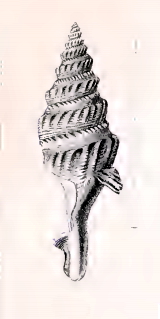
The shell is spindle-shaped, with a short siphonal canal and an elevated spire. It has distinctly shouldered whorls and an indented suture.[1][2]
The shoulder slope bears spiral threads, while the area below it has oblique axial ribs crossed by finer spiral threads. The shell base bears spiral threads and growth lines.[3][4]
The outer lip has a broad, moderately deep, U-shaped anal sinus at the shoulder, which occupies part of the subsutural ramp. In larger specimens, the outer lip flares outward below the anal sinus.[5][6][7]
The shell is chalky white and has a dull brown periostracum. The apex, ribs, and subsutural region are frequently eroded, and the shell is often mud-covered.[8][9]
The shell measures between 40 and 62 mm in length, although it is usually less than 45 mm long.[10][11]
Habitat
The species occurs off the western coast of South Africa, from Namibia to west of Cape Point, and off the Orange River.[12]
Classification of Comitas saldanhae
| Kingdom | Animalia |
|---|---|
| Phylum | Mollusca |
| Class | Gastropoda (Gastropod) |
| Subclass | Caenogastropoda |
| Order | Neogastropoda |
| Superfamily | Conoidea |
| Family | Pseudomelatomidae |
| Genus | Comitas |
| Species | Comitas saldanhae (Barnard, 1958) |
Where Comitas saldanhae is found
Checklists and occurrence records place Comitas saldanhae in 2 countries. GBIF holds 35 georeferenced records of it.
Countries
Regions and cities with the most records
A number beside a place is its count of GBIF occurrence records. A place without a number comes from a checklist alone. Records show where a species has been observed or collected, which can include escapes and vagrants.
Synonyms
One other scientific name has been used for this species and is now treated as a synonym of Comitas saldanhae.
- Turris saldanhae Barnard, 1958
Related species
- Comitas kuroharai
-
 Comitas kaderlyi
-
 Comitas peelae
-
 Comitas obliquicosta
-
 Comitas ilariae
- Comitas trailli
-
 Comitas vezo
-
 Comitas lurida
Compare
Questions and answers
What is the radula structure of Comitas saldanhae?
The radula consists of duplex marginal teeth with an accessory limb inserted into a deep and broad socket on the major limb. Its structure differs substantially from that of the examined Comitas species.[13][14]
What is the exact generic position of Comitas saldanhae?
Its exact generic position is undetermined.[15]
Which family does Comitas saldanhae belong to?
Its radula type suggests that the species belongs to the family Pseudomelatomidae.[16]
Sources
Passages the profile rests on
- The shell is spindle-shaped, with a short siphonal canal and an elevated spire. Source passage: “The shell is spindle-shaped, featuring a short siphonal canal and an elevated spire.” — English Wikipedia
- The shell has distinctly shouldered whorls and an indented suture. Source passage: “Whorls are distinctly shouldered, with an indented suture.” — English Wikipedia
- The shoulder slope bears spiral threads, while the area below it has oblique axial ribs crossed by finer spiral threads. Source passage: “The shoulder slope is adorned with spiral threads, while below the shoulder, the sculpture includes oblique axial ribs crossed by finer spiral threads.” — English Wikipedia
- The shell base bears spiral threads and growth lines. Source passage: “The base displays only spiral threads and growth lines.” — English Wikipedia
- The outer lip has a broad, moderately deep, U-shaped anal sinus at the shoulder. Source passage: “The outer lip has a broad, moderately deep U-shaped anal sinus at the shoulder” — English Wikipedia
- In larger specimens, the outer lip flares outward below the anal sinus. Source passage: “in larger specimens, the lip edge flares outward below this point.” — English Wikipedia
- The species has an anal sinus that occupies part of the subsutural ramp. Source passage: “The shell of the species possesses an anal sinus, which occupies part of the subsutural ramp” — English Wikipedia
- The shell is chalky white and has a dull brown periostracum. Source passage: “The shell is chalky white with a dull brown periostracum.” — English Wikipedia
- The apex, ribs, and subsutural region are frequently eroded, and the shell is often mud-covered. Source passage: “The apex, ribs, and subsutural region are frequently eroded, and the shell is often covered in mud.” — English Wikipedia
- The shell measures between 40 and 62 mm in length. Source passage: “The length of the shell varies between 40 mm and 62 mm” — English Wikipedia
- The shell is usually less than 45 mm long. Source passage: “but is usually less than 45 mm.” — English Wikipedia
- The species occurs off the western coast of South Africa, from Namibia to west of Cape Point, and off the Orange River. Source passage: “This marine species occurs off the west coast off South Africa (Namibia to west of Cape Point) and off the Orange River.” — English Wikipedia
- The radula consists of duplex marginal teeth with an accessory limb inserted into a deep and broad socket on the major limb. Source passage: “the radula consists of duplex marginal teeth, with the accessory limb of the marginal tooth inserted into a rather deep and broad socket on the major limb.” — English Wikipedia
- The radula structure differs substantially from that of the examined Comitas species. Source passage: “This tooth structure is very different from the radulae of Comitas that have been examined.” — English Wikipedia
- The species' exact generic position is undetermined. Source passage: “Although the exact generic position of the species cannot be determined” — English Wikipedia
- The radula type suggests that the species belongs to the family Pseudomelatomidae. Source passage: “the radula type suggests it belongs to the family Pseudomelatomidae.” — English Wikipedia
Data
- Catalogue of Life, 2026-10-16 XR cc by
- Global Biodiversity Information Facility CC BY 4.0
- Wikidata CC0
- GeoNames CC BY 4.0
- Wikimedia Commons per image; credit shown with each image
- Within the Catalogue of Life, this name comes from World Register of Marine Species cc by
References
- Powell, A. W. B. (1969). The family Turridae in the Indo-Pacific. Part 2. The subfamily Turriculinae. Indo-Pacific Mollusca, 2 (10): 215–416. where the name was published
This species in other databases
Page built on 28 November 2026. See how the catalog is made and all sources and licences.
Cite this page
ScientificNames.org. (2026). Comitas saldanhae. Retrieved November 28, 2026, from https://scientificnames.org/species/comitas-saldanhae
“Comitas saldanhae.” ScientificNames.org, 2026, scientificnames.org/species/comitas-saldanhae. Accessed 28 Nov. 2026.
ScientificNames.org. “Comitas saldanhae.” Accessed November 28, 2026. https://scientificnames.org/species/comitas-saldanhae.
@misc{scientificnames_comitas_saldanhae,
  author = {{ScientificNames.org}},
  title = {Comitas saldanhae},
  year = {2026},
  url = {https://scientificnames.org/species/comitas-saldanhae},
  note = {Accessed 2026-11-28}
}