Species · Insects
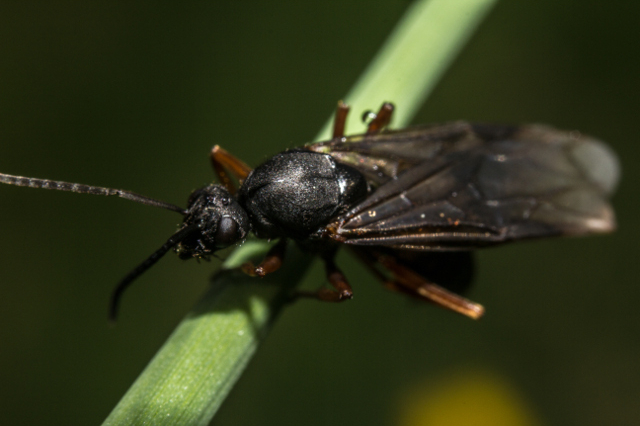
Diamondback Moth Parasitoid Wasp Cotesia vestalis
The scientific name of the Diamondback Moth Parasitoid Wasp is Cotesia vestalis. It is a species of insect in the family Braconidae (braconids), order Hymenoptera. The name dates from 1834.
- Scientific name
- Cotesia vestalis (Haliday, 1834)
- Common name
- Diamondback Moth Parasitoid Wasp
- Genus
- Cotesia
- Family
- Braconidae (Braconids)
- Order
- Hymenoptera
- Class
- Insecta
- Recorded in
- 34 countries
- Name status
- accepted in the Catalogue of Life
Overview
The Diamondback Moth Parasitoid Wasp is a solitary larval endoparasitoid and koinobiont endoparasitoid. The species originates in warmer parts of the Palearctic region and occurs in Japan. It primarily parasitizes diamondback moth larvae and is predominantly regarded as a diamondback moth specialist.
Written 27 November 2026 from the sources listed below. Each statement was checked against the passage it cites; statements that could not be supported were removed.
Behaviour
The species is a solitary larval endoparasitoid. It preferentially parasitizes second- and third-instar diamondback moth larvae.[1][2]
Reproduction and life cycle
The species completes development from egg to adult in approximately 15 days at 25°C.[3]
Diet
Natural hosts recorded in Japan include Autographa gamma, Autographa nigrisigna, and Leuroperna sera, in addition to the diamondback moth.[4]
Habitat
The species originates in warmer parts of the Palearctic region. It occurs in Japan.[5][6]
The species has been introduced to other regions for diamondback moth control.[7]
Uses
The species has been introduced to other regions for diamondback moth control. In Japan, it is considered one of the most important natural enemies of the diamondback moth.[7][6]
Classification of the Diamondback Moth Parasitoid Wasp
| Kingdom | Animalia |
|---|---|
| Phylum | Arthropoda |
| Subphylum | Hexapoda |
| Class | Insecta (Insect) |
| Order | Hymenoptera (Ants) |
| Suborder | Apocrita (Ants) |
| Infraorder | Terebrantes |
| Superfamily | Ichneumonoidea |
| Family | Braconidae (Braconids) |
| Subfamily | Microgastrinae |
| Genus | Cotesia |
| Species | Cotesia vestalis (Haliday, 1834) |
Where the Diamondback Moth Parasitoid Wasp is found
Checklists and occurrence records place Cotesia vestalis in 34 countries. GBIF holds 838 georeferenced records of it.
Countries
- Bangladesh 6
- Belarus 22
- Benin 3
- Bulgaria 15
- China 16
- Denmark 3
- Finland 5
- France 4
- Germany 148
- India 22
- Indonesia 8
- Iran 18
- Kenya 49
- Lebanon 13
- Malaysia 13
- Montenegro 4
- Myanmar 3
- Norway 4
- Pakistan 184
- Portugal 4
- Reunion 3
- Russia 12
- South Africa 20
- Spain 73
- Sri Lanka 14
- Sweden 107
- Taiwan 6
- Tanzania 6
- Thailand 3
- Turkey 8
- Ukraine 9
- United Arab Emirates 10
- United Kingdom 20
- Vietnam 3
Regions and cities with the most records
- Sindh, Pakistan 80
- Baden-Baden, Germany 79
- Baden-Wurttemberg, Germany 79
- Ettlingen, Germany 79
- Gaggenau, Germany 79
- Karlsruhe, Germany 79
- Rastatt, Germany 79
- Rheinstetten, Germany 79
- Wörth am Rhein, Germany 79
- Punjab, Pakistan 77
- Hyderabad, Pakistan 74
- Tando Allahyar, Pakistan 74
- Tando Jam, Pakistan 74
- Bavaria, Germany 68
- Kikuyu, Kenya 34
- Limuru, Kenya 34
- Maai Mahiu, Kenya 34
- Mai, Kenya 34
- Nakuru County, Kenya 34
- Skåne, Sweden 34
- Garmisch-Partenkirchen, Germany 30
- Telfs, Austria 30
- Bhakkar, Pakistan 26
- Faisalabad, Pakistan 24
- Kristianstad, Sweden 23
- Kalodzishchy, Belarus 22
- Minsk, Belarus 22
- Gotland, Sweden 16
- Visby, Sweden 16
- Sofia, Bulgaria 15
- Taita Taveta, Kenya 14
- Khuzestan, Iran 13
- Stockholm, Sweden 11
- Tripoli, Lebanon 11
- Alipur, Pakistan 10
- Islamabad, Pakistan 10
4 more countries have a few records outside this range
These countries hold a few records of Cotesia vestalis but lie outside the range the checklists give for it. Such records are often zoo or garden specimens, museum material or vagrants, so the species is not counted as occurring there.
A number beside a place is its count of GBIF occurrence records. A place without a number comes from a checklist alone. Records show where a species has been observed or collected, which can include escapes and vagrants.
Common names
English
- Diamondback Moth Parasitoid Wasp
Names in 1 other language
- Korean
- 프루텔고치벌
Synonyms
4 other scientific names have been used for this species and are now treated as synonyms of Cotesia vestalis.
- Apanteles plutellae Kurdjumov, 1912
- Apanteles vestalis (Haliday, 1834)
- Cotesia plutellae (Kurdjumov, 1912)
- Microgaster vestalis Haliday, 1834
Related species
-
 Tomato Hornworm Parasitoid WaspCotesia congregata
-
 Cabbage White Parasitoid WaspCotesia glomerata
- Cotesia rubecula
- Cotesia marginiventris
- Cotesia urabae
- Cotesia icipe
- Cotesia perspicua
- Cotesia ginginensis
Compare
Questions and answers
What is the scientific name of the Diamondback Moth Parasitoid Wasp?
The scientific name of the Diamondback Moth Parasitoid Wasp is Cotesia vestalis. Written with its author, the full name is Cotesia vestalis (Haliday, 1834).
Which family does the Diamondback Moth Parasitoid Wasp belong to?
Cotesia vestalis belongs to the family Braconidae, in the order Hymenoptera and the class Insecta.
Where is the Diamondback Moth Parasitoid Wasp found?
Checklists and occurrence records place Cotesia vestalis in 34 countries, including Pakistan, Germany, Sweden, Spain, Kenya and Belarus.
Are diamondback moths bad?
The diamondback moth is a pest of brassicaceous crops such as cabbages and mustards.[8]
What do parasitoid wasps eat?
The Diamondback Moth Parasitoid Wasp primarily parasitizes diamondback moth (Plutella xylostella) larvae.[9]
Sources
Passages the profile rests on
- The species is a solitary larval endoparasitoid. Source passage: “Cotesia vestalis (Hymenoptera, Braconidae) is a solitary larval endoparasitoid of the diamondback moth (DBM)” — pmc.ncbi.nlm.nih.gov
- The species preferentially parasitizes second- and third-instar diamondback moth larvae. Source passage: “The wasp preferentially parasitizes L2 and L3 instars of the DBM” — pmc.ncbi.nlm.nih.gov
- The species completes development from egg to adult in approximately 15 days at 25°C. Source passage: “takes approximately 15 days to complete its egg-to-adult development 25°C.” — pmc.ncbi.nlm.nih.gov
- Natural hosts recorded for the species in Japan include Autographa gamma, Autographa nigrisigna, and Leuroperna sera, in addition to the diamondback moth. Source passage: “Natural hosts of C vestalis in Japan include the DBM,16,18,27 Autographa gamma, 28 Autographa nigrisigna,23,28 and Leuroperna sera.” — pmc.ncbi.nlm.nih.gov
- The species originates in warmer parts of the Palearctic region. Source passage: “This wasp originates in warmer parts of the Palearctic” — pmc.ncbi.nlm.nih.gov
- The species occurs in Japan, where it is considered one of the most important natural enemies of the diamondback moth. Source passage: “In Japan, C vestalis is one of the most important natural enemies of the DBM.” — pmc.ncbi.nlm.nih.gov
- The species has been introduced to other regions for diamondback moth control. Source passage: “has been introduced to other regions for the control of DBM.” — pmc.ncbi.nlm.nih.gov
- The species' principal host, the diamondback moth, is a pest of brassicaceous crops such as cabbages and mustards. Source passage: “a major worldwide pest of brassicaceous crops (eg, cabbages and mustards)” — pmc.ncbi.nlm.nih.gov
- The species primarily parasitizes diamondback moth (Plutella xylostella) larvae. Source passage: “Cotesia vestalis, mainly parasitizes diamondback moth (DBM) larvae in the field” — pmc.ncbi.nlm.nih.gov
Data
- Catalogue of Life, 2026-10-16 XR cc by
- Global Biodiversity Information Facility CC BY 4.0
- Wikidata CC0
- GeoNames CC BY 4.0
- Within the Catalogue of Life, this name comes from Taxapad Ichneumonoidea cc by
References
- Haliday, A. H. (1834). Essay on parasitic Hymenoptera. Entomological Magazine. 2(iii):225-259. where the name was published
This species in other databases
Page built on 27 November 2026. See how the catalog is made and all sources and licences.
Cite this page
ScientificNames.org. (2026). Cotesia vestalis (Diamondback Moth Parasitoid Wasp). Retrieved November 27, 2026, from https://scientificnames.org/species/cotesia-vestalis
“Cotesia vestalis (Diamondback Moth Parasitoid Wasp).” ScientificNames.org, 2026, scientificnames.org/species/cotesia-vestalis. Accessed 27 Nov. 2026.
ScientificNames.org. “Cotesia vestalis (Diamondback Moth Parasitoid Wasp).” Accessed November 27, 2026. https://scientificnames.org/species/cotesia-vestalis.
@misc{scientificnames_cotesia_vestalis_diamondback_moth_parasitoid_wasp,
  author = {{ScientificNames.org}},
  title = {Cotesia vestalis (Diamondback Moth Parasitoid Wasp)},
  year = {2026},
  url = {https://scientificnames.org/species/cotesia-vestalis},
  note = {Accessed 2026-11-27}
}