Species · Mammals
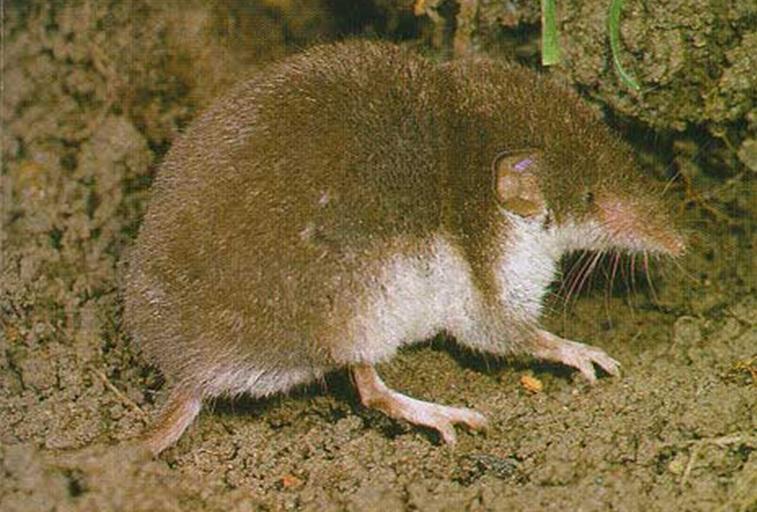
Luzon Shrew Crocidura grayi
The scientific name of the Luzon Shrew is Crocidura grayi. It is a species of mammal in the family Soricidae (shrew), order Eulipotyphla. The name dates from 1890.
- Scientific name
- Crocidura grayi Dobson, 1890
- Common name
- Luzon Shrew
- Genus
- Crocidura
- Family
- Soricidae (Shrew)
- Order
- Eulipotyphla
- Class
- Mammalia
- Red List category
- LC Least Concern
- Recorded in
- 2 countries
- Name status
- accepted in the Catalogue of Life
Overview
The Luzon Shrew is a small mammal in the family Soricidae, order Eulipotyphla, and class Mammalia. It is endemic to the Philippines and occurs in the Luzon and Mindoro faunal regions, including Catanduanes Island. Adult Luzon shrews weigh approximately 10 grams.
Written 26 November 2026 from the sources listed below. Each statement was checked against the passage it cites; statements that could not be supported were removed.
Appearance
The Luzon Shrew is a small mammal. Adult individuals weigh approximately 10 grams.[1][2]
Habitat
The Luzon Shrew primarily inhabits primary lowland, montane, and mossy forests. It occurs less frequently in secondary forests than in primary forests.[3][4]
The species typically occupies locations with moderate to heavy ground cover. Recorded ground-level locations include areas beside fallen logs, tunnel openings, ravine sides, and tree bases.[5][6]
The species occurs in forested areas in the northern Philippines and does not appear outside forested areas.[7][8]
Diet
The Luzon Shrew is thought to consume insects and amphipods.[9]
Behaviour
The Luzon Shrew is active during both daytime and nighttime. It is attracted to earthworm bait.[10][11]
A 1999 study found no evidence of predation on the species.[12]
Reproduction and life cycle
The average litter size is 1.2 ± 0.2 offspring.[13]
Conservation
The Luzon Shrew is classified as Least Concern on the IUCN Red List following a 2016 assessment. It is considered locally common, is presumed to have a large population, and is not thought to be declining rapidly.[14][15][16][17]
Deforestation is a threat to the species, particularly at lower elevations. Forest loss associated with human settlements, agriculture, and logging affects the species, which is described as threatened by habitat loss.[18][19][20]
Similar species
Crocidura beatus is identified as a close relative of the Luzon Shrew. It shares similar patterns of elevational range and abundance on Leyte.[21][22]
Classification of the Luzon Shrew
| Kingdom | Animalia |
|---|---|
| Phylum | Chordata |
| Subphylum | Vertebrata |
| Infraphylum | Gnathostomata |
| Parvphylum | Osteichthyes |
| Megaclass | Tetrapoda |
| Class | Mammalia (Mammal) |
| Subclass | Theria |
| Infraclass | Eutheria |
| Order | Eulipotyphla |
| Family | Soricidae (Shrew) |
| Subfamily | Crocidurinae (White-toothed Shrews) |
| Genus | Crocidura (White-toothed Shrews) |
| Species | Crocidura grayi Dobson, 1890 |
Where the Luzon Shrew is found
Checklists and occurrence records place Crocidura grayi in 2 countries across Asia. GBIF holds 455 georeferenced records of it.
Countries
Regions and cities with the most records
- Bontoc, Philippines 59
- Goa, Philippines 42
- Calabanga, Philippines 40
- Magarao, Philippines 40
- Baggabag B, Philippines 28
- Bambang, Philippines 28
- Bayombong, Philippines 28
- Solano, Philippines 28
- Sablayan, Philippines 23
- Masinloc, Philippines 19
- Dupax Del Norte, Philippines 10
- Bongabon, Philippines 9
- Labo, Philippines 9
- Laur, Philippines 9
- Buhi, Philippines 5
- Calapan, Philippines 5
- Mankayan, Philippines 5
- San Jose, Philippines 5
- Daet, Philippines 3
- General Emilio Aguinaldo, Philippines 3
- Malilipot, Philippines 3
- Maragondon, Philippines 3
- Naic, Philippines 3
- Nasugbu, Philippines 3
- Polangui, Philippines 3
- Tabaco, Philippines 3
- Ternate, Philippines 3
- Tiwi, Philippines 3
- Vinzons, Philippines 3
Range as the checklists state it
Southern Asia
A number beside a place is its count of GBIF occurrence records. A place without a number comes from a checklist alone. Records show where a species has been observed or collected, which can include escapes and vagrants.
Common names
English
- Luzon Shrew
- Luzon White-toothed Shrew
Names in 4 other languages
- Finnish
- luzoninsupiainen
- Japanese
- ルソンジネズミ
- Polish
- zębiełek luzoński
- Russian
- Белозубка Грея
Related species
- Christmas Island ShrewCrocidura trichura
-
 Greater White-toothed ShrewCrocidura russula
-
 Lesser White-toothed ShrewCrocidura suaveolens
-
 Bicolored ShrewCrocidura leucodon
- Cretan ShrewCrocidura zimmermanni
- African Giant ShrewCrocidura olivieri
-
 Canarian ShrewCrocidura canariensis
-
 Güldenstädt's ShrewCrocidura gueldenstaedtii
Compare
Questions and answers
What is the scientific name of the Luzon Shrew?
The scientific name of the Luzon Shrew is Crocidura grayi. Written with its author, the full name is Crocidura grayi Dobson, 1890.
Which family does the Luzon Shrew belong to?
Crocidura grayi belongs to the family Soricidae, in the order Eulipotyphla and the class Mammalia.
Where is the Luzon Shrew found?
Checklists and occurrence records place Crocidura grayi in 2 countries: Philippines and Indonesia.
What is the conservation status of the Luzon Shrew?
The IUCN Red List category recorded for Crocidura grayi is Least Concern (LC).
What other names does the Luzon Shrew have?
Crocidura grayi is also known in English as Luzon White-toothed Shrew.
What is the Luzon shrew?
The Luzon Shrew is a small mammal in the family Soricidae, order Eulipotyphla, and class Mammalia. It is endemic to the Philippines.[1][23]
What is the scientific name of a shrew?
The scientific name of the Luzon Shrew is Crocidura grayi Dobson, 1890. George Edward Dobson first described the species in 1890.[24]
What habitat do shrews live in?
The Luzon Shrew primarily inhabits primary lowland, montane, and mossy forests. It typically occupies locations with moderate to heavy ground cover.[3][5]
Is a shrew an herbivore, carnivore, or omnivore?
The Luzon Shrew is thought to consume insects and amphipods.[9]
What do shrews eat?
The Luzon Shrew is thought to consume insects and amphipods.[9]
Sources
Passages the profile rests on
- Crocidura grayi is a small mammal. Source passage: “Crocidura grayi is a small mammal” — English Wikipedia
- Adult Luzon shrews weigh approximately 10 grams. Source passage: “The weight of an adult Luzon shrew is approximately ten grams.” — English Wikipedia
- The species primarily inhabits primary lowland, montane, and mossy forests. Source passage: “It lives mainly in primary lowland, montane, and mossy forests” — English Wikipedia
- The species occurs less frequently in secondary forests than in primary forests. Source passage: “and is less common in secondary forests.” — English Wikipedia
- The species typically occupies locations with moderate to heavy ground cover. Source passage: “Specimens have been found on the ground in areas of moderate to heavy cover” — English Wikipedia
- Recorded ground-level locations include areas beside fallen logs, tunnel openings, ravine sides, and tree bases. Source passage: “such as next to fallen logs, openings to tunnels, the sides of ravines, or the bases of trees.” — English Wikipedia
- The species occurs in forested areas in the northern Philippines. Source passage: “where it is found in forested areas in the north of the country.” — English Wikipedia
- The species does not appear outside forested areas. Source passage: “It does not appear beyond forested areas.” — English Wikipedia
- The species is thought to consume insects and amphipods. Source passage: “It is thought, from surgical evidence, to eat both insects and amphipods.” — English Wikipedia
- The species is active during both daytime and nighttime. Source passage: “which is active both day and night.” — English Wikipedia
- The species is attracted to earthworm bait. Source passage: “It is attracted to earthworm bait.” — English Wikipedia
- A 1999 study found no evidence of predation on the species. Source passage: “A 1999 study found did not find any evidence of predation on the species.” — English Wikipedia
- The average litter size is 1.2 ± 0.2 offspring. Source passage: “Average litter size is 1.2 ± 0.2.” — English Wikipedia
- The species is classified as Least Concern on the IUCN Red List following a 2016 assessment. Source passage: “It has been listed as "Least Concern" on the IUCN Red List since assessment in 2016.” — English Wikipedia
- The species is considered locally common. Source passage: “It is considered to have a wide distribution and considered to be locally common.” — English Wikipedia
- The species is presumed to have a large population. Source passage: “The Luzon shrew is presumed to have a large population” — English Wikipedia
- The species is not thought to be declining rapidly. Source passage: “and not thought to be declining quickly.” — English Wikipedia
- Deforestation is a threat to the species, particularly at lower elevations. Source passage: “A threat to the species is deforestation, which has affected it especially in lower elevations.” — English Wikipedia
- Forest loss associated with human settlements, agriculture, and logging affects the species. Source passage: “Forest has been lost to human settlements, agriculture, and logging.” — English Wikipedia
- The species is described as threatened by habitat loss. Source passage: “It is threatened by habitat loss.” — inaturalist.org
- Crocidura beatus is identified as a close relative of Crocidura grayi. Source passage: “It is closely related to Crocidura beatus” — English Wikipedia
- Crocidura beatus shares similar patterns of elevational range and abundance on Leyte. Source passage: “which shares similar patterns of elevational range and abundance on Leyte.” — English Wikipedia
- The species is endemic to the Philippines. Source passage: “The Luzon shrew (Crocidura grayi) is a species of white-toothed shrew endemic to the Philippines” — English Wikipedia
- George Edward Dobson first described the species in 1890. Source passage: “It was first described by George Edward Dobson in 1890.” — English Wikipedia
Data
- Catalogue of Life, 2026-10-16 XR cc by
- Global Biodiversity Information Facility CC BY 4.0
- Wikidata CC0
- GeoNames CC BY 4.0
- Within the Catalogue of Life, this name comes from The Integrated Taxonomic Information System cc0
References
- Ann. Mag. Nat. Hist., ser. 6 vol.6 p.494 where the name was published
- Wilson, Don E., and DeeAnn M. Reeder, eds. (1993). Mammal Species of the World: A Taxonomic and Geographic Reference, 2nd Ed., 3rd Printing.
- Wilson, Don E., and F. Russell Cole. (2000). Common Names of Mammals of the World.
- Wilson, Don E., and DeeAnn M. Reeder, eds. (2005). Mammal Species of the World: A Taxonomic and Geographic Reference, 3rd Ed., Vols. 1 & 2.
- Burgin, Connor, Kai He, Rudolf Haslauer, et al. / Don E. Wilson and Russell A. Mittermeier, eds. (2018). Family Soricidae (Shrews). Handbook of the Mammals of the World. Vol. 8: Insectivores, Sloths and Colugos.
This species in other databases
Page built on 29 November 2026. See how the catalog is made and all sources and licences.
Cite this page
ScientificNames.org. (2026). Crocidura grayi (Luzon Shrew). Retrieved November 29, 2026, from https://scientificnames.org/species/crocidura-grayi
“Crocidura grayi (Luzon Shrew).” ScientificNames.org, 2026, scientificnames.org/species/crocidura-grayi. Accessed 29 Nov. 2026.
ScientificNames.org. “Crocidura grayi (Luzon Shrew).” Accessed November 29, 2026. https://scientificnames.org/species/crocidura-grayi.
@misc{scientificnames_crocidura_grayi_luzon_shrew,
  author = {{ScientificNames.org}},
  title = {Crocidura grayi (Luzon Shrew)},
  year = {2026},
  url = {https://scientificnames.org/species/crocidura-grayi},
  note = {Accessed 2026-11-29}
}