Species · Flowering plants
Tembusu Cyrtophyllum fragrans
The scientific name of the Tembusu is Cyrtophyllum fragrans. It is a species of flowering plant in the family Gentianaceae (gentian family), order Gentianales.
- Scientific name
- Cyrtophyllum fragrans (Roxb.) DC.
- Common name
- Tembusu
- Genus
- Cyrtophyllum
- Family
- Gentianaceae (Gentian Family)
- Order
- Gentianales
- Class
- Magnoliopsida
- Red List category
- LC Least Concern
- Recorded in
- 13 countries
- Name status
- accepted in the Catalogue of Life

Overview
Tembusu (Cyrtophyllum fragrans (Roxb.) DC.) is a large evergreen flowering tree in the family Gentianaceae. The species is native to Southeast Asia, extending from Indochina to New Guinea. It has fragrant yellowish flowers and produces bitter red berries.
Written 26 November 2026 from the sources listed below. Each statement was checked against the passage it cites; statements that could not be supported were removed.
Appearance
Tembusu has a dark brown trunk with deeply fissured bark. Its leaves are light green and oval-shaped.[1][2]
Its yellowish flowers are distinctly fragrant. The tree produces red berries with a bitter taste.[3][4]
The tree grows between 10 and 25 metres tall.[5]
Habitat
Tembusu is a large evergreen tree native to Southeast Asia, extending from Indochina to New Guinea.[6][7]
Diet
The fruits are eaten by Pteropus fruit bats.[8]
Uses
Tembusu produces very hard wood suitable for making chopping boards and floors.[9]
The wood can last for more than a hundred years because termites and weevils do not consume it.[10]
Classification of the Tembusu
| Kingdom | Plantae |
|---|---|
| Subkingdom | Pteridobiotina |
| Phylum | Tracheophyta |
| Class | Magnoliopsida |
| Order | Gentianales |
| Family | Gentianaceae (Gentian Family) |
| Tribe | Potalieae |
| Subtribe | Potaliinae |
| Genus | Cyrtophyllum |
| Species | Cyrtophyllum fragrans (Roxb.) DC. |
Where the Tembusu is found
Checklists and occurrence records place Cyrtophyllum fragrans in 13 countries across Asia. GBIF holds 928 georeferenced records of it.
Countries
- Brunei 11
- Cambodia 36
- China
- India 13
- Indonesia 280
- Laos 16
- Malaysia 243
- Myanmar 18
- Philippines 32
- Singapore 125
- Sri Lanka 9
- Thailand 74
- Vietnam 71
Regions and cities with the most records
- Ang Mo Kio New Town, Singapore 107
- Novena, Singapore 107
- Yio Chu Kang, Singapore 107
- Bukit Timah, Singapore 106
- Eunos, Singapore 106
- MacPherson, Singapore 106
- Queenstown Estate, Singapore 106
- Singapore, Singapore 105
- Anak Bukit, Singapore 104
- Marine Parade, Singapore 104
- Ulu Bedok, Singapore 103
- Jurong East, Singapore 102
- Jurong Town, Singapore 101
- Sengkang New Town, Singapore 100
- Bedok New Town, Singapore 99
- Bukit Panjang New Town, Singapore 99
- Sembawang Estate, Singapore 97
- Jurong West, Singapore 96
- Sungai Simpang, Singapore 96
- Yishun New Town, Singapore 96
- Matilda Estate, Singapore 95
- Boon Lay, Singapore 94
- Teck Whye, Singapore 94
- Woodlands, Singapore 94
- Choa Chu Kang New Town, Singapore 93
- Marsiling, Singapore 93
- Kampong Pasir Ris, Singapore 92
- Yew Tee, Singapore 92
- Keat Hong Village, Singapore 91
- Punggol, Singapore 90
- Johor Bahru, Malaysia 74
- Kampong Loyang, Singapore 59
- Pasir Gudang, Malaysia 59
- Kampung Pasir Gudang Baru, Malaysia 58
- Bandar Kinrara, Malaysia 43
- Masai, Malaysia 43
5 more countries have a few records outside this range
These countries hold a few records of Cyrtophyllum fragrans but lie outside the range the checklists give for it. Such records are often zoo or garden specimens, museum material or vagrants, so the species is not counted as occurring there.
Range as the checklists state it
China; India (West Bengal); Andaman Isl.; Myanmar (Kayin, Mon, Taninthayi, Yangon); Thailand; Laos; Cambodia; Vietnam; peninsular Malaysia (throughout); Singapore; Sumatera; Borneo; Brunei; Sulawesi; Palawan (incl. Busuanga, Culion); SW-Philippines (Mindoro, Balabac); Jawa (incl. Bawean Isl.); Moluccas; New Guinea (Yapen Isl.)
A number beside a place is its count of GBIF occurrence records. A place without a number comes from a checklist alone. Records show where a species has been observed or collected, which can include escapes and vagrants.
Common names
English
- Tembusu
Names in 8 other languages
- Chinese
- 香灰莉木
- Indonesian
- Tembesu
- Malay
- Pokok Tembusu Padang
- Russian
- Фагрея душистая
- Slovak
- voňavkovník voňavý
- Thai
- กันเกรา
- Vietnamese
- Trai lí
- fil
- Urung
Synonyms
7 other scientific names have been used for this species and are now treated as synonyms of Cyrtophyllum fragrans.
- Cyrtophyllum peregrinum Reinw. ex Blume
- Fagraea cochinchinensis A.Chev.
- Fagraea fragrans Roxb.
- Fagraea peregrina (Reinw. ex Blume) Blume
- Flemingia fragrans (Roxb.) Hunter
- Willughbeia fragrans (Roxb.) Spreng.
- Fagraea ridleyi Gand. ambiguous synonym
Related species
- Cyrtophyllum giganteum
- Cyrtophyllum caudatum
- Cyrtophyllum minutiflorum
- Cyrtophyllum lanceolatum
-
 Great Yellow GentianGentiana lutea
-
 Japanese GentianGentiana scabra
-
 Common CentauryCentaurium erythraea
-
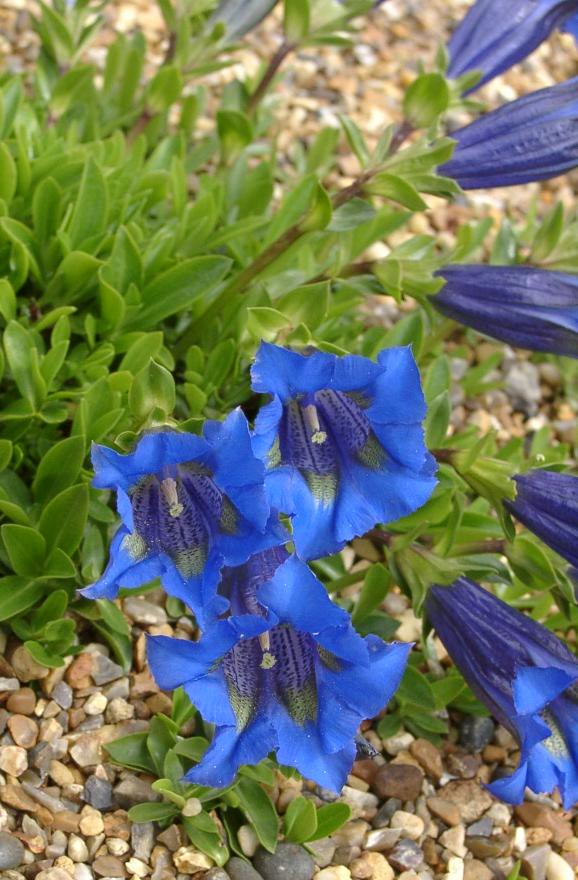 Stemless GentianGentiana acaulis
Compare
Questions and answers
What is the scientific name of the Tembusu?
The scientific name of the Tembusu is Cyrtophyllum fragrans. Written with its author, the full name is Cyrtophyllum fragrans (Roxb.) DC..
Which family does the Tembusu belong to?
Cyrtophyllum fragrans belongs to the family Gentianaceae, in the order Gentianales and the class Magnoliopsida.
Where is the Tembusu found?
Checklists and occurrence records place Cyrtophyllum fragrans in 13 countries, including Indonesia, Malaysia, Singapore, Thailand, Vietnam and Cambodia.
What is the conservation status of the Tembusu?
The IUCN Red List category recorded for Cyrtophyllum fragrans is Least Concern (LC).
Sources
Passages the profile rests on
- The tree has a dark brown trunk with deeply fissured bark. Source passage: “Its trunk is dark brown, with deeply fissured bark, looking somewhat like a bittergourd.” — English Wikipedia
- The leaves are light green and oval-shaped. Source passage: “with light green oval-shaped leaves” — English Wikipedia
- The flowers are yellowish and distinctly fragrant. Source passage: “yellowish flowers with a distinct fragrance.” — English Wikipedia
- The tree produces red berries with a bitter taste. Source passage: “The fruits of the tree are bitter tasting red berries” — English Wikipedia
- The tree grows between 10 and 25 metres tall. Source passage: “The tree grows in an irregular shape from 10 to 25 metres high” — English Wikipedia
- The species is described as a large evergreen tree. Source passage: “The tembusu (, təm-BOO-soo or tem-BOO-soo), is a large evergreen tree” — English Wikipedia
- The species is native to Southeast Asia, extending from Indochina to New Guinea. Source passage: “native to Southeast Asia (from Indo-China to New Guinea).” — English Wikipedia
- The fruits are eaten by Pteropus fruit bats. Source passage: “which are eaten by Pteropus fruit bats.” — English Wikipedia
- The tree produces very hard wood suitable for making chopping boards and floors. Source passage: “The trunk of this tree can produce very hard wood that can be used to make chopping boards and floors.” — English Wikipedia
- The wood can last for more than a hundred years because termites and weevils do not consume it. Source passage: “The wood can last over a hundred years, as it is not consumed by termites and weevils.” — English Wikipedia
- The species is described as a large evergreen tree. Source passage: “The tembusu is a large evergreen tree in the family Gentianaceae ...” — inaturalist.org
- The species is identified by the Malay name tembusu. Source passage: “It is the Malay name for Cyrtophyllum fragrans (synonym Fagraea fragrans).” — English Wikipedia
- The Malay name tembusu is used for Cyrtophyllum fragrans. Source passage: “It is the Malay name for Cyrtophyllum fragrans (synonym Fagraea fragrans).” — inaturalist.org
Data
- Catalogue of Life, 2026-10-16 XR cc by
- Global Biodiversity Information Facility CC BY 4.0
- Wikidata CC0
- GeoNames CC BY 4.0
- Wikimedia Commons per image; credit shown with each image
- Within the Catalogue of Life, this name comes from Synonymic Checklists of the Vascular Plants of the World cc by
References
- DC. (1845). Prodr. [A.P. de Candolle] 9: 31 (1845). where the name was published
This species in other databases
Page built on 27 November 2026. See how the catalog is made and all sources and licences.
Cite this page
ScientificNames.org. (2026). Cyrtophyllum fragrans (Tembusu). Retrieved November 27, 2026, from https://scientificnames.org/species/cyrtophyllum-fragrans
“Cyrtophyllum fragrans (Tembusu).” ScientificNames.org, 2026, scientificnames.org/species/cyrtophyllum-fragrans. Accessed 27 Nov. 2026.
ScientificNames.org. “Cyrtophyllum fragrans (Tembusu).” Accessed November 27, 2026. https://scientificnames.org/species/cyrtophyllum-fragrans.
@misc{scientificnames_cyrtophyllum_fragrans_tembusu,
  author = {{ScientificNames.org}},
  title = {Cyrtophyllum fragrans (Tembusu)},
  year = {2026},
  url = {https://scientificnames.org/species/cyrtophyllum-fragrans},
  note = {Accessed 2026-11-27}
}