Species · Flowering plants
Gnat Orchid Cyrtostylis reniformis
The scientific name of the Gnat Orchid is Cyrtostylis reniformis. It is a species of flowering plant in the family Orchidaceae (orchid), order Asparagales.
- Scientific name
- Cyrtostylis reniformis R.Br.
- Common name
- Gnat Orchid
- Genus
- Cyrtostylis
- Family
- Orchidaceae (Orchid)
- Order
- Asparagales
- Class
- Liliopsida
- Recorded in
- 2 countries
- Name status
- accepted in the Catalogue of Life

Overview
Gnat orchid (Cyrtostylis reniformis R.Br.) is a terrestrial, perennial, deciduous flowering herb in the family Orchidaceae. It is endemic to eastern Australia and occurs in all Australian states except Western Australia, as well as the Australian Capital Territory. It usually bears one kidney-shaped, heart-shaped or nearly round leaf and produces up to eight dark reddish-brown or rarely yellowish flowers.
Written 27 November 2026 from the sources listed below. Each statement was checked against the passage it cites; statements that could not be supported were removed.
Appearance
The plant usually bears one kidney-shaped, heart-shaped or nearly round leaf measuring 15–40 mm long and 10–30 mm wide. Its flowering stem reaches 50–150 mm in height and bears up to eight dark reddish-brown or rarely yellowish flowers, each measuring 11–14 mm long.[1][2][3][4][5]
The dorsal sepal is erect, curves forward and has a linear to lance-shaped form. It measures 11.5–13 mm long and approximately 2 mm wide.[6][7]
The lateral sepals are linear and curve forwards or downwards, measuring 10–11 mm long and approximately 1 mm wide. The petals resemble the lateral sepals in size and shape and curve downwards.[8][9][10]
The labellum is oblong and shelf-like, with a few serrations near its pointed tip. It measures 10–12.5 mm long and approximately 5 mm wide.[11][12]
Reproduction and life cycle
Flowering occurs between May and October.[13]
Habitat
Gnat orchid is a terrestrial herb. It is described as widespread and locally common across much of Australia.[14][15]
Classification of the Gnat Orchid
| Kingdom | Plantae |
|---|---|
| Subkingdom | Pteridobiotina |
| Phylum | Tracheophyta |
| Class | Liliopsida |
| Order | Asparagales |
| Family | Orchidaceae (Orchid) |
| Genus | Cyrtostylis (Gnat Orchids) |
| Species | Cyrtostylis reniformis R.Br. |
Where the Gnat Orchid is found
Checklists and occurrence records place Cyrtostylis reniformis in 2 countries across Oceania. GBIF holds 4,481 georeferenced records of it.
Countries
Regions and cities with the most records
- Victoria, Australia 1,567
- South Australia, Australia 1,339
- Tasmania, Australia 522
- New South Wales, Australia 462
- Adelaide Hills, Australia 297
- Adelaide, Australia 282
- Mount Barker, Australia 215
- Mount Gambier, Australia 172
- Western Australia, Australia 133
- Torquay, Australia 102
- Balwyn North, Australia 85
- Gawler, Australia 69
- Burwood, Australia 65
- Hobart, Australia 62
- Hornsby, Australia 51
- Frankston East, Australia 39
- Wangaratta, Australia 37
- Launceston, Australia 31
- Parramatta, Australia 30
- Sydney, Australia 30
- Auckland, New Zealand 27
- Auckland, New Zealand 27
- Avondale, New Zealand 27
- Mount Eden, New Zealand 27
- Otahuhu, New Zealand 27
- Otara, New Zealand 27
- Remuera, New Zealand 27
- Melbourne, Australia 26
- Devonport, Australia 23
- Wodonga, Australia 23
- Maitland, Australia 19
- Cessnock, Australia 18
- Tasman District, New Zealand 17
- New Lynn, New Zealand 16
- Australian Capital Territory, Australia 15
- Liverpool, Australia 15
A number beside a place is its count of GBIF occurrence records. A place without a number comes from a checklist alone. Records show where a species has been observed or collected, which can include escapes and vagrants.
Common names
English
- Gnat Orchid
- Australian Small Gnat Orchid
- Small Gnat-orchid
Names in 1 other language
- Chinese
- 澳洲小蚊蘭, 澳洲蚋蚊兰, 澳洲蚋蚊蘭
Synonyms
2 other scientific names have been used for this species and are now treated as synonyms of Cyrtostylis reniformis.
- Acianthus reniformis (R.Br.) Schltr.
- Caladenia reniformis (R.Br.) Rchb.f.
Subspecies and varieties
Related species
-
 Gnat OrchidCyrtostylis rotundifolia
-
 Mosquito OrchidCyrtostylis robusta
- Cyrtostylis huegelii
- Cyrtostylis oblonga
- Cyrtostylis tenuissima
-
 VanillaVanilla planifolia
-
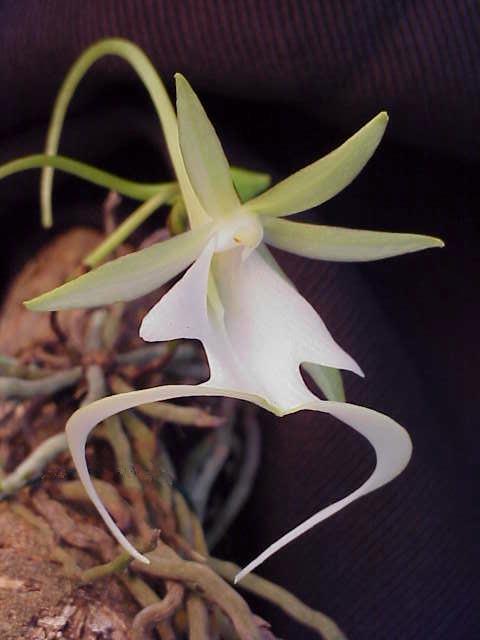 Ghost OrchidDendrophylax lindenii
-
 Noble DendrobiumDendrobium nobile
Compare
Questions and answers
What is the scientific name of the Gnat Orchid?
The scientific name of the Gnat Orchid is Cyrtostylis reniformis. Written with its author, the full name is Cyrtostylis reniformis R.Br..
Which family does the Gnat Orchid belong to?
Cyrtostylis reniformis belongs to the family Orchidaceae, in the order Asparagales and the class Liliopsida.
Where is the Gnat Orchid found?
Checklists and occurrence records place Cyrtostylis reniformis in 2 countries: Australia and New Zealand.
What other names does the Gnat Orchid have?
Cyrtostylis reniformis is also known in English as Australian Small Gnat Orchid and Small Gnat-orchid.
Sources
Passages the profile rests on
- The plant usually bears one kidney-shaped, heart-shaped or nearly round leaf. Source passage: “with a single kidney-shaped, heart-shaped or almost round leaf” — English Wikipedia
- Its leaf measures 15–40 mm in length and 10–30 mm in width. Source passage: “leaf 15–40 mm (0.6–2 in) long and 10–30 mm (0.4–1 in) wide.” — English Wikipedia
- The flowering stem bears up to eight dark reddish-brown or rarely yellowish flowers. Source passage: “Up to eight dark reddish brown, or rarely yellowish flowers” — English Wikipedia
- Individual flowers measure 11–14 mm in length. Source passage: “flowers 11–14 mm (0.4–0.6 in) long” — English Wikipedia
- The flowering stem reaches 50–150 mm in height. Source passage: “flowering stem 50–150 mm (2–6 in) high.” — English Wikipedia
- The dorsal sepal is erect, curves forward and has a linear to lance-shaped form. Source passage: “The dorsal sepal is erect and curved forward, linear to lance-shaped” — English Wikipedia
- The dorsal sepal measures 11.5–13 mm long and approximately 2 mm wide. Source passage: “11.5–13 mm (0.5–0.5 in) long and about 2 mm (0.08 in) wide.” — English Wikipedia
- The lateral sepals are linear and curve forwards or downwards. Source passage: “The lateral sepals are linear, 10–11 mm (0.4–0.4 in) long, about 1 mm (0.04 in) wide and curve forwards or downwards.” — English Wikipedia
- The lateral sepals measure 10–11 mm long and approximately 1 mm wide. Source passage: “10–11 mm (0.4–0.4 in) long, about 1 mm (0.04 in) wide” — English Wikipedia
- The petals resemble the lateral sepals in size and shape and curve downwards. Source passage: “The petals are similar in size and shape to the lateral sepals and curve downwards.” — English Wikipedia
- The labellum is oblong and shelf-like, with a few serrations near its pointed tip. Source passage: “The labellum is oblong, 10–12.5 mm (0.4–0.5 in) long and about 5 mm (0.20 in) wide and shelf-like with a few serrations near its pointed tip.” — English Wikipedia
- The labellum measures 10–12.5 mm long and approximately 5 mm wide. Source passage: “10–12.5 mm (0.4–0.5 in) long and about 5 mm (0.20 in) wide” — English Wikipedia
- Flowering occurs between May and October. Source passage: “Flowering occurs from May to October.” — English Wikipedia
- The species is described as a terrestrial herb. Source passage: “Cyrtostylis reniformis is a terrestrial, perennial, deciduous, herb” — English Wikipedia
- The species is described as widespread and locally common across much of Australia. Source passage: “Common gnat-orchid is widespread and locally common” — English Wikipedia
Data
- Catalogue of Life, 2026-10-16 XR cc by
- Global Biodiversity Information Facility CC BY 4.0
- Wikidata CC0
- GeoNames CC BY 4.0
- Wikimedia Commons per image; credit shown with each image
- Within the Catalogue of Life, this name comes from The World Checklist of Vascular Plants (WCVP) cc by
References
- Prodr. Fl. Nov. Holland.: 322 (1810) where the name was published
This species in other databases
Page built on 29 November 2026. See how the catalog is made and all sources and licences.
Cite this page
ScientificNames.org. (2026). Cyrtostylis reniformis (Gnat Orchid). Retrieved November 29, 2026, from https://scientificnames.org/species/cyrtostylis-reniformis
“Cyrtostylis reniformis (Gnat Orchid).” ScientificNames.org, 2026, scientificnames.org/species/cyrtostylis-reniformis. Accessed 29 Nov. 2026.
ScientificNames.org. “Cyrtostylis reniformis (Gnat Orchid).” Accessed November 29, 2026. https://scientificnames.org/species/cyrtostylis-reniformis.
@misc{scientificnames_cyrtostylis_reniformis_gnat_orchid,
  author = {{ScientificNames.org}},
  title = {Cyrtostylis reniformis (Gnat Orchid)},
  year = {2026},
  url = {https://scientificnames.org/species/cyrtostylis-reniformis},
  note = {Accessed 2026-11-29}
}