Species · Insects
Cochineal Dactylopius coccus
The scientific name of the Cochineal is Dactylopius coccus. It is a species of insect in the family Dactylopiidae (cochineal scales), order Hemiptera. The name dates from 1829.
- Scientific name
- Dactylopius coccus Costa, 1829
- Common name
- Cochineal
- Genus
- Dactylopius
- Family
- Dactylopiidae (Cochineal Scales)
- Order
- Hemiptera
- Class
- Insecta
- Recorded in
- 21 countries
- Name status
- accepted in the Catalogue of Life
Overview
Dactylopius coccus lives in stationary clumps on prickly pear cacti belonging to the genus Opuntia. It produces carminic acid, which is extracted to make carmine dye.
Written 24 November 2026 from the sources listed below. Each statement was checked against the passage it cites; statements that could not be supported were removed.
Appearance
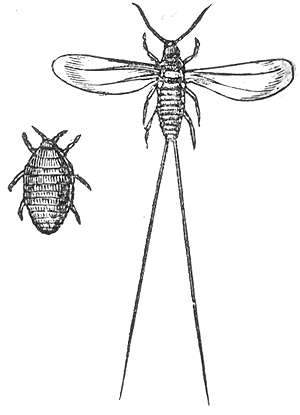
Adult females are wingless and approximately 5 mm long. Adult males have wings and are smaller than females.[1][2][3]
The insect's body and nymphs produce a red pigment that makes their insides look dark purple.[4]
Habitat
The insect lives in stationary clumps on prickly pear cacti belonging to the genus Opuntia and occurs on cactus pads. Opuntia ficus-indica is among the cactus species commonly used to cultivate it.[5][6][7]
Diet
The insect feeds on moisture and nutrients obtained from cacti. It penetrates cactus tissue with its beak-like mouthparts to feed on plant juices.[8][9]
Behaviour
The insect is primarily sessile and generally remains immobile unless disturbed. Females cluster together on cactus pads.[10][11]
The insect produces carminic acid that deters insect predators.[12]
Reproduction and life cycle
Female insects mate with winged males. After mating, fertilized females increase in size and give birth to tiny nymphs.[13][14]
Newly born nymphs secrete a waxy substance that protects them from water loss and excessive sunlight.[15]
Male nymphs feed on cactus plants until they reach sexual maturity, when they stop feeding.[16][17]
Uses
Carmine derived from the species is primarily used as a food colorant and in lipstick.[18]
Indigenous peoples of Mesoamerica used the insect to produce dyes for fabrics and amate paper. Cochineal dye was used in Peru for textiles during the Middle Horizon period, between 600 and 1000 CE.[19][20]
The insect's dye was used to color wool from alpacas and other camelids, rabbit fur, and feathers.[21]
Approximately 70,000 insects are required to produce one pound of cochineal dye. The insects are harvested at approximately 90 days of age for dye production.[22][23]
The female insect's dried body contains approximately 14–26% carminic acid.[24]
Similar species
Other species in the genus Dactylopius can be extremely difficult to distinguish from Dactylopius coccus.[25]
Classification of the Cochineal
| Kingdom | Animalia |
|---|---|
| Phylum | Arthropoda |
| Subphylum | Hexapoda |
| Class | Insecta (Insect) |
| Order | Hemiptera |
| Suborder | Sternorrhyncha |
| Infraorder | Coccomorpha |
| Family | Dactylopiidae (Cochineal Scales) |
| Genus | Dactylopius (Cochineal Bugs) |
| Species | Dactylopius coccus Costa, 1829 |
Where the Cochineal is found
Checklists and occurrence records place Dactylopius coccus in 21 countries across Africa, Asia, Europe, North America and South America. GBIF holds 429 georeferenced records of it.
Countries
- Algeria 3
- Bolivia 14
- Cyprus
- Ecuador 72
- Egypt 6
- Ethiopia
- Greece 2
- India 14
- Madagascar
- Mexico 12
- Morocco
- Pakistan
- Peru 74
- Portugal 37
- South Africa
- Spain 183
- Syria
- Turkey
- United Kingdom 4
- United States 8
- Venezuela
Regions and cities with the most records
- Canary Islands, Spain 146
- Pichincha, Ecuador 69
- Madeira, Portugal 34
- San Bartolomé de Tirajana, Spain 30
- Funchal, Portugal 29
- Santa Lucía, Spain 26
- Telde, Spain 24
- Cuzco Department, Peru 21
- Ayacucho, Peru 19
- Grao de Murviedro, Spain 19
- Sagunto, Spain 19
- Valencia, Spain 19
- La Laguna, Spain 18
- Las Palmas de Gran Canaria, Spain 16
- Ayacucho, Peru 14
- Santa Cruz de Tenerife, Spain 14
- Arrecife, Spain 12
- Arequipa, Peru 9
- Arona, Spain 8
- La Paz Department, Bolivia 8
- Cusco, Peru 7
- La Paz, Bolivia 7
- Santiago, Peru 7
- Wanchaq, Peru 7
- Cochabamba, Bolivia 6
- Cochabamba, Bolivia 5
- Sacaba, Bolivia 5
- Colcapirhua, Bolivia 4
- Ica, Peru 4
- Lima region, Peru 4
- Quillacollo, Bolivia 4
- Tiquipaya, Bolivia 4
- Oaxaca, Mexico 3
- Paterna, Spain 3
- Vinto, Bolivia 3
- Hidalgo, Mexico
Range as the checklists state it
Coquimbo
Veracruz
La Rioja
Jalisco
A number beside a place is its count of GBIF occurrence records. A place without a number comes from a checklist alone. Records show where a species has been observed or collected, which can include escapes and vagrants.
Common names
English
- Cochineal
- Cochineal Insect
- Cochineal Scale
- True Cochineal Bug
Names in 15 other languages
- Arabic
- حشرة الدبوس القرمزية القشرية
- Belarusian
- Кашаніль
- Catalan
- Cotxinilla de la figuera de moro
- Czech
- nopálovec karmínový
- Dutch
- Cochenilleluis
- Finnish
- Kokenillikirva
- German
- Cochenilleschildlaus, Echte Kochenilleschildlaus
- Italian
- Cocciniglia, Cocciniglia del carminio
- Japanese
- コチニールカイガラムシ
- Polish
- czerwiec kaktusowy
- Romanian
- Coșenila
- Russian
- Кошениль
- Spanish
- Cochinilla, Cochinilla del carmín, Cochinilla grana, cochinilla cultivada, cochinilla del carmin, cochinilla fina, grana cochinilla, grana cultivada
- Ukrainian
- Червець
- Vietnamese
- Bọ yên chi
Synonyms
8 other scientific names have been used for this species and are now treated as synonyms of Dactylopius coccus.
- Coccus cacti subsp. domestica Meunier, 1884
- Coccus carti (Costa, 1829)
- Coccus mexicanus Lamarck, 1801
- Coccus sativa Lancry, 1791
- Dactylopius cacti Linnaeus, 1758
- Dactylopius sativa (Lancry, 1791)
- Pseudococcus signoreti Cockerell, 1900
- Dactylopius mexicanus (Lamarck, 1801) ambiguous synonym
Questions and answers
What is the scientific name of the Cochineal?
The scientific name of the Cochineal is Dactylopius coccus. Written with its author, the full name is Dactylopius coccus Costa, 1829.
Which family does the Cochineal belong to?
Dactylopius coccus belongs to the family Dactylopiidae, in the order Hemiptera and the class Insecta.
Where is the Cochineal found?
Checklists and occurrence records place Dactylopius coccus in 21 countries, including Spain, Peru, Ecuador, Portugal, Bolivia and India.
What other names does the Cochineal have?
Dactylopius coccus is also known in English as Cochineal Insect, Cochineal Scale and True Cochineal Bug.
Is cochineal still used in food?
Carmine derived from the species is primarily used as a food colorant.[18]
Sources
Passages the profile rests on
- Adult females are wingless. Source passage: “The females, wingless and about 5 mm (0.20 in) long” — English Wikipedia
- Adult males have wings and are smaller than females. Source passage: “Adult males can be distinguished from females in that males have wings, and are much smaller.” — English Wikipedia
- Adult females are approximately 5 mm long. Source passage: “The females, wingless and about 5 mm (0.20 in) long” — English Wikipedia
- The insect's body and nymphs produce a red pigment that makes their insides look dark purple. Source passage: “the body of the insect and its nymphs produces the red pigment, which makes the insides of the insect look dark purple.” — English Wikipedia
- The insect lives in stationary clumps on prickly pear cacti belonging to the genus Opuntia. Source passage: “lives in stationary clumps on nopal, prickly pear cacti of the genus Opuntia.” — hmsc.harvard.edu
- The insect occurs on cactus pads. Source passage: “The insects are found on the pads of prickly pear cacti” — English Wikipedia
- Opuntia ficus-indica is among the cactus species commonly used to cultivate the insect. Source passage: “the most common is Opuntia ficus-indica.” — English Wikipedia
- The insect feeds on moisture and nutrients obtained from cacti. Source passage: “feeding on plant moisture and nutrients.” — English Wikipedia
- The insect penetrates cactus tissue with its beak-like mouthparts to feed on plant juices. Source passage: “penetrating the cacti’s flesh to feed on its juices using beak-like mouthparts.” — hmsc.harvard.edu
- The insect is primarily sessile and generally remains immobile unless disturbed. Source passage: “remaining immobile unless alarmed.” — English Wikipedia
- Females cluster together on cactus pads. Source passage: “The females, wingless and about 5 mm (0.20 in) long, cluster on cactus pads.” — English Wikipedia
- The insect produces carminic acid that deters insect predators. Source passage: “The insect produces carminic acid that deters predation by other insects.” — English Wikipedia
- After mating, fertilized females increase in size and give birth to tiny nymphs. Source passage: “After mating, the fertilised female increases in size and gives birth to tiny nymphs.” — English Wikipedia
- Female insects mate with winged males. Source passage: “Flightless females mate with winged males” — hmsc.harvard.edu
- Newly born nymphs secrete a waxy substance that protects them from water loss and excessive sunlight. Source passage: “The nymphs secrete a waxy white substance over their bodies for protection from water loss and excessive sun.” — English Wikipedia
- Male nymphs stop feeding when they reach sexual maturity. Source passage: “At this time, they can no longer feed at all” — English Wikipedia
- Male nymphs feed on cactus plants until they reach sexual maturity. Source passage: “Male nymphs feed on the cactus until they reach sexual maturity.” — English Wikipedia
- Carmine derived from the species is primarily used as a food colorant and in lipstick. Source passage: “Today, carmine is primarily used as a colorant in food and in lipstick” — English Wikipedia
- Indigenous peoples of Mesoamerica used the insect to produce dyes for fabrics and amate paper. Source passage: “Traditionally, cochineal was used by Indigenous peoples of Mesoamerica, including Mixtec, Zapotec, Aztec, and Otomi cultures, for coloring fabrics and amate paper.” — English Wikipedia
- Cochineal dye was used in Peru for textiles during the Middle Horizon period, between 600 and 1000 CE. Source passage: “Inhabitants of Peru have been producing cochineal dyes for textiles since early in the Middle Horizon period (600–1000 CE).” — English Wikipedia
- The insect's dye was used to color wool from alpacas and other camelids, rabbit fur, and feathers. Source passage: “The dye bonds best with animal fibers rather than plant fibers and was most effective for dyeing wool from alpacas and other Camelidae, rabbit fur, and feathers.” — English Wikipedia
- Approximately 70,000 insects are required to produce one pound of cochineal dye. Source passage: “It takes about 70,000 insects to make 1 pound (0.45 kilograms) of cochineal dye.” — English Wikipedia
- The insects are harvested at approximately 90 days of age for dye production. Source passage: “To produce dye from cochineals, the insects are collected when they are around 90 days old.” — English Wikipedia
- The female insect's dried body contains approximately 14–26% carminic acid. Source passage: “The dried body of the female insect is 14–26% carminic acid.” — English Wikipedia
- Other species in the genus Dactylopius can be extremely difficult to distinguish from Dactylopius coccus. Source passage: “Other species in the genus Dactylopius can be used to produce "cochineal extract", and are extremely difficult to distinguish from D. coccus” — English Wikipedia
Data
- Catalogue of Life, 2026-10-16 XR cc by
- Global Biodiversity Information Facility CC BY 4.0
- Wikidata CC0
- GeoNames CC BY 4.0
- Wikimedia Commons per image; credit shown with each image
- Within the Catalogue of Life, this name comes from Systematic Database of the Scale Insects of the World cc by
References
- Costa, O.G. (1829) Fauna del Regno di Napoli, famiglia de coccinigliferi, o de' gallinsetti. Emitteri, Napoli, 23 pp. [in Italian] where the name was published
- Bustamante-Brito, R., Vera-Ponce de Leon, A., Rosenblueth, M. & Martínez-Romero, E. (2024) Comparative genomics of the carmine cochineal symbiont Candidatus Dactylopiibacterium carminicum reveals possible protection to the host against viruses via CRISPR/Cas. Systematic and Applied Microbiology, https.
- Safapour, S., Almas, R., Rather, L.J., Mir, S.S., Assiri, M.A. & Rostamzadeh, P. (2025) Functional and photostable textile dyeing: a comparative study of natural (madder, cochineal) and synthetic (Alizarin Red S) dyes on wool yarns. The Journal of the Textile Institute. https://doi.org/10.1080/00405000.2025.2547421
- Jordan, B.D. (1963) La Grana Cochinilla. Nueva Biblioteca Mexicana de Obras Historicas, No. 1.
- Kondo, T. & Gullan, P.J. (2022) Beneficial Scale Insects. In K.& Watson (Ed.). Encyclopedia of Scale Insect Pests. CABI, Wallingford, UK. 1–7 pp. [in English]
- Signoret, V. (1869) Essai sur les cochenilles ou gallinsectes (Homoptères - Coccides) 2e partie. [Essay on the gall forming insects (Homoptera - Coccidae) - 2nd Part.]. Annales de la Société Entomologique de France, 8.
- Herrera, M. (1983) [Useful insects of Oaxaca: the cochineal.] Los insectos útiles de Oaxaca: la cochinilla. Revista Nuestra Causa Comun, 4(23).
- Vigueras Guzmán, A.L. & Portillo Martínez, L. (1995) Un recurso natural: La grana o cochinilla. [The cochineal: a natural remedy.]. AgroCultura, 6(35).
- Lindinger, L. (1909) Bemerkenswerte Schildläuse auf den im Berichtsjahr untersuchten Pflanzen. Jahrbuch der Hamburgischen Wissenschaftlichen Anstalten. Hamburg, 26(1908).
- "Marín Loayza, R. & Cisneros Vera, F.H. (1983) Factores que deben considerarse en la producción de la ""cochinilla del carmín"" Dactylopius coccus (Costa) en ambientes mejor. [Factors to consider in the production of ""carmine cochineal"" Dactylopius coccus (Costa) for environmental improvement.]. Revista Peruana de Entomología, 26(1)."
- Portillo Martínez, L. & Vigueras Guzmán, A.L. (1998) In Experiencias en el cultivo y difusión de la grana-cochinilla en Jalisco, México. SAGAR y Colegio de Postgraduados, Texcoco, Mexico. [6 pp.]. [in Spanish; Castilian]
- Aquino Perez, G. & Bárcenas Ortega, N.M. (2002) Reproductive biology and genetic (genetics?) of cochineal insect (Dactylopius spp.). CACTUSNET NEWSLETTER (FAO International Technical Cooperation on Cactus), No. 7.
- McClellan, J.E. (2004) Andre Michaux and French botanical networks at the end of the old regime. Castanea, Suppl. S.
- Schmutterer, H., Kloft, W. & Lüdicke, M. (1957) Coccoidea, Schildläuse, scale insects, cochenilles. Tierische Schädlinge an Nutzpflanzen. 2. Teil, Vierte Lieferung. Homoptera II. Teil. In P.(E. Sorauer (Ed.). Handb. der Pflanzenkrankheiten. V. 5. Paul Parey, Berlin. [in English]
- Pelham Wright, N.P. (1963) A thousand years of cochineal: a lost but traditional Mexican industry on its way back. American Dyestuff Reporter, 52.
- Vea, I.M. & Grimaldi, D.A. (2015) Diverse new scale insects (Hemiptera: Coccoidea) in amber from the Cretaceous and Eocene with a phylogenetic framework for fossil Coccoidea. American Museum Novitates, 3823. Link
- Rodríguez, N., Méndez, M.A. & Niemeyer, H.M. (2001) Direction of dispersion of cochineal (Dactylopius coccus Costa) within the Americas. Antiquity, 75.
- Böhmer, H. (2000) Insect dyes. HALI: Carpet, Textile and Islamic Art, 113.
- Miller, D.R. (1996) Checklist of the scale insects (Coccoidea: Homoptera) of Mexico. Proceedings of the Entomological Society of Washington, 98.
- Blanchard, R. (1883) Les coccides utiles. [Useful coccids.]. Bulletin de la Société Zoologique de France, 8.
- Matallo, H., Casas-Castañeda, F. & Migongo-Bake, E. (2002) Use of live fences of Nopal (Opuntia) and associated crops to rehabilitate and protect sloping land in Loja, Ecuador. Mountain Research and Development, 22(1).
- Van Dam, A.R., Portillo Martinez, L., Chavez, A.J. & May, B.P. (2015) Range Wide Phylogeography of Dactylopius coccus (Hemiptera: Dactylopiidae). Annals of the Entomological Society of America, 108(3).
- Ochoa-Manzo, G.M., Rodiles-López, J.O., Martínez-Flores, H.E., Portillo, L., García-Pérez, M.E. & Garnica-Romo, M.G. (2025) Optimized ultrasound-assisted extraction of carminic acid from Dactylopius opuntiae. Journal of the Professional Association for Cactus Development, 27. https://doi.org/10.56890/jpacd.v27i.593
- Hernández-Ruiz, A., Hernández-Ruiz, A., Frenette, M.J., Gonzaga-Segura, A.J., Giles-Torres, S.A. & Castrejón-Gómez, V.R. (2026) Hemiptera of agricultural importance in Mexico: diversity, host plants and status as pests. [Hemiptera de importancia agrícola en México: diversidad, plantas hospederas y estatus como plagas]. Southwestern Entomologist, 51(2).
- Brana, D.D. (1966) Cochineal: aboriginal dyestuff from Nueva España. XXXVI Congreso Internacional de Americanistas España, 2.
This species in other databases
Page built on 24 November 2026. See how the catalog is made and all sources and licences.
Cite this page
ScientificNames.org. (2026). Dactylopius coccus (Cochineal). Retrieved November 24, 2026, from https://scientificnames.org/species/dactylopius-coccus
“Dactylopius coccus (Cochineal).” ScientificNames.org, 2026, scientificnames.org/species/dactylopius-coccus. Accessed 24 Nov. 2026.
ScientificNames.org. “Dactylopius coccus (Cochineal).” Accessed November 24, 2026. https://scientificnames.org/species/dactylopius-coccus.
@misc{scientificnames_dactylopius_coccus_cochineal,
  author = {{ScientificNames.org}},
  title = {Dactylopius coccus (Cochineal)},
  year = {2026},
  url = {https://scientificnames.org/species/dactylopius-coccus},
  note = {Accessed 2026-11-24}
}