Species · Flowering plants
False Rue-anemone Enemion biternatum
The scientific name of the False Rue-anemone is Enemion biternatum. It is a species of flowering plant in the family Ranunculaceae (crowfoot family), order Ranunculales.
- Scientific name
- Enemion biternatum Raf.
- Common name
- False Rue-anemone
- Genus
- Enemion
- Family
- Ranunculaceae (Crowfoot Family)
- Order
- Ranunculales
- Class
- Magnoliopsida
- Recorded in
- 2 countries
- Name status
- accepted in the Catalogue of Life

Overview
Enemion biternatum grows in moist deciduous woodland, including floodplain woods, limestone ledges, and rich or calcareous woods and thickets. It has five white petal-like sepals, three to six green carpels, and deeply lobed leaflets.
Written 26 November 2026 from the sources listed below. Each statement was checked against the passage it cites; statements that could not be supported were removed.
Appearance
False rue-anemone is a perennial herb that produces evergreen basal leaves in autumn and flowering stems in spring. Its flowering stems reach 10–40 cm in height and are reddish and hairless.[1][2][3][4]
Its leaves are twice or three times compound, with groups of three leaflets. The leaflets have smooth edges and irregular, deep lobes.[5][6]
Its basal leaves grow on long stalks, while the leaves along its flowering stems have shorter stalks and alternate arrangement. Two rounded stipules occur on either side of its leaf axils.[7][8]
Its flowers have five white petal-like sepals, each measuring 5.5–13.5 mm long and 3.5–8.5 mm wide. They contain between 25 and 50 stamens with yellow pollen on their anthers, and three to six green carpels.[9][10][11][12]
Its flowers grow singly or in leafy racemes containing two to four flowers. They are usually positioned singly in leaf axils.[13][14]
Its root system is weakly rhizomatous and sometimes produces small tubers.[15]
Habitat
False rue-anemone grows in moist deciduous woodland. Its recorded habitats include floodplain woods, limestone ledges, and rich or calcareous woods and thickets.[16][17]
Behaviour
False rue-anemone becomes dormant in late spring and early summer after its seeds ripen. Individual plants spread over time and form dense colonies.[18][19]
Reproduction and life cycle
False rue-anemone produces pollen, but its flowers do not produce nectar. Sweat bees, mining bees, honeybees, and hoverflies visit its flowers to collect or feed on pollen.[20][21]
Fertilized carpels develop into beaked seed pods called follicles. When ripe, the follicles split open on one side to release several reddish-brown seeds.[22][23]
Conservation
In Canada, false rue-anemone is listed as a Schedule 1 threatened species. Only six populations were reported in southwestern Ontario.[24][25]
In Florida, the species is listed as endangered and has been reported only from Jackson and Washington counties.[26][27]
Similar species
False rue-anemone is frequently confused with rue-anemone (Thalictrum thalictroides). False rue-anemone has consistently white sepals, whereas rue-anemone does not.[28][29]
False rue-anemone typically grows in moist bottomlands, whereas rue-anemone grows singly on wooded slopes. False rue-anemone flowers usually occur singly in leaf axils, whereas rue-anemone flowers usually form groups of three to six above leaf-like bracts.[30][31]
False rue-anemone flowers always have five sepals, whereas rue-anemone flowers may have five to ten. False rue-anemone has no more than six green carpels per flower, whereas rue-anemone may have as many as fifteen.[32][33]
False rue-anemone leaflets usually have deep clefts, unlike those of rue-anemone.[34]
Classification of the False Rue-anemone
| Kingdom | Plantae |
|---|---|
| Subkingdom | Pteridobiotina |
| Phylum | Tracheophyta |
| Class | Magnoliopsida |
| Order | Ranunculales |
| Family | Ranunculaceae (Crowfoot Family) |
| Subfamily | Thalictroideae |
| Genus | Enemion (False Rue Anemone) |
| Species | Enemion biternatum Raf. |
Where the False Rue-anemone is found
Checklists and occurrence records place Enemion biternatum in 2 countries across North America. GBIF holds 11,536 georeferenced records of it.
Countries
Regions and cities with the most records
- Illinois, United States 2,064
- Indiana, United States 1,361
- Minnesota, United States 1,279
- Wisconsin, United States 1,077
- Ohio, United States 939
- Michigan, United States 783
- Broad Ripple, United States 615
- Indianapolis, United States 569
- Zionsville, United States 567
- Missouri, United States 566
- Fairfield Heights, United States 484
- Kentucky, United States 474
- Brownsburg, United States 470
- Avon, United States 435
- Carmel, United States 422
- West Chicago, United States 392
- Bolingbrook, United States 377
- Lemont, United States 370
- Bensenville, United States 363
- Romeoville, United States 363
- Naperville, United States 359
- Iowa, United States 352
- Darien, United States 349
- Lisle, United States 344
- Downers Grove, United States 339
- Elmhurst, United States 339
- Melrose Park, United States 339
- Woodridge, United States 338
- Wheaton, United States 337
- Bellwood, United States 334
- Carol Stream, United States 333
- Westmont, United States 327
- Bloomingdale, United States 324
- Addison, United States 322
- Maywood, United States 321
- Westchester, United States 318
Range as the checklists state it
Canada (Ontario); USA (Alabama, Arkansas, Florida, Iowa, Illinois, Indiana, Kansas, Kentucky, Michigan, Minnesota, Missouri, Mississippi, North Carolina, New York, Ohio, Oklahoma, South Carolina, South Dakota, Tennessee, Texas, Virginia, Wisconsin, West Virginia)
A number beside a place is its count of GBIF occurrence records. A place without a number comes from a checklist alone. Records show where a species has been observed or collected, which can include escapes and vagrants.
Common names
English
- False Rue-anemone
- Eastern False Rue-anemone
- False Rue Anemone
Names in 2 other languages
- French
- isopyre faux-pigamon, isopyre à feuilles biternées
- Swedish
- lundruta
Synonyms
3 other scientific names have been used for this species and are now treated as synonyms of Enemion biternatum.
- Isopyron biternatum (Raf.) Torr. & A.Gray
- Isopyrum biternatum (Raf.) Torr. & A.Gray
- Isopyrum biternatum f. acutilobum Fassett
Related species
-
 LiverleafHepatica nobilis
-
 Black CuminNigella sativa
-
 Poppy AnemoneAnemone coronaria
-
 Christmas RoseHelleborus niger
-
 Hubei AnemoneEriocapitella hupehensis
-
 GoldensealHydrastis canadensis
-
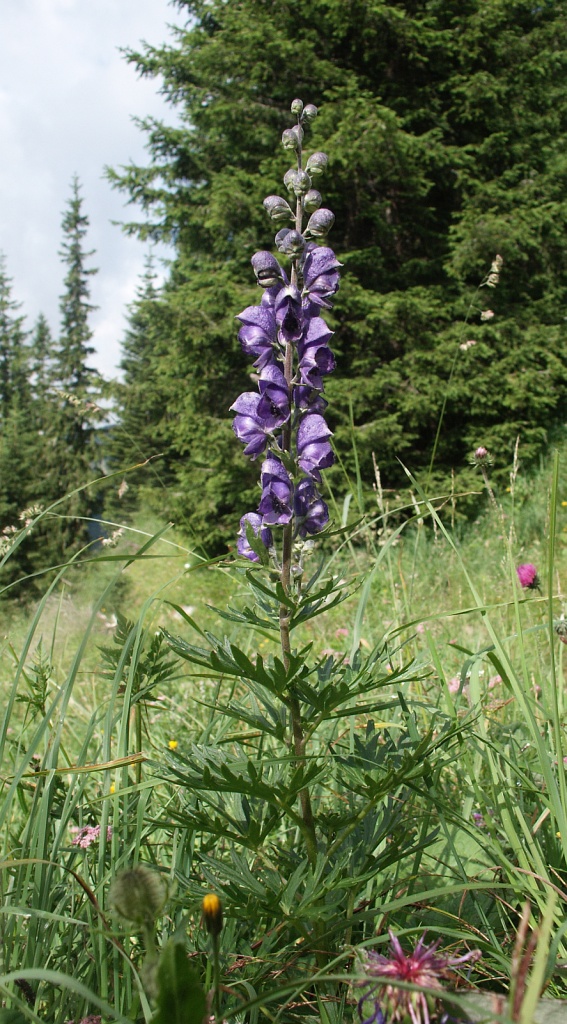 MonkshoodAconitum napellus
-
 Love-in-a-mistNigella damascena
Compare
Questions and answers
What is the scientific name of the False Rue-anemone?
The scientific name of the False Rue-anemone is Enemion biternatum. Written with its author, the full name is Enemion biternatum Raf..
Which family does the False Rue-anemone belong to?
Enemion biternatum belongs to the family Ranunculaceae, in the order Ranunculales and the class Magnoliopsida.
Where is the False Rue-anemone found?
Checklists and occurrence records place Enemion biternatum in 2 countries: United States and Canada.
What other names does the False Rue-anemone have?
Enemion biternatum is also known in English as Eastern False Rue-anemone and False Rue Anemone.
What is a rue anemone?
Rue-anemone (Thalictrum thalictroides) is a species frequently confused with false rue-anemone. Its flowers usually form groups of three to six above leaf-like bracts and may have five to ten sepals and as many as fifteen green carpels.[28][31][32][33]
Sources
Passages the profile rests on
- Enemion biternatum is a perennial herb. Source passage: “Enemion biternatum is a perennial herb.” — English Wikipedia
- The plant produces evergreen basal leaves in autumn and flowering stems in spring. Source passage: “The plant sends up evergreen basal leaves in the fall, and flower stems in the spring.” — English Wikipedia
- Its stems are reddish and lack hairs. Source passage: “All stems are reddish and hairless.” — English Wikipedia
- Its flowering stems reach 10–40 cm in height. Source passage: “The flowering stems are 4 to 16 inches (10 to 40 cm) high.” — English Wikipedia
- Its leaves are twice or three times compound, with groups of three leaflets. Source passage: “Leaves are twice or thrice compound with groups of three leaflets.” — English Wikipedia
- Its leaflets have smooth edges and irregular, deep lobes. Source passage: “Leaflets are smooth-edged, irregularly and deeply lobed twice or thrice” — English Wikipedia
- Its basal leaves grow on long stalks, while the leaves along its flowering stems have shorter stalks and alternate arrangement. Source passage: “Basal leaves are held on long stalks, and there are leaves arranged alternately up the flowering stems, with shorter stalks.” — English Wikipedia
- Two rounded stipules occur on either side of its leaf axils. Source passage: “On either side of the leaf axils are two rounded stipules.” — English Wikipedia
- Its flowers have five white petal-like sepals. Source passage: “The flowers have five white petal-like sepals” — English Wikipedia
- Its flowers contain between 25 and 50 stamens with yellow pollen on their anthers. Source passage: “25-50 stamens with yellow pollen on the anthers” — English Wikipedia
- Its flowers contain three to six green carpels. Source passage: “and three to six green carpels.” — English Wikipedia
- Its individual sepals measure 5.5–13.5 mm long and 3.5–8.5 mm wide. Source passage: “each 5.5–13.5 mm (3⁄16–9⁄16 in) long and 3.5–8.5 mm (1⁄8–5⁄16 in) wide” — English Wikipedia
- Its flowers grow singly or in leafy racemes containing two to four flowers. Source passage: “Flowers are produced singly or in leafy racemes of two to four flowers” — English Wikipedia
- Its flowers are usually positioned singly in leaf axils. Source passage: “The false rue-anemone holds its flowers in leaf axils, most often singly.” — English Wikipedia
- Its root system is weakly rhizomatous and sometimes produces small tubers. Source passage: “The root system is weakly rhizomatous and occasionally produces small tubers.” — English Wikipedia
- The species grows in moist deciduous woodland. Source passage: “native to moist deciduous woodland” — English Wikipedia
- Its recorded habitats include floodplain woods, limestone ledges, and rich or calcareous woods and thickets. Source passage: “Its habitats include floodplain woods, limestone ledges and rich or calcareous woods or thickets.” — English Wikipedia
- The plant becomes dormant in late spring and early summer after its seeds ripen. Source passage: “It goes dormant in late spring and early summer after the seed ripens.” — English Wikipedia
- Individual plants spread over time and form dense colonies. Source passage: “Plants spread over time to form thick colonies.” — English Wikipedia
- The species produces pollen but its flowers do not produce nectar. Source passage: “The flowers produce pollen but no nectar.” — English Wikipedia
- Sweat bees, mining bees, honeybees, and hoverflies visit its flowers to collect or feed on pollen. Source passage: “Small insects such as sweat bees (Lasioglossum and Halictus), mining bees (Andrena), honeybees (Apis mellifera), and hoverflies visit the flowers to collect or feed on pollen.” — English Wikipedia
- Fertilized carpels develop into beaked seed pods called follicles. Source passage: “If a carpel is fertilized, it develops into a beaked pod (follicle).” — English Wikipedia
- When ripe, its follicles split open on one side to release several reddish-brown seeds. Source passage: “When ripe, the pod splits open on one side to release several reddish-brown seeds.” — English Wikipedia
- In Canada, the species is listed as a Schedule 1 threatened species. Source passage: “listed as a schedule 1 threatened species in Canada” — English Wikipedia
- Only six populations of the species were reported in southwestern Ontario. Source passage: “where only six populations were reported in southwestern Ontario.” — English Wikipedia
- In Florida, the species has been reported only from Jackson and Washington counties. Source passage: “where it has only been reported in Jackson and Washington counties.” — English Wikipedia
- The species is listed as endangered in Florida. Source passage: “It is listed as an endangered species in Florida” — English Wikipedia
- The species is frequently confused with rue-anemone (Thalictrum thalictroides). Source passage: “The false rue-anemone is often confused with the similar species, the rue-anemone (Thalictrum thalictroides).” — English Wikipedia
- Unlike rue-anemone, false rue-anemone has consistently white sepals. Source passage: “Sometimes rue-anemone sepals are pale to dark pink, whereas false rue-anemone sepals are always white.” — English Wikipedia
- False rue-anemone typically grows in moist bottomlands, whereas rue-anemone grows singly on wooded slopes. Source passage: “the false rue-anemone is more likely to be found in moist bottomlands and can form large colonies, while the rue-anemone grows singly on wooded slopes.” — English Wikipedia
- False rue-anemone flowers usually occur singly in leaf axils, whereas rue-anemone flowers usually form groups of three to six above leaf-like bracts. Source passage: “The false rue-anemone holds its flowers in leaf axils, most often singly. In contrast, the flowers of a rue-anemone appear in a cluster above a whorl of leaf-like bracts, most often in groups of three to six.” — English Wikipedia
- False rue-anemone flowers always have five sepals, whereas rue-anemone flowers may have five to ten. Source passage: “While false rue-anemones always have five sepals, rue-anemones can have five to ten sepals.” — English Wikipedia
- False rue-anemone has no more than six green carpels per flower, whereas rue-anemone may have as many as fifteen. Source passage: “False rue-anemones have a small cluster of no more than six green carpels in the center of the flower, while rue-anemones sometimes have as many as fifteen.” — English Wikipedia
- Its leaflets usually have deep clefts, unlike those of rue-anemone. Source passage: “False rue-anemones usually have deep clefts in their leaflets, while rue-anemones do not.” — English Wikipedia
Data
- Catalogue of Life, 2026-10-16 XR cc by
- Global Biodiversity Information Facility CC BY 4.0
- Wikidata CC0
- GeoNames CC BY 4.0
- Wikimedia Commons per image; credit shown with each image
- Within the Catalogue of Life, this name comes from Synonymic Checklists of the Vascular Plants of the World cc by
References
- Raf. (1820). J. Phys. Chim. Hist. Nat. Arts 91: 70 (1820). where the name was published
This species in other databases
- Catalogue of Life 39SVC
- Wikidata Q5376756
- iNaturalist 81795
- World Flora Online wfo-0000667897
- GRIN 506070
Page built on 27 November 2026. See how the catalog is made and all sources and licences.
Cite this page
ScientificNames.org. (2026). Enemion biternatum (False Rue-anemone). Retrieved November 27, 2026, from https://scientificnames.org/species/enemion-biternatum
“Enemion biternatum (False Rue-anemone).” ScientificNames.org, 2026, scientificnames.org/species/enemion-biternatum. Accessed 27 Nov. 2026.
ScientificNames.org. “Enemion biternatum (False Rue-anemone).” Accessed November 27, 2026. https://scientificnames.org/species/enemion-biternatum.
@misc{scientificnames_enemion_biternatum_false_rue_anemone,
  author = {{ScientificNames.org}},
  title = {Enemion biternatum (False Rue-anemone)},
  year = {2026},
  url = {https://scientificnames.org/species/enemion-biternatum},
  note = {Accessed 2026-11-27}
}