Species · Flowering plants
Whorled Heath Erica verticillata
The scientific name of the Whorled Heath is Erica verticillata. It is a species of flowering plant in the family Ericaceae (ericaceous), order Ericales.
- Scientific name
- Erica verticillata P.J.Bergius
- Common name
- Whorled Heath
- Genus
- Erica
- Family
- Ericaceae (Ericaceous)
- Order
- Ericales
- Class
- Magnoliopsida
- Recorded in
- 1 country
- Name status
- accepted in the Catalogue of Life

Overview
The species was formerly restricted to the Cape Flats on the Cape Peninsula in South Africa, where it grew in Cape Flats Sand Fynbos. It produces tubular pink flowers.
Written 26 November 2026 from the sources listed below. Each statement was checked against the passage it cites; statements that could not be supported were removed.
Habitat
Whorled heath grew in Cape Flats Sand Fynbos and preferred damp sandy soils in areas including Wynberg, Kenilworth and Zeekoevlei.[1][2]
When cultivated, the species prefers seasonally moist sandy soils. It can also grow in average garden conditions when the soil is acidic.[3][4]
Diet
Bees have been observed feeding on the tubular pink flowers of whorled heath.[5][6]
Southern double-collared sunbirds have also been observed feeding on its tubular pink flowers.[7][6]
Conservation
Whorled heath is classified as extinct in the wild. Agricultural and urban development of its habitat caused it to become functionally extinct in the early twentieth century.[8][9]
Cuttings collected from wild specimens during the later twentieth century helped preserve the species in cultivation. Cuttings from two specimens were introduced in 1984, with one specimen originating from Protea Park in Pretoria and the other from Kew.[10][11]
The species was reintroduced into the wild at Rondevlei, a bird sanctuary and nature reserve in Cape Town.[12]
Uses
Whorled heath is maintained in cultivation.[13]
Appearance
Whorled heath produces tubular pink flowers.[6]
Classification of the Whorled Heath
| Kingdom | Plantae |
|---|---|
| Subkingdom | Pteridobiotina |
| Phylum | Tracheophyta |
| Class | Magnoliopsida |
| Order | Ericales |
| Family | Ericaceae (Ericaceous) |
| Subfamily | Ericoideae |
| Tribe | Ericeae |
| Genus | Erica (Heath) |
| Species | Erica verticillata P.J.Bergius |
Where the Whorled Heath is found
Checklists and occurrence records place Erica verticillata in 1 country across Africa. GBIF holds 634 georeferenced records of it.
Countries
Regions and cities with the most records
- Western Cape, South Africa 567
- Muizenberg, South Africa 564
- Retreat, South Africa 564
- Rondebosch, South Africa 563
- Cape Town, South Africa 561
8 more countries have a few records outside this range
These countries hold a few records of Erica verticillata but lie outside the range the checklists give for it. Such records are often zoo or garden specimens, museum material or vagrants, so the species is not counted as occurring there.
Range as the checklists state it
South Africa (W-Cape Prov.)
A number beside a place is its count of GBIF occurrence records. A place without a number comes from a checklist alone. Records show where a species has been observed or collected, which can include escapes and vagrants.
Common names
English
- Whorled Heath
Synonyms
19 other scientific names have been used for this species and are now treated as synonyms of Erica verticillata.
- Callista verecunda G.Don
- Erica lychnoidea Hort.
- Erica meuronii Benth.
- Erica paludosa Salisb.
- Erica roxburghii Benth.
- Ericoides meuronii (Benth.) Kuntze
- Ericoides roxburghii (Benth.) Kuntze
- Ericoides vesiculare (Salisb.) Kuntze
- Pachysa vesicularis (Salisb.) G.Don
- Syringodea concinna (Aiton) G.Don
- Erica abietina Andrews ex G.Don ambiguous synonym
- Erica concinna Aiton ambiguous synonym
- Erica mediterranea Sieber ex Tausch ambiguous synonym
- Erica metuliflora Klotzsch ambiguous synonym
- Erica multiflora Decne. ambiguous synonym
- Erica vaga Benth. ambiguous synonym
- Erica verecunda G.Lodd. ambiguous synonym
- Ericoides verticillatum (P.J.Bergius) Kuntze ambiguous synonym
- Gypsocallis manipuliflora D.Don ambiguous synonym
Related species
-
 Graceful HeathErica gracilis
-
 Tree HeathErica arborea
-
 Winter HeathErica carnea
-
 Darley Dale HeathErica darleyensis
-
 Cross-leaved HeathErica tetralix
-
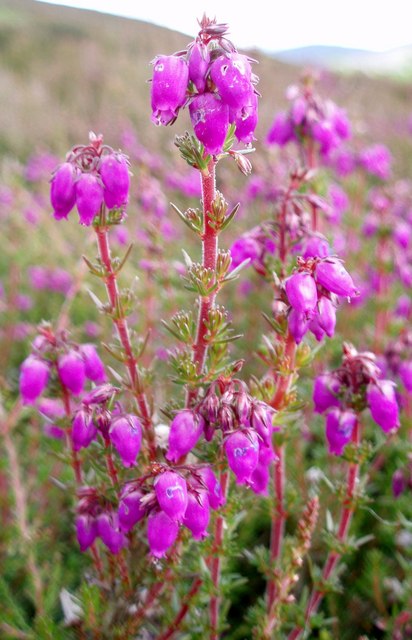 Bell HeatherErica cinerea
-
 Cornish HeathErica vagans
-
 Besom HeathErica scoparia
Compare
Questions and answers
What is the scientific name of the Whorled Heath?
The scientific name of the Whorled Heath is Erica verticillata. Written with its author, the full name is Erica verticillata P.J.Bergius.
Which family does the Whorled Heath belong to?
Erica verticillata belongs to the family Ericaceae, in the order Ericales and the class Magnoliopsida.
Where is the Whorled Heath found?
Checklists and occurrence records place Erica verticillata in 1 country: South Africa.
Sources
Passages the profile rests on
- The species grew in Cape Flats Sand Fynbos. Source passage: “It grew in Cape Flats Sand Fynbos” — English Wikipedia
- The species preferred damp sandy soils in areas including Wynberg, Kenilworth and Zeekoevlei. Source passage: “It preferred damp sandy soils such as those that were naturally found around Wynberg, Kenilworth and Zeekoevlei.” — English Wikipedia
- The species prefers seasonally moist sandy soils when cultivated. Source passage: “It prefers seasonally moist sandy soils” — English Wikipedia
- The species can grow in average garden conditions when the soil is acidic. Source passage: “but will grow well in average garden conditions provided the soils are acidic.” — English Wikipedia
- Bees have been observed feeding on the species' tubular pink flowers. Source passage: “Various pollinators such as bees and birds such as southern double-collared sunbirds have been observed feeding on the tubular pink flowers on E. verticillata.” — English Wikipedia
- The species produces tubular pink flowers. Source passage: “feeding on the tubular pink flowers on E. verticillata.” — English Wikipedia
- Southern double-collared sunbirds have been observed feeding on the species' tubular pink flowers. Source passage: “birds such as southern double-collared sunbirds have been observed feeding on the tubular pink flowers on E. verticillata.” — English Wikipedia
- The species is classified as extinct in the wild. Source passage: “but is now classified as extinct in the wild.” — English Wikipedia
- Agricultural and urban development of its habitat caused the species to become functionally extinct in the early twentieth century. Source passage: “Although the species became functionally extinct due to agricultural and urban development of its habitat in the early 20th century” — English Wikipedia
- Cuttings collected from wild specimens during the later twentieth century helped preserve the species in cultivation. Source passage: “cuttings from several plants discovered in the wild in the later 20th century have ensured that the species will continue in cultivation.” — English Wikipedia
- Cuttings from two specimens were introduced in 1984, with one specimen originating from Protea Park in Pretoria and the other from Kew. Source passage: “1984 saw the introduction of cuttings from two specimens, one in Protea Park, Pretoria and another in Kew.” — English Wikipedia
- The species was reintroduced into the wild at Rondevlei, a bird sanctuary and nature reserve in Cape Town. Source passage: “This species was introduced back into the wild at Rondevlei, a bird sanctuary and nature reserve in Cape Town.” — English Wikipedia
- The species is maintained in cultivation. Source passage: “have ensured that the species will continue in cultivation.” — English Wikipedia
Data
- Catalogue of Life, 2026-10-16 XR cc by
- Global Biodiversity Information Facility CC BY 4.0
- Wikidata CC0
- GeoNames CC BY 4.0
- Wikimedia Commons per image; credit shown with each image
- Within the Catalogue of Life, this name comes from Synonymic Checklists of the Vascular Plants of the World cc by
References
- Bergius, P. J. Descr. Pl. Cap. 99 (1767). where the name was published
This species in other databases
Page built on 28 November 2026. See how the catalog is made and all sources and licences.
Cite this page
ScientificNames.org. (2026). Erica verticillata (Whorled Heath). Retrieved November 28, 2026, from https://scientificnames.org/species/erica-verticillata
“Erica verticillata (Whorled Heath).” ScientificNames.org, 2026, scientificnames.org/species/erica-verticillata. Accessed 28 Nov. 2026.
ScientificNames.org. “Erica verticillata (Whorled Heath).” Accessed November 28, 2026. https://scientificnames.org/species/erica-verticillata.
@misc{scientificnames_erica_verticillata_whorled_heath,
  author = {{ScientificNames.org}},
  title = {Erica verticillata (Whorled Heath)},
  year = {2026},
  url = {https://scientificnames.org/species/erica-verticillata},
  note = {Accessed 2026-11-28}
}