Species · Flowering plants
Mealy Stringybark Eucalyptus cephalocarpa
The scientific name of the Mealy Stringybark is Eucalyptus cephalocarpa. It is a species of flowering plant in the family Myrtaceae (myrtle family), order Myrtales.
- Scientific name
- Eucalyptus cephalocarpa Blakely
- Common name
- Mealy Stringybark
- Genus
- Eucalyptus
- Family
- Myrtaceae (Myrtle Family)
- Order
- Myrtales
- Class
- Magnoliopsida
- Red List category
- VU Vulnerable
- Recorded in
- 2 countries
- Name status
- accepted in the Catalogue of Life

Overview
Mealy Stringybark (Eucalyptus cephalocarpa Blakely) is a flowering plant in the family Myrtaceae, order Myrtales and class Magnoliopsida. The species occurs mainly in Victoria, Australia, and is recorded in Nadgee Nature Reserve in south-eastern New South Wales. It is distinguished by its thick, soft, fibrous grey-brown bark and white flowers.
Written 26 November 2026 from the sources listed below. Each statement was checked against the passage it cites; statements that could not be supported were removed.
Appearance
Mealy Stringybark is a tree with thick, soft, fibrous grey-brown bark with fissures on its trunk and branches. The bark can be smooth on the thinnest branches.[1][2]
The flower buds are club-shaped, diamond-shaped or oval. Mature buds measure 3–6 mm long and 3–4 mm wide.[3][4]
The flowers are white. The fruit is a woody capsule that can be conical, bell-shaped or hemispherical, measuring 3–6 mm long and 4–8 mm wide.[5][6][7]
The tree grows to a height of 15–24 metres.[8]
Habitat
The species is recorded in Nadgee Nature Reserve in south-eastern New South Wales.[9]
The species occurs mainly in Victoria, Australia. It is common around Melbourne, extending from the eastern suburbs to the Dandenongs and south to the Mornington Peninsula.[10][11]
Its distribution extends to areas near Castlemaine, Kinglake and Mallacoota.[12]
Reproduction and life cycle
Flower buds are arranged in groups of seven in the leaf axils and grow on an unbranched peduncle. Flowering occurs between February and June.[13][14][15]
The fruit capsule has valves positioned at the rim or slightly above it.[16]
Uses
Classification of the Mealy Stringybark
| Kingdom | Plantae |
|---|---|
| Subkingdom | Pteridobiotina |
| Phylum | Tracheophyta |
| Class | Magnoliopsida |
| Order | Myrtales |
| Family | Myrtaceae (Myrtle Family) |
| Subfamily | Myrtoideae |
| Tribe | Eucalypteae |
| Genus | Eucalyptus (Gum) |
| Species | Eucalyptus cephalocarpa Blakely |
Where the Mealy Stringybark is found
Checklists and occurrence records place Eucalyptus cephalocarpa in 2 countries across Oceania. GBIF holds 2,613 georeferenced records of it.
Countries
Regions and cities with the most records
- Victoria, Australia 2,451
- Frankston East, Australia 630
- Burwood, Australia 589
- Balwyn North, Australia 512
- Melbourne, Australia 155
- New South Wales, Australia 62
- Bairnsdale, Australia 40
- Warragul, Australia 38
- Bacchus Marsh, Australia 19
- Traralgon, Australia 19
- Wallan, Australia 12
- Bay of Plenty, New Zealand 11
- Canterbury, New Zealand 10
- Rotorua, New Zealand 10
- Christchurch, New Zealand 5
- Auckland, New Zealand 4
- Hawke's Bay Region, New Zealand 4
- Manurewa, New Zealand 4
- Hastings, New Zealand 3
- Rolleston, New Zealand 3
- Waikato Region, New Zealand 3
2 more countries have a few records outside this range
These countries hold a few records of Eucalyptus cephalocarpa but lie outside the range the checklists give for it. Such records are often zoo or garden specimens, museum material or vagrants, so the species is not counted as occurring there.
Range as the checklists state it
Australia (Eden-Cape Howe area, New South Wales, and the Gippsland region and westwards, Victoria)
A number beside a place is its count of GBIF occurrence records. A place without a number comes from a checklist alone. Records show where a species has been observed or collected, which can include escapes and vagrants.
Common names
English
- Mealy Stringybark
- Silver Stringybark
- Silverleaf Stringybark
Names in 2 other languages
- Chinese
- 头果桉
- Russian
- Эвкалипт головчатоплодный
Synonyms
2 other scientific names have been used for this species and are now treated as synonyms of Eucalyptus cephalocarpa.
- Eucalyptus cinerea var. multiflora Maiden
- Eucalyptus longifolia var. multiflora Maiden
Related species
-
 Rainbow EucalyptusEucalyptus deglupta
-
 Southern Blue GumEucalyptus globulus
-
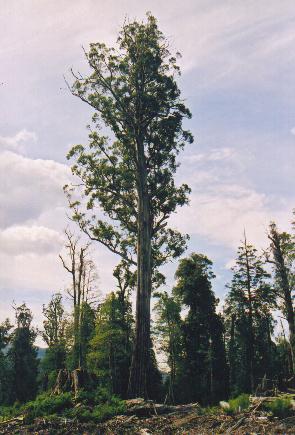 Mountain AshEucalyptus regnans
- River Red GumEucalyptus camaldulensis
-
 Argyle AppleEucalyptus cinerea
-
 Snow GumEucalyptus pauciflora
-
 JarrahEucalyptus marginata
-
 Cider GumEucalyptus gunnii
Compare
Questions and answers
What is the scientific name of the Mealy Stringybark?
The scientific name of the Mealy Stringybark is Eucalyptus cephalocarpa. Written with its author, the full name is Eucalyptus cephalocarpa Blakely.
Which family does the Mealy Stringybark belong to?
Eucalyptus cephalocarpa belongs to the family Myrtaceae, in the order Myrtales and the class Magnoliopsida.
Where is the Mealy Stringybark found?
Checklists and occurrence records place Eucalyptus cephalocarpa in 2 countries: Australia and New Zealand.
What is the conservation status of the Mealy Stringybark?
The IUCN Red List category recorded for Eucalyptus cephalocarpa is Vulnerable (VU).
What other names does the Mealy Stringybark have?
Eucalyptus cephalocarpa is also known in English as Silver Stringybark and Silverleaf Stringybark.
Do Eucalyptus have fruit?
Mealy Stringybark produces woody fruit capsules that can be conical, bell-shaped or hemispherical.[6]
Sources
Passages the profile rests on
- The tree has thick, soft, fibrous grey-brown bark with fissures on its trunk and branches. Source passage: “It has thick, soft, fibrous grey-brown, fissured bark on the trunk and branches” — English Wikipedia
- The bark can be smooth on the thinnest branches. Source passage: “sometimes smooth on the thinnest branches.” — English Wikipedia
- The flower buds are club-shaped, diamond-shaped or oval. Source passage: “Mature buds are club-shaped, diamond-shaped or oval” — English Wikipedia
- Mature flower buds measure 3–6 mm long and 3–4 mm wide. Source passage: “3–6 mm (0.12–0.24 in) long and 3–4 mm (0.12–0.16 in) wide” — English Wikipedia
- The flowers are white. Source passage: “the flowers are white.” — English Wikipedia
- The fruit is a woody capsule that can be conical, bell-shaped or hemispherical. Source passage: “The fruit is a woody conical, bell-shaped or hemispherical capsule” — English Wikipedia
- The fruit capsules measure 3–6 mm long and 4–8 mm wide. Source passage: “capsule 3–6 mm (0.12–0.24 in) long and 4–8 mm (0.16–0.31 in) wide” — English Wikipedia
- The tree grows to a height of 15–24 metres. Source passage: “Eucalyptus cephalocarpa grows to a height of 15–24 m (49–79 ft)” — English Wikipedia
- The species is recorded in Nadgee Nature Reserve in south-eastern New South Wales. Source passage: “the Nadgee Nature Reserve in the far south-east of New South Wales.” — English Wikipedia
- The species occurs mainly in Victoria, Australia. Source passage: “Mealy stringybark occurs mainly in Victoria” — English Wikipedia
- The species is common around Melbourne, extending from the eastern suburbs to the Dandenongs and south to the Mornington Peninsula. Source passage: “It is common around Melbourne, from the eastern suburbs to the Dandenongs and south to the Mornington Peninsula.” — English Wikipedia
- Its distribution extends to areas near Castlemaine, Kinglake and Mallacoota. Source passage: “Its range extends to near Castlemaine, Kinglake and Mallacoota.” — English Wikipedia
- Flower buds are arranged in groups of seven in the leaf axils. Source passage: “The flower buds are arranged in leaf axils in groups of seven” — English Wikipedia
- The flower buds grow on an unbranched peduncle. Source passage: “on an unbranched peduncle 4–18 mm (0.16–0.71 in) long” — English Wikipedia
- Flowering occurs between February and June. Source passage: “Flowering occurs between February and June” — English Wikipedia
- The fruit capsule has valves positioned at the rim or slightly above it. Source passage: “with the valves at rim level or slightly above.” — English Wikipedia
- The species is used as firewood. Source passage: “Used as firewood and timber.” — casey.vic.gov.au
- The species is used as timber. Source passage: “Used as firewood and timber.” — casey.vic.gov.au
Data
- Catalogue of Life, 2026-10-16 XR cc by
- Global Biodiversity Information Facility CC BY 4.0
- Wikidata CC0
- GeoNames CC BY 4.0
- Wikimedia Commons per image; credit shown with each image
- Within the Catalogue of Life, this name comes from Synonymic Checklists of the Vascular Plants of the World cc by
References
- Blakely. Key Eucalypts [Blakely] 164 (1934). where the name was published
This species in other databases
- Catalogue of Life 3BPRH
- Wikidata Q4529685
- iNaturalist 323751
- World Flora Online wfo-0000954637
- GRIN 401135
Page built on 27 November 2026. See how the catalog is made and all sources and licences.
Cite this page
ScientificNames.org. (2026). Eucalyptus cephalocarpa (Mealy Stringybark). Retrieved November 27, 2026, from https://scientificnames.org/species/eucalyptus-cephalocarpa
“Eucalyptus cephalocarpa (Mealy Stringybark).” ScientificNames.org, 2026, scientificnames.org/species/eucalyptus-cephalocarpa. Accessed 27 Nov. 2026.
ScientificNames.org. “Eucalyptus cephalocarpa (Mealy Stringybark).” Accessed November 27, 2026. https://scientificnames.org/species/eucalyptus-cephalocarpa.
@misc{scientificnames_eucalyptus_cephalocarpa_mealy_stringybark,
  author = {{ScientificNames.org}},
  title = {Eucalyptus cephalocarpa (Mealy Stringybark)},
  year = {2026},
  url = {https://scientificnames.org/species/eucalyptus-cephalocarpa},
  note = {Accessed 2026-11-27}
}