Species · Flowering plants
Bald Island Marlock Eucalyptus conferruminata
The scientific name of the Bald Island Marlock is Eucalyptus conferruminata. It is a species of flowering plant in the family Myrtaceae (myrtle family), order Myrtales.
- Scientific name
- Eucalyptus conferruminata D.J.Carr & S.G.M.Carr
- Common name
- Bald Island Marlock
- Genus
- Eucalyptus
- Family
- Myrtaceae (Myrtle Family)
- Order
- Myrtales
- Class
- Magnoliopsida
- Red List category
- NT Near Threatened
- Recorded in
- 3 countries
- Name status
- accepted in the Catalogue of Life

Overview
Eucalyptus conferruminata is native to the south coast of Western Australia, from Two Peoples Bay eastward beyond Esperance, including islands in the Recherche Archipelago. It is distinguished by flower buds fused at their hypanthia and fruits that fuse into woody masses.
Written 26 November 2026 from the sources listed below. Each statement was checked against the passage it cites; statements that could not be supported were removed.
Appearance
Bald Island Marlock has smooth grey and whitish bark and a bushy growth habit. It typically grows between 2 and 8 metres tall.[1][2]
Adult leaves are elliptical, oblong or egg-shaped, measuring 40–90 mm long and 10–30 mm wide. They are glossy and light green on both surfaces.[3][4][5]
Flower buds occur in axillary clusters of fifteen to twenty-one or more, borne on peduncles measuring 30–70 mm long. The buds are fused at their hypanthia, with only their upper portions remaining free, and the operculum is horn-shaped.[6][7][8][9]
The combined fused hypanthia and operculum measure approximately 30–45 mm long. The flowers are green to yellow-green.[10][11]
The fruits fuse together into woody masses measuring 14–26 mm across. Each fruit has three valves that extend beyond the rim but remain fused at their tips.[12][13][14]
The seeds are blackish brown and have flattened-ovoid to cuboid shapes. The fallen opercula are smooth, narrow, curved horns that are red on their sunlit sides and otherwise yellow.[15][16]
Habitat
Bald Island Marlock occurs exclusively in coastal areas within its native range. It frequently grows on large granite rocks, hillsides and in gullies.[17][18][19]
It grows in sandy-loamy soils over granite or quartzite. It can also grow on salty mudflats and in waterlogged soils, and tolerates wind carrying salt spray.[20][21][22][23]
The species is native to the south coast of Western Australia, from Two Peoples Bay eastward beyond Esperance, and includes islands in the Recherche Archipelago. It has become naturalised in other parts of southwestern Western Australia and California.[24][25][26][27][28]
It is sparingly established in the Gippsland and Wimmera regions of Victoria. Seed dispersal from planted trees has contributed to its establishment there.[29][30]
The subspecies conferruminata is endemic to the Recherche Archipelago and does not naturally occur on the mainland.[31]
Behaviour
Bald Island Marlock tolerates drought after becoming established. Its lower branches naturally split to form supporting structures that help stabilise the plant against windthrow.[32][33]
Reproduction and life cycle
Flowering occurs between August and November. The species commonly produces clusters of fifteen flower buds, and some clusters may contain up to thirty-one.[34][35]
The seeds are released through gaps between the fruit valves. The fruits fuse into woody masses.[12][36]
Uses
Bald Island Marlock is commercially sold as an ornamental plant, windbreak and erosion-control plant. Its fused fruits are suitable for use in dried floral arrangements.[37][38]
In the described cultivated setting, the species can eventually reach approximately twice its usual height of 12 feet. When grown as a screen, it can spread to more than 10–20 feet across.[39][40]
Classification of the Bald Island Marlock
| Kingdom | Plantae |
|---|---|
| Subkingdom | Pteridobiotina |
| Phylum | Tracheophyta |
| Class | Magnoliopsida |
| Order | Myrtales |
| Family | Myrtaceae (Myrtle Family) |
| Subfamily | Myrtoideae |
| Tribe | Eucalypteae |
| Genus | Eucalyptus (Gum) |
| Species | Eucalyptus conferruminata D.J.Carr & S.G.M.Carr |
Where the Bald Island Marlock is found
Checklists and occurrence records place Eucalyptus conferruminata in 3 countries across Oceania. GBIF holds 936 georeferenced records of it.
Countries
Regions and cities with the most records
- Western Cape, South Africa 448
- Western Australia, Australia 197
- Victoria, Australia 152
- Muizenberg, South Africa 85
- Retreat, South Africa 84
- Rondebosch, South Africa 78
- Cape Town, South Africa 76
- Hermanus, South Africa 74
- Mossel Bay, South Africa 46
- Bredasdorp, South Africa 43
- South Australia, Australia 34
- Burwood, Australia 32
- Melbourne, Australia 31
- Balwyn North, Australia 29
- St Albans, Australia 26
- Albany, Australia 24
- Gansbaai, South Africa 24
- Groot-Brakrivier, South Africa 23
- Geelong, Australia 21
- Frankston East, Australia 19
- Torquay, Australia 18
- Eastern Cape, South Africa 15
- Caledon, South Africa 10
- Kuils River, South Africa 10
- Durbanville, South Africa 8
- Kraaifontein, South Africa 8
- Somerset West, South Africa 7
- Gonubie, South Africa 5
- Grabouw, South Africa 5
- Manawatu-Wanganui, New Zealand 5
- Manukau City, New Zealand 5
- New South Wales, Australia 5
- Stellenbosch, South Africa 5
- Tasmania, Australia 5
- Whanganui, New Zealand 5
- Australian Capital Territory, Australia 4
2 more countries have a few records outside this range
These countries hold a few records of Eucalyptus conferruminata but lie outside the range the checklists give for it. Such records are often zoo or garden specimens, museum material or vagrants, so the species is not counted as occurring there.
A number beside a place is its count of GBIF occurrence records. A place without a number comes from a checklist alone. Records show where a species has been observed or collected, which can include escapes and vagrants.
Common names
English
- Bald Island Marlock
- Spidergum
- Bushy Yate
Names in 3 other languages
- Afrikaans
- Spinnekopbloekom
- Chinese
- 蜘蛛桉
- Spanish
- Eucalipto araña
Subspecies and varieties
Related species
-
 Rainbow EucalyptusEucalyptus deglupta
-
 Southern Blue GumEucalyptus globulus
-
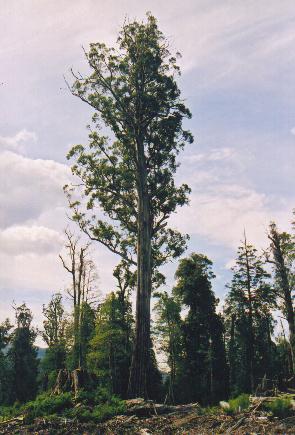 Mountain AshEucalyptus regnans
- River Red GumEucalyptus camaldulensis
-
 Argyle AppleEucalyptus cinerea
-
 Snow GumEucalyptus pauciflora
-
 JarrahEucalyptus marginata
-
 Cider GumEucalyptus gunnii
Compare
Questions and answers
What is the scientific name of the Bald Island Marlock?
The scientific name of the Bald Island Marlock is Eucalyptus conferruminata. Written with its author, the full name is Eucalyptus conferruminata D.J.Carr & S.G.M.Carr.
Which family does the Bald Island Marlock belong to?
Eucalyptus conferruminata belongs to the family Myrtaceae, in the order Myrtales and the class Magnoliopsida.
Where is the Bald Island Marlock found?
Checklists and occurrence records place Eucalyptus conferruminata in 3 countries: South Africa, Australia and New Zealand.
What is the conservation status of the Bald Island Marlock?
The IUCN Red List category recorded for Eucalyptus conferruminata is Near Threatened (NT).
What other names does the Bald Island Marlock have?
Eucalyptus conferruminata is also known in English as Spidergum and Bushy Yate.
Sources
Passages the profile rests on
- The species has smooth grey and whitish bark and a bushy growth habit. Source passage: “has smooth, grey and whitish bark and a bushy habit.” — English Wikipedia
- The species typically grows between 2 and 8 metres tall. Source passage: “typically grows to a height of 2 to 8 metres (7 to 26 ft)” — English Wikipedia
- Adult leaves are elliptical, oblong or egg-shaped. Source passage: “Adult leaves are elliptical to oblong or egg-shaped” — English Wikipedia
- Adult leaves measure 40–90 mm in length and 10–30 mm in width. Source passage: “40–90 mm (1.6–3.5 in) long, 10–30 mm (0.39–1.18 in) wide” — English Wikipedia
- Adult leaves are glossy and light green on both surfaces. Source passage: “the same glossy, light green colour on both surfaces.” — English Wikipedia
- Flower buds occur in axillary clusters containing fifteen to twenty-one or more buds. Source passage: “The flower buds are arranged in groups of between fifteen and twenty one or more in leaf axils” — English Wikipedia
- The flower-bud clusters are borne on peduncles measuring 30–70 mm long. Source passage: “on a broad, strap-like peduncle 30–70 mm (1.2–2.8 in) long.” — English Wikipedia
- The flower buds are fused at their hypanthia, with only their upper portions remaining free. Source passage: “The buds are fused at the hypanthium with only the upper part free.” — English Wikipedia
- The operculum is horn-shaped. Source passage: “The operculum is horn-shaped” — English Wikipedia
- The combined fused hypanthia and operculum measure approximately 30–45 mm long. Source passage: “The combined length of the fused hypanthia and each operculum is about 30–45 mm” — English Wikipedia
- The species produces green to yellow-green flowers. Source passage: “Green to yellow-green flowers appear” — English Wikipedia
- The fruits fuse together into woody masses. Source passage: “The fruit are fused to form a woody mass” — English Wikipedia
- The fused fruit masses measure 14–26 mm across. Source passage: “14–26 mm (0.55–1.02 in) wide” — English Wikipedia
- The fruits have three valves that extend beyond the rim but remain fused at their tips. Source passage: “with three valves extending beyond the rim but remaining fused at their tips.” — English Wikipedia
- The seeds are blackish brown and have flattened-ovoid to cuboid shapes. Source passage: “The seeds are blackish brown with a flattened-ovoid to cuboid shape” — English Wikipedia
- The fallen opercula are smooth, narrow, curved horns that are red on their sunlit sides and otherwise yellow. Source passage: “The fallen opercula are long, narrow, smooth, curved horns that are red on the sunlit side but otherwise yellow.” — trees.stanford.edu
- The species occurs exclusively in coastal areas within its native range. Source passage: “It is always found in coastal areas” — English Wikipedia
- The species frequently grows on large granite rocks. Source passage: “often on massive granite rocks.” — English Wikipedia
- The species commonly grows on hillsides and in gullies. Source passage: “It is often found on hillsides and in gullies” — English Wikipedia
- The species grows in sandy-loamy soils over granite or quartzite. Source passage: “growing in sandy-loamy soils over granite or quartzite.” — English Wikipedia
- The species can grow in waterlogged soils. Source passage: “including waterlogged soils.” — English Wikipedia
- The species can tolerate wind carrying salt spray. Source passage: “does not mind wind loaded with salt spray” — trees.stanford.edu
- The species can grow on salty mudflats. Source passage: “can grow on salty mudflats” — trees.stanford.edu
- The species is native to the south coast of Western Australia. Source passage: “is a small tree or mallee native to the south coast of Western Australia.” — inaturalist.org
- The native range extends from Two Peoples Bay eastward beyond Esperance. Source passage: “from Two Peoples Bay east to beyond Esperance” — English Wikipedia
- The native distribution includes islands in the Recherche Archipelago. Source passage: “including islands in the Archipelago of the Recherche.” — English Wikipedia
- The species has become naturalised in other parts of southwestern Western Australia. Source passage: “The species has become naturalised in other parts of the Southwest region of Western Australia” — English Wikipedia
- The species has also become naturalised in California. Source passage: “has also become naturalised in California.” — English Wikipedia
- The species is sparingly established in the Gippsland and Wimmera regions of Victoria. Source passage: “sparingly established in the Gippsland and Wimmera areas” — English Wikipedia
- Seed dispersal from planted trees has contributed to the species becoming established in Victoria. Source passage: “after having spread by seed dispersal from planted trees.” — English Wikipedia
- The subspecies conferruminata is endemic to the Recherche Archipelago and does not naturally occur on the mainland. Source passage: “Subspecies conferruminata is endemic to the Recherche Archipelago and does not occur naturally on the mainland.” — English Wikipedia
- The species tolerates drought after becoming established. Source passage: “It will tolerate drought once established” — English Wikipedia
- Lower branches naturally split to form supporting structures that help stabilise the plant against windthrow. Source passage: “the habit of having foliage to ground level results from natural splitting of lower branches to form props; the effect of this in the wild is to steady the whole plant against windthrow.” — trees.stanford.edu
- Flowering occurs between August and November. Source passage: “between August and November.” — English Wikipedia
- The species commonly produces clusters of fifteen flower buds, and some clusters may contain up to thirty-one. Source passage: “Spider gum often has 15 and in other cases tries to reach 31” — trees.stanford.edu
- The seeds are released through gaps between the fruit valves. Source passage: “are released through the gap between the valves.” — English Wikipedia
- The species is commercially sold as an ornamental plant, windbreak and erosion-control plant. Source passage: “The plant is sold commercially as an ornamental, wind break or for erosion control.” — English Wikipedia
- The fused fruits are suitable for use in dried floral arrangements. Source passage: “and are suitable for dry arrangements.” — trees.stanford.edu
- The species can eventually reach approximately twice its usual height of 12 feet in the described cultivated setting. Source passage: “not much more than 12 feet tall (though can eventually grow to double that height)” — trees.stanford.edu
- The species can spread to more than 10–20 feet across when grown as a screen. Source passage: “spreads as a screen to more than 10 to 20 feet across” — trees.stanford.edu
Data
- Catalogue of Life, 2026-10-16 XR cc by
- Global Biodiversity Information Facility CC BY 4.0
- Wikidata CC0
- GeoNames CC BY 4.0
- Wikimedia Commons per image; credit shown with each image
- Within the Catalogue of Life, this name comes from Synonymic Checklists of the Vascular Plants of the World cc by
References
- Carr, D. J., & Carr, S. G. M. where the name was published
This species in other databases
- Catalogue of Life 3BPSG
- Wikidata Q2712351
- iNaturalist 77090
- World Flora Online wfo-0000954683
- GRIN 492776
Page built on 27 November 2026. See how the catalog is made and all sources and licences.
Cite this page
ScientificNames.org. (2026). Eucalyptus conferruminata (Bald Island Marlock). Retrieved November 27, 2026, from https://scientificnames.org/species/eucalyptus-conferruminata
“Eucalyptus conferruminata (Bald Island Marlock).” ScientificNames.org, 2026, scientificnames.org/species/eucalyptus-conferruminata. Accessed 27 Nov. 2026.
ScientificNames.org. “Eucalyptus conferruminata (Bald Island Marlock).” Accessed November 27, 2026. https://scientificnames.org/species/eucalyptus-conferruminata.
@misc{scientificnames_eucalyptus_conferruminata_bald_island_marlock,
  author = {{ScientificNames.org}},
  title = {Eucalyptus conferruminata (Bald Island Marlock)},
  year = {2026},
  url = {https://scientificnames.org/species/eucalyptus-conferruminata},
  note = {Accessed 2026-11-27}
}